The SINISTER Plan to Integrate Israel’s Military Into the US Under the NDAA – With Dave DeCamp
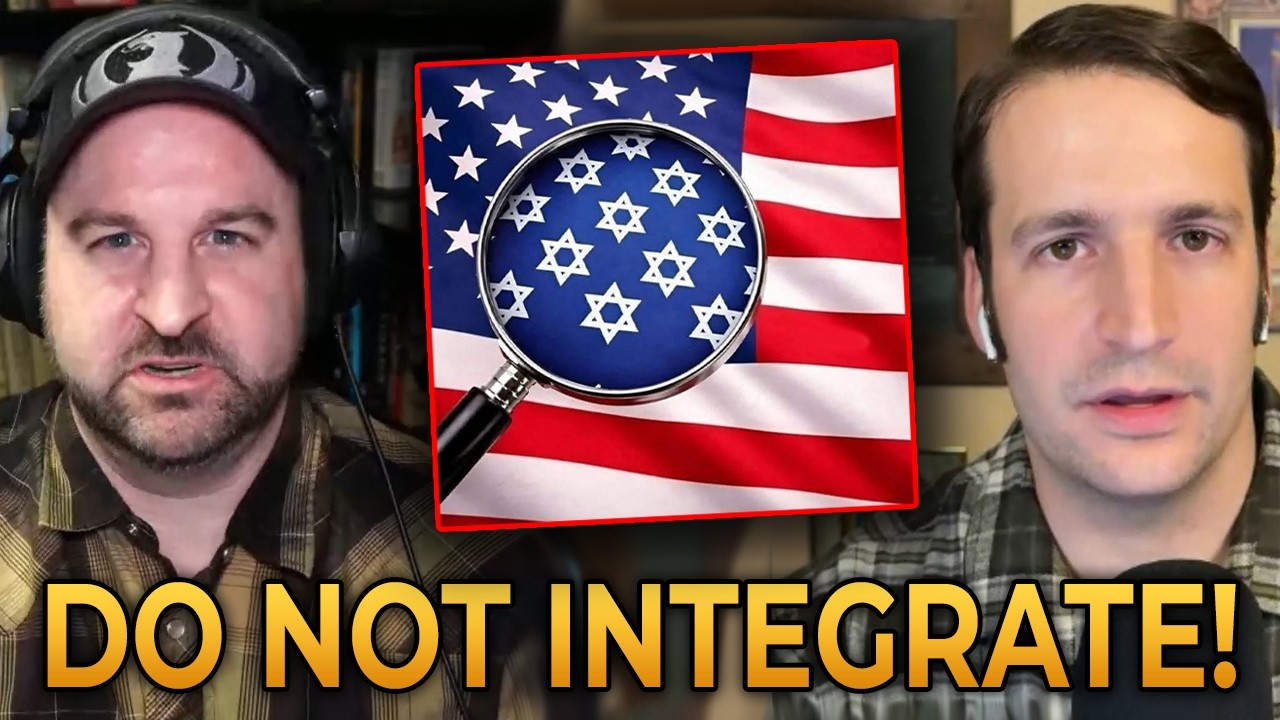
Is America Really Calling the Shots? The Growing Debate Over U.S.-Israel Relations, Hidden Military Integration, and the Future of American Foreign Policy
For decades, Americans have been told that Washington sets the rules of its alliances. But what happens when a growing number of political observers begin asking whether that relationship has quietly been turned on its head? As new legislation, behind-the-scenes military agreements, and controversial foreign policy decisions emerge, a fierce debate is unfolding—not only about America’s relationship with Israel, but about who truly shapes U.S. foreign policy.
For critics across the political spectrum, the latest developments represent far more than another foreign aid debate. They see a fundamental question of national sovereignty taking center stage. If military aid can simply be restructured instead of reduced, if defense industries become permanently intertwined, and if future administrations find themselves unable to unwind those commitments, then the conversation is no longer just about annual spending bills. It becomes a debate over whether America’s strategic independence is gradually being replaced by an irreversible security partnership.
Whether one agrees with these concerns or rejects them entirely, the controversy has become impossible to ignore.
A Growing Sense of Frustration Among America First Conservatives
The discussion begins with a frustration that has become increasingly common among many Republicans, particularly within the America First movement.
The argument is straightforward. If Donald Trump truly wished to reshape America’s relationship with Israel, critics argue, he possesses significant political leverage. With considerable influence over Republican lawmakers, he could support legislation conditioning military assistance, reducing aid, or requiring specific policy changes before additional support is authorized.
Yet none of those possibilities have materialized.
Instead, critics claim the opposite has happened. Rather than seeing America’s influence over Israel increase, they argue Washington appears increasingly unwilling—or unable—to impose meaningful conditions on its closest Middle Eastern ally.
To these observers, each new episode reinforces the perception that America’s foreign policy establishment continues operating according to long-established patterns regardless of campaign promises about avoiding foreign entanglements.
For voters who supported an “America First” vision centered on domestic priorities and reduced overseas commitments, this creates an uncomfortable contradiction.
Is the Political Landscape Beginning to Shift?
Despite their frustration, many analysts interviewed in the discussion believe today’s political environment is unlikely to remain permanent.
They argue that demographic changes, the rise of independent media, and shifting public opinion are gradually transforming the political conversation surrounding Israel.
Unlike previous decades, debates over military aid are no longer confined to niche foreign policy circles. They increasingly appear during primary elections, on podcasts with millions of viewers, and across social media platforms where younger voters consume political information outside traditional news outlets.
The expectation is not that federal policy will suddenly reverse.
Instead, many expect the issue to become increasingly difficult for both political parties to avoid.
Democratic leaders, in particular, may face growing pressure from younger voters who hold significantly different views on Middle East policy than previous generations.
That does not necessarily mean dramatic policy changes are imminent—but it does suggest that future elections may feature far more public debate over military assistance than Americans have grown accustomed to.
Netanyahu’s Long-Term Strategy?
One of the most interesting arguments presented during the discussion concerns what critics believe may be Israel’s long-term strategic objective.
Rather than fighting to preserve the existing model of direct American military aid indefinitely, they argue Israeli leadership recognizes that political support inside the United States could gradually weaken over time.
If that is true, then maintaining the current system may be less important than replacing it with something even more durable.
According to this interpretation, the goal would not simply be continued financial assistance.
It would be institutional integration.
Instead of annual aid packages that Congress debates every year, critics argue Israel could seek arrangements that permanently intertwine American and Israeli defense industries, research programs, intelligence networks, and military procurement systems.
Once those systems become deeply integrated, reversing them would become dramatically more difficult for any future administration.
Section 224: A Quiet but Significant Proposal
Central to the conversation is a little-known provision reportedly contained within the annual National Defense Authorization Act—commonly referred to as Section 224.
While the exact legislative language has received relatively little mainstream attention, critics argue its implications could be significant.
Rather than emphasizing traditional foreign aid, they claim the proposal would deepen military cooperation between the United States and Israel in several important ways.
These reportedly include:
Greater integration of defense manufacturing.
Increased cooperation in weapons development.
Expanded reliance on Israeli military technologies.
Deeper coordination between defense supply chains.
Financial support incorporated into broader Pentagon appropriations rather than separate foreign aid packages.
Supporters may view such integration as a logical evolution of an already close alliance.
Opponents, however, argue that the practical effect would be to make future separation increasingly difficult.
Instead of openly appropriating billions of dollars in military aid each year, assistance could become embedded throughout larger defense programs that receive less public scrutiny.
In other words, critics argue the funding would not disappear—it would simply become less visible.
From Military Aid to Military Integration
This distinction forms the heart of the debate.
Many Americans hear politicians discussing reductions in military aid and assume the overall relationship may become less financially intertwined.
Critics argue exactly the opposite.
They contend that replacing direct aid with institutional integration could actually strengthen the relationship.
Defense contractors already cooperate extensively.
Joint missile defense projects already exist.
Weapons systems already share technologies.
Expanding these partnerships, they argue, could create long-term dependencies throughout America’s defense industrial base.
Once factories, research programs, procurement systems, and logistical networks become fully integrated, disentangling them could prove extraordinarily expensive and politically difficult.
To critics, this represents a far more permanent commitment than annual foreign aid legislation ever did.
A Controversial Congressional Visit
Another point that generated considerable discussion involved a U.S. congressman who reportedly visited Israel, met with Prime Minister Benjamin Netanyahu, and later introduced legislation reflecting proposals discussed during that visit.
The controversy intensified after Netanyahu publicly thanked the congressman in writing, with the letter later shared publicly alongside announcements promoting the legislation.
For critics, the optics were striking.
They questioned how such an image—an Israeli prime minister openly celebrating legislation introduced by an American member of Congress—could emerge without generating far broader public debate.
Supporters, of course, would likely argue there is nothing unusual about close allies cooperating on defense initiatives.
But opponents saw the episode as symbolic of what they believe has become an increasingly transparent relationship between Israeli leadership and segments of the American political establishment.
Intelligence Sharing Expands
Military integration is only one aspect of the broader discussion.
Critics also point to legislative proposals expanding intelligence cooperation.
According to the discussion, another measure would reportedly require the United States to increase the sharing of sensitive intelligence with Israel.
Supporters argue intelligence cooperation strengthens both countries against common threats.
Critics counter that mandatory intelligence-sharing requirements reduce executive flexibility while further institutionalizing security commitments that future administrations may find difficult to modify.
Viewed individually, each proposal may appear relatively technical.
Taken together, critics argue they represent a broader strategy to cement the alliance beyond the reach of ordinary political debate.
Public Opinion Is Changing
Despite these legislative developments, one recurring theme throughout the conversation is that public opinion appears to be moving in a different direction.
Polling in recent years has suggested growing divisions—particularly among younger Americans—regarding U.S. support for Israel.
While bipartisan support remains strong among many elected officials, public attitudes have become noticeably more varied than they were even a decade ago.
Independent media has played a substantial role in that shift.
Podcasts, YouTube programs, long-form interviews, and alternative news platforms increasingly shape political conversations once dominated by cable television and major newspapers.
As a result, issues previously confined to foreign policy specialists now reach audiences numbering in the millions.
Whether that ultimately changes legislation remains uncertain.
But it unquestionably changes the conversation.
Trump’s Political Messaging
The discussion also examined Donald Trump’s public comments regarding inflation and energy markets.
During one exchange with reporters, Trump expressed optimism that inflation would decline after the conflict ended while discussing increased oil movements through the region.
Critics argued that this explanation misunderstands how inflation operates.
They contended that while energy prices certainly influence consumer costs, inflation itself is more fundamentally tied to monetary policy, government spending, and money supply expansion.
From that perspective, lower oil prices alone cannot simply erase broader inflationary pressures.
More broadly, commentators questioned the political wisdom of appearing dismissive toward inflation at a time when many Americans continue struggling with higher living costs.
Even those sympathetic to Trump’s broader agenda found themselves puzzled by messaging that seemed disconnected from everyday economic concerns.
Secret Oil Shipments and the Strait of Hormuz
Another topic involved reports that the United States quietly assisted commercial shipping through the Strait of Hormuz during periods of heightened regional tension.
While some reporting suggested certain shipments continued moving despite the conflict, participants questioned the scale of those operations.
Even assuming significant volumes reached international markets, they argued overall traffic remained well below pre-conflict levels.
Some also noted that Iranian authorities themselves periodically announced allowing selected commercial vessels to pass through the strait, making it difficult to determine precisely which shipments resulted from American efforts and which reflected Iranian decisions.
The broader point, they argued, was that restoring global energy markets involves far more than moving isolated shipments.
Could Congress End a War?
The conversation eventually turned toward constitutional questions surrounding presidential war powers.
One participant argued that Congress possesses legal mechanisms capable of ending unauthorized military operations through concurrent resolutions under the War Powers Resolution framework.
Others questioned both the constitutional foundation of the War Powers Resolution and the political willingness of Congress to exercise those authorities.
Although legal scholars continue debating the act’s interpretation, critics argued the larger problem is political rather than constitutional.
Even if Congress possesses the authority to constrain military action, lawmakers often lack the incentive to challenge ongoing conflicts supported by their own party leadership.
As a result, the constitutional balance envisioned by the nation’s founders has, according to critics, gradually shifted toward an increasingly powerful executive branch.
Why Impeachment Over War Seems Unlikely
Interestingly, participants expressed skepticism that Congress would seriously pursue impeachment based solely on unauthorized military action.
Their reasoning was political rather than legal.
Both parties, they argued, have generally supported expansive presidential authority in matters of foreign intervention when those policies align with broader strategic goals.
Setting a precedent that presidents could be impeached for launching military operations might constrain future administrations from either party.
Consequently, critics believe Congress often focuses impeachment efforts on other legal or political controversies rather than directly challenging presidential war-making authority.
The Bigger Picture
Beneath every policy dispute discussed lies a much larger question.
What should America’s role in the world actually be?
For decades, bipartisan consensus largely favored extensive overseas commitments, global military partnerships, and expansive security guarantees.
That consensus now appears increasingly contested.
Some argue America’s alliances remain essential for maintaining international stability and deterring adversaries.
Others believe those same commitments have become financially unsustainable, strategically overextended, and increasingly disconnected from the priorities of ordinary American citizens.
The debate over aid to Israel, military integration, congressional authority, and presidential war powers is ultimately part of that broader argument.
It is a conversation about sovereignty, accountability, and the limits of American global leadership.
Conclusion
The issues raised in this discussion reflect one side of an ongoing and highly contested political debate. Many of the claims involve interpretations of legislation, strategic motives, or political influence that are disputed by other analysts, policymakers, and scholars. Nevertheless, the questions themselves have become increasingly prominent.
As public opinion evolves, independent media expands its reach, and geopolitical tensions continue to reshape international politics, debates over America’s alliances are unlikely to fade. Whether future administrations deepen military integration with allies, reconsider foreign aid, or redefine the balance between Congress and the presidency, the conversation is moving into the political mainstream.
The coming decade may not simply determine the future of U.S.-Israel relations. It may also determine how Americans define national sovereignty, congressional authority, and the country’s role in an increasingly uncertain world.