Is the Iran Deal DOOMED to Fail? Scott Horton Reveals the Truth
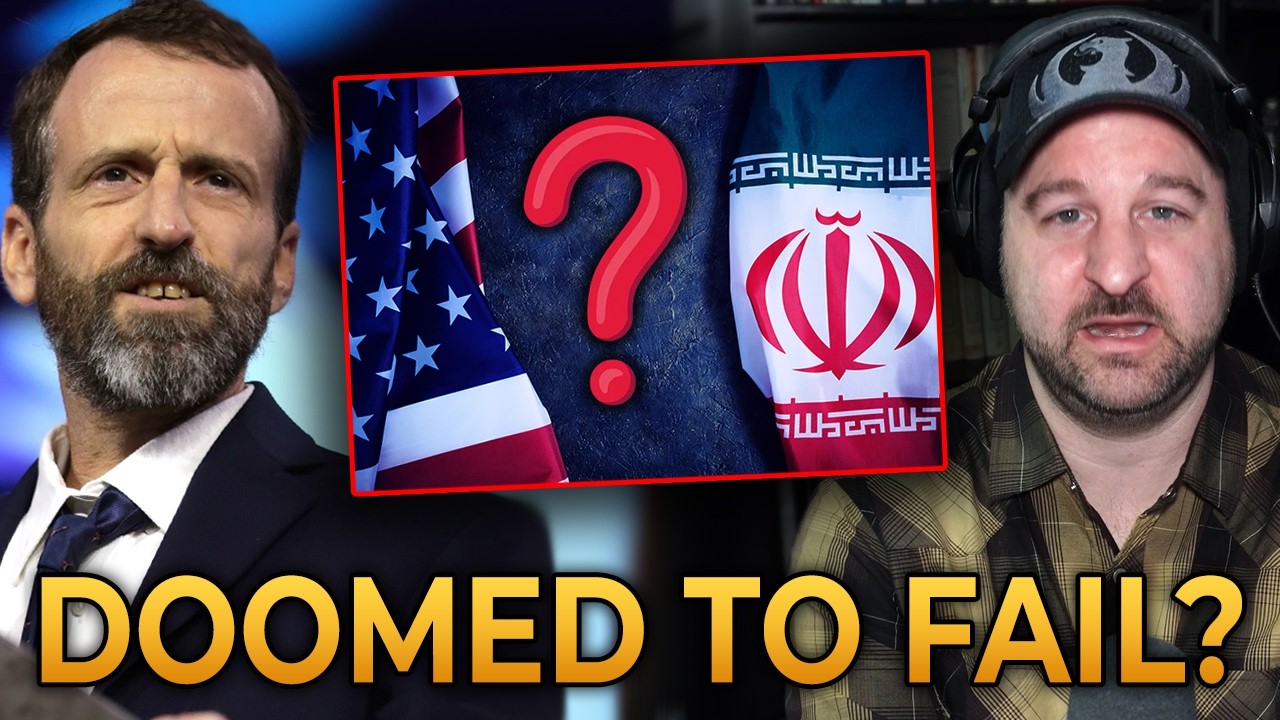
Trump’s Iran Deal Sparks Fury: Is Washington Retreating While Israel Pushes Toward Another War?
The political battle over America’s Middle East strategy has entered a new and potentially defining phase. What was expected to be another chapter of escalating confrontation with Iran has instead become a heated debate over whether the United States has quietly abandoned its own war objectives—and whether Israel is willing to accept that reality.
As details of the emerging agreement with Iran continue to surface, the backlash has been immediate. Supporters call it a necessary step toward preventing another catastrophic regional war. Critics describe it as nothing short of a strategic surrender. But perhaps the most fascinating question is not what the agreement says—it is why it happened at all.
If Washington truly possessed the overwhelming military advantage that many officials claimed throughout the conflict, why negotiate on terms that appear far less ambitious than the rhetoric that preceded the war? Why are some of the same politicians who once insisted Iran could never retain missile capabilities or uranium enrichment now defending an agreement that appears to tolerate both?
These questions are driving an increasingly intense debate inside conservative circles, among foreign policy analysts, and even within supporters of former President Donald Trump. Some believe the agreement reflects political realism after military realities became impossible to ignore. Others argue it represents a dramatic reversal of objectives that exposes the limits of American power rather than its strength.
Even more controversial is the growing discussion surrounding Israel’s role. Recent military operations in Lebanon, launched while negotiations were underway, have fueled speculation that not everyone involved shares the same vision for ending the conflict. Whether those actions were coordinated, tolerated, or openly opposed by Washington remains one of the biggest unanswered questions.
The stakes extend far beyond one diplomatic agreement. They touch on the future of America’s alliances, the credibility of its military commitments, and whether decades of interventionist policy are reaching a breaking point. If this agreement ultimately survives, it could redefine how Washington approaches conflicts across the Middle East for years to come. If it collapses, the region could find itself once again on the edge of a much larger war.
From Maximum Pressure to Maximum Compromise
One of the most striking aspects of the proposed agreement is how dramatically it differs from the demands that were publicly articulated only weeks earlier.
For years, American policy toward Iran emphasized maximum pressure: sanctions, military deterrence, and uncompromising demands regarding Iran’s missile program, nuclear enrichment, and regional influence. During the recent confrontation, administration officials repeatedly insisted that Iran would have to accept sweeping concessions before any settlement could be reached.
Instead, according to the discussion presented in the interview, the emerging framework appears to move in the opposite direction.
The agreement reportedly includes commitments not to attack Iran, substantial sanctions relief, the return of frozen Iranian assets, and significant reconstruction assistance. Perhaps even more notably, it appears to acknowledge Iran’s continued ability to enrich uranium for civilian purposes while no longer insisting upon the complete elimination of its missile capabilities.
For critics of previous American policy, these developments amount to an admission that the original war aims were unattainable.
Rather than forcing Iran into unconditional surrender, they argue, Washington found itself accepting many of the conditions it had previously rejected.
Why Did the Strategy Change?
Supporters of this interpretation argue that battlefield realities—not political preference—forced Washington to alter course.
Throughout the interview, one recurring theme is that Iran demonstrated an ability to threaten American military assets across the region despite sustained military pressure.
According to this view, Iranian missile and drone capabilities remained sufficiently intact to pose continuing risks to U.S. bases, regional infrastructure, and commercial shipping.
If those assessments are accurate, they would explain why policymakers shifted from escalation toward negotiation.
Military campaigns are ultimately judged by whether they achieve strategic objectives. If the costs continue rising while the prospects for decisive victory diminish, governments frequently reassess their goals.
This interpretation portrays the agreement not as generosity toward Iran but as recognition that prolonged conflict carried increasing risks with uncertain rewards.
The Strait of Hormuz and the Economic Pressure
Another central issue discussed is the strategic importance of the Strait of Hormuz.
This narrow waterway remains one of the world’s most critical energy corridors, with a significant percentage of global oil exports passing through it.
The agreement reportedly prioritizes reopening maritime traffic while allowing future management arrangements involving Iran and Oman.
Critics view this as another concession.
Supporters counter that maintaining uninterrupted commercial shipping is a practical necessity regardless of broader geopolitical disagreements.
The interview also argues that prolonged disruptions were beginning to create pressure not only on Iran but also on American strategic resources, suggesting that economic realities became increasingly difficult to ignore.
Whether those claims accurately reflect classified assessments remains uncertain, but they illustrate why economic considerations often become just as influential as military ones during prolonged crises.
Israel’s Role Becomes the Center of Debate
Perhaps the most politically sensitive aspect of the discussion concerns Israel’s actions during the negotiation process.
Israeli military operations in Lebanon reportedly continued while diplomatic talks were taking place, prompting criticism from observers who believed such actions risked undermining efforts to reduce regional tensions.
The interview raises the possibility that Israel and the United States may not have been perfectly aligned regarding the timing or objectives of the negotiations.
Some analysts interpret these events as evidence of genuine disagreement between Washington and Jerusalem.
Others believe the apparent friction may simply reflect different public messaging rather than substantive policy differences.
Without access to internal communications, it is impossible to determine which interpretation is correct.
What is clear, however, is that perceptions of disagreement have fueled intense public debate.
Can Trump Actually Restrain Netanyahu?
A recurring question throughout the conversation is whether Donald Trump would be willing—or able—to pressure Israeli Prime Minister Benjamin Netanyahu if negotiations required it.
One argument presented is straightforward: as President of the United States, Trump possesses vastly greater leverage than any foreign leader because Israel depends heavily on American diplomatic, financial, and military support.
Under this logic, if Washington firmly insisted on preserving a negotiated settlement, Israel would ultimately have little choice but to cooperate.
Others remain skeptical.
They argue that the political relationship between the two leaders, along with longstanding strategic ties between both countries, makes any serious confrontation unlikely.
The interview ultimately concludes that the answer depends less on formal power than on political will.
The Lebanon Question
Lebanon emerges as one of the agreement’s most complicated components.
According to the discussion, provisions emphasizing Lebanese territorial sovereignty could conflict with Israel’s stated intention to maintain a military presence in certain areas.
This raises difficult practical questions.
Would isolated military operations violate the spirit of the agreement?
Could limited clashes continue without collapsing the broader diplomatic framework?
Or would any renewed escalation immediately jeopardize negotiations with Iran?
These uncertainties highlight how fragile ceasefire arrangements often become when multiple actors pursue overlapping but not identical objectives.
A Debate Over American Power
Beyond the specifics of the agreement lies a broader philosophical disagreement.
For decades, American foreign policy has often rested on the assumption that overwhelming military superiority allows Washington to dictate political outcomes.
The interview challenges that assumption directly.
Its central claim is that military strength does not automatically translate into political success, particularly against large regional powers capable of imposing meaningful costs even without matching America’s overall capabilities.
Historical examples are frequently invoked to support this argument.
Conflicts in Vietnam, Afghanistan, and Iraq demonstrated that superior firepower does not always produce decisive political victories.
The discussion suggests Iran may represent another example where geography, regional influence, and asymmetric capabilities complicate traditional military planning.
Whether one agrees with this conclusion or not, it reflects an increasingly common debate among foreign policy analysts across the political spectrum.
The Politics of Declaring Victory
Another fascinating aspect concerns political messaging.
Governments rarely describe negotiated settlements as compromises, particularly after military confrontations.
Instead, leaders often present agreements as successful outcomes regardless of how much their original objectives evolved during negotiations.
The interview argues that Trump possesses an unusual political advantage in this regard.
His supporters contend that he can dramatically shift positions while maintaining political momentum, framing policy reversals as strategic victories rather than retreats.
Critics see this as inconsistency.
Supporters describe it as pragmatism.
Either way, the contrast between previous demands and current rhetoric has become impossible to ignore.
The Growing Divide Inside the Conservative Movement
Perhaps one of the most significant developments highlighted in the discussion is the widening divide within America’s political right.
Traditional interventionist conservatives continue emphasizing strong support for Israel and aggressive policies toward Iran.
Meanwhile, an increasingly vocal non-interventionist faction argues that endless overseas conflicts no longer serve American interests.
This debate is no longer confined to academic circles.
It now includes prominent media personalities, policy analysts, veterans, and elected officials.
Questions that once remained politically sensitive—such as the long-term costs of military intervention or the limits of American influence—are now openly discussed by audiences that previously supported more hawkish positions.
Could the Agreement Survive?
Even if both Washington and Tehran remain committed to implementation, numerous obstacles remain.
Regional actors possess their own priorities.
Military incidents can quickly derail diplomatic momentum.
Domestic political opposition exists in multiple countries.
Any significant escalation involving Lebanon, Hezbollah, or Israeli military operations could place enormous strain on the agreement before its implementation is complete.
History offers numerous examples of promising diplomatic breakthroughs collapsing under renewed violence.
Whether this agreement avoids that fate depends not only on Washington and Tehran but on every major actor operating across the region.
The Strategic Question That Remains
Perhaps the interview’s most important contribution is not any single claim but the broader strategic question it raises.
If military escalation ultimately produced negotiations that accepted many of the conditions previously rejected, what does that reveal about the effectiveness of coercive diplomacy?
Some observers conclude that diplomacy should have been prioritized from the beginning.
Others argue that military pressure created the conditions necessary for negotiations.
Still others believe both interpretations overlook crucial facts unavailable to the public.
These debates will continue long after the headlines fade.
Conclusion
Whether viewed as pragmatic diplomacy, strategic realism, or reluctant compromise, the proposed agreement with Iran has become one of the most consequential foreign policy developments in recent years.
It has exposed divisions inside the American political establishment, intensified debate over the U.S.-Israel relationship, and forced difficult questions about the limits of military power in achieving political objectives.
Supporters see an opportunity to reduce the risk of another devastating regional conflict.
Critics warn that concessions made today may encourage greater challenges tomorrow.
The ultimate outcome will depend not only on the text of the agreement itself but on whether all major participants are willing to restrain military escalation long enough for diplomacy to take hold.
For now, one thing is certain: the conversation has shifted. The debate is no longer simply about confronting Iran. It has become a broader discussion about America’s role in the Middle East, the future of its alliances, and whether decades of intervention have reached a point where negotiation, however imperfect, becomes the only realistic path forward.
As implementation moves ahead, every military strike, every diplomatic statement, and every political calculation will be scrutinized through that lens. The success or failure of this agreement may ultimately determine not only the future of U.S.-Iran relations but also how future American administrations define power, deterrence, and peace in one of the world’s most volatile regions.