Dave Smith Delivers SHOCKING Truth About the Future of Israel First vs. America First
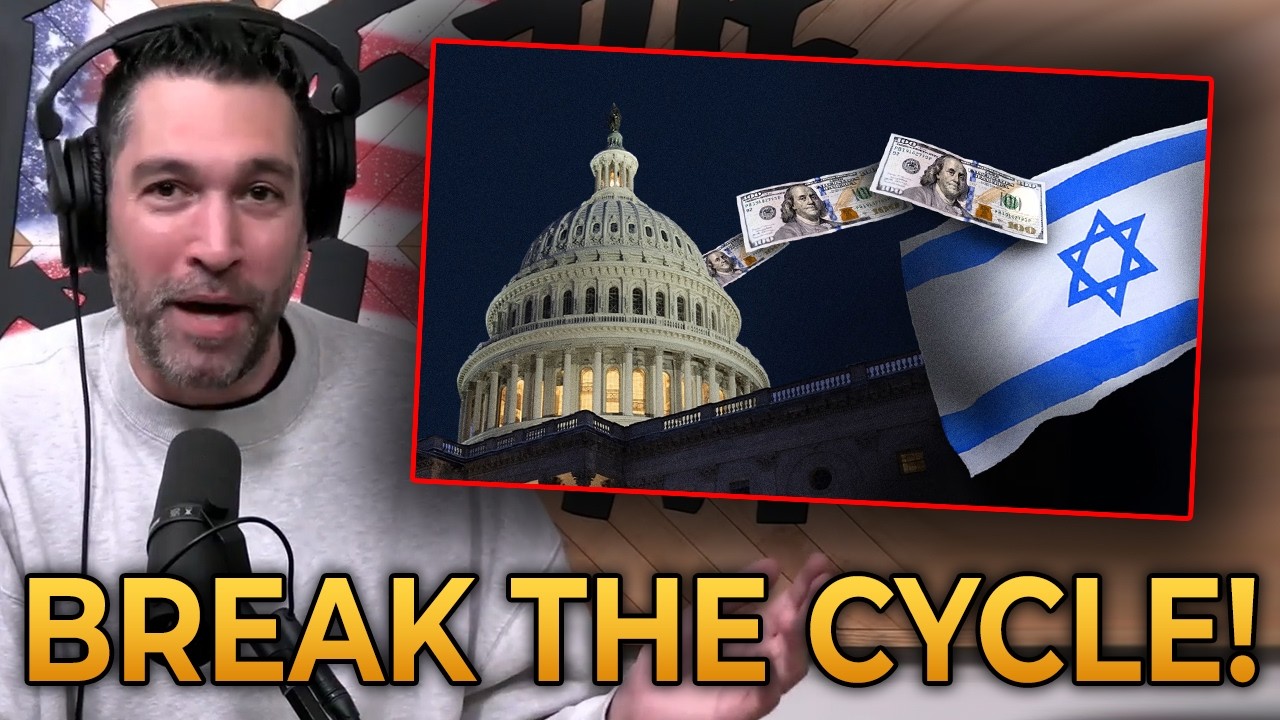
The United States is entering a political moment that doesn’t quite fit the old categories anymore. Public opinion is shifting in one direction, government policy in another, and the gap between the two is becoming impossible to ignore.
What happens when a country’s voters start thinking one way about foreign policy, but its leaders keep acting in the opposite direction?
That question sits at the center of a growing and increasingly emotional debate in American political culture—one that cuts across left and right, media and politics, war and diplomacy. And depending on where it goes next, it could reshape how Americans understand power itself.
A new kind of political fracture
For decades, American politics has been described in familiar terms: Democrat versus Republican, left versus right, progressive versus conservative. Those labels still exist, but they are increasingly inadequate for describing what is happening around foreign policy—especially when it comes to military intervention, alliances, and U.S. involvement in the Middle East.
A growing number of commentators argue that something more fundamental is emerging: a split not between parties, but between institutional policy and public sentiment.
In this framing, the public—especially younger Americans—is becoming more skeptical of military intervention abroad, long-term wars, and unconditional foreign alliances. At the same time, U.S. government policy is still widely seen as maintaining strong commitments abroad, particularly in regions like the Middle East.
This perceived disconnect is fueling a sense of political tension that doesn’t map neatly onto election cycles or party platforms.
Podcasters and political commentators like Dave Smith have argued that this gap is not only growing, but accelerating—driven in part by the rise of independent media, which allows alternative viewpoints to bypass traditional television and print gatekeepers.
Meanwhile, figures such as Ana Kasparian have highlighted how discussions once confined to fringe spaces are now entering mainstream political debate, often with intense disagreement over what the data, morality, or policy implications actually are.
The result is a political environment where consensus is harder to find—and where foreign policy has become one of the most polarizing issues in unexpected ways.
The collapse of old media control
One of the central claims made in this debate is that the traditional media ecosystem no longer has the same ability to shape public opinion.
In earlier decades, television networks, major newspapers, and a small set of political institutions played a dominant role in framing foreign policy narratives. Today, however, podcasts, YouTube channels, and social media platforms have created parallel information systems.
Commentators such as Tucker Carlson are frequently cited as examples of this shift. Once part of mainstream cable news, Carlson now operates in a largely independent media space with a large audience that exists outside traditional broadcast constraints.
Supporters of this shift argue that it has allowed for more open debate on topics that were previously difficult to question in mainstream media environments. Critics argue that it has also amplified more extreme interpretations and reduced editorial filtering.
But regardless of where one stands, there is little disagreement on the underlying reality: information is no longer centrally controlled in the way it once was.
And that matters, because foreign policy debates are particularly sensitive to narrative framing—especially when they involve war, military aid, or long-standing geopolitical alliances.
A public moving faster than institutions
One of the most striking claims made in recent discussions is that public opinion is changing faster than policy.
Polling over the past several years has shown increasing skepticism among younger Americans toward foreign military interventions. This includes wars in Iraq and Afghanistan historically, as well as broader questions about ongoing U.S. military commitments abroad.
At the same time, government policy tends to move more slowly. Institutional commitments, defense agreements, and strategic alliances are not easily reversed, even when public opinion shifts.
This creates what some analysts describe as a “temporal mismatch” between voters and policymakers: one side evolving quickly through digital discourse, the other constrained by institutional inertia.
In the conversation this article is based on, this gap is framed as historically significant—something that could define a generation of political conflict.
From partisan conflict to coalition politics
One of the most important ideas emerging from this debate is the possibility of cross-ideological coalitions.
Traditionally, American political alliances form along party lines. But on foreign policy, especially issues involving military intervention, a different pattern is emerging: left-wing anti-war activists and right-wing non-interventionists finding unexpected overlap.
This is where figures like Dave Smith often position themselves—arguing that foreign policy should not be treated as a partisan issue, but as a question of constitutional limits, public consent, and national interest.
From this perspective, disagreements over domestic policy—taxation, healthcare, regulation—are secondary to what are seen as far more consequential decisions about war and peace.
Supporters of this view argue that the most powerful political alignment in modern America may not be left versus right, but interventionist versus anti-interventionist.
Critics, however, warn that such coalitions can oversimplify complex geopolitical realities and collapse distinct issues into a single narrative.
The role of Israel and Middle East policy in the debate
A major flashpoint in these discussions is U.S. policy toward Israel and broader Middle East engagement. This topic is frequently used as a focal point in broader arguments about foreign influence, military aid, and geopolitical alignment.
In the script underlying this article, some speakers argue that U.S. policy is disproportionately influenced by strategic alliances, while public opinion is becoming more divided or critical.
Others emphasize that Israel remains a key U.S. ally in a complex and volatile region, and that policy decisions are driven by security considerations rather than ideological alignment alone.
The intensity of this debate reflects how emotionally and politically charged the issue has become in recent years, particularly as conflicts in the region receive global attention in real time through social media.
It also reflects a broader trend: foreign policy debates that once took place behind closed doors are now being contested in public forums at scale.
The language of crisis and historical turning points
One of the most notable features of this discourse is its tone. It is often framed not as incremental policy disagreement, but as historical rupture.
Phrases like “history is being made” or “a breaking point” are common. The implication is that current tensions are not temporary but structural—signaling a deeper transformation in how American democracy processes foreign policy decisions.
This style of argument is powerful because it situates political disagreement within a larger narrative of systemic change. But it also raises questions about interpretation: are these truly unprecedented shifts, or are they part of longer cycles of political disagreement over war and intervention?
Historians might point out that American foreign policy has always generated internal conflict—from Vietnam to Iraq to Afghanistan. What may be different now is not the existence of disagreement, but its visibility and speed.
The return of anti-war politics across ideological lines
Despite deep disagreements, there is one area of convergence that stands out: renewed skepticism toward war itself.
After two decades of military interventions following 9/11, public fatigue is evident across multiple demographics. This fatigue has created space for political messaging that emphasizes restraint, domestic investment, and reduced foreign entanglement.
What is new is not anti-war sentiment itself, but its distribution across ideological lines.
Where once opposition to war was primarily associated with left-wing movements, it is now also present in segments of the populist right. This cross-ideological overlap is what many commentators find politically significant.
It suggests that foreign policy may become one of the few areas where traditional partisan identity is less predictive of opinion.
The structural question: who decides foreign policy?
At the core of this entire debate is a fundamental constitutional and democratic question: who ultimately determines foreign policy in a representative system?
Is it elected officials responding to public opinion over time? Or is it institutional continuity shaped by strategic, economic, and military constraints that persist regardless of electoral change?
This tension is not new, but it is becoming more visible.
Critics of current policy argue that there is a growing disconnect between voter preferences and government action. Defenders of the system argue that foreign policy requires long-term consistency that cannot fluctuate with every shift in public sentiment.
Both positions contain elements of truth—and both face the same underlying challenge: maintaining democratic legitimacy in a rapidly changing information environment.
Conclusion: a political system under pressure
What emerges from this debate is not a single coherent conclusion, but a portrait of a political system under strain.
Public opinion is faster, more fragmented, and more skeptical of traditional authority than at any point in recent decades. Government institutions remain powerful but slower to adapt. Media ecosystems are no longer centralized, allowing competing narratives to flourish simultaneously.
Foreign policy—especially issues involving war, alliances, and military aid—has become the arena where these tensions are most visible.
Whether this leads to meaningful political realignment or simply ongoing polarization remains uncertain. But one thing is clear: the old assumptions that once structured American political debate are no longer stable.
And as that instability grows, so too does the intensity of the arguments surrounding it.
The only question left is whether this moment represents a correction—or a rupture.