The Most Terrifying Videos from Around the World
The Most Terrifying Videos from Around the World
Deep within the digitized static of a home security feed from San Marcos, Texas, a grainy shape drifts silently across a darkened living room. To the human eye, watching retrospectively on a smartphone screen, the anomaly is ambiguous—a translucent smear of light easily written off as a lens flare or an insect crawling over a cheap infrared sensor. But on the floor below, the homeowner’s pets react instantly, their bodies stiffening, eyes locked onto the empty air with an evolutionary terror that cannot be faked.
This fleeting digital moment represents the baseline of a massive, borderless shift in how humanity interacts with the unknown. We have moved past the era of grainy, mid-century photographs and highly produced cable television specials; today, paranormal folklore is being written, curated, and consumed in seconds-long bursts across algorithmic feeds. From the disquieting echoes of phantom dogs in American veterinary clinics to the hyper-stylized horror shorts of European TikTok creators, our screens are saturated with a new kind of digital ghost story. This modern phenomenon blends authentic human panic, sophisticated artificial intelligence, and deep-seated cultural anxieties into a seamless, endless scroll—transforming the ancient campfire tale into a viral commodity that challenges our perception of reality.
The Ghost in the Security Feed: Suburbia’s Digital Sentinels
For generations, the haunted house was defined by its architecture: creaking Victorian floorboards, neglected gothic manses, and isolated rural estates with dark histories. Today, however, the most prominent setting for paranormal activity is the aggressively mundane American suburb, documented not by intrepid investigators but by the automated security systems designed to keep the outside world at bay.
The incident in San Marcos, Texas, captured in the spring of 2025, perfectly illustrates this transition. Home surveillance cameras, equipped with motion-activated sensors and low-light infrared capabilities, operate as digital sentinels. They are programmed to detect anomalies—usually a package delivery, a stray neighborhood cat, or a potential intruder. But when these cameras trigger in the dead of night, recording translucent humanoids that glide through locked living spaces, they subvert their original purpose. Instead of providing security, they introduce an ambient, domestic dread.
When these clips are uploaded to platforms like TikTok or Reddit, they trigger a predictable binary debate. Skeptics point to the technical limitations of consumer-grade hardware. Cheap digital sensors utilizing night-vision modes frequently suffer from “ghosting”—a visual artifact caused by slow shutter speeds and aggressive video compression, where a flesh-and-blood resident walking to the kitchen for a glass of water is rendered as a terrifying, transparent specter.
Yet, what keeps these videos in the cultural bloodstream is rarely the visual evidence alone; it is the behavioral reaction of domestic animals caught in the frame. Dogs growling at empty corners, cats tracking unseen entities across ceilings—these elements introduce a biological variable that data compression algorithms cannot easily explain. For an audience increasingly detached from the natural world, the instinctual terror of a household pet serves as a powerful validation of the unseen, anchoring a flawed digital recording to a visceral, ancient reality.
Phantom Echoes and the Architecture of Anxiety
The suburban living room is not the only mundane space transformed by modern digital folklore. Public and commercial spaces, particularly those associated with transition, stress, and vulnerability, have become breeding grounds for viral hauntings. Consider the modern veterinary clinic—a space defined by clean surfaces, fluorescent lighting, and a constant undercurrent of emotional anxiety.
In one widely circulated series of videos documented by a clinic owner in the United States, automated cameras repeatedly captured acoustic and physical anomalies in empty rooms. The most chilling segment involved the distinct, unmistakable sounds of a dog barking and whimpering in distress, emanating from an isolation ward. When staff rushed to investigate, they found the room empty of human personnel, and the few animals currently boarded there completely silent, resting undisturbed in their kennels.
Acoustic Anomaly Log - Veterinary Isolation Ward:
- Primary Audio: High-frequency canine vocalization (distress pattern).
- Secondary Verification: Immediate physical inspection by on-duty staff.
- On-Site Status: Four feline/canine patients present; zero vocalization observed.
In an environment where life and death are routinely navigated, the concept of an acoustic residue—a phantom echo of an animal that previously passed away in the clinic—resonates deeply with the public. It taps into a broader, collective grief and the human desire to believe that consciousness, whether human or animal, leaves a permanent footprint on the physical environment.
The virality of these videos relies heavily on their presentation. Unlike classic horror films that use sweeping orchestral scores to signal danger, these clips feature the flat, compressed audio of a workspace: the hum of fluorescent lights, the distant chatter of employees, and the sudden, shocking intrusion of the inexplicable. The lack of cinematic production value acts as a shorthand for authenticity, convincing the viewer that they are catching a rare, unedited glimpse into the fractures of our reality.
The AI Horizon and the Death of Digital Trust
As the digital landscape evolves, the line between an authentic, unexplained recording and a calculated digital fabrication has grown dangerously thin. The democratization of high-powered visual tools has introduced an era of unprecedented skepticism, where even the most jaw-dropping supernatural encounters are met with immediate, cynical dismissal.
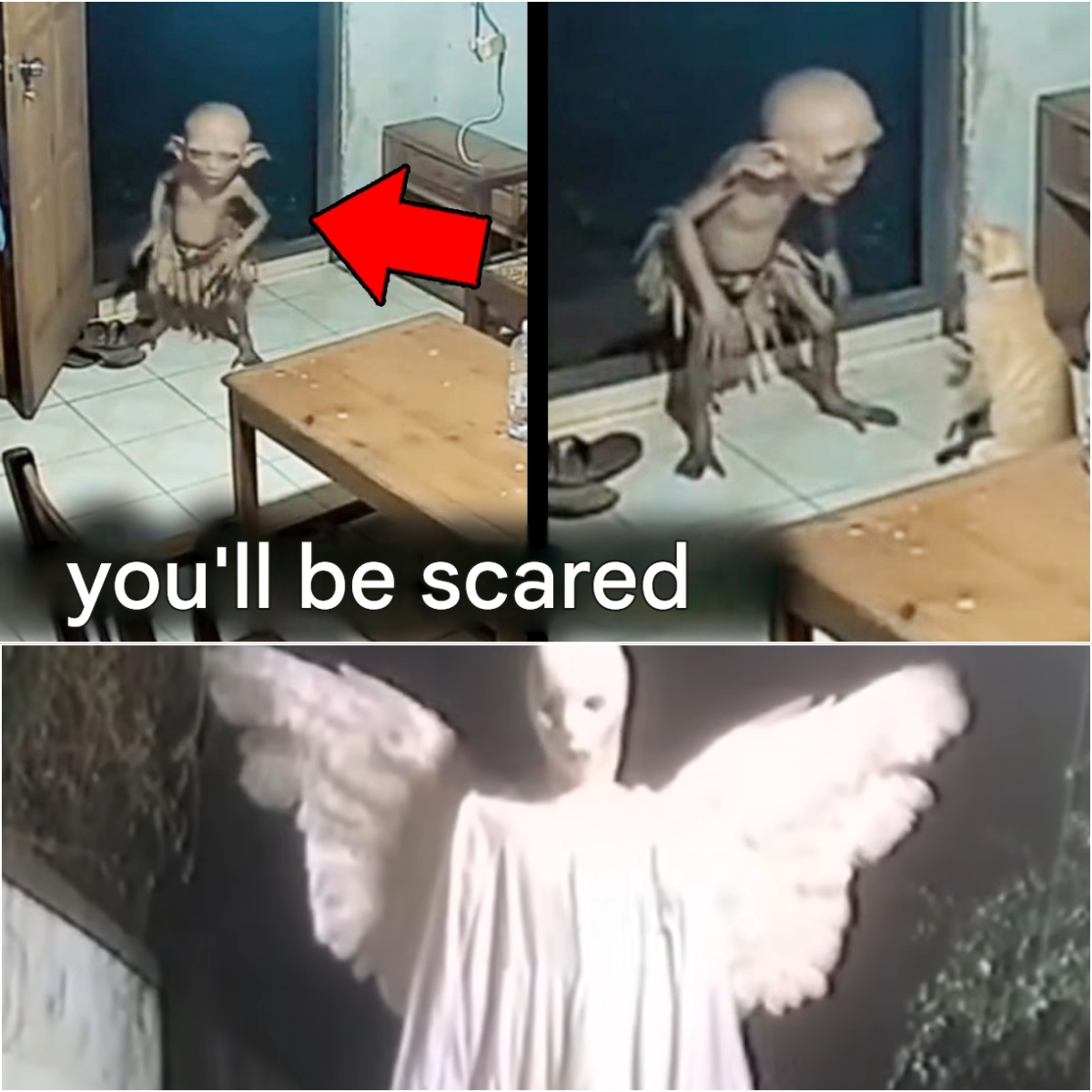
A stark example of this played out recently when a video surfaced online, allegedly retrieved from an abandoned, fluid-stained video camera found on an American street. The footage, lasting only a few seconds, showed a chaotic sequence that culminated in a close-up of a pale, leering, winged humanoid entity before abruptly cutting to static. Within hours of hitting the internet, the video generated thousands of panicked theories about cryptids and government cover-ups.
However, the digital community’s collective detective work quickly dismantled the narrative. The creator was unmasked, forcing an admission that the entire sequence was generated using advanced neural networks and generative AI video tools. What once required a Hollywood special effects budget can now be rendered on a mid-tier home computer in an afternoon.
This shift has profound implications for modern folklore. We have reached a point where seeing is no longer believing. A generation ago, a video of a cat physically tussling with an invisible, shifting force or an entity descending a staircase would have been scrutinized by film experts for wires and editing splices. Today, the immediate assumption is much simpler: it is an AI generation or a sophisticated filter.
Paradoxically, this hyper-skepticism has not killed the internet’s love for the paranormal; it has merely changed the rules of engagement. Audiences now consume these videos with a dual mindset, appreciating the craft of a “digital creepypasta” while remaining fully aware of its artificial nature. The thrill is no longer found in the absolute certainty of the supernatural, but in the delicious, temporary suspension of disbelief.
Global Paranoia and Regional Monsters
While American suburbia dominates a massive portion of the viral marketplace, the phenomenon is inherently global, adapting itself seamlessly to the unique cultural anxieties of different regions. The short-form format allows urban legends to travel across borders at lightning speed, creating a cross-pollination of international horror.
In Mexico City, a brief, terrifying security clip caught an ambiguous, flying mass drifting just above street level between concrete apartment blocks. The video immediately fractured the local digital community into historical and modern factions. Older commentators saw the footage through the lens of traditional urban legends, invoking stories of local witches or atmospheric entities that have haunted the valley of Mexico for centuries. Younger viewers, by contrast, analyzed the clip for video compression errors, pixelation artifacts, and drone silhouettes.
Meanwhile, in the high-density urban corridors of Indonesia, a late-night video captured by a citizen in Jakarta showed a pale, humanoid shape being pulled from a stagnant drainage canal. The wet, claustrophobic setting of an underground concrete sewer system provided the perfect psychological backdrop for a modern monster story. In crowded megacities, where millions of people live stacked on top of one another, the idea that something ancient and predatory is adapting to live within the literal waste of human civilization is a recurring, deeply uncomfortable theme.
Incident Location
Media Source
Visual/Acoustic Anomaly
Cultural/Technical Explanation
San Marcos, TX
Home Security Camera
Translucent figure moving through a living room; strong reaction from pets.
Low-light camera ghosting vs. genuine paranormal manifestation.
United States
Commercial CCTV
Disembodied canine crying in an empty veterinary ward.
Acoustic resonance, ambient audio bleed, or residual haunting.
Ohio Wilderness
Smartphone Video
A massive, dark silhouette moving rapidly above a 6-meter tree line.
Local cryptid folklore (Bigfoot/Reak) vs. digital scale manipulation.
France
TikTok Broadcast
Domestic furniture and objects displacing themselves on camera.
Poltergeist activity vs. coordinated monetization string-work.
Jakarta, Indonesia
Mobile Phone
A pale, reptilian humanoid extracted from an urban drainage network.
Subterranean adaptation mythologies vs. elaborate practical hoax.
These regional variations show that while the technology used to capture the strange remains uniform—smartphones and security lenses—the monsters themselves are deeply tied to local geography and history. The algorithm acts as a global equalizer, allowing a viewer in Chicago to experience the specific, localized dread of a Jakarta alleyway or a Parisian apartment, expanding the boundaries of our collective imagination.
The Monopolization of Dread: The Creator as a Character
One of the most significant departures from traditional folklore in the digital age is the serialization of the haunting. In the past, a ghost story was a self-contained narrative with a beginning, middle, and end. Today, on platforms like TikTok and YouTube, a haunting is presented as an ongoing, episodic reality television show where the uploader is both the victim and the protagonist.
The ongoing saga of a French creator named Rosana serves as a prime case study for this new narrative framework. For months, she has documented an escalating series of terrifying events within her apartment: doors slamming on command, objects violently flying off tables, and disembodied whispers cutting through her broadcasts. The situation grew so intense that she publicly documented the process of moving her children out of the home for their own protection, while she remained behind to continue recording.
This episodic structure creates an intense, parasocial relationship between the creator and the audience. Viewers check in daily, not just to see a scary video, but to check on the well-being of a real person navigating a prolonged supernatural siege. Every video is dissected for clues; comments sections turn into massive, decentralized think tanks offering advice on home blessings, structural integrity, and psychological health.
Suburban Domestic Disruption Metrics:
- Frequency of Anomalies: Escals from monthly to near-daily intervals.
- Narrative Pivot: Transition from simple observation to an active, hostile confrontation.
- Audience Dynamic: Massive engagement driven by ongoing safety concerns for the uploader.
However, this format introduces an intense commercial pressure. In the attention economy of modern social media, viewership equals revenue. A creator whose apartment suddenly stops being haunted faces a sharp decline in relevance and income. This reality casts a long shadow of doubt over even the most convincing long-form accounts. The incentive to escalate the activity—moving from a door gently swinging open to a kitchen chair flying across a room—is incredibly high. The modern ghost hunter is no longer just an observer of the unknown; they are a content creator under a strict deadline to deliver the spectacular.
The Permanent Hunger for the Unknown
Ultimately, the endless stream of paranormal videos flooding our digital feeds tells us far less about the spirit world than it does about our own current cultural landscape. We are living in an era of unprecedented mapping, surveillance, and data collection. Satellite imagery can pinpoint almost any location on the globe in high definition; algorithms predict our purchasing habits before we are even fully aware of them; and our daily lives are increasingly hemmed in by the predictable, safe routines of a technological society.
In this hyper-rationalized world, the viral ghost video functions as an essential psychological safety valve. It represents a collective, subconscious refusal to accept that the world has been entirely figured out. Whether it is a giant, fast-moving shadow cutting through the canopy of an Ohio forest or a toy in a child’s bedroom moving its plastic hand to point directly at a terrified mother, these clips provide a thrilling reminder that mystery still exists.
They offer a modern confirmation of the ancient human suspicion that there are things operating just beyond the narrow bandwidth of our daily perception. For a few seconds at a time, on a tiny screen held in the palm of a hand, a poorly lit security video can dissolve the certainty of the modern world, leaving millions of viewers staring into the dark, waiting for the next upload, and wondering if we are truly as alone as we think.