Unexplained Things That Cameras Proved Are Real!
Unexplained Things That Cameras Proved Are Real!
The promises of the digital panopticon were supposed to be absolute: total clarity, undeniable evidence, and the systematic elimination of the unknown. Yet, as high-definition security feeds, doorbell lenses, and automotive dashcams blanket the modern landscape, they have inadvertently catalyzed a profound cultural paradox. Instead of rendering the world completely legible, our omnipresent lenses are capturing a relentless stream of visual anomalies—translucent silhouettes, inexplicable mechanical shifts, and human behaviors so bizarre they border on the preternatural. Rather than killing the ghost story, the surveillance state has merely provided it with an industrialized framework, transforming low-light artifacts and algorithmic glitches into a new genre of digitized folklore that deeply unsettlingly grips the American imagination.
The Phantom in the Masonic Yard
To understand the emotional and cultural weight of these modern digital apparitions, one must look to the high-desert community of Las Cruces, New Mexico. In 2018, the city was struck by the tragic loss of Faviola Rodriguez, a two-year-old child who died under deeply suspicious circumstances while in the custody of her mother’s boyfriend. While the slow gears of the judicial system eventually ground toward a conviction years later, the grieving family faced a more immediate, localized torment: the elaborate toys, personal trinkets, and traditional mementos left at Faviola’s resting place within the historic Masonic Cemetery were systematically vanishing.
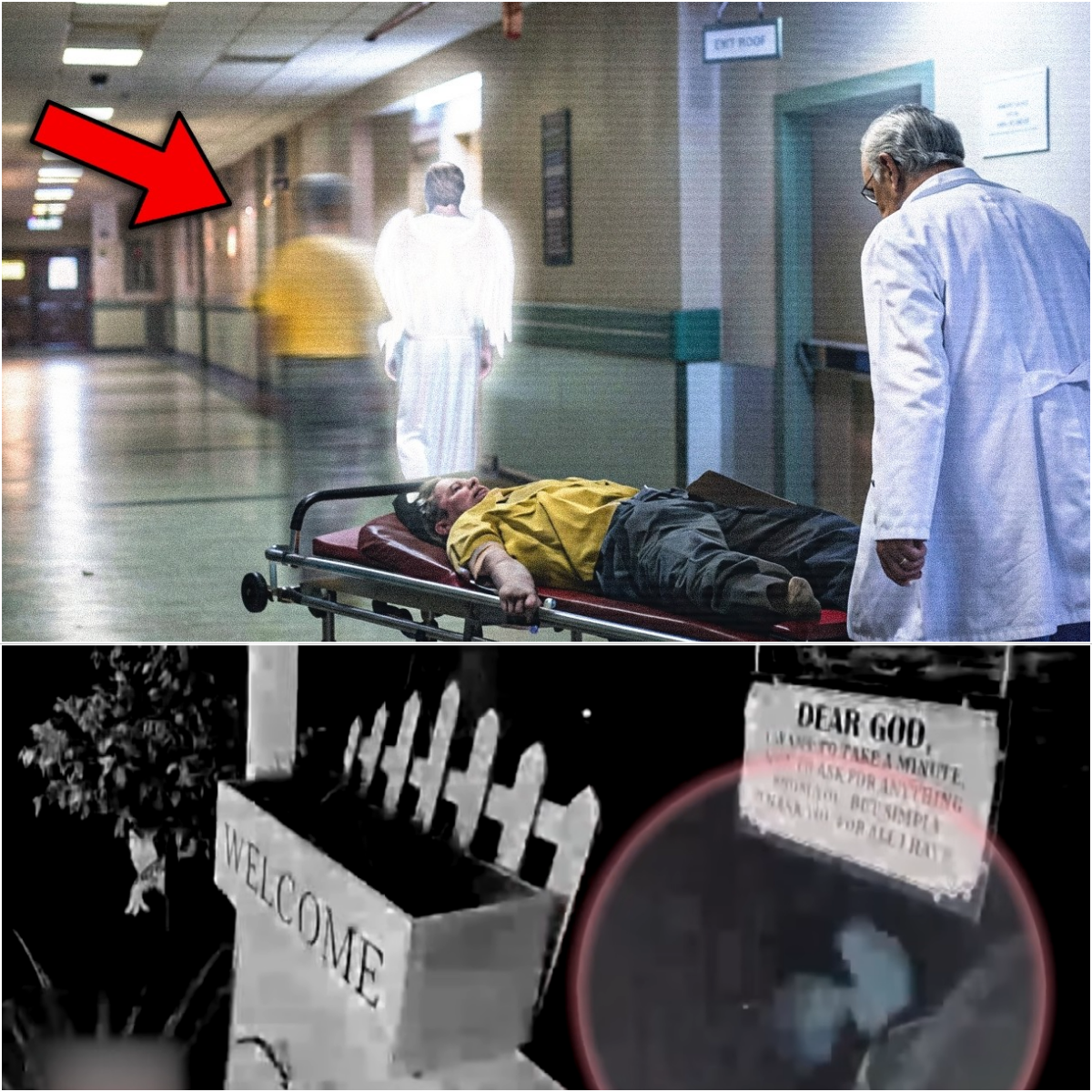
Desperate for answers, the family found an unexpected resource through a neighboring plot. Another local family, dealing with persistent vandalism at the grave of their deceased son and suspecting that a violent culprit remained at large, had installed a rugged, motion-activated surveillance camera hidden within the nearby foliage. When the recordings from the dead of night were carefully reviewed, the footage did not reveal a common thief or a petty vandal. Instead, the frame captured the distinct, isolated figure of a remarkably small child, walking completely unescorted through the rows of stone monuments in the pitch black.
When cemetery administrators were shown the low-light footage, several workers visibly recoiled, claiming to recognize the unique gait and proportions of the child, leading the investigators directly back to the Rodriguez plot. For the mother, Saundra Rodriguez, the grainy, pixelated loop offered immediate, tearful confirmation. In the final sequence of the viral recording, the small silhouette appears to stall, standing alongside a noticeably taller, faint shape near the young man’s neighboring grave. In a community fractured by unresolved grief, the video was quickly interpreted not as a technical failure of the camera’s sensor, but as a tender, protective visitation—a child offering comfort to a fellow restless soul before both slipped past the camera’s infrared boundary.
The Veracity of the Child’s Eye
The psychological tension between parental grief and digital documentation repeats across the American landscape, shifting from the deserts of the Southwest to the rolling hills of Virginia. There, a family visit to a local cemetery by resident Kiona Walker resulted in a brief smartphone recording that continues to polarize behavioral psychologists and paranormal enthusiasts across the internet.
Walker had gathered her family to pay respects at a communal plot containing the remains of her parents and her sister. During the quiet afternoon visit, she began filming her three-year-old niece, Liona, who was playing near the family headstones. The nature of the video shifted abruptly when the toddler ceased her play, her gaze locking onto a specific, completely vacant pocket of air directly above the grass. The child did not merely stare; she began a complex series of precise physical interactions, nodding responsively, gesturing toward the engraved family names, and tilting her face upward at a distinct angle—perfectly mimicking the physical compression of receiving a soft kiss on the cheek.
THE COGNITIVE BIFURCATION OF INFANT INTERACTION
--------------------------------------------------
[The Analytical Paradigm] ---> Elaborate imaginative play /
                               Developmental object permanence simulation
[The Folkloric Paradigm]   ---> Unfiltered sensory reception /
                               Antediluvian spiritual recognition
When the footage was uploaded to social platforms, it quickly accumulated millions of views, generating a sharp divide in the commentary. For a large segment of the public, the video reinforced a long-standing folkloric belief that early childhood possesses an unfiltered sensory vulnerability, allowing infants to perceive ancestral presence long after adults have become structurally blind to it.
Conversely, developmental specialists note that three-year-olds possess highly volatile, deeply complex imaginative capacities, often staging elaborate internal narratives to process the heavy, somber emotional cues modeled by the adults surrounding them in a graveyard. Yet, the enduring power of the clip lies entirely in its ambiguity; the camera documents the child’s absolute sincerity, leaving the viewer to decide whether the lens caught a glimpse of a psychological coping mechanism or a genuine breach in the curtain of mortality.
The Translucent Hitchhiker of Route 87
While cemeteries provide a traditional backdrop for the uncanny, the modern American highway system has generated its own distinct, clinical brand of tech-driven isolation. On March 11, 2023, along State Route 87—a long, dark stretch of asphalt carving its way between Phoenix and Payson, Arizona—commercial truck driver William Church was navigating his rig through the early morning hours.
At approximately 2:30 a.m., as the truck cleared a desolate interior bend, Church’s driver-facing safety camera and forward dashcam registered a stark anomaly. Standing directly on the narrow, unlit shoulder of the highway was a tall, vertical figure. Reacting to a primitive defensive instinct, Church nudged his heavy vehicle toward the center lane to avoid what he initially assumed was a stranded motorist or a pedestrian walking dangerously close to high-speed traffic.
OPTICAL PROFILE: ARIZONA ROUTE 87 ANOMALY
--------------------------------------------------
Time stamp: 02:34:12 AM MST
Luminance Index: High-intensity localized phosphorescence
Structural Integrity: Non-solid upper torso / High-transparency gradient
Alternative Diagnosis: Retroreflective sign-post bloom / Digital artifacting
The passenger in the cab, Erika Lake, who had just finished her driving shift, caught a fleeting glimpse of the form as they roared past. When the couple later isolated the digital file at a highway truck stop, the high-definition loop revealed a shape that defied conventional physics. The entity possessed a clear, upright human posture, yet its upper torso and facial features remained entirely unresolved, presenting a distinct, shimmering translucency that allowed the distant desert scrub and highway reflectors to be seen directly through its body.
The Route 87 video immediately embedded itself within the rich history of the “vanishing hitchhiker” mythos, updated specifically for the era of corporate fleet surveillance. Skeptics and digital forensic analysts have argued that the figure is a textbook example of retroreflective bloom—a phenomenon where high-intensity LED headlights strike a weathered, out-of-angle traffic sign or a strip of discarded construction material, bouncing a distorted beam back into the camera’s sensor that the internal compression algorithm struggles to process. For long-haul drivers who frequent these isolated corridors, however, the video remains a chilling modern validation of the ancient suspicion that certain highways retain the structural echoes of those who lost their lives along the asphalt.
The Lens Flare of Ascension
The intersection of sudden human tragedy and photographic anomaly found an even more dramatic manifestation in an image captured along a rural Georgia highway in April 2017. A catastrophic head-on collision between a commercial truck and a passenger vehicle resulted in the immediate deaths of 23-year-old Hannah Simmons, her nine-month-old daughter Alana, and her close friend Lauren Buteau.
Shortly after the impact, a local student named Anisa Ganon was commuting along the same route when her vehicle was halted by regional emergency vehicles blocking the lanes. Intending merely to provide her employer with verifiable proof of the traffic delay, Ganon raised her smartphone and took a single, wide photograph of the distant, flashing emergency lights surrounding the wreckage. At the moment she took the picture, she was completely unaware of the fatalities and noticed nothing unusual through the screen.
OPTICAL ANALYSIS: THE GAINESVILLE HIGHWAY LIGHT SHAFT
--------------------------------------------------
Source: Upper right quadrant solar placement
Mechanism: Internal lens barrel reflection (Prismatic scattering)
Visual Path: Linear descent intersecting target wreckage zone
Cultural Impact: Immediate transformation from data to sacred artifact
It was only later, when reviewing the photograph with family members, that a striking visual element emerged. Cutting directly through the dark canopy of overhead trees was a brilliant, sharply defined beam of golden light that appeared to descend from the sky and illuminate the precise coordinates of the destroyed vehicle. Within the beam, subtle variations in atmospheric dust created faint, ascending patterns that the victims’ families immediately identified as a physical manifestation of souls departing the scene.
From a clinical optical standpoint, the image is a classic demonstration of a severe lens flare. When a high-intensity light source—such as the afternoon sun or a powerful emergency strobe—strikes a smartphone’s multi-layered plastic lens array at a specific diagonal angle, the internal light bounces between the internal elements of the camera barrel, creating a linear, luminous artifact that projects directly across the final image.
Yet, when this technical explanation was presented to the grieving families, it was gently but firmly discarded. For them, the mechanical explanation of the camera lens was secondary to the cosmic timing of the anomaly. The image ceased to be a mere file; it became a sacred modern artifact, illustrating how a technological glitch can provide profound, life-altering comfort to those confronting the sudden, brutal reality of mortality.
The Compton Biological Enigma
As surveillance equipment migrates from commercial highways into the dense residential neighborhoods of Southern California, the nature of these digital mysteries frequently shifts from the spiritual to the biological and extraterrestrial. In the industrial suburb of Compton, California, resident Jessica Ortiz was awakened at 1:00 a.m. by a persistent series of motion alerts generated by her high-definition porch security system.
When she opened the live video feed on her smartphone, she was confronted with a figure moving deliberately across her enclosed concrete courtyard. The video captured a distinct, low-slung entity measuring between three and four feet in height. The creature possessed a starkly elongated, bulbous cranium, a minimal neck structure, and an asymmetrical posture that immediately mirrored the classic “grey alien” archetypes popularized by twentieth-century science fiction cinema.
The Compton footage quickly became a primary exhibit for international forensic investigators and video analysts. Scott Roder, a well-known forensic video expert who has testified in high-profile criminal trials, subjected the raw digital file to rigorous frame-by-frame analysis. His formal conclusion startled the community: the video bore no structural signs of digital manipulation, CGI overlay, or post-production editing, confirming that a physical entity of unusual proportions had indeed traversed the courtyard.
FORENSIC METRIC BREAKDOWN: COMPTON ENCOUNTER
--------------------------------------------------
Estimated Stature: 90 - 120 Centimeters (3.0 - 4.0 Feet)
Morphology: Macro-cranial extension / Brachial asymmetry
Authenticity Rating: High (Verified by forensic video analysis)
Competing Hypothesis: Nocturnal urban wildlife with severe mange
Predictably, the alternative explanations from digital skeptics like video analyst Conor McCourt were far more grounded in urban reality. McCourt demonstrated that a small stray dog, a raccoon, or a feral cat suffering from an advanced case of sarcoptic mange—which strips an animal of its fur and alters its visual silhouette—can appear radically distorted when walking close to a low-cost security camera lens.
When combined with the intense distortion of infrared night-vision mode, which exaggerates highlights and flattens depth perception, an ordinary animal carrying a discarded plastic bag or a piece of cloth can be transformed by the camera’s automated processing unit into a terrifying, alien visitor. The Compton clip highlights the double-edged sword of modern home security: the technology meant to reassure us can easily turn our front yards into scenes of cosmic body horror.
The Invisible Tug-of-War
The domestic space becomes even more intensely charged when the anomaly involves not an external intruder, but the vulnerable interior of a family kitchen. A viral domestic video uploaded by an ordinary homemaker known online as Rose captured a routine afternoon with her young daughter that quickly deteriorated into a baffling display of unexplained physical force.
The video begins with the young girl standing completely alone in the center of a brightly lit kitchen, casually holding a small plastic container and a colorful toy box. The child’s demeanor changes instantly as she freezes, her eyes locking onto an empty space directly in front of her. The camera documents her engaging in a clear, audible conversation, repeating the word “yes” several times while lifting her toys upward as if presenting them to an unseen playmate.
KINETIC FORCE MOMENTUM: KITCHEN VIDEO
--------------------------------------------------
Observation: Rigid muscle contraction in child's forearms
Movement: Directional displacement away from center mass
Vector: Inversion of balance matching an external tensile strain
What occurs next cannot be easily explained by imaginative play. The child’s arms are suddenly jerked forward with significant kinetic force. The video captures the girl visibly straining, her small boots sliding across the linoleum floor as she enters into a literal tug-of-war with an invisible entity trying to wrench the toy box from her grip. Her muscles tense, her center of gravity shifts backward, and she aggressively pulls her upper body away from the empty space to retain ownership of the object.
Paranormal researchers who analyzed the footage noted the highly consistent muscle contraction in the child’s forearms and shoulders, arguing that it would be extraordinarily difficult for a toddler to consciously fake that specific physical resistance without an actual external tensile strain acting upon the object. When the mother later questioned the child, the girl matter-of-factly stated that she was simply interacting with a “little boy and a little girl” who lived within the walls of the house.
While stage parents and sophisticated digital editors have occasionally manufactured such videos using fine monofilament fishing lines that remain invisible to low-resolution camera sensors, the raw, unedited panic in the domestic setting continues to trouble viewers who worry that our homes may contain structural residents our eyes cannot see, but our children can feel.
The Garage Angel of Michigan
In contrast to the adversarial nature of the invisible tug-of-war, a video captured by a civic leader in Michigan provided a community with a profoundly reassuring, if highly debated, spiritual symbol. Glenn Thorman, the fire chief of a small Michigan township, received an automated midnight security alert from a camera monitoring his residential driveway and detached garage.
Upon accessing the sequence of static images captured by the motion-detecting system, Thorman and his wife discovered a large, highly luminous, winged silhouette hovering directly over the cab of his parked commercial truck. In the successive frames, the brilliant form appeared to unfold its structure, shifting its position elegantly across the driveway before rising vertically out of the camera’s field of view.
PHOTOMETRIC ANALYTICS: THE GARAGE SHAPE
--------------------------------------------------
Luminous Intensity: Out-of-bounds lux reading on home sensor
Form Factor: Bi-lateral wing-like extensions
Technical Explanation: Near-field insect wing-beat synchronization
Scriptural Reception: Immediate classification as a guardian entity
The story rapidly migrated from local church bulletins to national news networks, drawing commentary from prominent theological authors like Don Piper, who noted that the visual shape precisely matched the cross-cultural iconographic memory of guardian entities. The fire chief’s public position lent significant credibility to the account, reassuring a community looking for signs of divine protection in an increasingly chaotic world.
The engineering explanation offered by camera manufacturers, however, was far less transcendent. When a common nocturnal insect—such as a moth or a flying beetle—flies within millimeters of a security camera’s lens while the infrared illuminators are fully active, the insect’s wings reflect an immense amount of light directly back into the sensor.
If the insect’s wing-beat frequency synchronizes with the camera’s frame rate, the automated software cannot resolve the individual insect, instead stitching the blurred path of movement into a large, shimmering, winged entity that appears to hover like an angel over distant objects. The Michigan video perfectly illustrates how the internal math of a low-cost security camera can accidentally generate a modern miracle from the flight of a common bug.
The Mechanical Turn of Nebsenu
While domestic security cameras generate accidental folklore, a controlled museum setting in England provided a bizarre demonstration of physical movement that baffled world-class curators and structural engineers for months. Within the secure, high-security galleries of the Manchester Museum, a small, ancient Egyptian statuette began to exhibit an impossible autonomous motion.
The artifact, a 10-inch stone figure known as Nebsenu dating back to 1800 B.C., had been safely housed inside a locked, heavy glass vitrine for over eighty years without moving a millimeter. Yet, in 2013, curators noticed that the statue was consistently out of alignment. To solve the mystery, the museum installed a dedicated time-lapse camera to monitor the display case continuously over a 24-hour cycle.
The resulting video sequence, compressed from eleven hours of continuous recording, revealed a deeply unsettling sight: during the day, while visitors traversed the gallery, the ancient stone figure began to spin slowly, smoothly, and deliberately on its axis, completing a near-perfect 180-degree rotation until its back was turned completely to the public. Strikingly, the movement ceased entirely at night when the museum was locked and vacant.
ROTATIONAL KINETICS: THE NEBSENU STATUETTE
--------------------------------------------------
Artifact Age: ~3,800 Years (Funerary provision)
Material Composition: High-density steatite (Soapstone)
Rotational Velocity: Variable (0.015 RPM during peak foot traffic)
Primary Variable: Differential friction coefficient vs. plate glass shelf
While internet forums immediately resurrected legends of pharaonic curses and restless funerary spirits demanding their privacy, a team of structural physicists offered a elegant, materialist solution. The base of the statuette was slightly convex and made of a hard steatite stone, which sat upon a modern, highly polished plate-glass shelf.
When hundreds of tourists walked through the adjacent galleries, their footsteps created subtle, low-frequency acoustic vibrations that traveled up through the building’s concrete foundations and into the glass display cases. The irregular base of the statue acted as a physical transformer, converting these microscopic, imperceptible vibrations into a slow, unidirectional rotational movement.
The mystery was solved by science, yet a lingering question remained among the staff: why had the statue remained completely stationary for nearly a century before suddenly beginning its slow, silent spin? The case remains a classic example of how a slight modification in a building’s acoustic environment can suddenly awaken an ancient object, turning a museum shelf into a mechanical stage for the uncanny.
The Child Behind the Mortician’s Back
The psychological dread of the cemetery returns with a more clinical, claustrophobic intensity in a surveillance video recorded inside an undisclosed American funeral home in March 2019. The facility’s internal security camera, positioned to monitor a formal viewing chapel, captured an event that continues to trouble professional mortuary workers.
The video begins in the dead of night, documenting a small boy dressed entirely in formal white clothing materializing within the center of the chapel. The child wanders casually between the rows of heavy viewing chairs, occasionally hopping or gesturing as if engaged in a solitary childhood game within the solemn room.
The security officer on duty, alerted by an unexpected auditory spike on the facility’s intercom system, enters the chapel with a heavy flashlight to conduct a manual sweep. As the officer paces through the room, checking the windows and the locks, the video shows the small child standing directly behind his back, moving fluidly within his blind spot. Despite his active search, the officer senses absolutely nothing, his flashlight beam cutting clean through the space where the digital camera registers a solid, physical child.
SURVEILLANCE RENDERING vs. HUMAN VISION
--------------------------------------------------
[Camera Sensor Matrix] ---> Registers light across the near-infrared spectrum
[Human Retinal Matrix] ---> Constrained strictly to the visible light spectrum
Result: Complete physical invisibility to the naked eye during low-light sweeps
Adding to the complexity of the footage, numerous bright, floating points of light—traditionally labeled “orbs” by paranormal investigators—can be seen swarming around the child’s perimeter before the figure walks directly into a solid interior wall and vanishes from the video feed.
While video production specialists have demonstrated that the clip could easily be manufactured using a simple double-exposure or digital overlay technique common in entry-level editing software, the video retains a potent psychological grip on the public. It taps into our deepest anxieties about the spaces where we prepare our dead, suggesting that the cameras we use to guard these institutions are seeing a completely different reality than the human eye can register.
The Highway Apparition of Uruaçu
The migration of these digital ghost stories across international borders demonstrates the universal nature of tech-driven folklore. On the night of October 22, 2025, along the darkened corridor of highway GO-237 near Uruaçu, in the northern region of Goiás, Brazil, a young couple experienced an encounter that would quickly dominate South American social networks.
As their vehicle cruised past the exterior walls of the Jardim das Oliveiras (Garden of the Olives) cemetery, the driver illuminated a figure walking slowly along the unlit dirt shoulder. Standing on the roadside was a lone woman, dressed in a long, flowing white bridal gown, walking completely barefoot through the gravel. Her dense, dark hair fell forward in an unbroken sheet, completely obscuring her facial features from identification.
Sensing the extreme danger of the situation, the couple pulled onto the shoulder several hundred yards ahead and raised a smartphone to record the woman’s progress from a safe distance. The sequence was brief and chaotic; within seconds of entering the camera’s frame, the woman appeared to dissolve into the dark tree line bordering the graveyard.
THE FOLKLORIC LANDSCAPE: THE NOIVA DE URUAÇU
--------------------------------------------------
Location: Highway GO-237 (Adjacent to Jardim das Oliveiras)
Visual Markers: Long white gown / Faceless cranial presentation
Internet Consensus: Classic urban hitchhiker legend adaptation
Skeptical Metric: Verified structural shadow cast by headlights
When the video was broadcast by regional news outlets, it immediately triggered intense debates. While traditionalists rushed to link the apparition to regional urban legends of tragic brides killed on their way to the altar, secular internet users attempted to dismantle the mystery using simple visual data, pointing out that the woman cast a distinct, solid shadow on the ground as the vehicle’s headlights struck her—an anatomical reality that rules out a non-physical specter.
The “Noiva de Uruaçu” serves as a textbook example of how a very real, potentially troubled human being, walking an isolated road for reasons known only to herself, can be instantly converted by the mechanics of viral social media into a supernatural internet phenomenon.
The Submarine Terror of the North Atlantic
While highways and front porches represent the terrestrial boundaries of our surveillance state, the ocean depths offer a vast, terrifying canvas for digital anomalies that challenge our understanding of evolutionary biology. A highly controversial video sequence, originally broadcast during an aggressive television special on the Animal Planet network, continues to circulate across oceanographic and cryptid forums.
The footage was reportedly captured during a deep-sea research expedition in the cold, unforgiving waters of the North Atlantic. A small, manned research submersible was operating near the ocean floor when its external structural cameras recorded a violent kinetic impact.
The primary camera, capturing the wide expanse of water beyond the vessel’s thick acrylic viewport, documents a massive, sleek silhouette emerging from the blackness with terrifying speed. The second camera, angled to monitor the submersible’s mechanical arm, captures the entity slamming a webbed, human-like hand directly against the glass before twisting its body and vanishing into the abyss.
DEEP-SEA ACOUSTIC RECONSTRUCTION
--------------------------------------------------
Depth Metric: Twilight Zone (~1,200 Meters)
Visual Contact: Webbed manual extremity with distinct phalangeal bones
Interpretive Tension: Evolutionary aquatic primate vs. high-budget CGI hoax
The television broadcast featured interviews with scientific consultants who noted that the creature’s structural morphology suggested a highly advanced, predatory aquatic organism that possessed an intelligent, inquisitive gaze. The video triggered a massive wave of public fascination, prompting thousands to wonder if the deep trenches of our oceans contain an alternate branch of intelligent hominid evolution that has remained completely insulated from the surface world.
However, the reality behind the video was eventually revealed to be an elaborate corporate media experiment. The network had engineered a highly sophisticated mockumentary, utilizing top-tier Hollywood CGI artists and professional visual effects to manufacture a modern myth for television ratings. Despite formal admissions that the footage was entirely fictional, the clip continues to be shared across the internet as definitive proof of the deep-sea uncanny, illustrating how easily our collective desire for monsters can overwrite our scientific literacy.
The Moving Jar of the Unnamed Lab
The domestic and the corporate spaces collide in a final, highly sterile demonstration of unexplained kinetic energy recorded within a commercial research facility. The surveillance video, dated March 2019, tracks a laboratory technician dressed in a standard white lab coat who is focused on calibrating an electronic diagnostic machine.
While the technician’s back is turned, a large glass chemical beaker resting on a completely separate workstation begins to slide across the smooth laminate surface. There are no individuals near the desk, and the building’s environmental control systems are completely static. The beaker moves with a smooth, continuous velocity until it reaches the edge of the counter, falling to the floor and shattering instantly.
LABORATORY ANOMALY TIMELINE: DISPLACEMENT EVENTS
--------------------------------------------------
00:14:22 — Beaker A undergoes horizontal translation (Distance: 45cm)
00:14:25 — Structural impact / Fluid release on laboratory floor
00:14:55 — Beaker B initiates a slow creeping movement toward perimeter
00:14:58 — Manual intervention by secondary staff member
Startled by the crash, the technician flees the room to summon the facility’s director, Dr. John Thomson. While the director listens to the explanation with visible skepticism, a secondary laboratory assistant enters the room with cleaning equipment to manage the chemical spill.
As the assistant works on his knees to clean the floor, a second glass jar positioned on the high shelf above him begins to move. The camera captures the object creeping slowly and deliberately toward the edge of the shelf. The worker, completely oblivious to the movement occurring above his head, reaches up casually and pushes the jar back to the center of the shelf without looking, ending the video sequence.
While regional corporate representatives opened an internal investigation to rule out subtle seismic activity, structural settling, or an elaborate practical joke orchestrated by the staff using concealed magnets beneath the chemical-resistant countertops, the video remains a popular item on paranormal forums. It perfectly captures the clinical horror of the modern age: a clean, sterile environment governed by the laws of chemistry and physics, suddenly subverted by a chaotic, invisible force that the laboratory’s instruments cannot measure, but its security cameras cannot ignore.
The Rationalist Anchor: Roberto Daniel Arroyo
If this modern bestiary of digital apparitions suggests that our world is becoming increasingly haunted by ghosts, aliens, and deep-sea monsters, a final case from the coastal community of Salinas, California, provides a necessary, sobering anchor. It serves as a reminder that the most unsettling things captured by our omnipresent surveillance networks are rarely supernatural—they are profoundly, disturbingly human.
In January 2019, resident Sylvia Dungan and her husband were traveling out of state while their children slept securely inside their Salinas home. At approximately 5:00 a.m., Dungan’s smartphone began to ring with an unprecedented torrent of motion alerts generated by her high-definition smart doorbell camera.
When she opened the application to review the video feed, she was confronted with an image that defied any conventional understanding of neighborhood security. A grown man was standing directly on her front porch, his face pressed within inches of the wide-angle camera lens. For three continuous hours, the individual remained on the porch, staring with a vacant, unblinking intensity directly into the camera while systematically and slowly licking the plastic doorbell mechanism.
SURVEILLANCE TIMELINE: SALINAS INTERACTION
--------------------------------------------------
05:02 AM — System entry / Commencement of sensory interaction with lens
07:12 AM — Localized property contamination events noted
08:00 AM — Departure from residential zone
Identification: Roberto Daniel Arroyo, Age 33
The police department quickly identified the individual as 33-year-old Roberto Daniel Arroyo. Aside from his bizarre sensory interaction with the doorbell lens, investigators noted that Arroyo had also traversed the family’s yard, committing minor acts of property contamination before slipping away into the morning fog.
The Salinas doorbell case offers a profound, closing lesson for the age of digital surveillance. When we review a viral clip of an upright animal, a translucent highway figure, or a moving jar in a laboratory, our default cultural impulse is to project our ancient fears and theological narratives onto the screen. We want to believe that the glitches on our displays are portals to a spiritual world, because an enchanted, supernatural universe is infinitely more romantic than a world governed by sensor noise and environmental dust.
But as Sylvia Dungan noted after her family’s ordeal, the modern surveillance state reminds us that we do not need to look for ghosts to find the uncanny. The camera lenses we install to protect our families are occasionally going to catch a optical bloom, a flying insect, or a technical artifact that our software struggles to resolve. But far more often, if we look closely into the high-definition feeds running in the dead of night, the most terrifying, unpredictable, and incomprehensible monsters we will ever capture are simply our fellow human beings, staring back at us through the glass.