Jesus to St. Faustina: What You’ll See About Your Soul (Illumination of Conscience)
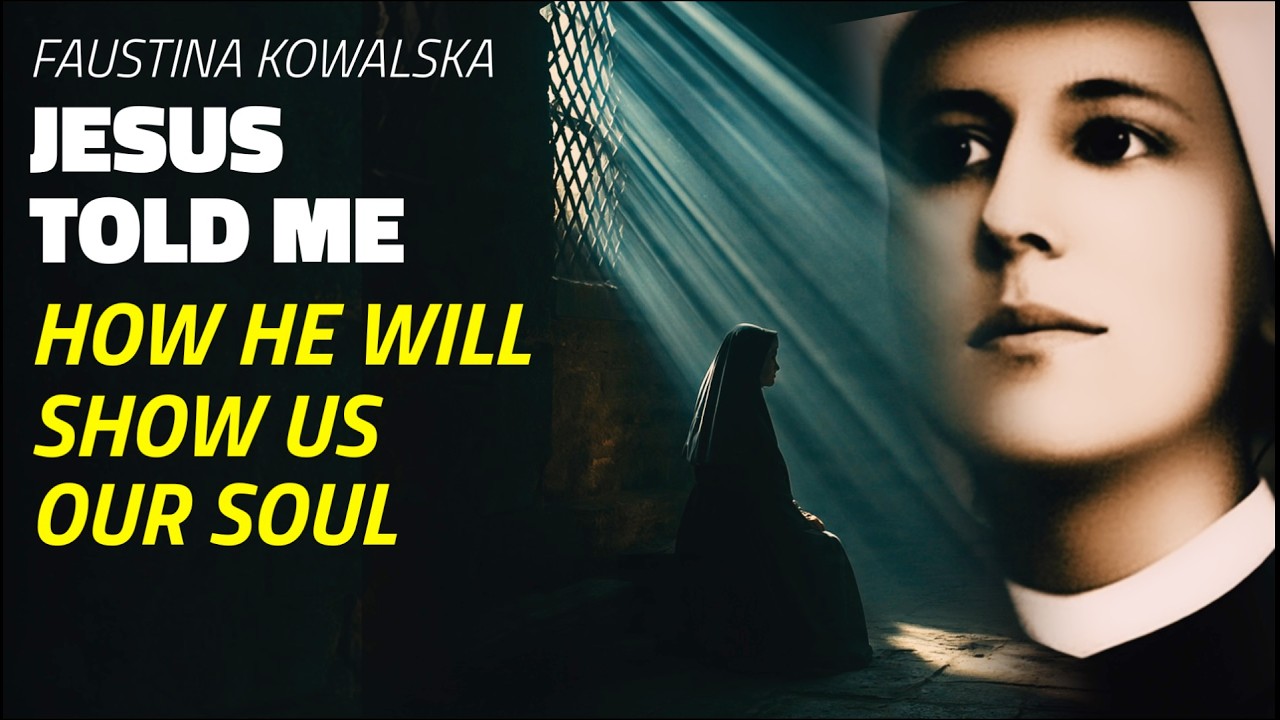
The Illumination of Conscience: The Prophecy That Could Change Your Life Before It Is Too Late
What if, in the next moment, time stopped?
Not for the world. Not for history. Just for you.
Imagine being shown your entire life exactly as God sees it—every choice, every word, every hidden motive. No excuses. No self-deception. No ability to blame circumstances or other people. For one brief instant, you would see the complete truth.
For centuries, mystics and saints have spoken about such an event. Some called it The Warning. Others referred to it as a Mini Judgment. But perhaps the most accurate name is The Illumination of Conscience.
Many people hear about this prophecy and immediately think of fear, punishment, and catastrophe. Yet what if they have misunderstood the message entirely? What if the greatest prophecy concerning this event was never meant to terrify humanity, but to rescue it?
That is exactly what we discover when we turn to the writings of Saint Faustina Kowalska, the humble Polish nun whose message of Divine Mercy has touched millions around the world. Hidden within her diary is a truth so powerful that it transforms the idea of judgment into an invitation, and fear into hope.
And if that truth is real, it may change how you live every day from this moment forward.
The Prophecy Everyone Talks About—And Few Truly Understand
Whenever discussions arise about the end times, warnings from heaven, or future events, the conversation often drifts toward fear.
People become fascinated by disasters.
They speculate about punishments.
They search for signs in the sky.
They look for evidence that something dramatic is about to happen.
But there is a problem with this approach.
It focuses on the symptoms while ignoring the cure.
Saint Faustina’s writings are frequently quoted in conversations about judgment, yet many overlook the central theme that runs through every page of her diary: mercy.
Faustina did not spend her life predicting doom. She spent her life proclaiming a God who desperately wants to save humanity before it is too late.
Her message was not, “Be afraid.”
Her message was, “Do not waste the opportunity God is giving you.”
That difference changes everything.
A Nun Hidden From the World
Saint Faustina was not a famous theologian.
She was not a powerful leader.
She did not command armies, influence governments, or dominate public attention.
Born into poverty in Poland, she entered religious life and lived most of her years in obscurity. Her daily existence consisted of simple tasks, prayer, sacrifice, and quiet service.
Yet from this hidden life emerged one of the most influential spiritual messages of the modern era.
In her diary, Faustina recorded numerous conversations and visions that she believed came from Jesus Christ. Whether one approaches these writings from faith, curiosity, or skepticism, their impact on Christianity has been undeniable.
At the heart of these revelations lies a single message:
God’s mercy is greater than humanity’s sin.
But mercy is not unlimited in time.
And that is where the urgency begins.
The Sentence That Changes Everything
Among all the passages in Faustina’s diary, one statement stands out with extraordinary force.
Jesus tells her:
“Before I come as the just Judge, I first open wide the door of My mercy.”
At first glance, these words may seem simple.
Yet they contain a profound spiritual reality.
Most people imagine God waiting to punish.
The message of Divine Mercy presents a different picture.
Imagine a doctor who discovers that a patient has a serious illness.
The doctor does not reveal the diagnosis because he enjoys frightening people.
He reveals it because healing remains possible.
The warning itself is an act of mercy.
The same principle applies here.
The “door of mercy” exists because God desires repentance before judgment becomes unavoidable.
Mercy is not the absence of truth.
Mercy is truth offered in a form that can still save us.
Understanding the Illumination of Conscience
So what exactly is meant by the Illumination of Conscience?
Descriptions vary among different mystical traditions, but the basic idea remains consistent.
At some point, humanity may experience a profound encounter with truth.
Not truth as we interpret it.
Not truth filtered through culture, ideology, or personal preference.
Truth as God sees it.
Imagine suddenly understanding every consequence of your actions.
Imagine seeing every act of kindness that brought light into another person’s life.
Imagine also seeing the wounds caused by selfishness, pride, resentment, dishonesty, or indifference.
For many people, such an experience sounds terrifying.
And in one sense, it would be.
The truth often hurts.
Yet the purpose would not be condemnation.
The purpose would be conversion.
The purpose would be healing.
Just as a surgeon must first expose a wound before treating it, God may first reveal the soul before restoring it.
Why We Fear the Truth
Human beings have an extraordinary ability to avoid uncomfortable realities.
We tell ourselves stories.
We justify our actions.
We explain away our failures.
We compare ourselves to people who seem worse than we are.
We convince ourselves that tomorrow will be different.
One day we will forgive.
One day we will pray.
One day we will change.
One day we will become the person we know we should be.
But tomorrow has a way of becoming next week.
Next week becomes next year.
And before long, entire decades pass.
The Illumination of Conscience confronts this tendency directly.
It removes every illusion.
It strips away every defense mechanism.
It asks one unavoidable question:
If you could see your life exactly as it is, what would you change today?
Mercy Before Justice
One of the most misunderstood concepts in Christianity is the relationship between mercy and justice.
Many people see them as opposites.
They are not.
Mercy comes before justice because God desires restoration before accountability.
Consider a train racing toward a collapsed bridge.
A warning signal appears.
The brakes are available.
The engineer has time to stop.
That warning is mercy.
Ignoring it does not eliminate reality.
It merely guarantees the collision.
Justice is not revenge.
Justice is reality revealed.
Mercy is reality revealed early enough to change direction.
This is why the message of Divine Mercy is ultimately hopeful.
It tells us that God is giving humanity every possible opportunity to return to Him.
The tragedy is not that mercy is unavailable.
The tragedy is that many people ignore it.
The Great Danger of Modern Life
One reason this message feels especially relevant today is that modern life excels at distraction.
Never before have human beings had so many ways to avoid silence.
We fill every moment with entertainment.
We scroll endlessly through screens.
We consume information without reflection.
We stay busy enough to avoid asking the deepest questions.
Yet beneath the noise, the human heart remains unchanged.
People still long for meaning.
They still seek forgiveness.
They still wrestle with guilt, loneliness, fear, and regret.
The Illumination of Conscience reminds us that eventually, every distraction falls away.
The truth remains.
And the sooner we face it voluntarily, the better.
Three Practical Ways to Live the Time of Mercy
The message of Divine Mercy is not merely theoretical.
It calls for action.
If the door of mercy is open now, how should we respond?
1. Tell Yourself the Truth
Most spiritual growth begins with honesty.
Ask yourself:
What area of my life am I avoiding?
What habit keeps me trapped?
What resentment am I carrying?
What truth am I refusing to face?
Write it down.
See it clearly.
The first illumination of conscience happens when we stop lying to ourselves.
2. Seek Reconciliation
Broken relationships rarely heal on their own.
Neither do wounded souls.
Whether through prayer, confession, forgiveness, or a difficult conversation, healing begins when we stop postponing it.
Every day we delay is another day spent carrying unnecessary burdens.
Mercy invites us to put them down.
3. Practice Concrete Love
Love is not primarily a feeling.
It is an action.
Help someone.
Encourage someone.
Forgive someone.
Serve someone.
Many spiritual problems begin to dissolve when our attention shifts away from ourselves and toward others.
Love clarifies the conscience because love aligns us with the heart of God.
The Real Meaning of the Warning
Perhaps the greatest mistake people make regarding the Illumination of Conscience is assuming it concerns the future.
In reality, its message concerns the present.
The point is not to speculate about dates.
The point is to live differently now.
Every examination of conscience is a small warning.
Every moment of conviction is a small illumination.
Every invitation to repent is a small act of mercy.
The final judgment belongs to God.
But the opportunity to change belongs to today.
That is why Saint Faustina’s message remains so powerful.
It shifts our focus away from fear and toward preparation.
Away from panic and toward conversion.
Away from speculation and toward action.
The Most Important Question
Imagine that tonight you were given one minute to see your soul exactly as God sees it.
What would you be grateful for?
What would you regret?
What would you change?
Those questions are not meant to frighten you.
They are meant to awaken you.
Because the greatest tragedy is not judgment.
The greatest tragedy is wasting the time given before judgment arrives.
The message of Divine Mercy is ultimately simple.
The door is open.
The invitation has been extended.
The opportunity exists now.
No one knows how long that opportunity will remain.
But everyone knows this:
Today is the only day we are guaranteed.
And perhaps that is why the message of Saint Faustina continues to resonate across generations.
Not because it predicts darkness.
But because it points toward light.
Not because it announces condemnation.
But because it offers mercy.
And not because it tells us to fear the future.
But because it teaches us how to live the present.
The Illumination of Conscience, if it comes, will not reveal anything God does not already know.
The real question is whether we are willing to discover it before that moment arrives.
Because the greatest act of mercy may not be the warning itself.
It may be the fact that we are hearing about it now.