The Fourth Wise Man: the untold story of his journey to Jesus
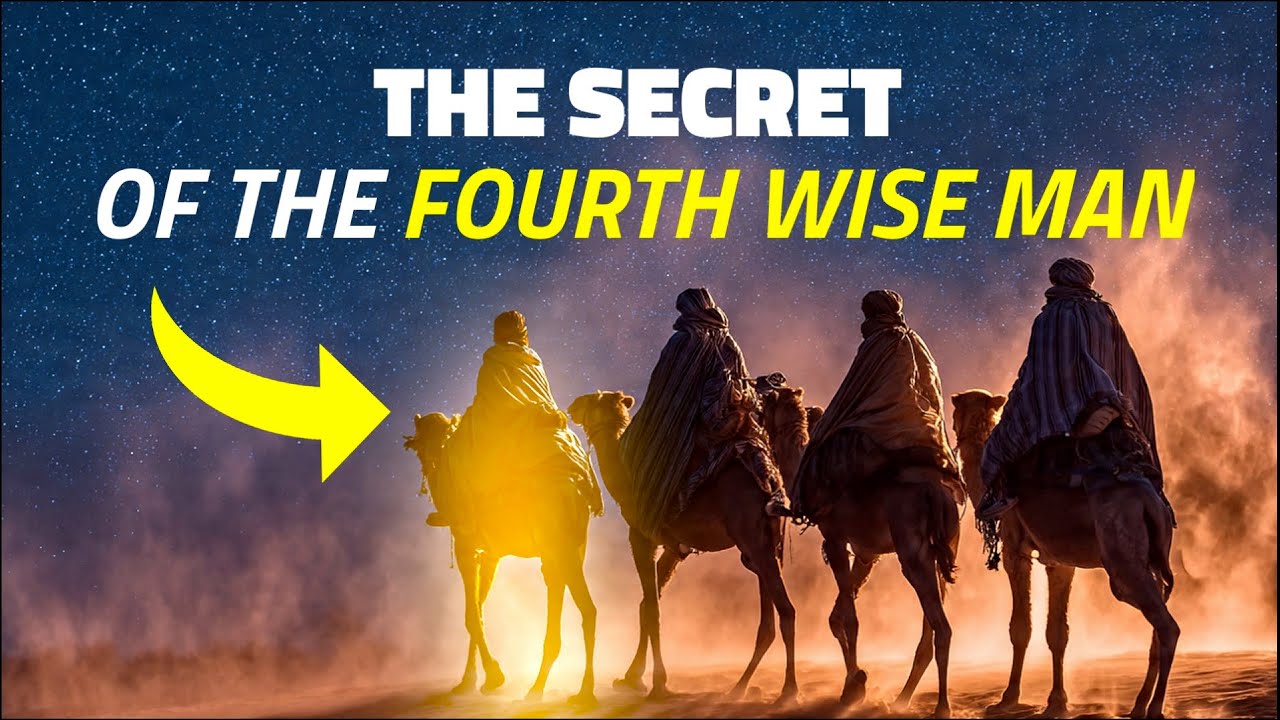
The Fourth Wise Man: The Forgotten Journey That Reveals How We Truly Find Christ
What if one of the wise men never made it to Bethlehem?
Not because he lost his way. Not because he lacked faith. But because every time he tried to reach the newborn King, someone in need stood in his path.
A wounded stranger. A hungry child. A desperate mother. A condemned innocent.
And every time, he faced the same agonizing choice: continue toward God—or stop to help a suffering person.
For centuries, Christian tradition has preserved the moving story of a mysterious figure known as the Fourth Magus. His name was Artaban. Unlike the three wise men described in the Gospel, Artaban belongs to a spiritual tradition rather than biblical history. Yet his story has endured because it touches a fear hidden deep within the human heart: the fear of arriving too late.
Too late to change.
Too late to return to God.
Too late to become the person we were meant to be.
The story of Artaban speaks directly to anyone who has ever looked at their life and wondered whether they missed their chance.
The Man Who Saw the Star
Like the other magi, Artaban was a seeker.
He studied the heavens. He knew the ancient prophecies. He watched the skies with the expectation that one day God would act in history in a way that would change the world forever.
Then it happened.
A brilliant star appeared.
To many people it was merely another light among thousands. But Artaban understood its meaning immediately. This was the sign he had waited for his entire life.
A king had been born.
Not an ordinary king surrounded by armies and palaces, but a king whose reign would stretch beyond nations and centuries. A king whose power would not rest on force but on truth, mercy, and love.
Without hesitation, Artaban prepared for the journey.
Like the other wise men, he gathered treasures worthy of royalty. He carried gifts of immense value, each carefully chosen to honor the child he hoped to meet.
As he stepped into the desert beneath the shining star, his heart overflowed with certainty.
Every mile brought him closer to the fulfillment of a lifelong hope.
Or so he thought.
The First Delay
Not long after beginning his journey, Artaban encountered something unexpected.
At the edge of the road lay a man who had been attacked by thieves.
He was wounded, abandoned, and close to death.
Artaban stopped.
The star beckoned him forward.
The dying man begged him to stay.
He immediately understood the dilemma. If he delayed, he might miss the meeting with the other magi. He might lose precious time. He might even miss the King himself.
But if he ignored the wounded traveler, he would leave a fellow human being to die.
The choice tore at him.
For years he had waited for the promised Messiah. Every instinct urged him to continue.
Yet compassion demanded something else.
Finally, Artaban made his decision.
He sold one of his precious jewels, purchased medicine and supplies, found shelter for the stranger, and cared for him until he recovered.
Only then did he resume his journey.
But when he looked toward the horizon, everything had changed.
The star seemed farther away.
The caravan of the other wise men had vanished.
His appointment with destiny had been missed.
Or so it appeared.
A Life of Searching
From that day forward, Artaban’s journey became something entirely different.
No longer was it a straightforward pilgrimage.
It became a lifelong search.
Everywhere he traveled, he listened for news of the child born under the star.
He questioned travelers.
He spoke with shepherds.
He followed rumors.
He chased stories.
Whenever he heard whispers of a prophet, a miracle worker, or a promised Messiah, he set out again.
But something strange kept happening.
Whenever he seemed close to finding his destination, another person in need crossed his path.
A hungry child.
A grieving widow.
A mother struggling to protect her family.
A prisoner condemned unjustly.
A stranger facing despair.
Again and again, Artaban found himself standing at a crossroads.
Should he continue pursuing the King?
Or should he stop and help?
Each time he chose compassion.
Each time he gave away a little more of himself.
Sometimes it was money.
Sometimes it was time.
Sometimes it was strength.
Sometimes it was one of the treasures he had hoped to place before the Messiah.
The years passed.
His gifts slowly disappeared.
One by one, they were exchanged for acts of mercy.
The Burden of Regret
As Artaban grew older, doubt began to creep into his heart.
His hair turned gray.
His body weakened.
The star that had once burned so brightly seemed distant.
A painful question haunted him.
What if I failed?
What if I missed the most important moment of my life?
The question followed him through deserts, villages, and cities.
Perhaps he should have ignored the wounded man.
Perhaps he should have walked past the suffering.
Perhaps he should have focused only on reaching Bethlehem.
After all, wasn’t that the purpose of the journey?
Wasn’t meeting the King the goal?
Many people know this feeling.
We begin life with grand spiritual dreams.
We want to become saints.
We want to pray more.
We want to accomplish great things for God.
Then reality intervenes.
Responsibilities appear.
Families need us.
Mistakes happen.
Dreams are delayed.
Years pass.
And eventually we begin to wonder whether we have fallen behind.
Whether we have somehow failed God.
Artaban carried that burden for decades.
The Final Encounter
At last, as an old man, Artaban arrived in Jerusalem.
The city was in turmoil.
Crowds flooded the streets.
Roman soldiers pushed people aside.
Angry voices filled the air.
Something important was happening.
Artaban asked what had caused the commotion.
The answer struck him like lightning.
“Jesus of Nazareth.”
The name pierced his heart.
For years he had searched.
For years he had wandered.
For years he had followed fading traces.
And now, finally, he had found the one he had been seeking.
But there was a terrible problem.
Jesus was not seated upon a throne.
He was carrying a cross.
A crown of thorns rested on his head.
Blood stained his face.
The child born under the star was being led to execution.
Artaban stood frozen.
He had found the King.
But once again he seemed too late.
He had missed Bethlehem.
He had missed the manger.
He had missed the years of teaching.
And now he was arriving at the very end.
All his dreams appeared shattered.
The Last Gift
Artaban possessed only one treasure now.
One final precious stone.
For decades he had protected it.
This was the gift he had always intended to place in the hands of the King.
Then, at the very moment when Jesus was approaching Golgotha, Artaban saw a young woman being dragged away.
She was about to be sold into slavery.
Terrified and helpless, she cried out for mercy.
No one intervened.
No one defended her.
Artaban immediately understood the situation.
The only way to save her was to surrender his final treasure.
If he did so, he would have nothing left to offer Jesus.
Nothing.
Again, the familiar crossroads appeared.
Keep the gift for the King.
Or spend it on a stranger.
For the last time in his life, Artaban chose love.
He sold the precious stone.
He paid the ransom.
He set the woman free.
And then he collapsed.
His strength was gone.
The long journey was over.
The Words That Changed Everything
According to the tradition, as Artaban lay dying, he heard a voice.
It was not a voice of disappointment.
Not a voice of condemnation.
Not a voice asking why he had arrived so late.
Instead, it spoke words that Christians immediately recognize from the Gospel of Matthew:
“Whatever you did for one of the least of these brothers of mine, you did for me.”
In that instant, everything became clear.
Artaban realized he had never truly missed Christ.
Not once.
Every wounded stranger.
Every hungry child.
Every suffering person.
Every act of compassion.
Every sacrifice.
Every delay.
All of it had been an encounter with the King.
The Christ he sought in Bethlehem had been present beside him throughout the entire journey.
Hidden.
Waiting.
Disguised in the needs of others.
The Lesson We Need Today
The power of the Fourth Magus lies in its challenge to how we often measure faith.
We tend to focus on achievements.
Did I pray enough?
Did I accomplish enough?
Did I become holy enough?
Did I reach my goals?
Artaban’s story proposes a different measure.
Love.
Not perfect plans.
Not flawless performance.
Not spiritual success.
Love.
The story reminds us that God is not found only in extraordinary moments.
He is found in hospital rooms.
In quiet acts of forgiveness.
In sacrifices nobody notices.
In patience with difficult people.
In generosity when it costs us something.
In choosing compassion when convenience would be easier.
The world often tells us that interruptions are obstacles.
This story suggests something radical.
Perhaps some interruptions are actually invitations.
Perhaps what appears to be a detour is sometimes the road itself.
If You Feel Late
This is why the story continues to resonate after so many generations.
Many people feel like Artaban.
They started with hope.
They saw a star.
They made plans.
Then life became complicated.
Mistakes were made.
Dreams were postponed.
Faith grew weaker.
Time moved faster than expected.
And now they wonder whether they have missed their chance.
The Fourth Magus offers a gentle answer.
You are not late if you are still capable of love.
You have not lost God because your path looks different from what you imagined.
You have not failed because your journey included suffering, detours, and unexpected responsibilities.
The King whom Artaban sought was never confined to a manger in Bethlehem.
He was present in every act of mercy.
And he remains present there today.
Perhaps the greatest surprise of all is that when we finally stand before God, we may discover that the moments we considered interruptions were actually the moments that mattered most.
The conversations we almost avoided.
The sacrifices nobody applauded.
The kindnesses nobody remembered.
The people we stopped to help.
Like Artaban, we may discover that what seemed like delays were actually divine appointments.
And that every genuine act of love was another step toward the King.
Because in the end, the story of the Fourth Magus is not about a man who arrived late.
It is about a man who found Christ everywhere.