How Israel Has TARNISHED American Politics and RUINED Our Heritage – With Anthony Aguilar
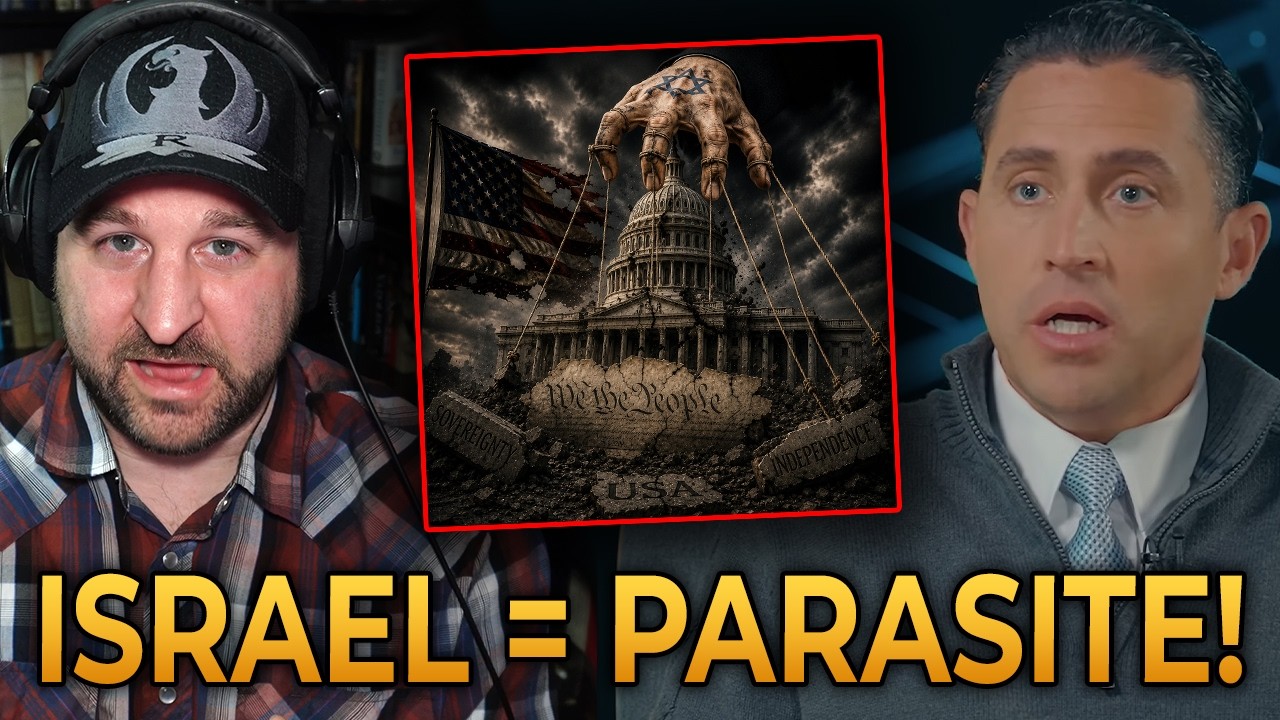
Has America Lost Its Founding Foreign Policy? The Growing Debate Over Israel, U.S. Power, and the Future of American Leadership
The United States once aspired to lead by example rather than by force.
That simple idea—rooted in the country’s earliest foreign policy traditions—has become the center of an increasingly fierce political debate. Critics of modern American foreign policy argue that the nation has drifted far from the vision articulated by early statesmen like John Quincy Adams, who warned that America “goes not abroad in search of monsters to destroy.” Supporters of current alliances counter that today’s global security challenges require a far more active international role than existed two centuries ago.
This disagreement has become especially intense as the wars in Gaza and the broader Middle East continue to reshape political conversations in Washington. Questions that once belonged primarily to foreign policy specialists are now entering mainstream political discourse. Should the United States continue providing extensive military assistance to allies with few public conditions? Should Congress use American leverage more aggressively? Does America’s current strategy advance U.S. national interests, or has it drawn the country into conflicts that ultimately weaken its standing abroad?
These are no longer fringe questions.
They are becoming central to debates inside both major political parties, among military veterans, foreign policy analysts, and an American public increasingly skeptical of prolonged overseas commitments. While opinions remain sharply divided, one thing is becoming difficult to ignore: the traditional bipartisan consensus surrounding America’s role in the Middle East appears less secure than it has been in decades.
A Debate About America’s Identity
For many critics, the discussion extends beyond Israel or any single conflict. They argue that the larger issue concerns America’s identity as a nation.
They point to the country’s early diplomatic philosophy, emphasizing commerce, negotiation, and avoiding unnecessary foreign entanglements whenever possible. In their view, the United States earned international admiration primarily through its constitutional system, economic opportunity, and political freedoms—not through military intervention.
Supporters of a robust American global presence see history differently.
They argue that the world changed dramatically after World War II. New threats, international alliances, nuclear deterrence, and terrorism created responsibilities that earlier generations of American leaders never faced. Maintaining security, they contend, sometimes requires active engagement abroad rather than isolation.
This tension between restraint and intervention has shaped American foreign policy for generations, but recent events have brought it back into sharp focus.
The Question of Leverage
One of the central criticisms voiced by opponents of current policy concerns the enormous influence the United States already possesses.
America provides substantial military assistance, intelligence cooperation, diplomatic support, and economic partnerships to numerous allies around the world. Critics argue that these relationships naturally create leverage that could be used to encourage policy changes when disagreements arise.
Their question is straightforward: if Washington has significant influence, why is it so rarely used publicly in moments of serious disagreement?
Some analysts argue that conditional assistance could encourage greater accountability while preserving strategic alliances.
Others strongly disagree.
Supporters of current policy argue that public pressure can damage trust between allies, reduce diplomatic influence, and encourage adversaries who seek to exploit divisions. They contend that sensitive disagreements are often better addressed through private diplomacy than public confrontation.
The disagreement reflects two fundamentally different schools of foreign policy thinking.
An Analogy That Resonated
During a recent discussion, one commentator illustrated his criticism using a colorful analogy.
He compared the U.S.-Israel relationship to two friends on a night out, one repeatedly starting fights while the other continually pays the financial and political costs afterward.
Whether one agrees with the comparison or not, its popularity illustrates something important.
Political analogies often succeed because they simplify complicated geopolitical relationships into everyday situations people immediately understand.
Supporters of Israel reject the analogy, arguing that it ignores the country’s security concerns and the regional threats it faces. They emphasize that Israel confronts hostile armed groups and neighboring actors that openly challenge its existence.
Critics respond that unconditional support can remove incentives for restraint and ultimately increase regional instability.
The analogy itself is less important than what it represents: growing public frustration over the perceived costs and benefits of longstanding American alliances.
Congress and Foreign Policy
Another recurring theme involves the role of Congress.
The U.S. Constitution grants Congress significant authority over funding, oversight, and declarations of war. Nevertheless, modern foreign policy is often driven primarily by the executive branch.
Some lawmakers advocate stronger congressional oversight of military assistance and foreign commitments.
Others argue that presidents require flexibility to respond rapidly to international crises.
The balance between legislative oversight and executive authority has long been debated, but conflicts in the Middle East have renewed questions about whether Congress should exercise its powers more aggressively.
International Law as a Political Battleground
Few phrases generate as much disagreement as “international law.”
Governments frequently invoke international legal principles when defending their own positions or criticizing others.
Critics argue that governments sometimes apply those principles inconsistently, emphasizing international law when it supports their objectives while minimizing it in other situations.
Supporters respond that international law itself often involves complicated legal interpretations rather than simple yes-or-no answers.
Issues involving maritime navigation, military operations, sanctions, sovereignty, and self-defense regularly generate differing legal opinions among scholars, governments, and international institutions.
As a result, political leaders often cite the same legal framework while reaching opposite conclusions.
The Strait of Hormuz and Maritime Security
One example involves the Strait of Hormuz, one of the world’s most strategically important waterways.
A significant portion of global energy shipments passes through this narrow passage connecting the Persian Gulf with international waters.
Maintaining freedom of navigation has long been considered a major international priority.
Some analysts argue that uninterrupted commercial access benefits every nation dependent upon global trade.
Others emphasize the importance of coastal states participating in administrative and security arrangements affecting nearby waterways.
Exactly how those responsibilities should be shared remains an ongoing subject of diplomatic negotiation and legal debate.
Political Messaging Under the Microscope
Modern foreign policy increasingly unfolds in front of the public through televised interviews, social media posts, press conferences, and podcasts.
Every statement made by senior officials is analyzed almost instantly.
Supporters often interpret those remarks as strategic messaging designed for multiple audiences.
Critics frequently view the same statements as evidence of inconsistency or hypocrisy.
This rapid information environment makes diplomatic communication considerably more challenging than in previous decades.
A single comment can dominate headlines, shape public perception, and influence international reactions within hours.
The Growing Divide Inside Washington
One notable development is that disagreements over Middle East policy increasingly cut across traditional partisan lines.
Within both Republican and Democratic circles, voices advocating greater restraint have become more prominent.
Some conservatives question continued overseas commitments and argue for prioritizing domestic concerns.
Some progressives focus on humanitarian issues and call for stronger conditions on military assistance.
Although these groups disagree on many domestic policies, they sometimes reach similar conclusions regarding foreign intervention.
This unusual overlap reflects broader public fatigue with prolonged international conflicts.
America’s Reputation Abroad
Another question frequently raised concerns America’s global image.
Critics argue that military interventions, inconsistent application of international norms, and prolonged conflicts have weakened America’s moral authority.
Supporters counter that the United States continues providing humanitarian assistance, defending allies, supporting international commerce, and promoting democratic institutions worldwide.
Both perspectives acknowledge that reputation matters.
Soft power—the ability to influence through culture, diplomacy, and values—remains one of America’s most important strategic assets.
How current conflicts affect that reputation may become clearer only with time.
The Challenge of Consistency
Perhaps the most difficult challenge facing any government is maintaining consistency.
Citizens expect leaders to apply principles fairly across different situations.
Foreign policy, however, often involves competing interests rather than perfect choices.
Security alliances, humanitarian concerns, economic relationships, intelligence cooperation, and domestic politics all intersect simultaneously.
As a result, decisions that appear contradictory from one perspective may reflect competing priorities from another.
That complexity rarely satisfies critics, but it helps explain why foreign policy debates are often so enduring.
Why Public Opinion Matters More Than Ever
Public attitudes toward foreign policy have changed significantly over the past decade.
Americans increasingly obtain information from independent journalists, podcasts, long-form interviews, and social media rather than relying solely on traditional television news.
This diversification of information sources has expanded the range of perspectives entering public debate.
It has also made it harder for any single political narrative to dominate.
Younger voters, in particular, often express greater skepticism toward military intervention and stronger interest in transparency regarding international commitments.
Whether those generational trends ultimately reshape government policy remains an open question.
Looking Ahead
The debate surrounding America’s relationship with Israel—and more broadly its role in the Middle East—is unlikely to disappear anytime soon.
Supporters of current policy argue that strong alliances remain essential for regional stability, deterrence, and protecting long-term U.S. interests.
Critics contend that Washington should exercise its considerable leverage more actively, place greater emphasis on diplomacy, and ensure that American support aligns consistently with its stated values and legal commitments.
Neither side appears likely to persuade the other overnight.
Yet the conversation itself marks an important shift. Issues that once generated broad bipartisan agreement now receive far greater public scrutiny. Questions about military assistance, congressional oversight, international law, and the costs of global leadership are moving from academic circles into everyday political discussion.
History shows that foreign policy rarely changes suddenly. It evolves gradually as public opinion, geopolitical realities, and political leadership shift over time.
Whether the United States ultimately embraces a more restrained foreign policy or continues its current strategic approach remains uncertain. What is already clear, however, is that Americans are asking deeper questions about their country’s place in the world—and demanding clearer answers from the leaders who make those decisions.
As those debates continue, one principle remains at the heart of the discussion: should America’s influence rest primarily on military power, or should it once again seek to lead by the strength of its example? How future generations answer that question may shape not only U.S. foreign policy but also America’s role in the international order for decades to come.