These Creatures Appeared Out Of Nowhere, And Shocked Everyone!
These Creatures Appeared Out Of Nowhere, And Shocked Everyone!
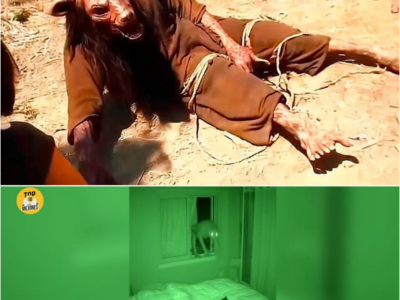
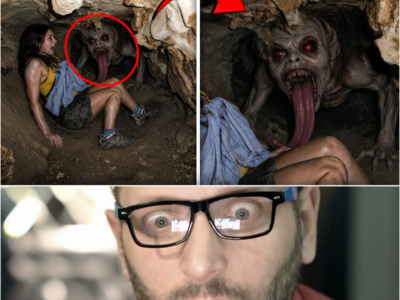
In the dead of winter, a video began circulating on TikTok that sent a collective shiver through millions of smartphones. Filmed from the dashboard of a car traversing an unlit stretch of highway in rural Oregon, the camera captures a patch of high wayside grass. For a fraction of a second, as the headlights cut through the gloom, a pale, spindly creature on all fours emerges from the brush, its limbs bent at impossible angles, its face a featureless oval reflecting the harsh high beams. Within forty-eight hours, the video had amassed fifteen million views, thousands of frantic comments warning of “Skinwalkers,” and a flurry of local news reports investigating whether a bizarre prankster was loose in the county. It was ultimately revealed to be a highly sophisticated piece of digital rendering—a CGI asset dropped seamlessly into mundane shaky-cam footage. Yet, for those forty-eight hours, the terror was entirely real, vibrating through the digital nervous system of an anxious nation.
The New Bestiary of the Digital Age
For generations, American folklore possessed a distinct, localized geography. If you wandered into the dense, rain-drenched forests of the Pacific Northwest, you watched the treeline for the hulking, ape-like silhouette of Bigfoot. If you drove through the pine barrens of New Jersey, you kept your windows rolled up against the leather-winged specter of the Jersey Devil. These legends were tied to the land, whispered around campfires, and passed down through regional oral histories. They were slow-cooked myths, shaped by the landscape and the specific anxieties of the communities that birthed them.
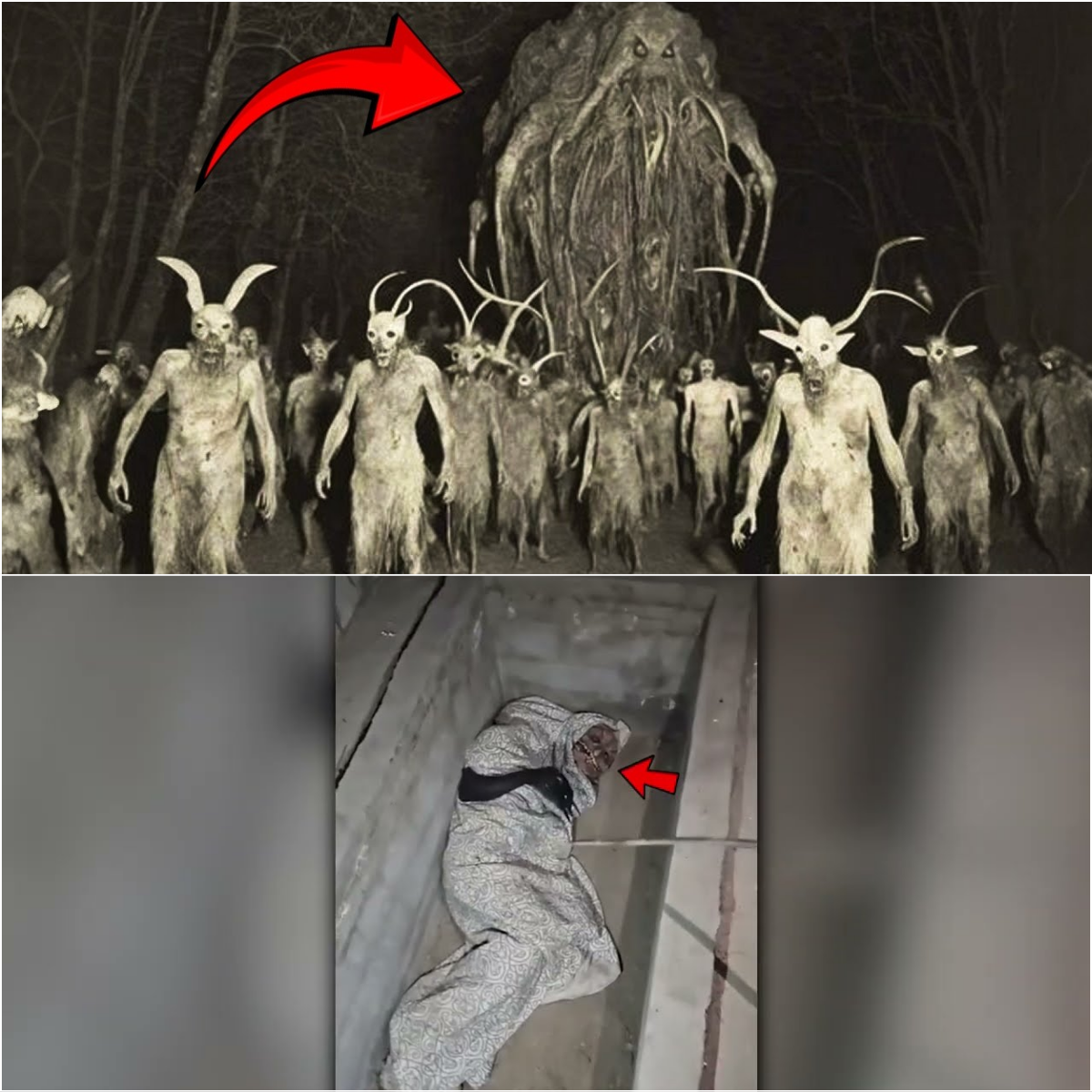
Today, however, a new kind of monster stalks the American imagination—one born not from ancient woods or deep lakes, but from the sterile light of computer monitors and the algorithmic feedback loops of social media. We have entered the era of the digital cryptid, a fast-mutating bestiary of internet-engineered terrors that defy traditional folklore and rewrite the rules of how we experience fear.
From the elongated, faceless geometry of Slender Man to the emaciated, nocturnal malice of “The Rake,” these modern monsters are native to the internet. They do not belong to a specific state or county; they belong to the web, appearing simultaneously on trail cameras in Texas, dashcams in Ohio, and ringside doorbells in suburban California. They are characterized by their unnatural, jerky movements, their hairless, graying skin, and their uncanny ability to appear just at the edge of a lens’s focus before vanishing into the static.
This shift represents more than just a change in the characters of our scary stories. The transition from physical folklore to digital myth reflects a profound transformation in how human beings process truth, narrative, and community in the twenty-first century. In an age where high-definition cameras sit in every pocket, the old mysteries should have died. Instead, the technology meant to illuminate the world has merely created deeper, more terrifying shadows.
The Architecture of the Algorithmic Scare
To understand the power of the modern digital hoax, one must look at the mechanics of the platforms that distribute them. In the traditional publishing world, a story required validation, editorial oversight, and time to print. In the ecosystem of modern social media, attention is the ultimate currency, and nothing commands attention quite like raw, unexplained terror.
Consider the typical structure of a viral “crypted” video. It is almost always characterized by low fidelity—shaky footage, digital noise, sudden focus drops, and grainy night-vision filters. Far from detracting from the realism, this lack of clarity is precisely what makes the video effective. The human brain is a pattern-recognition machine; when confronted with ambiguous visual data, it instinctively fills in the blanks with its deepest anxieties. A rustling bush becomes a crouching beast; a compression artifact becomes a glowing eye; a stray dog with a severe case of mange transforms into the legendary Chupacabra.
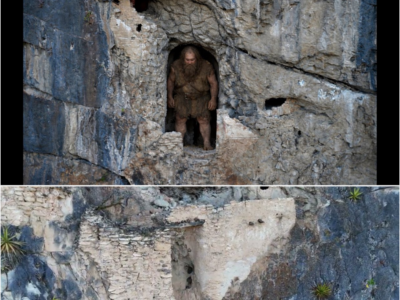
Content creators have turned this psychological quirk into a finely tuned art form. Utilizing readily available VFX software, amateur filmmakers can insert terrifying entities into everyday footage with astonishing precision. A cyclist’s GoPro ride across an ordinary footbridge suddenly includes a hairless, gray humanoid leaping from the rafters. A hiker’s panoramic shot of a snowy mountainside reveals a massive, brown-furred face peering down from the pines.
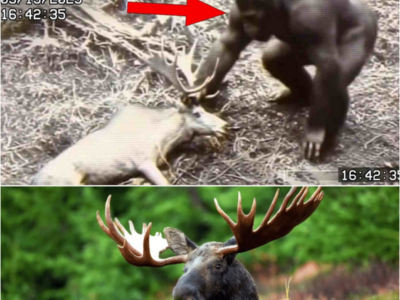
These clips are rarely presented as fiction. Instead, they are uploaded with captions that mimic genuine confusion or panic: “Can anyone explain what this is?” or “Caught this on my trail cam last night, moving out of the state.”
Once uploaded, the algorithm takes over. Recommendation engines prioritize content that drives high engagement—shares, saves, and frantic debates in the comment sections. As skeptics argue with believers, and internet detectives analyze the footage frame-by-frame, the platform reads this activity as a signal to push the video to an even wider audience. Within hours, a localized piece of digital fiction becomes a national phenomenon, seamlessly integrating itself into the cultural consciousness.
Creepypasta and the Democratization of Myth
The foundational blueprint for this phenomenon can be traced back to the early 2000s with the rise of “Creepypasta”—a term derived from the internet slang “copypasta,” referring to blocks of text that were copied and pasted across online forums. Websites like Reddit, 4chan, and dedicated wikis became digital casting houses for a new generation of horror writers who understood that the most effective scary story is one that purports to be real.
Unlike traditional horror literature, which maintains a clear boundary between the author and the reader, Creepypasta blurred the lines completely. Stories were written in the first person, styled as leaked government documents, found diaries, or urgent forum posts warning others of an imminent threat.
It was within this environment that Slender Man was synthesized in 2009, created by an internet user named Eric Knudsen for a Photoshop contest on the Something Awful forum. Knudsen superimposed a tall, thin, faceless man in a dark suit into the background of archival photos of children. The image struck a deep, primordial chord. Within months, hundreds of other users began writing stories, creating faux documentaries, and developing indie video games centered around the character. Slender Man became a crowdsourced myth, a collective projection of internet anxiety that eventually bled into tragic, real-world violence.
Similarly, “The Rake”—a creature described as a naked, humanoid monster with long, canine claws and glowing eyes—began as a collaborative thought experiment on an internet imageboard before exploding into a multi-platform mythos. Today, thousands of people genuinely believe The Rake is a biological entity stalking the forests of North America, pointing to doctored trail-camera photos and manufactured encounters as absolute proof.
This democratization of myth-making has fundamentally altered our relationship with folklore. In the past, myths required generations to solidify, anchored by the authority of elders and community tradition. Today, a myth can be engineered over a weekend by a teenager with a basic understanding of Adobe After Effects and an internet connection.
Why We Want to Believe
The enduring popularity of these digital monsters raises a fundamental question: In an era defined by scientific consensus, satellite mapping, and unprecedented access to information, why do millions of Americans continue to entertain the existence of monsters?
The answer lies in a phenomenon psychologists call the “enchantment deficit.” The modern world is hyper-mapped, heavily surveilled, and thoroughly explained. We live in cities illuminated by LED streetlights, our movements tracked by GPS, our questions answered instantly by search engines. While this technological saturation provides safety and convenience, it also strips away the sense of mystery that defined the human experience for millennia.
Believing in cryptids—or even just allowing oneself to be frightened by them—is a form of rebellion against this hyper-rationalized reality. It is an expression of a deeply American desire for the frontier, for the idea that there are still places where the map ends and the unknown begins. If a prehistoric beast can still lurk in the swamps of Louisiana, or if a shape-shifting entity can still hunt in the deserts of New Mexico, then the world is still vast, mysterious, and wild.
Furthermore, these digital monsters reflect our contemporary anxieties. The traditional Bigfoot was a creature of nature—a gentle, reclusive giant that represented the untamed wilderness. The modern digital cryptid, by contrast, is almost always hostile, invasive, and deeply unnatural. They invade our domestic spaces; they crawl through suburban backyards, peer through bedroom windows, and haunt abandoned, decaying industrial infrastructure.
They are monsters of the Anthropocene, embodying our collective dread about environmental collapse, technological alienation, and the breakdown of shared objective truth. In a world where fake news, deepfakes, and artificial intelligence have made it difficult to trust what we see on our screens, the monster that shifts shapes and defies explanation becomes the perfect avatar for our cultural paranoia.
The Blurred Edge of Reality
The danger of this shift is not merely that people are being fooled by clever video editing; it is that the boundary between online folklore and real-world behavior is becoming increasingly porous. When a video goes viral claiming that a “Skinwalker” is hunting in a specific national park, it triggers real-world consequences. Local park rangers are inundated with calls, amateur monster hunters descend on the area equipped with firearms and night-vision gear, and local residents are left feeling genuinely unsafe in their homes.
Moreover, the consumption of these hoaxes feeds into a broader cultural vulnerability. The psychological mechanisms that allow a person to believe a doctored video of a werewolf sprinting down a road in Brazil are the exact same mechanisms that leave them susceptible to political disinformation and conspiracy theories. Once a viewer accepts that the mainstream media is “hiding” the existence of these creatures, it is a very short cognitive leap to believing that institutional authorities are hiding far more sinister, human conspiracies.
The static on our screens is no longer just a sign of a poor signal; it has become the habitat for our modern nightmares. As technology continues to advance, the line between the rendered and the real will only grow thinner. The next time a video surfaces of something strange moving in the dark, the debate will rage across millions of screens, the algorithm will hum with activity, and for a brief, terrifying moment, the monster will step out of the digital void and into the living room of an entire nation, reminding us that the oldest and strongest emotion of mankind is fear—and the oldest and strongest kind of fear is fear of the unknown, even when that unknown is made of pixels.