The Millionaire Hid Cameras to Protect His Paralyzed Son — Until He Saw What the Maid Did
The Millionaire Hid Cameras to Protect His Paralyzed Son — Until He Saw What the Maid Did
Chapter I: The Architecture of Vigilance
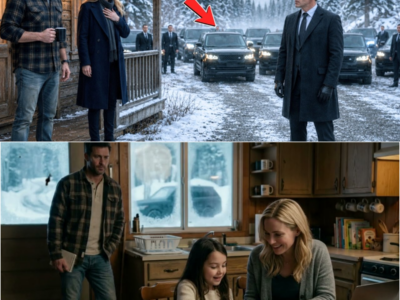
The security monitors in the private study of the Hail estate cast a cool, sapphire luminescence across the polished walnut desk. Jonathan Hail sat in the high-backed leather chair, his fingers laced tightly beneath his chin, his gaze tracking the digital grid that divided his home into thirty-six distinct squares of high-definition video.
To the outside world, Jonathan was a man who had mastered the art of prediction. As the founder of an algorithmic risk-assessment firm in Seattle, his entire career was built on identifying structural vulnerabilities before they could cause a collapse. He was wealthy, meticulous, and entirely unyielding.
But three years ago, the one variable he failed to calculate shattered his world completely.
It had been an ordinary Tuesday afternoon when a reckless driver, running a red light at sixty miles per hour, plowed directly into the passenger side of the family’s SUV. Jonathan had escaped with minor lacerations, but his twelve-year-old son, Lucas, had his spine shattered at the lumbar level. In a single, devastating second, the bright, athletic boy who used to sprint across soccer fields was confined to a customized titanium wheelchair, paralyzed from the waist down.
Since that catastrophic afternoon, Jonathan’s instinct for control had mutated into something fierce, suffocating, and absolute. The sprawling limestone mansion had been retrofitted into a private medical facility. A rotating ledger of professionals—pediatric physical therapists, specialized nurses, clinical neurologists, and high-end domestic maids—moved through the corridors like seasonal workers.

Jonathan quickly learned the agonizing reality that premium salaries did not guarantee human decency. Six months after the accident, a hidden audio log had captured a prestigious therapist speaking to Lucas in a sharp, mocking tone when the boy struggled with a leg extension. Another time, a nurse had roughly hoisted Lucas into his chair, ignoring his quiet gasps of pain because she was eager to take her break.
Each incident chipped away at Jonathan’s remaining faith in humanity. In response, he used his tech background to transform the mansion into a digital panopticon. He installed microscopic, pinhole cameras throughout the house—embedded within the crown molding, hidden inside the bases of designer lamps, and tucked behind the leather-bound volumes of the library shelves. They were silent, invisible, and streamed directly to an encrypted server in his office.
Yet, as the months ground on, Jonathan found himself rarely opening the live feeds. Watching his son’s daily, agonizing struggle through a camera lens felt like repeatedly tearing open a surgical wound. The surveillance had protected Lucas from physical abuse, but it had done nothing to cure the cold, gray silence that had settled over the boy’s soul. Lucas had stopped fighting. He answered questions with flat, monosyllabic shrugs, his eyes permanently fixed on the floorboards.
When the previous head maid quit abruptly, citing the suffocating emotional exhaustion of the household, Jonathan had instructed his agency to send an immediate replacement.
Her name was Elena.
During the interview, she didn’t attempt to flatter him, nor did she gawk at the marble water features in the grand foyer. She was a woman in her early thirties, dressed in a simple, pressed dark dress, her dark hair woven into a neat braid. Her resume was unremarkable—a few years of domestic care for elderly patients and some volunteer work at a community center. Her references were brief but carried a strange, quiet sincerity.
As Jonathan concluded the interview, preparing to hand her the standard corporate confidentiality agreement, Elena had looked up, her calm amber eyes meeting his.
“Mr. Hail,” she asked softly. “Does Lucas like music?”
Jonathan had paused, his pen hovering over the contract. The question was an anomaly; most applicants only asked about the benefits package or the exact square footage they were expected to clean. “He used to play the piano,” Jonathan replied, his voice tightening instinctively. “He hasn’t touched the keys since the accident. He doesn’t care for it anymore.”
Elena had simply nodded, her expression unreadable, and signed her name.
Chapter II: The Rhythm on the Tile
The first seven days of Elena’s employment passed with an uneventful, mechanical precision. She kept the vast house immaculate, the silver polished, and followed Lucas’s complex dietary and medication schedules without a single deviation. Jonathan, buried under an avalanche of international corporate mergers, barely crossed paths with her, noting her presence only by the faint, pleasant scent of lemon and lavender that lingered in the corridors.
Yet, by the end of the week, Jonathan began to notice a subtle shift in the household’s atmosphere.
Lucas, who typically retreated to his bedroom the moment his formal therapy sessions concluded, was beginning to linger in the living spaces. One evening, Jonathan observed his son sitting in his wheelchair near the threshold of the kitchen. Elena was at the counter, chopping vegetables for dinner, humming a low, wordless melody that possessed a strange, rhythmic cadence. Lucas wasn’t speaking, but his gaze was locked on the movement of her hands, his fingers lightly tapping against the rubber armrest of his chair. It was a fragment of curiosity Jonathan hadn’t seen in his son’s eyes since the crash.
The following night, Jonathan returned home early. The corporate office had been stifling, and a deep, restless anxiety kept him from his work. He paced the floor of his study for several minutes before his gaze drifted to the darkened monitor on his desk. Driven by a sudden, inexplicable impulse, he tapped the keyboard and brought up the live camera feed for the first-floor sunroom.
The screen flickered to life, showing the sunroom bathed in the soft, gray light of dusk.
What Jonathan saw on the high-definition monitor made him freeze, his breath catching in his throat.
Elena wasn’t cleaning, and she wasn’t assisting Lucas with his prescribed leg braces. She was sitting directly on the cool, limestone tile floor beside his wheelchair. She wasn’t speaking to him. Instead, her eyes were closed, her back resting against the wall, and her palms were placed flat against the stone.
Jonathan leaned closer to the screen, adjusting his audio headset. Through the high-sensitivity microphone, he could hear the distinct, rhythmic sound of Lucas’s rapid, shallow breathing. Elena was deliberately altering her own respiration, slowing her breath down in perfect synchronicity until her chest rose and fell in unison with the boy’s.
After several minutes of this shared silence, Lucas’s shoulders, which were usually locked in a rigid, defensive hunch, slowly began to drop. The chronic tension in his frame dissolved.
Elena opened her eyes and looked up at him. She didn’t offer a patronizing smile. Instead, she reached out and began to tap her fingers softly against the stone floor. It was a gentle, syncopated rhythm—tap, tap, tap-tap-tap—that barely registered on the audio feed.
She reached into her apron pocket and pulled out two plain wooden cooking spoons, placing them gently on Lucas’s lap.
The boy stared down at the pieces of wood, his expression a mix of confusion and guarded hesitation. For a long moment, he didn’t move. Elena didn’t press him; she simply continued her soft, steady rhythm against the limestone floor, her face open and encouraging.
Slowly, with trembling fingers, Lucas picked up the wooden spoons. He hesitated again, then brought them together with a clumsy, hollow clack.
Elena’s face lit up with a brilliant, unforced warmth. She immediately altered her rhythm, responding to his beat with a counter-melody tapped out on the floorboards. Lucas struck the spoons together again, more deliberately this time. Within minutes, an erratic, beautiful dialogue of percussion filled the sunroom.
Then, Lucas laughed.
It wasn’t the polite, forced chuckle he gave when his father bought him an expensive new video game. It was a bright, full-throated sound of pure, unburdened childhood—a sound Jonathan realized he had not heard in three long years.
Jonathan sat paralyzed in his office chair, his chest aching. There was no mention of this in any medical care manual. This wasn’t physical rehabilitation or clinical behavioral therapy. This was the raw, unscripted architecture of human connection.
Chapter III: The Weight of the Chair
Over the subsequent days, Jonathan found himself drawn back to the monitors night after night, watching the unfolding relationship with a sense of profound humility. Elena had no idea she was being observed, yet her devotion to Lucas never wavered for a single second.
One late-night feed showed her entering Lucas’s bedroom long after the night nurse had gone off duty. She adjusted his heavy down comforter with painstaking care, ensuring that the fabric didn’t press too tightly against his ankles.
As she tucked the edges in, Lucas murmured sleepily from his pillow, “I didn’t do well with the parallel bars today, Elena. My legs felt like lead.”
Elena sat on the edge of the mattress, her shadow stretching long across the bedroom wall. She smoothed his hair back with a gentle hand. “You don’t have to be brave every single day, Lucas,” she said, her voice dropping into a soft, melodic murmur. “You are allowed to be tired. You are allowed to be angry. I’ll stay right here until the dark goes away.”
Jonathan watched through the lens, his fist clenched against his mouth, a crushing weight settling on his heart as he realized he had spent three years telling his son to “stay strong” and “keep fighting,” never once giving the boy the permission to simply grieve what he had lost.
Then came the night that shattered Jonathan’s foundational assumptions about his role as a father.
It was just past midnight when an alert on Jonathan’s phone indicated movement in the central living room. He opened the feed to see Lucas parked in the center of the dark room, the moonlight streaming through the double-height windows, illuminating the tears streaming down the boy’s face.
Lucas’s fists were clenched so tightly his knuckles were white. He was striking the rubber wheels of his chair in a silent, furious rage.
“I hate this thing,” Lucas choked out, his voice cracking with a raw, agonizing frustration that he had always hidden from his father. “I hate this chair. I hate being stuck in the dirt while everyone else runs.”
Jonathan’s immediate instinct was to sprint down the grand staircase, to wrap his arms around his son and offer whatever comfort his wealth could buy. But he stopped his hand over the door handle, his eyes glued to the monitor as Elena entered the frame. She had been folding laundry in the service wing and had heard the boy’s distress.
She walked into the living room and knelt directly in front of the wheelchair, bringing her face to the exact same level as Lucas’s. She didn’t offer a hollow cliché. She didn’t tell him that science was advancing or that he was “special” in other ways.
“I know,” she said quietly, her voice steady and anchored. “I know it’s completely unfair.”
Lucas looked at her, his breathing ragged, his defensive wall crumbling. “You don’t know,” he sobbed. “Nobody knows what it feels like to have dead weight where your life used to be.”
Elena did something Jonathan never could have anticipated. She took Lucas’s trembling hands and placed them firmly onto her own thighs.
“Tell me what you miss the most, Lucas,” she said softly.
The boy faltered, his fingers twitching against the denim of her skirt. “Running,” he whispered, his head bowing down. “I miss the feeling of the wind when my feet hit the dirt.”
Elena nodded slowly, her eyes reflecting the silver moonlight. She gently guided his hands until his palms were pressing flat against her knees. Then, she shifted her weight, lifting her right foot and stepping forward in place, then her left.
“Then feel this,” Elena commanded softly, her voice carrying an intense, hypnotic focus. “This is movement, Lucas. It’s passing through my muscles, into your hands, and straight into your memory. Close your eyes.”
Lucas closed his eyes, his chest heaving.
“The wind is coming off the grass,” Elena narrated as she slowly walked in place beneath his hands, her muscles tensing and releasing under his palms. “Your heels are striking the earth. You are pushing off the ground. Your lungs are full of cold air. Feel the rhythm of it. It’s still inside you, Lucas. Different doesn’t mean gone.”
The boy’s breathing began to slow, his fingers tracing the mechanical shift of her walking stride. A look of profound, meditative peace washed over his young face, his imagination stepping into the movement she was translating through her own flesh.
When she finally stopped, her hands covered his. “Your body remembers the joy of it,” she whispered. “We are going to remind your mind together, every single day. You aren’t stuck, Lucas. You’re just finding a different way to move.”
Jonathan sat in the dark of his office, the tears finally blurring the digital screen into a smear of blue and white light. In that silent room, the billionaire understood a painful, humbling truth: all his money, all his technological vigilance, and all his hidden cameras had succeeded in protecting his son from harm, but none of it had been capable of giving him hope. Elena had done that with nothing more than two wooden spoons, a limestone floor, and an infinite capacity for empathy.
Chapter IV: The Promise of the House
The following morning, the autumn sun broke through the Seattle fog, casting long, golden geometric shafts of light across the marble floors of Jonathan’s primary office.
Elena entered the room, her expression calm and professional, her hands folded neatly over her apron. She believed she had been called in to receive her weekly operational notes or a cleaning evaluation.
Jonathan stood by the large bay window, his back to her for a long moment as he attempted to master the tremor in his throat. When he finally turned to face her, she noticed that his eyes were bloodshot, the rigid, corporate armor he usually wore completely absent.
“Elena,” Jonathan began, his voice dropping into a low, unstable register. He walked over to his desk, but instead of sitting behind it, he leaned against the edge, looking down at his hands. “I need to make a confession to you. And I am deeply ashamed to say it.”
Elena tilted her head slightly, her amber eyes remaining steady, waiting.
“When I built this house, I installed a network of microscopic security cameras in every room,” Jonathan said, pointing a trembling hand toward the hidden lens embedded within the bookshelf casing. “I told myself I did it to keep Lucas safe from careless people. Last night… and for several nights before that… I watched the feeds. I saw what you did in the sunroom. And I saw what you did for him last night in the dark.”
Elena’s posture didn’t change. She didn’t look around the room in violation, nor did she express anger at the invasion of her privacy. She simply took a slow, deep breath and looked directly into Jonathan’s eyes.
“I’m glad you saw the real him, Mr. Hail,” she said softly. “He spends so much time trying to be strong for you because he knows how much your heart breaks when you look at his chair. He needed a place where he could just be broken for a little while.”
The words cut through Jonathan’s remaining defenses like a scalpel. He stepped forward, his hands extended. “Elena, I want to triple your salary effective immediately. I want to draft a lifetime employment contract for you with full medical benefits, an estate trust, anything you want. I want to ensure you never have a reason to leave this house.”
Elena looked down at his extended hands, then gave a slow, gentle shake of her head.
“I don’t need a new contract, Mr. Hail,” she said, a faint, genuine smile touching her lips. “And I don’t want a raise for being a human being to your son. I didn’t come to this house for the marble or the security infrastructure. I came because I saw a boy who was drowning in everyone else’s pity.”
She stepped closer to the desk, her voice dropping into a firm, unyielding vow. “You don’t have to buy my loyalty, sir. Just let me keep helping him. Not as a job description, but as a promise between friends. He’s learning how to live again, and I’m not going anywhere until he’s ready to fly.”
Chapter V: The New Symphony
From that morning onward, the digital grid on Jonathan’s desk remained entirely dark. The hidden cameras stayed in their structural alcoves, but their servers were permanently disconnected. Jonathan no longer required a lens to know what was happening inside his home; he could hear it.
The heavy, clinical silence that had dominated the limestone mansion for three years was replaced by an organic, beautiful chaos. The sound of clumsy, energetic percussion rhythms echoed from the sunroom during the afternoons. Lucas’s formal physical therapy sessions were no longer battles of endurance; they became games managed by Elena, who stood beside the parallel bars, translating every agonizing inch of physical effort into a narrative of an adventurous journey through uncharted mountains.
Lucas began his rehabilitation with an intensity that stunned his medical team. He didn’t work because he believed a miracle would make him sprint tomorrow; he worked because Elena had convinced him that his worth as a human being wasn’t tied to the mechanics of his legs. He was more than what he had lost.
Jonathan changed, too. The man who had believed that control was the only form of protection learned the profound, liberating safety that comes from vulnerability. He began to sit on the floor with his son during the evening music sessions, his own hands holding a pair of wooden spoons, joining the clumsy, beautiful symphony that had brought his family back from the dead.
The mansion remained a place of grand architecture and immense wealth, but its true security was no longer managed by algorithms or glass lenses. It was anchored by the quiet, invisible threads of compassion that a soft-spoken woman had woven through the household—a truth that proved, long after the monitors had faded to black, that the greatest safety in the human world is found in the willingness to trust.