Ex-Muslim Unpacks 3 Lies He Was Taught About JESUS
Ex-Muslim Unpacks 3 Lies He Was Taught About JESUS
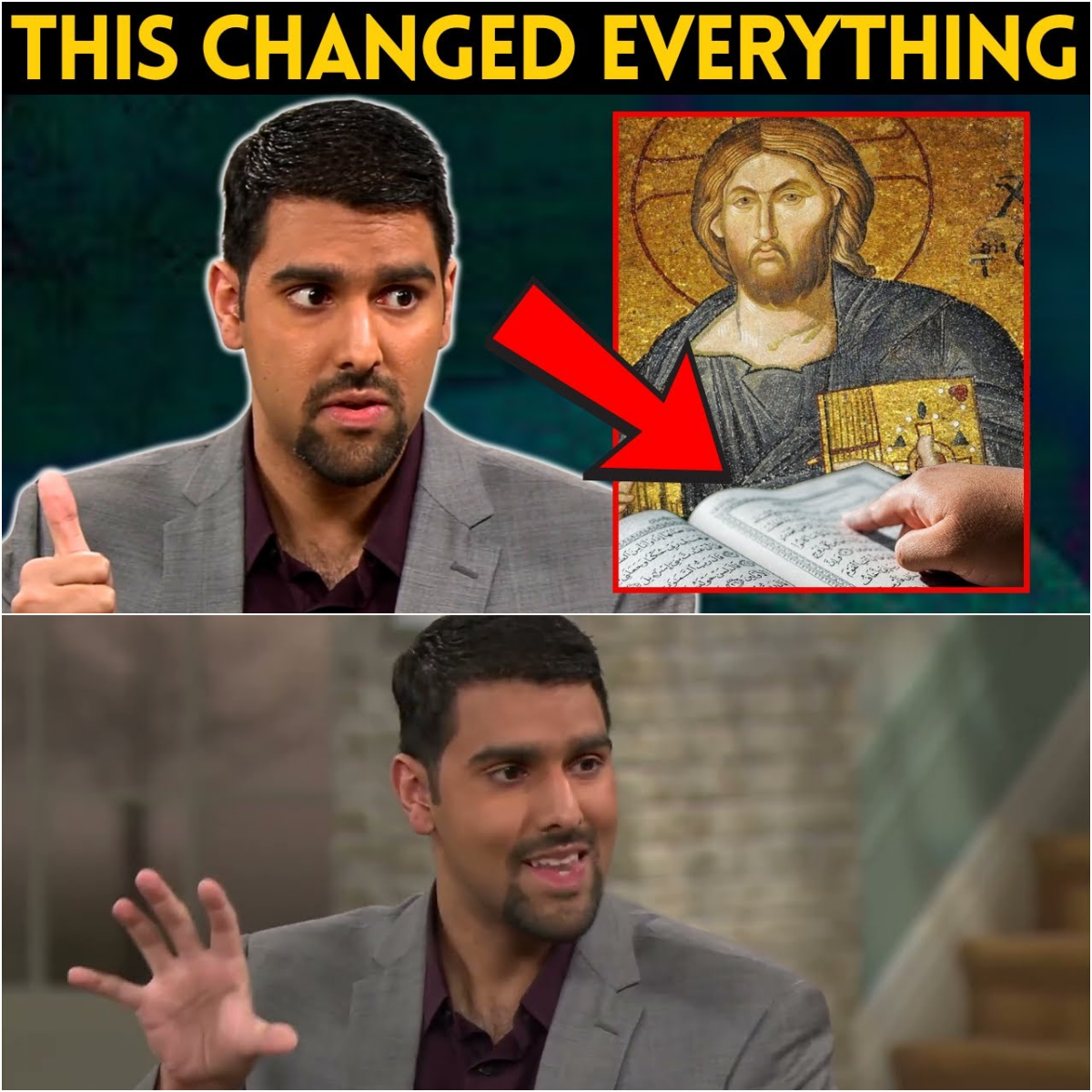
For the first two decades of his life, Nabil Qureshi possessed a faith that was both a shield and a sword. Born into a devout family belonging to the Ahmadiyya sect of Islam—and claiming lineage from the prestigious Qureshi tribe of the Prophet Muhammad—his identity was woven directly into the fabric of Muslim tradition. By age five, he had memorized the last seven chapters of the Quran, reciting them flawlessly during his five daily prayers. By that same age, he had completed a full recitation of the Islamic holy book in its native Arabic.
Like many young Muslims raised in the West, Qureshi was carefully insulated by his parents from what they perceived as the moral decay of secular society. Immodest dress, fractured families, and media-driven hedonism were viewed not merely as Western cultural failings, but as the direct fruits of Christianity. Armed with an arsenal of structured arguments, Qureshi left his home for college with a clear mission: to challenge Christians, expose the perceived logical fallacies of their theology, and bring them to what he believed was the ultimate truth of Islam.
When he initiated these debates on campus, the results were overwhelmingly lopsided. Most Christians he encountered stumbled through their explanations, unable to defend the reliability of the Bible or articulate the complexities of the Trinity. They faltered under scrutiny, reinforcing Qureshi’s internal conviction that Western faith was largely an inherited cultural habit rather than a deeply understood truth.
That was until he met David Wood.
Wood was a fellow freshman who possessed an unusual combination of rigorous historical knowledge, fierce logical precision, and an unexpected, enduring patience. Instead of retreating, Wood engaged. Over the course of a multi-year college friendship, Qureshi sought to dismantle Wood’s faith by attacking the three foundational pillars of Christian doctrine. In doing so, however, Qureshi stumbled into a historical and theological labyrinth. He discovered that the very narrative elements Islam explicitly denies about Jesus are the most historically defensible components of the New Testament record.
Lie 1: The Denial of the Crucifixion
The first and most critical point of departure between orthodox Islamic theology and historic Christianity centers on the physical death of Jesus. Traditional Islamic doctrine, rooted in Surah 4:157 of the Quran, asserts that Jesus was never actually crucified. The text declares, “They did not kill him, nor did they crucify him, but another was made to resemble him to them.” Within the Islamic framework, God would never allow a noble prophet and the promised Messiah to suffer such a shameful, cursed death at the hands of his enemies. Instead, divine intervention spared Jesus, lifting him directly into heaven, while an unspecified lookalike—often theorized by commentators to be Judas Iscariot or Simon of Cyrene—was executed in his place.
As an apologist for his faith, Qureshi sought to weaponize this narrative, intending to prove to his Christian friend that the crucifixion was a myth invented by later theologians. However, when he applied standard historical methodology to the ancient Greco-Roman and Jewish world, he encountered an overwhelming academic consensus that severely challenged his position.
Outside the New Testament, the crucifixion of Jesus of Nazareth is one of the most firmly established events of ancient history. It is recorded not only by passionate believers, but by highly skeptical, secular, and non-Christian sources who had no ideological motivation to validate the young church. The first-century Roman historian Tacitus explicitly noted that Christ “suffered the extreme penalty during the reign of Tiberius at the hands of one of our procurators, Pontius Pilate.” Josephus, the Jewish historian, likewise recorded the execution. Even the Jewish Talmud references the hanging of “Yeshu” on the eve of Passover.
In the arena of modern historical-critical scholarship, even highly skeptical historians agree that the crucifixion is an indisputable historical fact. To deny it requires dismissing a massive web of early, independent attestations. Qureshi realized that the Islamic narrative required a historical vacuum—it demanded that the Roman Empire, the Jewish leadership, and Jesus’s own disciples were all simultaneously deceived by an optical illusion, leaving no historical trace of the substitute’s true identity. The evidence forced him to confront an uncomfortable reality: the historical record affirmed a death that his scriptures claimed never occurred.
Lie 2: The Rejection of Christ’s Deity
The second major pillar Qureshi attempted to dismantle was the Christian doctrine of the Trinity and the deity of Christ. To a devout Muslim, assigning partners to God—a concept known as shirk—is the ultimate, unforgivable sin. The Quran repeatedly emphasizes strict, uncompromised monotheism (Tawhid), stating clearly that Jesus was a revered human messenger, born of a virgin and empowered to perform miracles, but ultimately nothing more than a servant of Allah. Qureshi was taught that Jesus never claimed to be divine, and that the doctrine of his deity was a later corruption introduced by the Apostle Paul and formalized centuries later by Roman emperors at the Council of Nicaea.
To prove this point, Qureshi scrutinized the text of the Gospels, searching for anachronisms and theological evolutions. He expected to find that the earliest layers of Christian tradition viewed Jesus merely as a human prophet. Instead, he found the high Christology of the New Testament embedded in its earliest, most primitive layers.
In the Gospel of Mark, widely considered by scholars to be the earliest account written after the death of Jesus, Christ repeatedly operates in ways that ancient Jews understood as exclusively divine. He forgives sins—an act that prompts the religious leaders to cry blasphemy, rightly asking, “Who can forgive sins but God alone?” He claims authority over the Sabbath, commands nature, and applies the divine Old Testament title “Son of Man” to himself from the Book of Daniel, implying eternal dominion and cosmic judgment.
Furthermore, the earliest Christian writings in existence—the letters of Paul, written within two decades of the crucifixion—contain liturgical hymns that describe Jesus as existing in the very form of God before emptying himself to take on human flesh. Qureshi realized that the concept of Jesus as divine was not an evolution added centuries later by a compromised church; it was the explosive, driving conviction of the very first Jewish followers who walked with him. The argument that Jesus was merely a moral teacher or a human prophet who never claimed divinity collapsed under the weight of the earliest textual evidence.
Lie 3: The Dismissal of the Resurrection
The final and most crucial lie Qureshi had to unpack was the Islamic dismissal of the resurrection. Logic dictates that if a person does not die, they cannot be raised from the dead. Because Islam asserts that Jesus was taken directly to heaven without experiencing physical death, it inherently dismisses the resurrection as a theological fabrication.
For Christians, however, the resurrection is the linchpin of the entire faith. As Paul wrote to the Corinthians, if Christ has not been raised, their preaching is useless and their faith is in vain. To defend Islam, Qureshi needed to show that the post-cruicifixion appearances of Jesus were either hallucinations, fabrications, or a mass conspiracy concocted by the disciples.
Yet, when Qureshi examined the historical data surrounding the aftermath of the crucifixion, he found a series of facts that secular and religious historians alike must account for: the sudden emptiness of the tomb, the radical transformation of the disciples, and the independent appearances of the risen Christ to both individuals and large groups.
The most compelling piece of evidence for Qureshi was the sudden change in the behavior of the apostles. Following the crucifixion, the disciples were terrified, hiding behind locked doors, their movement effectively crushed. Yet, a short time later, these same men emerged into the public squares of Jerusalem—the very city where their leader had just been brutally executed—boldly proclaiming that he was alive. They did not do this for political power, wealth, or status; instead, they faced decades of torture, exile, and horrific martyrdom for refusing to recant their testimony.
While people will occasionally die for a lie they believe to be true, Qureshi recognized that people do not willingly suffer and die for a narrative they know they fabricated. The sheer resilience of the early church, combined with the conversion of fierce skeptics and enemies like James the brother of Jesus and Saul of Tarsus, demanded a monumental catalyst. The historical evidence pointed to an event so disruptive that it altered the course of human history, directly contradicting the Islamic premise that Jesus simply bypassed the grave.
The Cost of Truth and the Narrow Door
The realization that the historical data supported the death, deity, and resurrection of Jesus triggered a profound internal crisis for Qureshi. When he turned the same rigorous historical skepticism toward the origins of Islam, he found that its foundations were far less resilient under modern academic scrutiny. The symmetry of his skepticism shattered his previous worldview.
This intellectual journey was not an abstract academic exercise; it carried an immense, terrifying personal cost. To abandon Islam was to forfeit his heritage, his community, and his identity. As the eldest son of the Qureshi line, a conversion to Christianity was viewed as the ultimate betrayal, an act that would effectively devastate his family’s honor and reputation.
Desperate for absolute clarity, Qureshi turned to prayer, asking God for direct guidance through visions and dreams—a practice deeply respected within Islamic tradition. The answer came in a vivid, unforgettable dream. He found himself standing at the threshold of an incredibly narrow door, just wide enough and tall enough to fit him. On the other side of the doorway lay a magnificent wedding feast, filled with people dressed in fine clothing, celebrating together. He wanted desperately to enter, but his friend David Wood was sitting in the doorway, inadvertently blocking his path. When Qureshi asked why they could not eat together, Wood replied, “You haven’t responded.”
Upon waking, Qureshi shared the dream with Wood, who immediately directed him to a text he had never read: Luke chapter 13. Opening the Bible, Qureshi’s heart stopped as he read the words of Jesus: “Make every effort to enter through the narrow door, because many, I tell you, will try to enter and will not be able to… You will see Abraham, Isaac and Jacob and all the prophets in the kingdom of God, but you yourselves thrown out.”
The realization that God had placed him directly into a biblical parable broke through his final reservations. He recognized that while salvation was offered as a free gift of grace, the call to discipleship demanded that he count the cost and be willing to lose everything. The intellectual journey that began as an attempt to expose the “lies” of Christianity ended with Nabil Qureshi stepping through the narrow door, trading an ancient family legacy for what he concluded was an undeniable historical and spiritual truth.