Jesus is appearing in Iran right now to hundreds of thousands of people! The testimonies
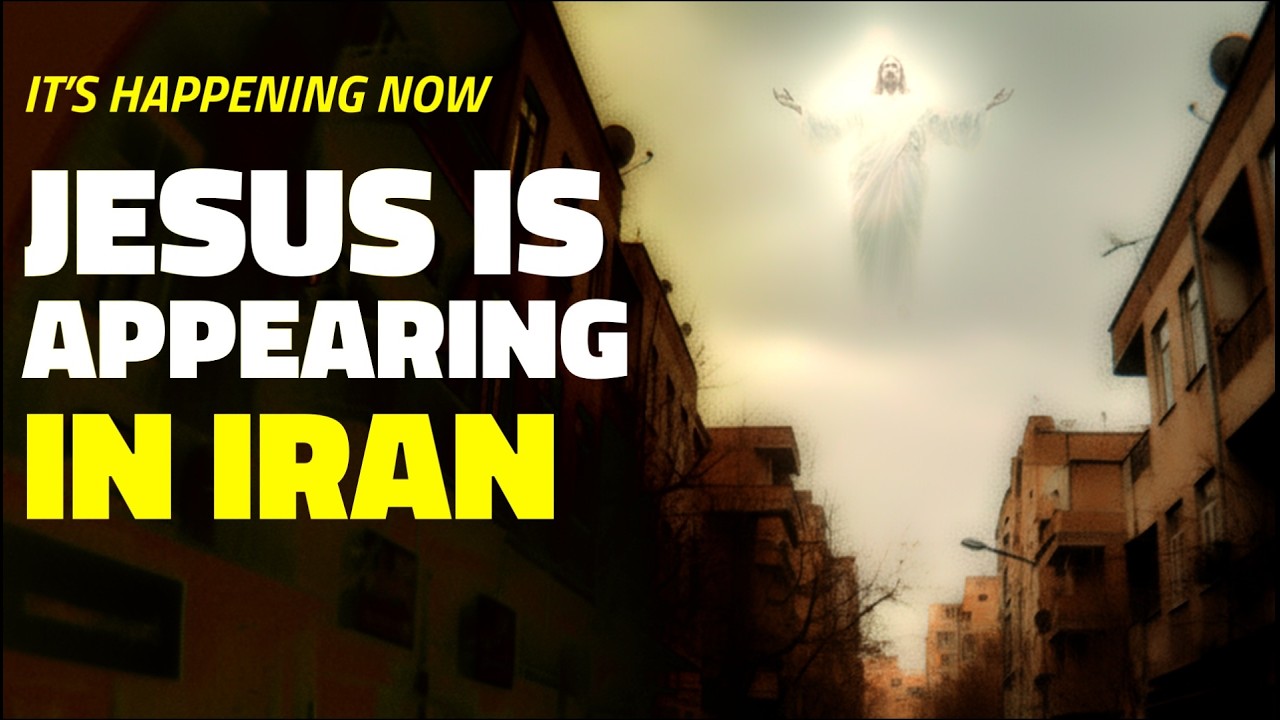
The Man in White: Why Thousands of Iranians Are Secretly Turning to Jesus
What happens when a government closes churches, bans missionaries, restricts Bibles, and threatens converts with prison? Most people would expect Christianity to disappear.
Yet in one of the most heavily restricted religious environments on earth, the opposite appears to be happening.
Behind closed apartment doors, in crowded cities, in remote villages, and in the quiet darkness of bedrooms across Iran, thousands of men and women are reporting something remarkable. Many claim they encountered a mysterious man dressed in white. Some say he appeared in dreams. Others describe visions so vivid they changed the course of their lives forever. What makes these stories especially intriguing is that many of those who tell them had little or no prior exposure to Christianity.
How can a faith grow rapidly where it is actively opposed? Who is this “man in white” that so many describe in strikingly similar ways? And why are these testimonies emerging from a country where public conversion can carry enormous personal risk?
To understand the mystery, we must begin with a paradox that has puzzled observers for years.
The Paradox of Iran
Modern Iran is not a place where Christianity enjoys freedom or public support. Religious conversion away from Islam can bring severe social consequences. Churches have faced restrictions, some pastors have been arrested, and many Christian gatherings operate quietly and discreetly.
By all conventional measures, Christianity should be shrinking.
Instead, numerous researchers, ministries, and observers have reported significant growth within Iran’s underground Christian movement. What makes this especially surprising is that many of the traditional methods of evangelization are largely absent.
There are no massive public crusades.
There are no stadium events.
There are very few foreign missionaries.
Christian literature is difficult to obtain in many places.
Yet the movement continues to grow.
For sociologists and religious scholars, this presents a fascinating question. If the normal channels of religious expansion are restricted, what is driving this phenomenon?
Many Iranian Christians give an unexpected answer.
They say their journey began with a dream.
A Phenomenon That Refuses to Disappear
Stories of religious dreams are not unique to Iran. Throughout history, people from many cultures have reported profound spiritual experiences during sleep.
But what has drawn attention in recent decades is the sheer number of remarkably similar accounts emerging from Muslim-majority regions, particularly Iran.
Again and again, testimonies follow a recognizable pattern.
A person with little knowledge of Christianity experiences a vivid dream.
A radiant figure appears.
The figure is often described as wearing white.
The dream carries an overwhelming sense of peace, authority, or love.
Words are spoken.
The dreamer awakens convinced that the experience was real.
Only later do they discover that the figure they encountered closely resembles Jesus as described in the New Testament.
For many, this becomes the beginning of a spiritual search that eventually leads them to Christianity.
Critics may dismiss such accounts as psychological phenomena. Believers see them as evidence of divine intervention.
Regardless of one’s interpretation, the stories themselves are difficult to ignore.
When Despair Meets Hope
One testimony frequently echoed across various ministries and conversion accounts involves individuals who reached moments of extreme desperation before their experience occurred.
Consider the story of a young Iranian woman whom we will call Miriam.
According to accounts shared by Christian organizations, Miriam grew up in circumstances marked by deep emotional suffering. Life had become so painful that she had begun contemplating suicide.
One evening, overwhelmed by hopelessness, she cried out to God.
Not to a specific religion.
Not to a specific doctrine.
Simply to God.
“If you are there,” she pleaded, “help me.”
Exhausted from tears, she eventually fell asleep.
That night she experienced something she would never forget.
She later described seeing a man clothed in white. Unlike the harsh image of religion she had carried for much of her life, this presence radiated compassion.
The figure spoke words that would remain with her forever.
“Come to me.”
“I love you.”
“I will not hurt you.”
When she awoke, she said something had changed.
The crushing despair that had consumed her seemed gone.
The circumstances of her life had not magically disappeared. Her problems remained. Yet she felt an unfamiliar peace.
More importantly, she wanted to know who the man was.
That search eventually led her to Christian believers. When she encountered the words of Jesus in the Gospels, she claimed to recognize them immediately.
The words she was reading were the same words she believed she had heard in her dream.
Today, according to her testimony, she remains active within Iran’s house church movement.
Whether viewed through a spiritual lens or a psychological one, stories like Miriam’s continue to emerge with remarkable consistency.
But not all involve suffering victims.
Some involve persecutors.
The Hunter Who Became a Believer
One of the most striking themes within conversion narratives is the transformation of individuals who were actively hostile toward Christianity.
Among the stories frequently shared by ministries serving Iranian converts is that of a security officer tasked with investigating underground churches.
His role was not merely administrative.
He was responsible for identifying Christians, disrupting gatherings, and enforcing restrictions.
By his own understanding, he was defending the faith.
Then something unexpected happened.
After participating in operations against Christians, he reportedly experienced a dream unlike anything he had known before.
In the dream, a man clothed in brilliant white stood before him.
The officer felt unable to resist the presence.
He later described being overwhelmed not by fear, but by a powerful love that exposed every certainty he possessed.
Then came a question.
“Why are you persecuting me?”
For many Christians, those words immediately recall the conversion of Saul of Tarsus in the Book of Acts.
Saul, who later became the Apostle Paul, heard a similar question on the road to Damascus.
The parallel deeply affected the officer.
According to the testimony, he awoke shaken.
The anger that had fueled his actions seemed suddenly hollow.
Instead of pursuing Christians, he began searching for answers.
Eventually, he sought out believers not to arrest them, but to learn from them.
His life changed course entirely.
Skeptics may debate the origins of such experiences, but the transformative impact on individuals is difficult to deny.
People who once opposed Christianity often become some of its most passionate advocates.
Why?
Because they believe they encountered not an idea, but a person.
Why Dreams?
One question naturally arises.
Why would spiritual experiences occur through dreams rather than public miracles visible to everyone?
For many observers, the answer may lie partly in culture.
Throughout the Middle East, dreams have historically carried great significance. They are often viewed as meaningful, sometimes even sacred.
Dreams occupy an important place within Islamic tradition as well.
A message delivered through a dream therefore speaks a language many people already understand.
It bypasses barriers.
It crosses borders.
It enters homes where books cannot.
It reaches individuals who may never attend a church.
In environments where public religious discussion is restricted, dreams remain beyond the control of governments and institutions.
No authority can inspect a person’s sleep.
No law can prevent a dream.
This reality has led some Christian leaders to suggest that dreams serve as a unique avenue for spiritual exploration in closed societies.
The Prophetic Dimension
For many believers, however, the explanation goes deeper than culture.
They point to biblical passages that speak of dreams and visions in times of spiritual awakening.
One frequently cited text comes from the Book of Joel:
“I will pour out my Spirit on all people. Your old men will dream dreams, your young men will see visions.”
Christians who view the Iranian phenomenon through a prophetic lens see these accounts as a continuation of that promise.
In their view, God is reaching people directly where traditional avenues are unavailable.
The extraordinary growth of Christianity under difficult circumstances becomes, for them, evidence that faith cannot be extinguished by force.
History provides many examples of religious movements surviving persecution.
Iran’s story may be one of the most compelling modern examples.
The Underground Church
Perhaps the most remarkable aspect of Christianity’s growth in Iran is that much of it occurs quietly.
Large cathedrals do not dominate city skylines.
Televised sermons do not fill the airwaves.
Instead, faith often spreads through personal relationships.
Small gatherings meet in homes.
Families share experiences with trusted friends.
Conversations happen in whispers.
And increasingly, many participants point to dreams as the spark that ignited their search.
Researchers studying religious movements often note that conviction gained through personal experience tends to be particularly resilient.
People may argue with doctrines.
They may challenge institutions.
But experiences they believe they personally lived are much harder to dismiss.
This helps explain why many Iranian converts remain committed despite significant risks.
They do not see themselves as adopting a new philosophy.
They see themselves as responding to an encounter.
A Challenge to the Comfortable World
The stories emerging from Iran raise an uncomfortable question for Christians living in countries with complete religious freedom.
In many parts of the world, churches are readily available.
Bibles can be purchased in countless bookstores.
Sermons are accessible with a click.
Religious content fills television channels and social media feeds.
Yet faith often struggles against apathy.
Meanwhile, in places where faith carries a cost, people continue seeking it.
Many Iranian believers have never enjoyed the conveniences available to Christians elsewhere.
What they often possess instead is a profound sense of urgency.
Their faith is not cultural.
It is personal.
Not inherited.
Chosen.
Not convenient.
Costly.
That reality has inspired Christians around the world to reflect on the value they place on beliefs they can practice freely.
The Man in White
At the center of all these accounts stands a recurring image.
A man dressed in white.
A figure described with striking consistency by people separated by geography, background, and circumstance.
To skeptics, the phenomenon invites psychological and sociological investigation.
To believers, it points toward something far greater.
Either way, the stories continue.
They emerge from apartments in Tehran.
From villages hidden among mountains.
From university dormitories.
From former prisoners.
From former skeptics.
From former persecutors.
Again and again, the testimonies tell a similar story:
A dream.
A voice.
An encounter.
A transformed life.
And perhaps that is why the phenomenon has captured so much attention.
Because beyond debates about religion, politics, or ideology lies a deeply human question.
What happens when people believe they have encountered hope in their darkest moment?
For thousands of Iranians, the answer appears to be life-changing.
Their stories remind us that faith often travels paths no one expects. It crosses walls, survives pressure, and appears in places where logic predicts it should vanish.
Whether one views these accounts as miracles, mysteries, or matters of personal conviction, one fact remains undeniable: in one of the least likely places on earth, a movement continues to grow.
And according to many who have joined it, it all began with a man dressed in white.