Viral Milo Debate With Muslim Conservative Woman Ignites U.S. Firestorm Over Islam, Sharia, and Western Values
Viral Milo Debate With Muslim Conservative Woman Ignites U.S. Firestorm Over Islam, Sharia, and Western Values
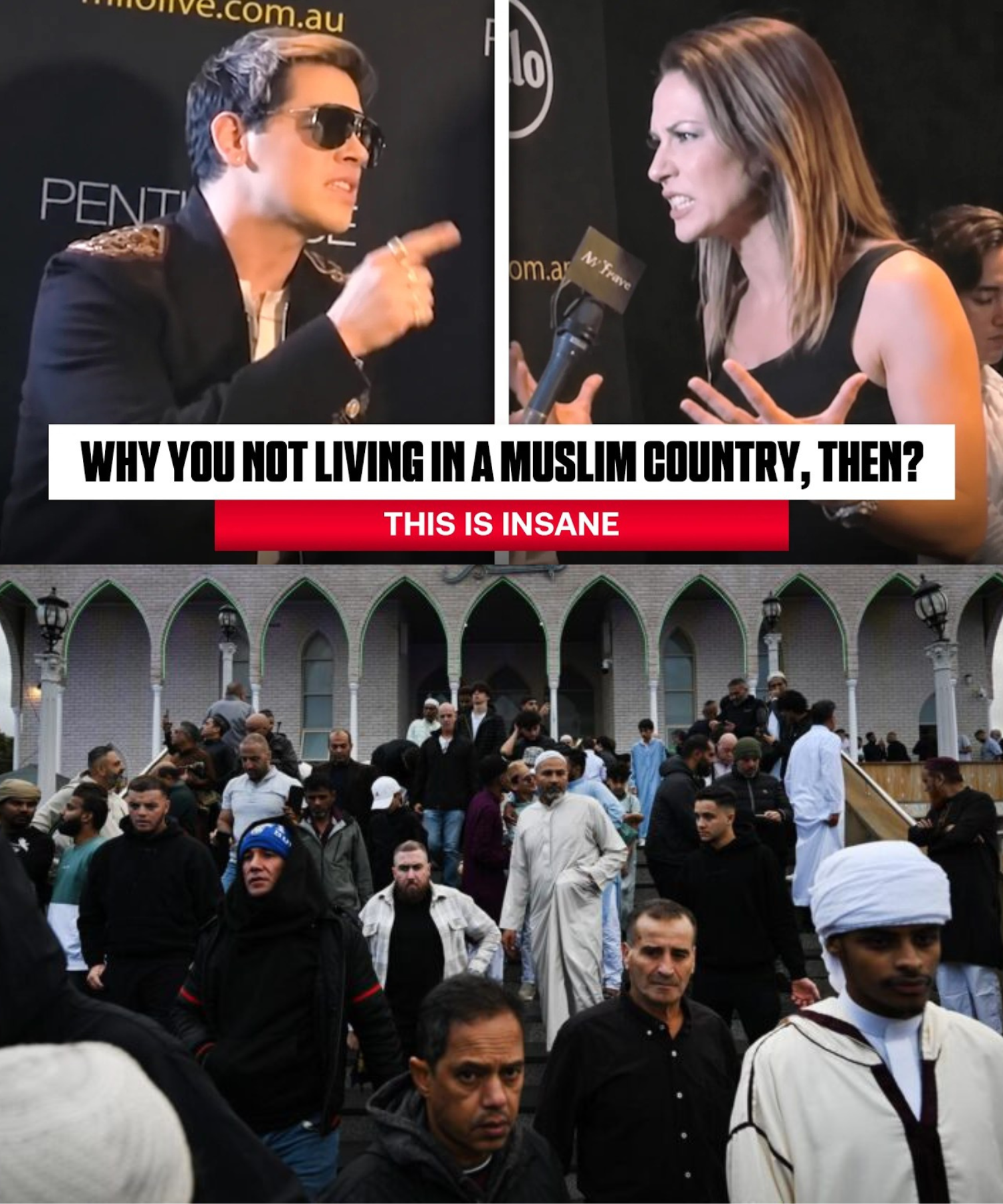
A fiery debate between conservative commentator Milo Yiannopoulos and a self-described Muslim conservative woman has exploded across American social media, reigniting one of the most divisive questions in the West: can Islam, as a religious and political system, be fully reconciled with modern liberal democracy?
The exchange, now being shared widely among U.S. political commentators, began as a discussion about extremism, Sharia, women’s rights, homosexuality, and immigration. But within minutes, the conversation turned into a brutal clash over faith, identity, and whether Western societies are being asked to tolerate ideas that may conflict with their own freedoms.
The woman, identified in the clip as an Australian Muslim conservative, opened by saying that extremism and terrorism must be eradicated. She also acknowledged that Sharia law is not compatible with the legal order of countries like Australia, Britain, and the United States. On the surface, her position sounded moderate: she was Muslim, conservative, and opposed to extremism.
But Milo immediately pressed deeper.
If Sharia is incompatible with Western law, he asked, would she rather live under Sharia? Did she believe women’s testimony should be worth less than men’s in certain legal settings? Did she believe women should be able to drive? Did she support equal treatment for women and homosexuals?
The woman answered that women are equal to men and that many abuses in majority-Muslim countries are the fault of culture, corruption, bad men, or extremist interpretations — not Islam itself.
That answer did not satisfy Milo.
He argued that when similar patterns appear across multiple societies where Islam has strong legal or cultural power — restrictions on women, punishment of homosexuality, blasphemy laws, honor-based violence, and hostility toward dissent — Westerners have a right to ask whether the problem is merely “bad interpretation” or something deeper in the tradition itself.
That question became the heart of the viral controversy.
For supporters of Milo, the debate showed a contradiction they believe is common among moderate Muslims in the West: they enjoy the protections of liberal societies, reject the harshest practices found in some Muslim-majority countries, but still defend Islam as if those outcomes have nothing to do with the religion. Critics of Milo, however, argue that he used broad generalizations that unfairly place millions of peaceful Muslims under suspicion.
That tension is now exploding in America.
In U.S. cities, school boards, universities, and immigration debates, Americans are increasingly being forced to confront difficult questions about religion and public life. Muslim Americans serve in the military, run businesses, practice medicine, teach in schools, and raise families. Many are deeply patriotic and strongly opposed to extremism. But critics of political Islam argue that Western governments cannot ignore the real-world record of Islamist movements, Sharia-based legal systems, and religious conservatism that conflicts with Western norms.
The debate became sharper when Milo asked whether there was any majority-Muslim country the woman would rather live in than Australia.
She said no.
To Milo, that answer proved the point. If Western countries offer greater freedom, safety, and dignity than the systems she was defending, then why defend those systems so strongly? The woman responded that each country has its own laws and that Islam should not be blamed for every abuse committed by people who identify as Muslim.
But Milo kept pressing: if Islam is being practiced wrongly almost everywhere, where is it being practiced correctly?
The woman said no one practices religion perfectly. Milo seized on that response and framed it as an admission that the “ideal” version of Islam she defended exists mostly in theory, not in any functioning society.
The conversation then moved into Islamic doctrine. Milo raised the concept of Quranic abrogation, arguing that later verses can supersede earlier ones in traditional Islamic scholarship. He claimed that this creates problems for reformers who emphasize Islam’s peaceful passages while ignoring later, more militant interpretations. The woman challenged his knowledge and asked which scholars he relied on, but Milo accused her of not knowing enough about her own faith.
That moment changed the emotional tone of the exchange.
Milo began asking about her personal religious practice: did she pray five times a day, attend Friday prayers, follow an imam, give zakat, complete pilgrimage, and know the five pillars of Islam? The woman repeatedly answered that she tried her best and was not “the best Muslim.” She said her relationship with God was personal and that only God could judge her.
To some viewers, Milo’s questioning was needlessly aggressive and personal. To others, it exposed a deeper issue: someone publicly defending a religion should understand and practice its fundamentals.
This part of the debate triggered heavy reaction among American conservatives who argue that many Western Muslims live relatively secular lives while defending a faith that is practiced more strictly elsewhere. They say the problem is not ordinary peaceful Muslims, but the possibility that large-scale immigration from more conservative religious cultures could eventually reshape Western values.
Progressive critics reject that framing as dangerous. They argue that religious identity is complex and that no Christian, Jew, Muslim, Hindu, or atheist should be forced to prove purity before speaking. They also warn that turning a debate about doctrine into a test of whether someone “really belongs” can easily become discriminatory.
Then came the most explosive moment: Milo’s proposed “solution.”
When the woman asked him what should be done, Milo answered with a hardline position: Islam should be expelled from the West, and anyone who describes themselves as Muslim should be sent back to the Middle East.
That statement has drawn fierce condemnation from many viewers, including people who agree with some of his critiques of Islam. In the American context, such a proposal would collide directly with constitutional protections for religious freedom and equal citizenship. The United States does not allow the government to deport people because of their religion. Muslim Americans are Americans.
Still, the fact that the clip spread so widely shows how intense the immigration and identity debate has become.
Many Americans are no longer satisfied with vague assurances that “extremism has nothing to do with religion.” They want clearer answers about integration, national values, public safety, women’s rights, LGBT rights, and whether newcomers must adapt to American civic principles.
At the same time, the debate reveals the danger of going too far. Criticizing Sharia, Islamist movements, or oppressive practices is one thing. Treating every Muslim as a threat is something else entirely. A democratic society must be able to challenge ideas without turning citizens into enemies.
That is the unresolved tension at the center of the viral exchange.
Milo’s supporters say he exposed contradictions that polite society refuses to discuss. His critics say he crossed the line from criticism of ideology into sweeping hostility toward a religious minority. The Muslim woman tried to present a peaceful, personal version of Islam, but struggled under pressure to explain how that version relates to the broader record of Islamic societies.
In the end, the debate did not settle anything.
It did, however, expose the battle now unfolding across the West: how to defend liberal freedoms without surrendering to extremism, and how to criticize religious ideas without demonizing the people who hold them.
For America, that question is no longer theoretical.
It is already here.