Why Did Jesus Sweat Blood? The Phenomenon That Challenges Atheists
“The Wall That Survived the End of the World”: Peru’s Lord of Miracles and the Earthquakes That Defied Explanation
A centuries-old religious tradition in Peru is once again drawing global attention after renewed interest in the story of the “Lord of Miracles,” a fragile mural painted by an enslaved African man that reportedly survived multiple catastrophic earthquakes that destroyed colonial Lima.
The image, painted on a simple adobe wall in the 17th century, has become one of the most powerful symbols of faith in Latin America. Its survival through repeated seismic disasters — including some of the most devastating earthquakes in recorded history — continues to fuel debate between believers, historians, and scientists.
At the center of the story lies a question that still divides interpretation:
How did a fragile mud wall survive when everything else collapsed?
A Painting Born in Colonial Silence
The origins of the Lord of Miracles trace back to 1651 in colonial Lima, then one of the richest cities in the Spanish Empire.
Behind its wealth and architecture, however, was a brutal system of slavery. In a poor district known as Pachacamilla, enslaved Africans from Angola were forced to live and work under harsh conditions.
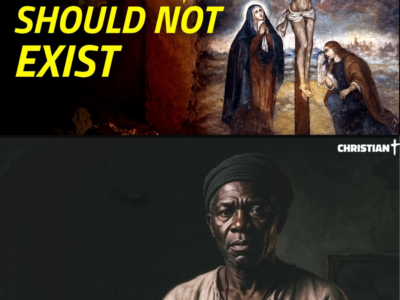
Within this marginalized community, an unnamed enslaved man — his identity lost to history — painted an image of Jesus Christ on a fragile adobe wall made of mud and straw.
Some historical accounts refer to him as Benito or Pedro, but no verified record preserves his true name.
The painting quickly became a spiritual focal point for the enslaved community, who gathered in secret to pray, sing, and seek comfort before the image.
1655: The First Earthquake and the First Mystery
On November 13, 1655, a powerful earthquake struck Lima, destroying much of the city.
Stone buildings collapsed, entire neighborhoods were leveled, and thousands of lives were lost.
In Pachacamilla, nearly every structure was reduced to rubble.
Yet according to historical accounts, the adobe wall bearing the painted Christ remained standing — intact and uncracked.
From a structural perspective, adobe is highly vulnerable to seismic activity due to its lack of tensile strength. It typically collapses faster than stone masonry during earthquakes.
The survival of a single fragile wall under such conditions became the first defining element of the legend.
The Attempt to Erase the Image
As devotion to the mural grew, colonial authorities became increasingly concerned.
Large gatherings formed around the site, consisting primarily of enslaved people, the poor, and the sick. For many, the wall became a place of hope in an otherwise oppressive society.
Spanish civil and religious officials feared that these gatherings could evolve into unrest or resistance.
Eventually, an order was issued to destroy the painting.
According to accounts preserved in historical tradition, multiple attempts to erase the image failed. Individuals sent to remove it reportedly experienced fear, paralysis, or emotional distress, preventing them from completing the task.
The order was ultimately revoked.
1687: Earthquake, Tsunami, and Survival Again
In 1687, another devastating earthquake struck Lima and nearby Callao, triggering a tsunami that destroyed coastal communities.
A chapel later built around the mural was completely destroyed.
Yet once again, the original wall reportedly remained standing amid the ruins.
Following this disaster, a local landowner commissioned a replica of the image on canvas so it could be carried through the streets.
This marked the beginning of public religious processions — a tradition that would eventually evolve into the famous “Purple Month” observance held every October.
1746: The Cataclysm That Changed Everything
The most dramatic event in the narrative occurred on October 28, 1746.
A massive earthquake — estimated by modern seismologists to approach magnitude 9 — struck coastal Peru.
The port of Callao was almost completely destroyed by a tsunami that followed, killing the majority of its population.
In Lima, entire districts collapsed, and more than 10,000 people reportedly died in a single night.
Yet the adobe wall with the painted Christ survived for a third time, standing amid widespread destruction.
This repeated survival became central to its transformation from local devotion into national religious identity.
Science vs. Interpretation: The Ongoing Debate
Skeptical interpretations of the phenomenon emphasize natural seismic variability.
Earthquake damage is often uneven, and isolated structures can occasionally survive due to soil composition, orientation, or structural shielding.
From this perspective, the survival of the wall — while remarkable — may fall within the boundaries of rare but natural probability.
However, supporters of the miracle interpretation point to the repeated survival across three major catastrophic events as statistically extraordinary.
The debate remains unresolved between geological explanation and devotional interpretation.
The Forgotten Artist Behind the Wall
One of the most powerful aspects of the story is the identity of the artist himself.
The enslaved African man who painted the original image is not recorded in official colonial documents. His existence is known only through tradition and community memory.
In modern interpretation, he represents thousands of enslaved individuals whose contributions to culture and spirituality were erased by colonial systems.
His painting survived empires, censorship, and natural disasters — even as his identity disappeared from historical record.
The Rise of a National Devotion
Over time, devotion to the Lord of Miracles expanded far beyond its original community.
Today, millions of people participate in October processions in Lima, many dressed in purple robes, carrying replicas of the sacred image through the streets.
The event is now one of the largest religious gatherings in the world.
What began as a hidden act of devotion among enslaved people has become a national symbol of identity, resilience, and faith.
A Symbol Beyond Religion
Beyond theological meaning, the Lord of Miracles has also become a cultural and historical symbol.
For believers, it represents divine protection and hope amid suffering.
For historians, it reflects the transformation of colonial trauma into collective identity.
For anthropologists, it demonstrates how communities use narrative and ritual to preserve memory across centuries.
The image is no longer just a painting — it is a living tradition.
Conclusion: A Wall That Outlived Empires
More than 350 years after its creation, the original mural still stands preserved in Lima’s Church of the Nazarene.
It has survived earthquakes, censorship attempts, colonial rule, and the collapse of entire cities.
Whether interpreted as miracle or coincidence, its cultural impact is undeniable.
The Spanish Empire has disappeared. Colonial Lima has transformed into a modern capital.
But the fragile wall painted by an enslaved man remains — still central to one of the most powerful religious traditions in the Americas.
And the question that continues to echo through history is simple, yet unresolved:
How did something so fragile survive everything that was meant to destroy it?