Former Muslim Apologist’s Shocking Testimony Ignites U.S. Debate Over the Bible, Jesus, Islam, and the Cost of Conversion
Former Muslim Apologist’s Shocking Testimony Ignites U.S. Debate Over the Bible, Jesus, Islam, and the Cost of Conversion
A powerful testimony from a former Muslim apologist has gone viral across American Christian circles, reigniting one of the most sensitive religious debates in the country: what happens when a deeply committed Muslim begins investigating Christianity and discovers that the arguments he once used against the Bible may not be as strong as he believed?
The story begins on a college campus, where a young Muslim speaker, confident in his faith and trained to challenge Christians, believed he had the perfect argument. He had used it many times before. The Bible, he would say, was unreliable. Jesus spoke Aramaic. The earliest church had roots in Jewish Palestine. The New Testament was written in Greek. Then came Latin, German, English, and countless modern versions. To him, Christianity appeared to rest on a long chain of translations — a message passed through so many hands that the original truth must have been lost.
He expected the Christian student in front of him to collapse under the pressure.
Instead, the Christian closed his Bible and calmly said, “Go on.”
That moment changed everything.
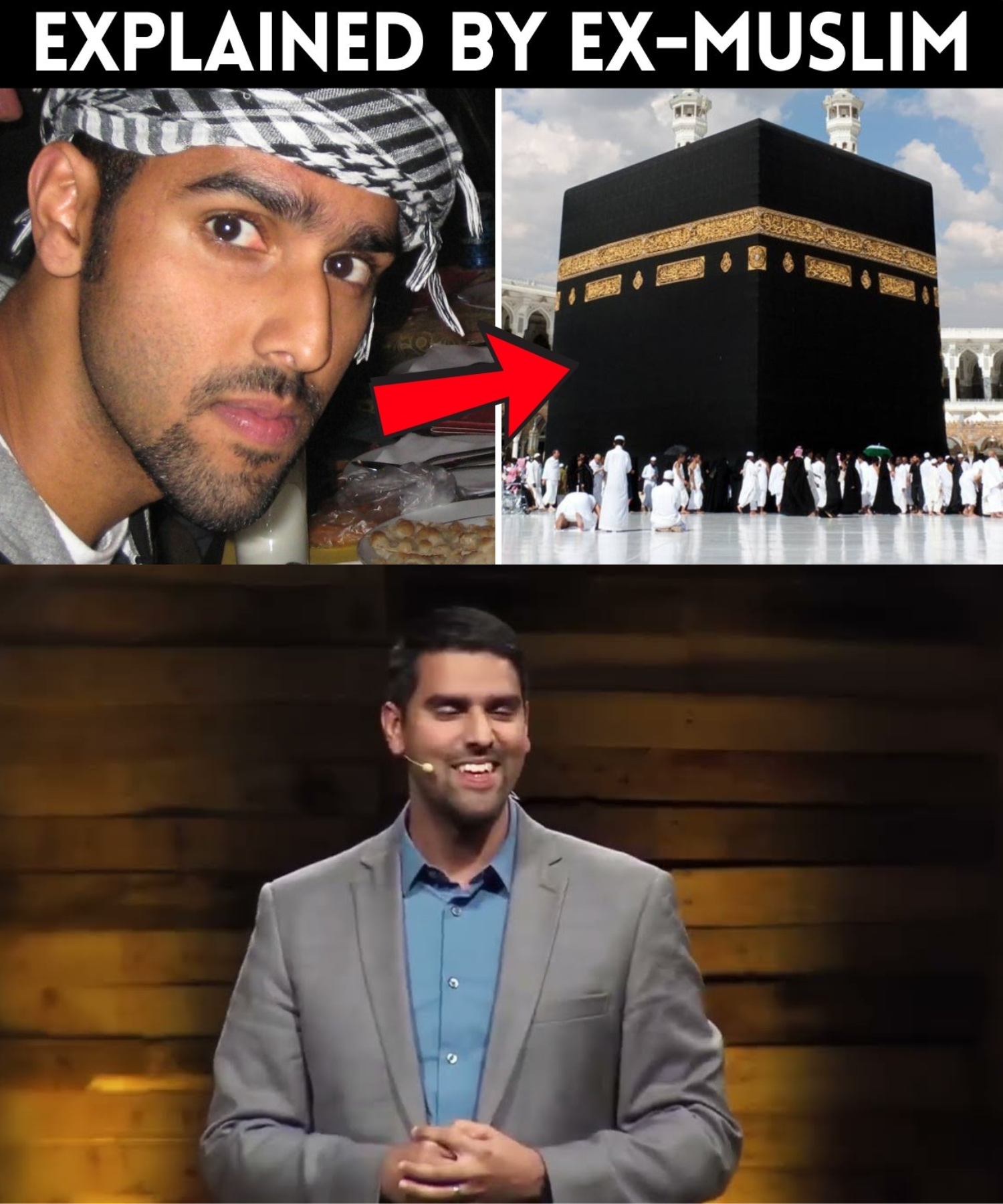
The Muslim student, identified in the testimony as Nabil, later recalled that he had already challenged many Christians before college. He knew the lines. He knew the pressure points. He knew how to make believers doubt whether they could trust the Bible. But this time, he met someone prepared — a friend named David, who would eventually become one of the most important figures in his life.
David’s response was simple but devastating. He reminded Nabil that multilingual people translate accurately all the time. Just because a message moves from one language to another does not mean it becomes corrupted. If someone speaks to his mother in one language and later tells a friend the message in English, that does not automatically make it false.
Then David went further.
He argued that the New Testament was not built on one fragile manuscript but preserved through thousands of early Greek manuscripts, ancient translations, and quotations from early church fathers. According to David’s argument, even if every direct manuscript vanished, the text could still be reconstructed through early Christian writings and translations.
Nabil did not believe him.
He thought David was making it up.
But that challenge launched a years-long investigation that would transform his life. What began as a debate between two college friends became a serious pursuit of truth. They argued in dorm rooms, in classrooms, in homes, and during ordinary life. They were not enemies. They became best friends. That friendship mattered because David was not simply trying to win an argument. He loved Nabil enough to walk with him through every question.
That is one of the reasons the testimony has struck such a deep chord in America.
In a culture where religious debates often become shouting matches, this story presents something different: conviction joined with friendship. David challenged Nabil’s worldview, but he did it as someone Nabil trusted. He did not merely hand him a tract and walk away. He stayed.
After about a year, Nabil reached a conclusion he had never expected: the New Testament manuscripts were reliable. He did not yet believe Christianity was true, but he no longer believed the Bible had been uniformly and secretly corrupted beyond recovery.
Then came the next crisis.
If the New Testament was reliable, did Jesus actually claim to be God?
For a Muslim, this question cuts straight to the center of faith. Islam honors Jesus as the Messiah and a great prophet, but rejects the claim that Jesus is divine. In Islamic theology, calling Jesus God is not a small error. It is one of the greatest forms of blasphemy. The Quran rejects the idea that Jesus is God and denies the crucifixion in the way Christians understand it.
So Nabil began searching.
He first read the Gospel of John, where the opening chapter declares that the Word was with God and was God, and that the Word became flesh. He then examined passages such as John 8:58, where Jesus says, “Before Abraham was, I am,” a statement Christians connect to God’s self-revelation to Moses in Exodus. He later turned to earlier Gospel material, including Mark, and saw Jesus making claims that led religious authorities to accuse him of blasphemy.
The pressure became unbearable.
If the New Testament was reliable, and if Jesus claimed divine identity, then Nabil’s inherited understanding of Islam and Christianity could not remain untouched. His investigation was no longer academic. It was personal. It could determine the course of his life.
Then came the resurrection.
Nabil reasoned that anyone can claim to be God. In medical school, he had encountered psychiatric patients who made grandiose religious claims. A claim by itself proves nothing. But if someone claims divine authority, predicts death, and then rises from the dead, the claim must be taken seriously.
He began examining the historical evidence for Jesus’ death and resurrection. In his testimony, he points out that even many skeptical scholars accept that Jesus died by crucifixion under Pontius Pilate. That alone was deeply troubling for him, because the Quran says Jesus was not killed or crucified in the way Christians claim. If the crucifixion is historically solid, then the conflict between Christianity and Islam becomes unavoidable.
For Nabil, the case for Christianity grew stronger. But David challenged him to apply the same level of skepticism to Islam that he had applied to Christianity.
That was the turning point.
Nabil began comparing the historical evidence for Jesus and the New Testament with the early sources for Muhammad’s life and the Quran. According to his testimony, the first major biographical sources for Muhammad came much later than the earliest sources for Jesus. He also began reexamining the claims he had heard from childhood about the Quran’s preservation, scientific miracles, and prophetic authority. Under the same critical standards he had used against Christianity, those claims began to weaken.
But accepting Christianity was not simply an intellectual move.
For Nabil, it meant potentially losing everything.
He came from a Muslim family shaped by honor, community, faith, and heritage. Leaving Islam would not be treated as a private theological adjustment. It would bring shame upon his parents. It would damage family reputation. It could destroy relationships. In some Islamic legal traditions, apostasy carries severe consequences. For many converts from Islam, the cost is social, emotional, and sometimes physical.
That is why his testimony is so dramatic.
He was not choosing between two abstract ideas. He was choosing between truth as he believed he had found it and the life he had always known.
Nabil began praying for guidance. In his Muslim background, dreams were often viewed as a possible way God could direct a person. He says he received dreams, including one of a narrow door and a wedding feast. When David pointed him to Luke 13, where Jesus speaks of entering through the narrow door, Nabil was shaken. Later, while grieving what conversion would cost him, he opened the Bible and read, “Blessed are those who mourn, for they shall be comforted.”
He felt the words were for him.
Finally, he prayed and submitted his life to Jesus.
But the hardest moment came after conversion, when his father cried in front of him for the first time. His father, a U.S. Navy veteran and symbol of strength in his life, told him it felt as if his backbone had been ripped out. His mother said little, but Nabil remembered the light in her eyes fading.
That pain nearly crushed him.
He asked God why he had not died before telling them. If he had died after believing but before breaking their hearts, he thought, everyone would have been spared the agony. Then he says he sensed one answer: “This is not about you.”
That moment changed his understanding of the gospel.
Christianity was no longer merely a set of arguments about manuscripts, history, and resurrection. It became a call to love others with the same sacrificial love that Christians believe Jesus showed on the cross.
That is why the testimony is resonating across America.
It is not just a conversion story. It is a story about friendship, evidence, doubt, family pain, intellectual honesty, and the cost of following truth wherever it leads.
For some viewers, it is a powerful defense of Christianity. For Muslims, it may be painful and contested. For secular audiences, it raises a broader question: how many people are willing to test their own beliefs with the same skepticism they apply to others?
Nabil’s story does not ask for casual belief.
It asks whether truth is worth everything.