Viral Quran Preservation Debate Explodes Across America After Christian Apologist Challenges Islam’s “Perfectly Preserved” Claim
Viral Quran Preservation Debate Explodes Across America After Christian Apologist Challenges Islam’s “Perfectly Preserved” Claim
A fiery online apologetics debate has erupted across American religious media after a Christian commentator challenged one of Islam’s most repeated claims: that the Quran has been perfectly preserved, word for word, letter for letter, from the time of Muhammad until today.
The clip, now circulating through Christian debate channels, Muslim response videos, and religious livestream communities in the United States, centers on a controversial argument built from Islamic sources themselves. The speaker did not begin by quoting Christian theologians, Western historians, or anti-Islam polemics. Instead, he turned to hadith literature — the very tradition many Sunni Muslims accept as authentic — and argued that the Islamic record tells a far more complicated story about the Quran’s preservation than many modern believers are willing to admit.
The central issue was the collection of the Quran after Muhammad’s death.
According to the argument presented in the livestream, the Quran was not compiled into a single official book during Muhammad’s lifetime. The speaker cited a well-known narration involving Abu Bakr, Umar, and Zayd ibn Thabit, where the death of Quran memorizers in battle created fear that portions of the Quran could be lost. For the Christian critic, that detail was explosive.
His question was simple: if the Quran was perfectly preserved through mass memorization, why were early Muslim leaders afraid that parts of it might disappear when reciters died?
That question became the heart of the viral clip.
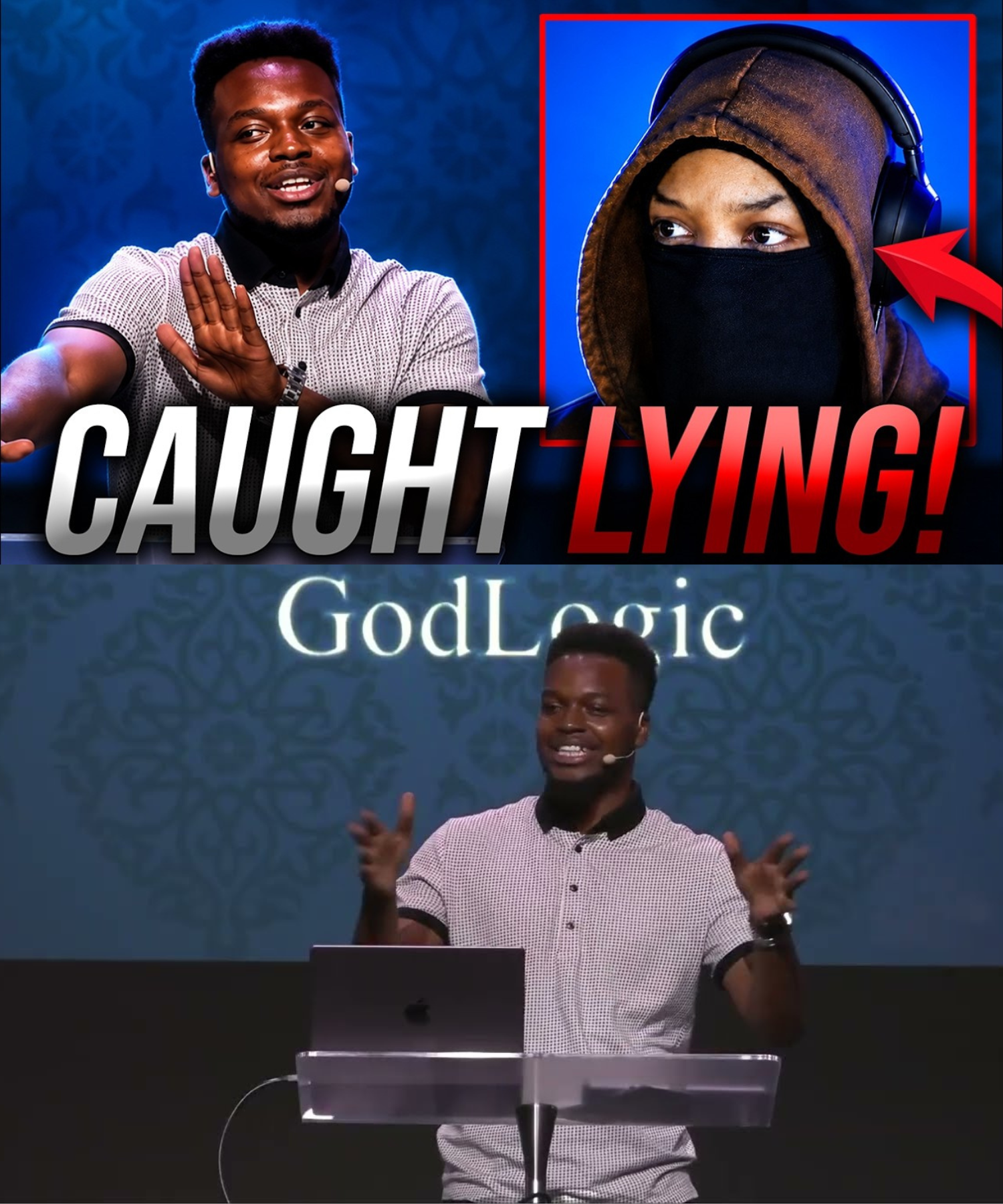
The speaker emphasized that Umar reportedly warned Abu Bakr that heavy casualties among those who had memorized the Quran could result in a “large part” of the Quran being lost. In the speaker’s view, this does not sound like a community possessing a universally fixed, easily verified text known completely by everyone. It sounds like a community rushing to preserve scattered material before it vanished.
He then focused on Abu Bakr’s hesitation.
According to the narration discussed in the stream, Abu Bakr initially resisted the idea of collecting the Quran into one manuscript because Muhammad himself had not done so. The speaker framed this as a major problem for Islamic apologetics. If compiling the Quran into a single book was necessary, why did the prophet not do it while alive? And if Abu Bakr saw the project as something Muhammad did not perform, was the collection itself an innovation?
The word “bid‘ah” — religious innovation — quickly became part of the discussion.
In the livestream, the speaker called attention to the fact that Abu Bakr had to be persuaded by Umar before approving the collection project. For critics of Islam, this has become a dramatic talking point: the most important text in Islam, they argue, was formally compiled only after Muhammad’s death, under pressure, by men trying to prevent loss.
Muslim defenders reject that framing.
They argue that the Quran existed in written fragments and in living memorization during Muhammad’s lifetime, and that Abu Bakr’s collection was not an invention of new scripture but a careful preservation effort. To them, the narration proves the seriousness of the early Muslim community, not the weakness of the text.
But the Christian commentator pressed further.
He focused on Zayd ibn Thabit, the scribe tasked with gathering the Quran. According to the narration, Zayd described the mission as so heavy that moving a mountain would have been easier. The speaker argued that this line matters because it suggests the task was not simple. The Quran, he said, had to be searched for among palm stalks, stones, written fragments, and men who knew portions by heart.
That description, he argued, clashes with modern claims that the Quran was always universally memorized, perfectly accessible, and easily cross-checked by the entire Muslim community.
Then came the detail that triggered the sharpest reaction: a verse reportedly found with only one man.
The speaker highlighted the narration’s claim that the last verses of Surah al-Tawbah were found with Abu Khuzaymah al-Ansari and not with anyone else. His challenge was direct: if only one person had that verse, who could correct him if he misremembered it? How could later Muslims claim mass verification if a key moment in the collection process depended on one individual witness?
That argument struck American Christian audiences because it flips a familiar Muslim claim on its head.
Muslim apologists often argue that the Quran is uniquely preserved because if one reciter makes a mistake, others can correct him instantly. But the speaker asked: what happens when a verse is found with only one man? What happens when Muhammad is no longer alive to verify the compilation? What happens when the official manuscript comes after the prophet’s death?
The debate then moved to the Hafsa manuscript.
In Islamic tradition, the manuscript compiled under Abu Bakr passed to Umar and then to Hafsa, the daughter of Umar and widow of Muhammad. The Christian commentator disputed a Muslim speaker’s claim that this manuscript “belonged to the Prophet Muhammad” or had been with him in a direct original sense. He argued that, according to the very narration being discussed, the compiled manuscript was produced after Muhammad’s death and therefore could not be a manuscript Muhammad personally reviewed as a completed Quran.
This point became especially important when the discussion turned to Uthman.
Islamic tradition holds that during Uthman’s caliphate, differences in recitation caused concern, leading Uthman to standardize the Quranic text and order other manuscripts burned. Muslim defenders often say this preserved unity and prevented confusion. Critics, however, argue that burning variant manuscripts raises unavoidable questions: if there was only one Quran, why did other written materials need to be destroyed?
In the livestream, the speaker mocked the idea that quoting hadith reports on these subjects should be called Islamophobic. His line was sharp: if quoting the Quran, Muhammad, the companions, or hadith is treated as “Islamophobic,” then the “Islamophobic material” is coming from Islamic sources themselves.
That line became one of the most shared moments of the video.
But the controversy is not merely about theology. It reflects a much larger religious battle unfolding in America.
Across YouTube, TikTok, livestream platforms, college debates, and church apologetics ministries, the question of Quran preservation has become a central front in Christian–Muslim polemics. Muslims often challenge the Bible’s textual history, pointing to manuscript variants, canon development, and translation issues. Christian apologists increasingly respond by turning the same scrutiny back onto the Quran.
The result is a high-stakes credibility war.
For Muslims, the Quran’s perfect preservation is not a minor doctrine. It is one of the foundations of Islamic confidence. If the Quran is the final revelation from Allah, then its preservation proves divine protection. But if its compilation history is messy, debated, or dependent on later human decisions, critics argue that Islam loses one of its most powerful claims against Christianity.
For Christians, the issue is strategic. They argue that Muslims often attack the Bible while assuming the Quran is immune from historical scrutiny. By quoting Islamic sources about collection, memorization, lost reciters, Hafsa’s manuscript, and Uthman’s standardization, Christian apologists believe they can force Muslims to defend their own tradition under the same pressure.
The debate ended without resolving the issue.
Muslim viewers will say the narration proves preservation, not corruption. Christian viewers will say it exposes vulnerability, not certainty. But the viral clip has already done its work.
It has pushed one question into the center of America’s online religion war:
If the Quran was perfectly preserved from the beginning, why did the earliest Muslims fear losing it?