Viral “Ex-Muslim Testimony” Video Sparks Global Firestorm Over Islam, Free Speech, and Western Identity
Viral “Ex-Muslim Testimony” Video Sparks Global Firestorm Over Islam, Free Speech, and Western Identity
New York — A viral video featuring a man identifying as a former Muslim has ignited a major international controversy, reigniting one of the most sensitive debates in Western political discourse: whether Islam is compatible with modern liberal democracies.
The footage, widely shared across social media platforms in the United States and Europe, shows the speaker delivering a highly critical account of Islam based on his personal experience growing up in religious schooling. His remarks, framed as a testimony from lived experience, argue that Islam is fundamentally incompatible with integration into Western systems and that its expansion carries long-term cultural and political consequences.
The video has triggered a wave of reactions, with supporters praising it as “truth-telling from inside the system” and critics condemning it as sweeping generalization that risks fueling religious tension and social division.
“Designed to Take Over Systems” — Core Claim Sparks Outrage
At the center of the video is the speaker’s claim that Islam was not designed to integrate into existing societies, but rather to transform them.
He argues that religious education and doctrinal structure create a framework where Islamic governance and social norms are intended to supersede non-Islamic systems over time.
In the video, he states that Islam “was not designed to integrate into any system, but to take over systems and submit people to its framework,” a claim that immediately sparked strong backlash from religious scholars, civil rights groups, and interfaith organizations.
Critics argue that such framing ignores the diversity of Islamic thought, which includes multiple schools of jurisprudence, philosophical traditions, and modern reformist movements across the Muslim world.
Europe, the UK, and the “Collapse Narrative”
The speaker repeatedly references Europe and the United Kingdom as examples of societies undergoing cultural transformation due to immigration and demographic change.
He claims that Western societies are “weakening” due to excessive tolerance and that cultural traditions are being replaced or diluted over time.
He further argues that Western nations may look fundamentally different within the next 50 years if current migration patterns continue, warning that cultural identity is being reshaped at a rapid pace.
This “civilizational decline” framing has become increasingly common in online political discourse, particularly among commentators critical of immigration policies in Europe.
However, demographers and policy experts caution that such narratives often oversimplify complex population trends, which are influenced by economics, birth rates, integration policies, and geopolitical instability.
Claims About Violence, Terrorism, and Religious Expansion
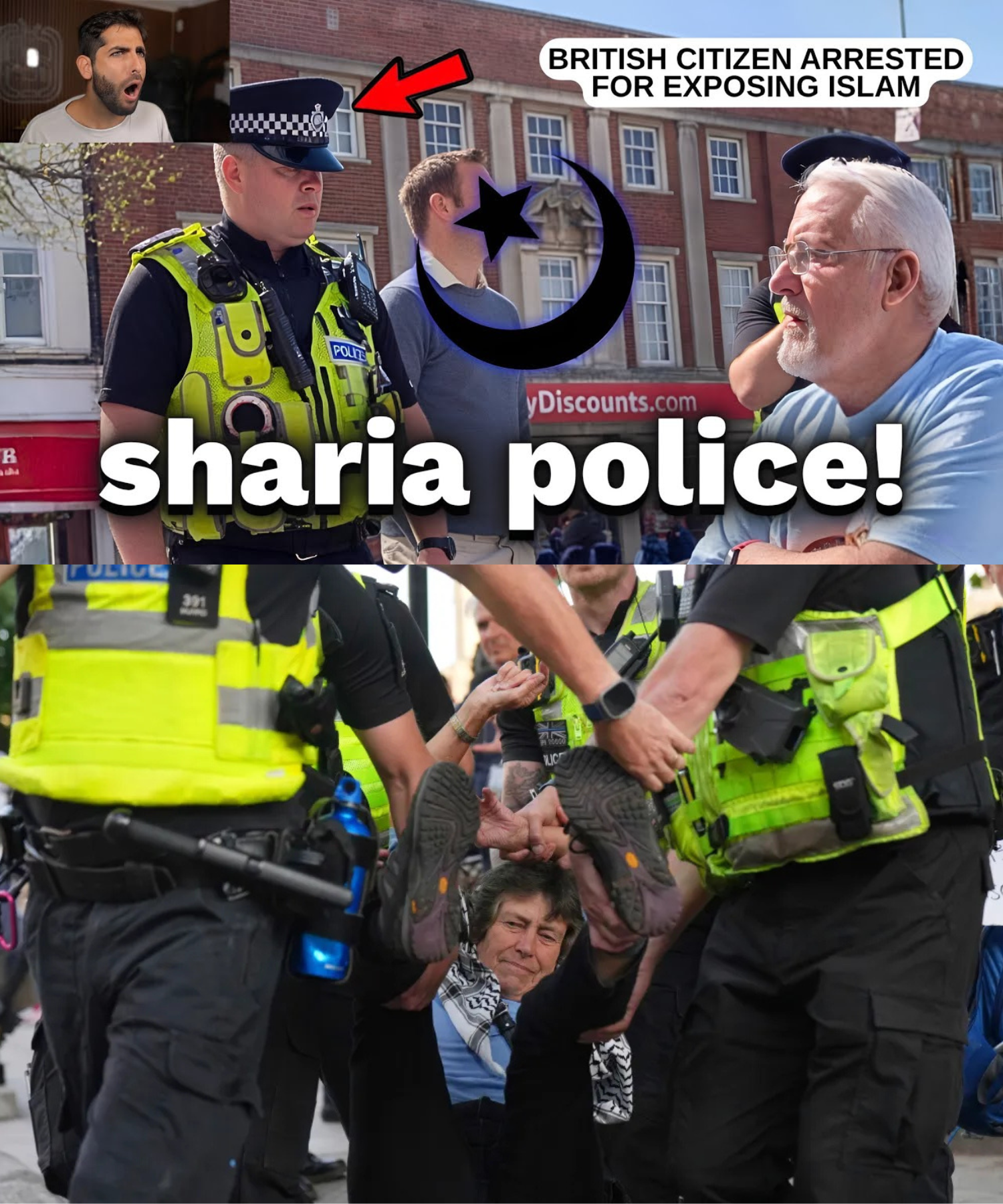
A major portion of the video focuses on violence and historical conflict.
The speaker argues that Islamic expansion throughout history involved military conquest and that modern extremist violence reflects ideological continuity with historical patterns.
He also claims that acts of terrorism associated with Islamist groups are often mischaracterized in Western media, suggesting that political correctness prevents honest discussion about religious motivation in violent incidents.
Experts strongly dispute such generalizations, emphasizing that terrorism is a global phenomenon influenced by political, ideological, and socioeconomic factors, and that the vast majority of Muslims worldwide reject violence.
Slavery, Historical Narratives, and Religious Interpretation
The video also references historical slavery, including the figure of Bilal, an early companion of Prophet Muhammad, using this as part of a broader argument about Islamic history.
The speaker suggests that historical accounts are often sanitized or misrepresented in modern discourse, arguing that uncomfortable aspects of religious history should be openly acknowledged.
Historians and theologians, however, emphasize that slavery was a global institution in antiquity, present in nearly all major civilizations, including Europe, Africa, and the Middle East, and caution against selectively isolating one tradition.
Apostasy, Blasphemy, and Free Speech Tensions
Another central theme in the video is the claim that criticism of Islam is more dangerous than criticism of other religions.
The speaker argues that individuals who criticize Islam may face social or physical backlash in ways not typically seen with criticism of Christianity or Judaism.
He links this to broader concerns about apostasy laws and blasphemy restrictions in certain countries, arguing that such frameworks are incompatible with Western free speech norms.
Civil liberties organizations agree that free expression is essential in democratic societies but stress that threats or violence against individuals for speech are not representative of the global Muslim population.
Demographic Claims and Cultural Growth Arguments
The speaker also claims that Muslim populations are growing rapidly in Western countries due to higher birth rates and migration patterns, suggesting that this will lead to long-term cultural transformation.
He argues that this demographic shift is part of a broader ideological change rather than simply population movement.
Demographers caution that while population growth rates vary across groups, long-term projections depend on numerous factors including education levels, urbanization, economic integration, and generational change.
“Indoctrination” and Education Systems
A significant portion of the video focuses on religious education, particularly madrasa schooling.
The speaker claims that religious instruction in some communities involves indoctrination, emphasizing strict adherence to doctrine and limiting critical thinking.
Experts note that educational systems in Muslim-majority countries vary widely, and many institutions incorporate secular curricula alongside religious instruction.
Call to Action: Religion as Political Ideology
Toward the end of the video, the speaker shifts from analysis to activism, urging viewers to treat religion not just as faith but as a political ideology that must be actively countered in public life.
He argues that ideas must be fought with ideas, not with violence, but emphasizes that cultural and political engagement is necessary to preserve Western values.
He also criticizes what he describes as complacency among Western societies in responding to ideological challenges.
Social Media Reaction: Deep Polarization
The viral spread of the video has generated intense and divided reactions.
Supporters describe it as an honest insider account of religious systems that are often misunderstood or politically protected from criticism.
Critics argue that it relies on sweeping generalizations, selective historical interpretation, and emotionally charged framing that risks increasing hostility toward Muslim communities.
Civil rights advocates stress that millions of Muslims living in the United States and Europe are fully integrated citizens who reject extremism and participate in democratic societies.
Experts Warn Against Overgeneralization
Academic experts in religion and political science caution that the video reflects a broader trend in online discourse: the transformation of personal testimony into generalized geopolitical claims.
They emphasize that while lived experience is valuable, it cannot be used alone to define a global religion practiced by more than a billion people across diverse cultures.
A Debate With No Resolution
As the video continues to circulate, it has become part of a larger unresolved debate in Western societies over immigration, integration, religious identity, and freedom of speech.
For some, it represents a necessary confrontation with uncomfortable truths.
For others, it represents a dangerous simplification of complex historical and religious realities.
What remains clear is that the question at the center of the video — whether Islam can integrate into Western liberal systems — is not going away.
And as the debate intensifies online, it is becoming one of the defining cultural fault lines of the modern era.