Viral Debate Over Sharia, TikTok, and “The West” Sparks Firestorm Across America
Viral Debate Over Sharia, TikTok, and “The West” Sparks Firestorm Across America
A viral online conversation about Sharia law, TikTok propaganda, Western identity, and the future of Europe has ignited a fierce new debate across the United States, where anxieties over immigration, religion, Israel, social media, and national identity are already at a boiling point.
The discussion, now circulating through conservative media circles, pro-Israel platforms, and culture-war accounts, features a content creator arguing that many young Americans are being pulled into political and religious movements they do not fully understand. His warning is blunt: short-form social media, especially TikTok, has transformed how millions of people absorb information — and in his view, it has made them dangerously vulnerable to emotional propaganda.
The most explosive claim came early in the exchange, when the speaker reacted to Americans who openly praise Sharia law or claim they “want Sharia” in the United States. He argued that many of these people are disconnected from reality and have no real understanding of what life under strict religious legal systems can mean for minorities, dissenters, women, secular citizens, or religious opponents.
His proposed “wake-up call” was intentionally provocative: send Americans who romanticize Sharia to live briefly under the conditions they praise online and see whether the slogans survive contact with reality.
That remark instantly lit up social media.
Supporters said it captured a frustration many Americans feel when they see college students, influencers, and activists embracing causes through slogans rather than research. Critics accused the conversation of painting Muslims too broadly and warned that legitimate criticism of extremist ideology can easily slide into suspicion of an entire religious community.
That tension became the heart of the controversy.
The speaker’s broader argument was not only about Islam. It was about the collapse of attention, the rise of algorithm-driven politics, and what he described as the death of serious learning online. He said that before TikTok, people who wanted to learn about a topic might watch a long YouTube essay, read an article, or at least spend enough time with a subject to understand its basic shape. Now, he argued, people are absorbing world events in 30-second bursts designed to trigger emotion before thought can catch up.
He pointed to the Israel-Palestine conflict as the clearest example. In his view, the 2021 Gaza war was a turning point, when short-form videos became a dominant weapon in the information battle. Images of suffering, dead children, devastated families, and destroyed neighborhoods spread instantly, producing emotional reactions faster than context could be added.
The speaker did not deny the power of those images. In fact, he said that was exactly why they worked. A short clip does not need to explain history, military strategy, ideology, or competing claims. It only needs to make the viewer feel something.
That observation resonated strongly in America, where political opinion is increasingly shaped by viral images rather than slow investigation. On college campuses, students have marched for causes many admit they first encountered on TikTok. In family homes, dinner-table arguments now begin with clips sent in group chats. In Congress, lawmakers quote viral moments as evidence of broader national crises.
The conversation then moved into an even more sensitive subject: Western self-hatred.
The speaker argued that over the past decade, many people of European descent in Western societies have been taught to see themselves only through the lens of colonialism, guilt, and historical wrongdoing. He said that while every civilization has crimes in its past, no group should be told that its entire heritage is shameful, empty, or illegitimate.
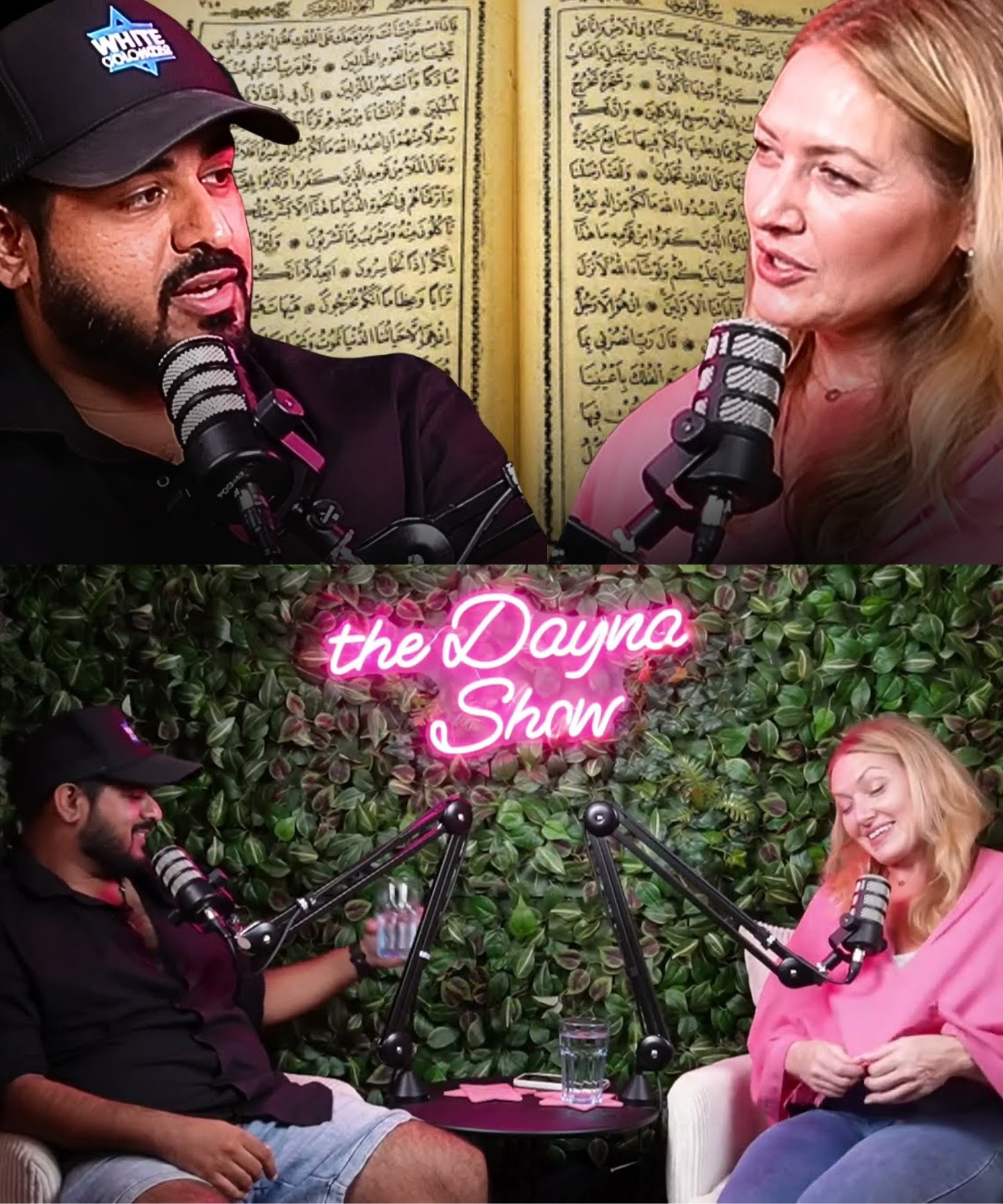
That statement sparked another wave of reaction. Supporters called it a long-overdue defense of Western civilization. Critics said it risked minimizing colonial violence and the real suffering caused by European empires. But even some moderate observers acknowledged that there is a growing identity crisis in the West, especially among younger people who are told to value every culture except their own.
The speaker connected that identity crisis to immigration debates in Europe and, indirectly, the United States. He warned that when native populations lose confidence in their own culture, more assertive religious and political communities can fill the vacuum. He described cities in Europe where public religious expression, demographic change, and online triumphalism have created a feeling among some locals that their countries are slipping away.
Still, the most serious analysts caution that this issue cannot be reduced to fear. Immigration is not one story. Muslim communities are not one political bloc. Many Muslim immigrants came to the West seeking freedom, safety, opportunity, and protection from extremism. Many oppose theocratic rule and value secular democracy. But the controversy shows how quickly public anxiety grows when some activists or preachers openly reject Western laws while benefiting from Western freedoms.
That contradiction is exactly what made the conversation go viral in the United States.
America is built around religious liberty. A Muslim has the right to pray, build mosques, wear religious clothing, raise children in faith, and criticize American policy. A Christian, Jew, atheist, Hindu, or anyone else has those same rights. But the American system also rests on a crucial limit: no religious group gets to impose its law on everyone else.
That line is where the public debate becomes intense.
The speaker also discussed a subtle but symbolic issue: greetings between Muslims and Jews in online conversations. He claimed that some Western Muslims refuse to return a full greeting of peace to Jews, removing the word “peace” as a deliberate sign of rejection. Whether that pattern is universal or anecdotal, his interpretation was clear. To him, it revealed not old-fashioned religious devotion, but a new kind of ideological hostility hardened by online radicalization.
The comment drew mixed responses. Some viewers saw it as a chilling example of dehumanization. Others argued that it was too small and too culturally specific to support such a sweeping conclusion. But the debate again returned to the same question: how do people recognize radicalization without accusing entire communities?
Near the end, the conversation shifted toward Israel’s future. The speaker argued that Israel cannot rely only on Western approval, especially if public opinion in the West continues to change under the pressure of social media and demographic shifts. Instead, he said Israel must build deeper relationships with Arab neighbors such as the United Arab Emirates, Bahrain, Oman, and especially Saudi Arabia.
That part surprised some viewers. After a long warning about radical ideologies, the speaker called for Jewish Israelis to let go of blanket assumptions about Arabs and build respectful alliances with Arab states that share strategic interests. In other words, his solution was not endless hostility. It was selective partnership: oppose extremism, but pursue peace with neighbors who want stability.
That message may be the most important part of the viral exchange.
The debate now spreading across American platforms is not just about Sharia, TikTok, Islam, Europe, or Israel. It is about whether the West still has the confidence to defend liberal democracy without turning fear into hatred. It is about whether young people can still tell the difference between information and manipulation. It is about whether criticism of ideology can avoid becoming prejudice against people.
In the end, the viral conversation did not prove that the West has fallen.
But it did reveal something deeply unsettling.
America is watching a generation learn politics through algorithms, identity through resentment, and global conflict through emotional fragments. In that environment, every side believes it is under attack, every clip becomes a weapon, and every debate feels like a warning about the future.
The question now is whether Americans can slow down long enough to understand what they are sharing before the next viral storm arrives.