Dave Smith and Nick Fuentes EXPOSE Israel’s Total OVERTHROW of MAGA
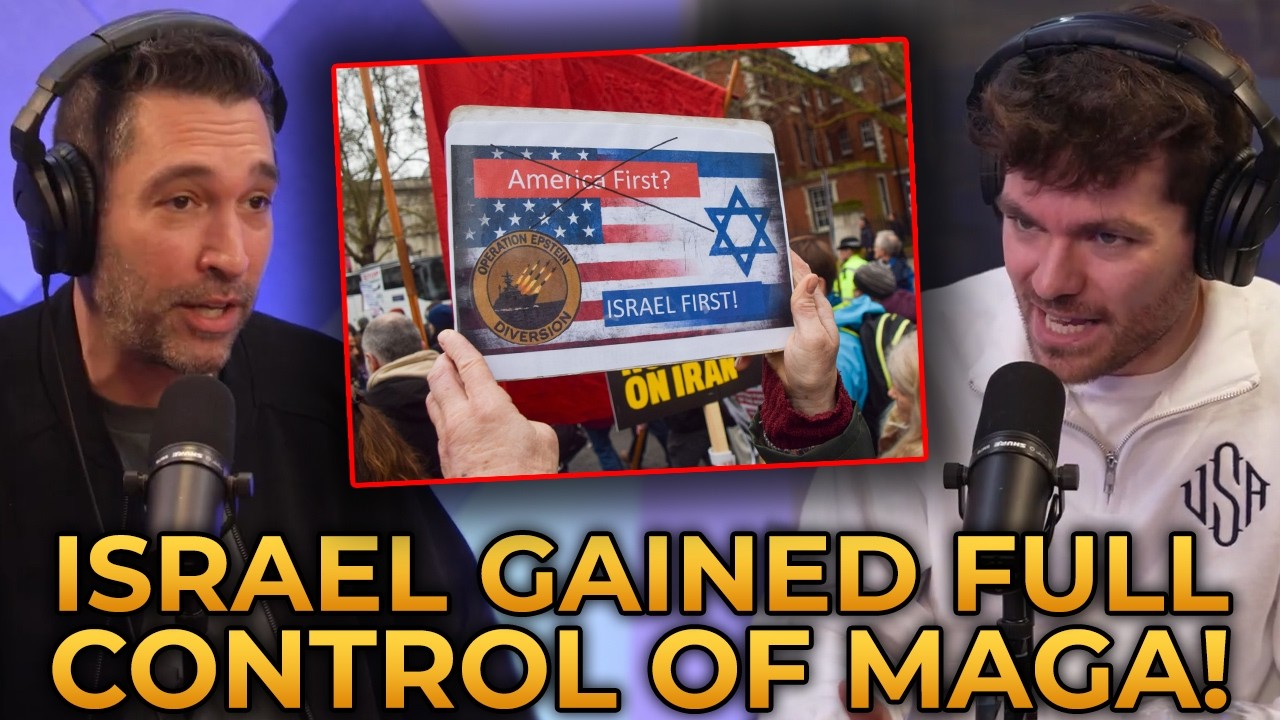
Has MAGA Lost Its Way? The Growing Revolt Against Trump’s Foreign Policy and the Crisis Inside America First
For years, “America First” was presented as more than a campaign slogan. It was supposed to be a complete rejection of the foreign policy consensus that had dominated Washington for decades. The promise was simple: no more endless wars, fewer foreign entanglements, and a government focused on the interests of ordinary Americans instead of overseas conflicts.
Now, some of the movement’s most recognizable voices are asking a question that would have seemed almost unthinkable only a few years ago:
Has America First been abandoned by the very people who built it?
That question sits at the center of an increasingly fierce debate inside the conservative movement, where loyalty to Donald Trump is colliding with the principles that originally attracted millions of voters. Instead of arguing with Democrats, many of the loudest disputes are now happening between conservatives themselves. At stake is not simply one military conflict or one election cycle—but the future identity of the America First movement itself.
The disagreement has become especially visible in conversations involving libertarian commentator Dave Smith and political commentator Nick Fuentes, who argue that many prominent MAGA influencers have transformed from independent voices into defenders of the Republican establishment. Whether one agrees with their conclusions or not, the debate raises important questions about political loyalty, media influence, and whether campaign promises still matter once a candidate takes office.
When Principles Meet Party Loyalty
One of the strongest themes emerging from this debate is the difference between supporting ideas and supporting politicians.
According to Smith, many conservative commentators now appear less interested in evaluating government actions on their merits and more interested in defending whatever the administration chooses to do. The concern isn’t merely disagreement over policy—it’s the perception that the standard changes depending on who occupies the White House.
If an action would have been fiercely criticized under another president, why is it suddenly acceptable now?
This is where Smith argues the conversation becomes frustrating. Rather than debating whether a particular policy is wise, discussions often shift toward explaining why the administration had little choice, why critics are exaggerating, or why the alternative would have been even worse.
Over time, that approach creates a different role for political commentators.
Instead of challenging power, they begin justifying it.
“Are You the Press Secretary?”
Perhaps the most memorable moment from the discussion comes when Smith asks what many frustrated conservatives have quietly been wondering.
At what point does defending every decision stop being analysis and start becoming public relations?
His question is blunt:
“Am I talking to the White House press secretary?”
The remark isn’t simply rhetorical.
It captures the growing frustration among conservatives who feel that certain influencers have become extensions of the administration’s messaging operation rather than independent commentators.
According to this criticism, every new development is met with a fresh explanation that somehow reconciles today’s actions with yesterday’s promises—even when those promises appear to conflict directly.
The result, critics argue, is a constant movement of the goalposts.
Policies that once would have been considered unacceptable suddenly become acceptable because the political context has changed.
The “No New Wars” Promise
No issue illustrates this tension more clearly than foreign policy.
Donald Trump’s political rise was built in large part on criticizing America’s involvement in Iraq, Afghanistan, and what he repeatedly described as “endless wars.”
For millions of supporters, this wasn’t just another campaign promise.
It was the defining feature that separated Trump from both Republicans and Democrats who had supported decades of military intervention overseas.
That is why recent military actions have sparked such intense disagreement inside MAGA circles.
Critics argue that regardless of how one justifies any particular conflict, entering another military confrontation appears fundamentally inconsistent with the message that energized Trump’s base.
Supporters, however, counter that preventing adversaries from acquiring nuclear weapons or responding to security threats does not necessarily violate an America First philosophy.
This disagreement isn’t simply about military strategy.
It’s about whether campaign slogans should be interpreted literally or flexibly when governing becomes more complicated than campaigning.
The Goalposts Keep Moving
Another recurring criticism focuses on what Smith describes as constantly shifting justifications.
First, supporters argue that a conflict will be extremely limited.
If that changes, the explanation becomes that the broader strategic objective remains worthwhile.
If new complications emerge, attention shifts to the dangers of abandoning the mission.
Each new development produces a new rationale.
For critics, this creates the impression that no outcome could ever cause loyal supporters to reconsider their position.
Instead, every unexpected consequence simply generates another explanation.
Whether or not one accepts that characterization, it reflects a growing skepticism toward political messaging that appears to evolve alongside unfolding events.
Is the Real Goal Winning Elections—or Fixing Problems?
Another important issue raised during the discussion concerns political priorities.
Should voters judge politicians relative to their opponents?
Or should they judge them against the promises they made?
This distinction matters enormously.
If the benchmark is simply “better than Democrats,” then many Republican policies can be defended on comparative grounds.
If the benchmark is campaign promises, however, the evaluation becomes much harsher.
Smith argues that too much conservative commentary now measures success by partisan competition rather than actual policy outcomes.
Instead of asking whether immigration has truly been solved, whether spending has genuinely been reduced, or whether foreign intervention has ended, the conversation often becomes:
“Would Democrats have done worse?”
Critics believe that standard lowers expectations dramatically.
A movement built on transformational promises gradually settles for incremental differences.
The Wall as a Symbol
Immigration serves as another example of this larger disagreement.
Trump’s border wall became one of the defining symbols of his first presidential campaign.
Years later, critics argue that the project remains incomplete while illegal immigration continues to dominate political debate.
Supporters point to legal obstacles, congressional resistance, court rulings, and administrative challenges that complicated implementation.
Critics respond that voters care less about explanations than results.
Their argument is straightforward:
If the central promise remains unfinished after years in office, should supporters continue evaluating success based primarily on intentions rather than outcomes?
The wall therefore becomes more than infrastructure.
It becomes a symbol of the broader debate over political accountability.
Independent Commentary or Party Messaging?
Perhaps the most philosophical part of the conversation centers on the purpose of political media itself.
Smith argues that independent commentators should serve as a check on those in power—not as unofficial communications staff for whichever party they support.
When media personalities spend more time explaining government decisions than questioning them, critics argue that they cease functioning as independent analysts.
Instead, they become advocates.
This concern extends beyond Republicans.
The discussion notes that similar patterns existed during previous Democratic administrations, when sympathetic media figures often defended policies that they might otherwise have criticized under a different president.
Viewed this way, the issue isn’t uniquely conservative.
It’s a broader problem affecting modern political media across the ideological spectrum.
Tribal Politics
One explanation offered for this phenomenon is tribalism.
Humans naturally organize themselves into groups.
Politics often amplifies that instinct.
Once individuals identify strongly with a party or political movement, criticism of its leaders can begin to feel like criticism of the group itself.
As a result, policy discussions become secondary.
Winning becomes the priority.
Smith argues that this mindset transforms politics into something resembling sports fandom.
Supporters cheer their team regardless of performance because loyalty itself becomes the highest value.
Critics argue that this dynamic weakens democratic accountability.
If politicians know their core supporters will defend nearly every decision, the incentive to honor campaign promises diminishes considerably.
Executive Orders and Temporary Victories
Another issue raised concerns the increasing reliance on executive authority.
Modern presidents from both parties have frequently used executive orders to advance their agendas without congressional approval.
The problem, critics argue, is durability.
One administration signs dozens of executive orders.
The next administration reverses them.
The cycle repeats every four years.
Rather than creating lasting institutional reforms, government swings back and forth depending on election outcomes.
From this perspective, lasting political victories require legislation, structural reforms, and broad public consensus—not merely executive action.
The Economic Dimension
Although foreign policy dominates much of the discussion, economic concerns remain central.
Critics argue that many Americans judge government performance less by political speeches than by everyday experiences.
Higher fuel prices.
Rising grocery bills.
Housing affordability.
Inflation.
Healthcare costs.
Childcare expenses.
These practical realities often shape public opinion more than ideological debates in Washington.
If voters continue feeling financially squeezed, campaign messaging alone may not preserve political support.
Whether those economic conditions stem from domestic policy, global markets, or international conflicts remains heavily debated.
Nevertheless, public perception often depends less on economic theory than on household budgets.
A Coalition Showing Signs of Strain
The America First coalition was never ideologically uniform.
It included traditional conservatives, libertarians, populists, independents, anti-war voters, and former Democrats dissatisfied with the political establishment.
That diversity helped fuel Trump’s electoral success.
It also created long-term tensions.
Different factions prioritized different issues.
Some focused primarily on immigration.
Others emphasized trade.
Many cared most about avoiding new military conflicts.
When those priorities begin competing with one another, fractures naturally emerge.
The current debate reflects those underlying divisions becoming increasingly visible.
Can America First Exist Without Donald Trump?
An even larger question now confronts the movement.
Is America First fundamentally tied to one individual?
Or is it a broader political philosophy capable of existing independently?
If loyalty to Trump becomes more important than adherence to the principles that originally defined the movement, critics argue that America First risks becoming simply another form of conventional partisan politics.
Supporters would likely respond that political leaders inevitably face difficult choices and that governing requires compromises impossible to anticipate during campaigns.
Both perspectives reflect genuine tensions inherent in democratic politics.
The Influence of Political Commentators
Another major issue involves the role of online personalities.
Podcasters, YouTubers, independent journalists, and social media commentators now influence public opinion far more than many traditional news organizations.
That influence carries responsibility.
Audiences increasingly expect these figures to challenge politicians rather than merely amplify official narratives.
When commentators appear unwilling to criticize leaders they previously supported, credibility can suffer.
Conversely, relentless opposition regardless of circumstances can also undermine thoughtful analysis.
The challenge lies in maintaining independence while remaining intellectually consistent.
What Happens Next?
As future elections approach, these debates are unlikely to disappear.
If foreign policy remains controversial, internal disagreements inside the conservative movement may become even sharper.
Questions about immigration, government spending, executive authority, inflation, and military intervention will continue shaping voter priorities.
Whether the America First coalition remains united may depend less on campaign slogans than on whether supporters believe core promises are still being honored.
Political movements survive disagreement.
What often proves more difficult is surviving the perception that foundational principles have become negotiable.
Conclusion
The conversation surrounding America’s future is no longer divided simply between Republicans and Democrats.
Increasingly, the deepest disagreements are occurring within political movements themselves.
The debate between figures like Dave Smith and Nick Fuentes on one side and more establishment-friendly conservative commentators on the other reflects a broader struggle over what political loyalty should actually mean.
Should supporters defend leaders because they belong to the same political team?
Or should they hold those leaders accountable to the promises that earned their support in the first place?
Reasonable people will answer those questions differently.
Some will argue that governing inevitably requires difficult compromises.
Others will insist that abandoning core principles ultimately weakens any political movement, no matter how successful it appears in the short term.
What seems increasingly clear is that the conversation has moved beyond individual personalities.
It has become a debate about whether modern politics rewards independent thinking or unwavering partisan loyalty.
For millions of voters who embraced America First as a promise of a fundamentally different approach to government, that question may ultimately matter more than any single election.