Scott Horton Lays Down the FACTS About Iran’s Nuclear Threat
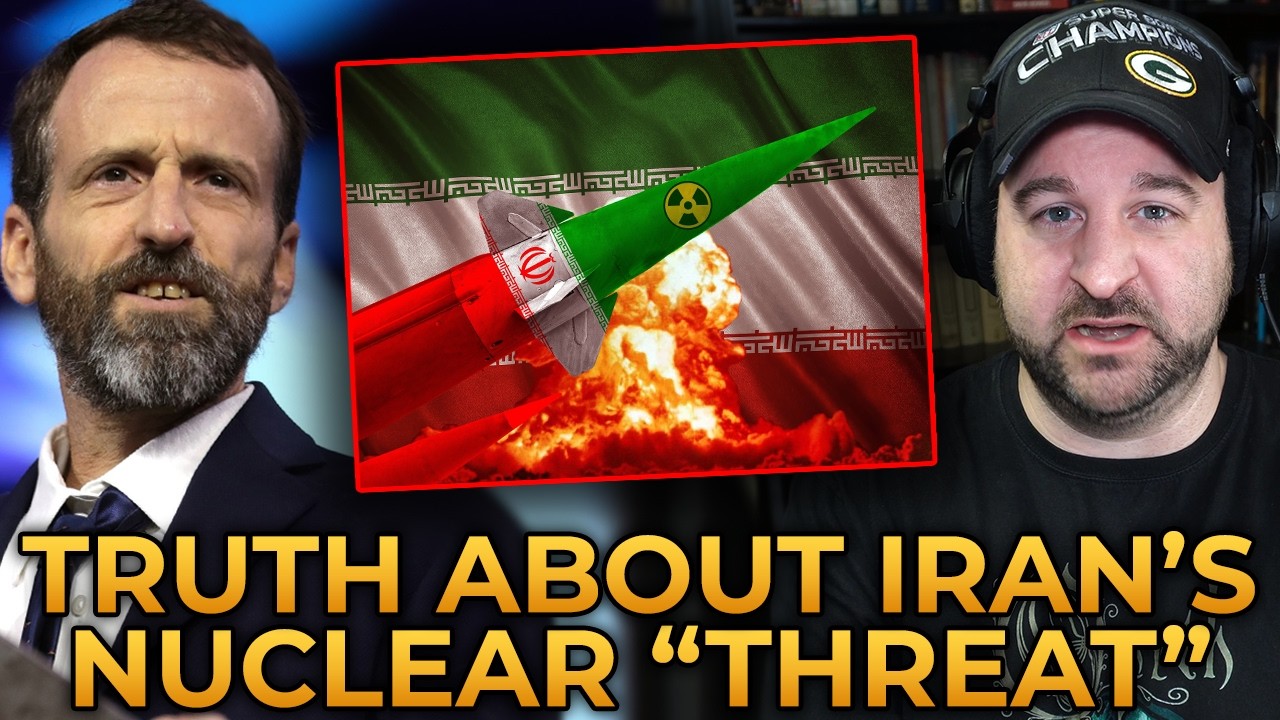
After the Iran War: Is America Losing Its Grip on the Middle East?
For decades, American policymakers pursued a relatively straightforward objective in the Middle East: maintain military superiority, protect strategic allies, secure energy routes, and prevent any regional rival from becoming dominant. That framework shaped countless decisions across multiple administrations, from the Gulf War to Iraq, Afghanistan, Libya, Syria, and beyond.
Today, however, many observers argue that the geopolitical landscape looks dramatically different.
In a wide-ranging discussion, Scott Horton suggested that the recent conflict involving Iran may represent more than another chapter in the region’s long history of instability. Instead, he argues, it may signal a fundamental shift in the balance of power—one in which America’s traditional influence is increasingly constrained while regional actors are forced to adapt to a new reality.
Whether that assessment proves accurate remains an open question. Yet the issues raised deserve careful consideration because they touch on the future of American foreign policy itself.
Why Gulf States Wanted Distance From the Conflict
One of the most notable observations from the discussion concerns the reaction of America’s traditional Arab partners.
Despite decades of rivalry with Iran, several Gulf Cooperation Council (GCC) states appeared reluctant to become directly involved in another major regional confrontation. Even Saudi Arabia—often viewed as Tehran’s principal Arab competitor—showed little enthusiasm for escalating the conflict.
According to Horton, this hesitation reflects changing regional calculations rather than any newfound alignment with Iran.
Countries throughout the Gulf have spent years attempting to reduce tensions, diversify their economies, and avoid becoming battlefields for great-power competition. For governments focused on long-term economic development, another prolonged military confrontation offers enormous risks with relatively few rewards.
The discussion highlighted reports suggesting that Qatar sought understandings with Iran intended to prevent further escalation. While details remain difficult to verify publicly, Horton argued that such diplomatic efforts fit a broader regional pattern: Gulf governments increasingly prefer de-escalation over confrontation.
This represents a notable departure from earlier periods when regional blocs were often more willing to support aggressive policies toward Tehran.
The Strategic Importance of Qatar
A particularly significant point raised during the interview involves Qatar’s unique strategic position.
The country hosts one of the United States’ most important military installations in the region, serving as a central hub for American operations.
If reports are accurate that Qatar sought assurances from Iran in exchange for limiting certain military activities originating from its territory, the implications would be substantial.
Rather than enthusiastically facilitating military escalation, regional partners would instead be prioritizing the protection of their own territory and economic stability.
Whether or not every reported detail proves accurate, the broader trend appears consistent: Gulf states increasingly seek to balance relationships with both Washington and Tehran rather than choosing absolute alignment with either side.
Has the Regional Balance Shifted?
Perhaps Horton’s strongest argument is that recent events have altered the strategic balance in ways that cannot easily be reversed.
His central claim is that Iran has emerged with greater regional leverage despite suffering military setbacks.
That conclusion rests less on battlefield outcomes than on geography and political realities.
Iran occupies a position adjacent to the Strait of Hormuz, through which a significant portion of global energy exports passes. Regardless of military developments, geography grants Tehran enduring influence over one of the world’s most important maritime chokepoints.
According to Horton, that reality means neighboring countries will ultimately have to find practical ways to coexist with Iran rather than relying indefinitely on outside military power to contain it.
Not everyone agrees with this assessment. Critics argue that Iran’s economy remains under pressure, its military capabilities have suffered damage, and regional opposition to Tehran remains substantial.
Still, the interview raises an important strategic question:
Has the Middle East reached a point where regional powers must increasingly manage their own security arrangements rather than depending primarily on American military dominance?
Robert Kagan’s Surprising Assessment
One of the more unexpected moments in the discussion involved comments attributed to foreign policy analyst Robert Kagan.
Long associated with interventionist foreign policy, Kagan has historically advocated for robust American global leadership.
According to Horton, even voices traditionally supportive of assertive American engagement have begun acknowledging that recent developments represent significant geopolitical setbacks.
For Horton, this serves as evidence that concerns about America’s regional position extend beyond critics of intervention.
Whether one accepts that interpretation or not, the broader point remains noteworthy: debates over U.S. foreign policy increasingly cut across traditional ideological lines.
Former interventionists, realists, libertarians, and restraint advocates often disagree about solutions, but many now acknowledge that America’s strategic environment has changed considerably.
Why Doesn’t Washington Simply Leave?
One of the interview’s central questions explored why the United States remains so deeply involved despite repeated calls for restraint.
Several possible explanations emerged.
One involves concerns that Iran could accelerate its nuclear program if military pressure declines.
Another centers on continued commitments to regional allies, particularly Israel.
A third reflects broader concerns about maintaining credibility and deterrence throughout the international system.
Horton argued that the fear of Iran immediately producing a nuclear weapon may be overstated.
He suggested that any attempt by Tehran to openly build a nuclear arsenal would likely be detected well before completion, giving outside powers time to respond.
Whether that assessment is correct remains heavily debated among defense analysts.
Nevertheless, the conversation highlights an enduring policy dilemma.
Military pressure intended to prevent nuclear proliferation can sometimes create incentives for states to pursue stronger deterrents of their own.
Could Military Action Encourage Nuclear Proliferation?
Perhaps the interview’s most thought-provoking argument concerns unintended consequences.
Horton suggested that military strikes against Iran could strengthen internal arguments favoring the development of nuclear weapons rather than weakening them.
The logic is relatively straightforward.
Governments observing international conflicts may conclude that nuclear deterrence offers greater protection against outside intervention.
Historical comparisons frequently arise in these discussions.
Analysts often contrast the experiences of Iraq, Libya, North Korea, and Iran when debating whether possession—or absence—of nuclear capabilities influences external military decisions.
Of course, these comparisons remain controversial.
Every country’s circumstances differ dramatically, and no historical analogy perfectly predicts future behavior.
Still, the discussion reflects an important debate among international relations scholars regarding whether military intervention discourages or accelerates nuclear proliferation.
The Future of the Nuclear Non-Proliferation System
The conversation also turned toward broader questions surrounding the global nuclear order.
If countries believe that remaining within international agreements provides insufficient security guarantees, what incentives remain for continued participation?
Horton argued that this question extends well beyond Iran.
Other governments may closely watch how international crises unfold when evaluating their own long-term security strategies.
Supporters of the current system counter that treaties, inspections, diplomacy, and international institutions continue to play indispensable roles in limiting nuclear proliferation.
Even so, the discussion illustrates how regional conflicts can influence strategic thinking far beyond their immediate geographic boundaries.
Energy Markets Remain Central
Beyond military strategy, the interview repeatedly returned to economics.
Any prolonged instability around the Strait of Hormuz carries implications for global energy markets.
Even temporary disruptions can influence shipping costs, insurance premiums, and ultimately fuel prices worldwide.
For ordinary Americans, geopolitical developments often become tangible not through headlines but through higher gasoline prices, increased transportation costs, and broader inflationary pressures.
This economic dimension explains why foreign policy debates frequently resonate with voters even when conflicts occur thousands of miles away.
Trump’s Foreign Policy Balancing Act
The discussion also examined President Trump’s strategic position.
On one hand, Trump has consistently emphasized preventing Iran from acquiring nuclear weapons.
On the other, he has frequently campaigned on reducing American involvement in overseas wars and avoiding prolonged military entanglements.
Reconciling those objectives presents significant challenges.
Supporters argue that maintaining pressure prevents larger conflicts later.
Critics contend that military escalation risks creating exactly the long-term commitments voters hoped to avoid.
This tension has become one of the defining debates surrounding Trump’s broader foreign policy approach.
China Enters the Picture
The interview eventually broadened into great-power competition.
According to Horton, China’s growing influence complicates virtually every major Middle Eastern decision.
Beijing maintains significant economic relationships throughout the Gulf while also deepening ties with Iran.
Unlike Washington, China generally emphasizes commercial engagement over direct military intervention.
This approach allows Beijing to expand its regional influence without assuming many of the security burdens traditionally carried by the United States.
Whether that model proves sustainable remains uncertain.
Nevertheless, China’s expanding role reflects the increasingly multipolar nature of global politics.
From Middle East Strategy to Global Competition
The discussion ultimately linked Middle Eastern developments to larger questions about American grand strategy.
For decades, U.S. policymakers sought to prevent any rival power from dominating key regions.
Today, however, multiple major powers—including China, Russia, India, and regional actors—exercise increasing influence over global affairs.
Managing this transition may prove one of the defining foreign policy challenges of the coming decade.
Rather than confronting isolated crises, Washington increasingly faces interconnected strategic competitions spanning Europe, Asia, and the Middle East simultaneously.
The Debate Over Restraint Versus Intervention
Underlying the entire conversation is a philosophical disagreement about America’s role in the world.
Advocates of restraint argue that decades of military intervention have produced diminishing returns while imposing enormous financial and human costs.
Supporters of continued engagement counter that American withdrawal could create dangerous power vacuums, embolden adversaries, and undermine global stability.
Neither perspective offers easy answers.
Both acknowledge genuine risks.
The disagreement centers on which risks are more manageable.
An Uncertain Future
Whether one agrees with Scott Horton’s analysis or strongly disagrees with it, the broader themes discussed deserve attention.
The Middle East is changing.
Traditional alliances are evolving.
Regional powers increasingly pursue independent strategies.
China’s influence continues to grow.
Questions surrounding nuclear deterrence remain unresolved.
Meanwhile, American policymakers face mounting pressure to balance overseas commitments with domestic priorities.
The debate over Iran, therefore, extends far beyond a single conflict. It reflects larger questions about how the United States should exercise power in a world where military superiority alone no longer guarantees political outcomes.
As Washington navigates this increasingly complex landscape, one reality becomes difficult to ignore: the assumptions that shaped American strategy for much of the post-Cold War era are being challenged from multiple directions at once.
Whether that marks the beginning of a lasting geopolitical realignment or simply another chapter in the Middle East’s long history of upheaval remains to be seen. But the conversation underscores a point that analysts across the political spectrum increasingly recognize—the next phase of American foreign policy will likely be defined less by unquestioned dominance and more by adaptation to a rapidly changing global order.