Viral Douglas Murray Debate Ignites U.S. Firestorm Over Islam, Free Speech, and the Price of Offense
Viral Douglas Murray Debate Ignites U.S. Firestorm Over Islam, Free Speech, and the Price of Offense
A tense televised debate about Islam, satire, and free speech has resurfaced online and is now tearing through American political media, reigniting one of the most explosive questions in modern Western society: should a free country limit speech when religious believers say they are deeply offended?
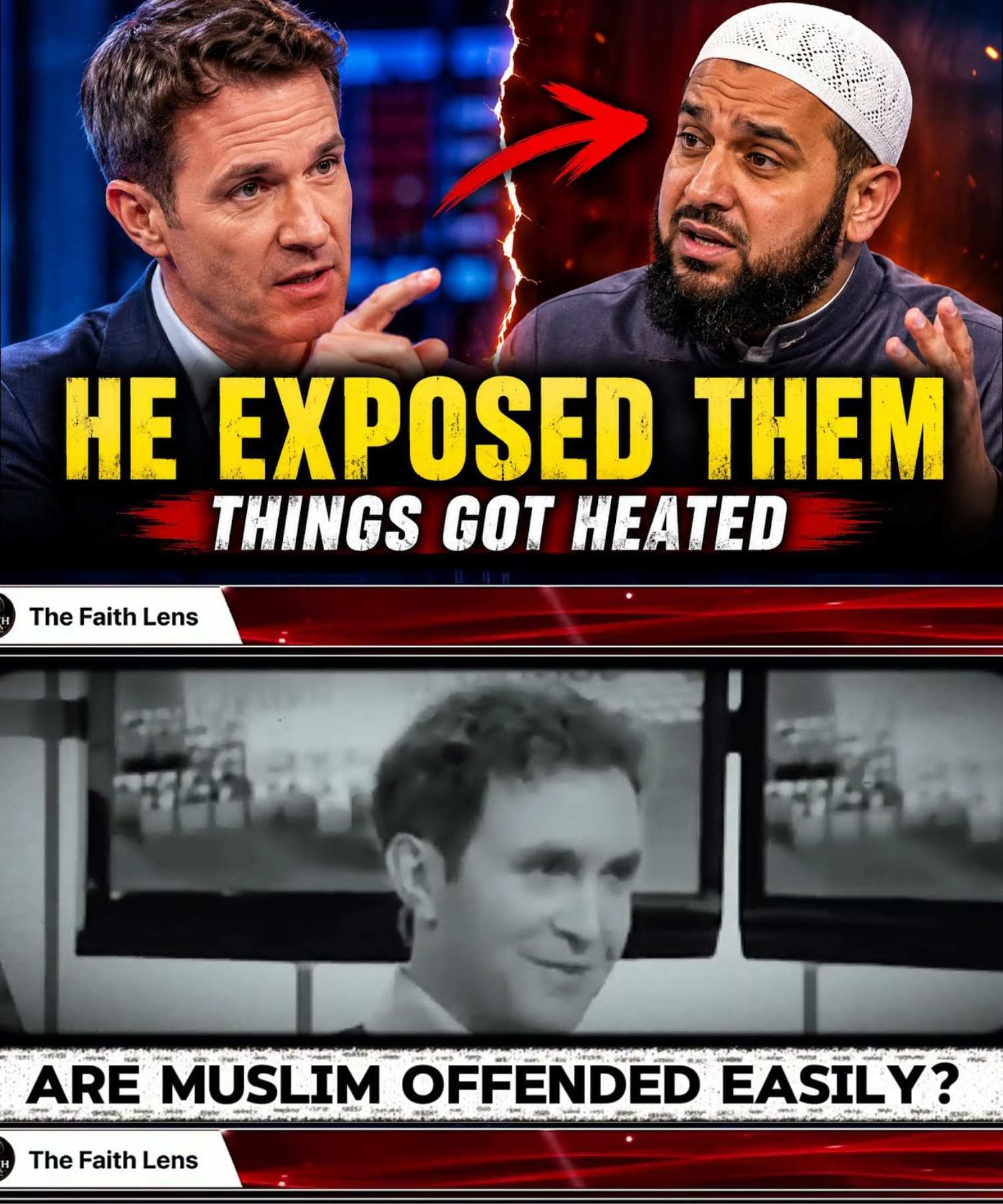
The clip features British author and commentator Douglas Murray facing off against an imam and other panelists during a discussion about a controversial anti-Islam film and the violent protests that followed in several countries. Although the debate originally centered on events abroad, its renewed viral spread in the United States has made it feel strikingly current.
Across America, the same argument is already raging on college campuses, in newsrooms, in comedy clubs, in courtrooms, and on social media: where does respect end and censorship begin?
The imam in the debate argues that Muslims are not simply reacting to artistic criticism. He says many Muslims feel genuine pain when their prophet or faith is mocked. He insists that people in the West often fail to understand the emotional and spiritual depth of that offense. In his view, free speech should be used responsibly, and societies should recognize that words can wound communities.
Murray does not deny that people can feel wounded. But he immediately challenges the foundation of the argument.
Islam, he says, does not feel anything. Individual Muslims do.
That line became one of the most shared moments of the clip.
For Murray’s supporters, it cuts straight through what they see as a dangerous confusion between people and ideas. Human beings deserve protection from violence, discrimination, and harassment. But ideas, religions, historical claims, and belief systems must remain open to criticism, satire, and scrutiny. If a society protects ideas from offense, critics argue, it stops being free.
The imam pushes back, saying Islam is not one single political machine. He reminds viewers that Muslims are mothers, fathers, families, workers, and citizens, and that there are many different strands of Islamic thought across the world. He argues that sweeping claims about Islam ignore the complexity and diversity of Muslim life.
That point matters, especially in the American context.
The United States is home to millions of Muslims who live peacefully, serve in the military, run businesses, teach in schools, practice medicine, and participate in civic life. Many strongly reject violence committed in the name of religion. Civil rights groups warn that public debates about Islam can quickly become unfair attacks on ordinary Muslim Americans if speakers fail to distinguish between believers and extremist reactions.
But Murray’s counterargument is not aimed at every Muslim as an individual. His focus is on what he sees as a pattern in Islamic societies and political movements where blasphemy is treated not merely as offensive, but as punishable. He points to countries where criticism of the Prophet Muhammad or questioning the origins of Islam can trigger legal consequences, mobs, threats, or violence.
That is the heart of the dispute.
The imam says much of the anger seen in places like Pakistan, Yemen, Egypt, and Libya is political, not purely religious. He argues that dictatorship, poverty, corruption, Western military intervention, drone strikes, and local instability have created deep resentment. In this view, offensive films or cartoons are often used as sparks by political groups seeking to mobilize public anger.
Murray does not dismiss politics entirely, but he argues that politics cannot explain everything. To him, the deeper issue is that Islam has not gone through the same long, painful process of public ridicule, historical criticism, and satire that Christianity, Judaism, Mormonism, and other belief systems have endured in the West.
He points to Broadway’s “Book of Mormon” musical as an example. Mormonism is mocked on stage, night after night, yet nobody seriously fears Mormon mobs storming theaters. Christianity is mocked in films, television shows, books, comedy routines, and academic debates. Jesus, Moses, the Bible, churches, priests, and believers are regularly criticized or satirized. Society may find some of it tasteless, but it is broadly accepted as part of life in a free culture.
Then comes Murray’s central question: why should Islam be treated differently?
That question has now landed squarely in the American culture war.
In the United States, free speech has long been treated as one of the country’s defining principles. Yet Americans increasingly disagree about how far it should go. Some argue that offensive speech, especially about race, religion, gender, or identity, can fuel real-world harm. Others warn that once speech is restricted because it offends, the loudest or most threatening group gains power over everyone else.
The debate becomes even more dangerous when violence enters the picture.
Several panelists in the clip discuss whether society should self-censor because controversial material can provoke unrest. One journalist argues that offensive works can become focal points for broader anger against Western policies. Another participant warns that compromising out of fear would be a surrender to intimidation.
That warning echoes strongly in America after years of campus protests, speaker cancellations, social media campaigns, and fights over “hate speech.” Many Americans now fear a two-tier speech system: some religions, ideologies, and groups can be mocked freely, while others are treated as too dangerous to criticize.
Murray’s supporters say that is precisely the problem. They argue that if people avoid criticizing Islam not because they respect it, but because they fear threats, then censorship has already won. The law may still protect speech on paper, but social fear has narrowed what people dare to say.
The imam, however, stresses that respect is not censorship. He argues that decent people should know when they are being cruel, needlessly provocative, or deliberately insulting. Just because something is legal does not mean it is wise, kind, or socially responsible.
That argument appeals to many Americans who believe freedom should come with restraint. A society can defend the legal right to offend while still asking citizens not to dehumanize one another. The difficulty is deciding who gets to define “offense,” and whether powerful religious or political movements can weaponize hurt feelings to shut down debate.
The most uncomfortable section of the debate comes when the conversation turns to academic criticism of Islam. Murray argues that scholars and filmmakers should be able to ask whether Muhammad existed as traditionally described, whether the Quran has historical layers, and whether Islamic origins can be studied like any other religion. The imam says death threats against scholars are absolutely wrong, but he also criticizes certain documentaries as biased or poorly made.
This distinction is crucial.
In a free society, Muslims have every right to criticize films, books, cartoons, documentaries, and commentators. They have every right to protest peacefully, write rebuttals, boycott media, and defend their beliefs. But critics say the line is crossed when disagreement becomes intimidation, threats, or demands that others be legally or socially silenced.
That is why the old debate has gone viral again in America.
It is not really about one bad film. It is about whether Western societies still believe that no idea is sacred from scrutiny. It is about whether religious sensitivity can coexist with open criticism. It is about whether fear of unrest should shape what citizens are allowed to say.
By the end of the discussion, the divide is clear.
The imam wants a society that remembers the human pain caused by mockery. Murray wants a society that refuses to place any belief system beyond challenge.
Both concerns are real. But America’s founding instinct leans toward one principle above all: the government should not protect ideas from criticism, even when criticism burns.
The viral clip has struck such a nerve because Americans know this fight is no longer theoretical. It is already happening in their schools, platforms, institutions, and public squares.
The question now is whether the country can defend free speech without turning believers into targets — and whether it can show respect without surrendering the right to question everything.