“15 Hidden Books of the Bible?” Viral Ethiopian Manuscript Claims Ignite Global Debate Over Lost Scriptures and Church History
“15 Hidden Books of the Bible?” Viral Ethiopian Manuscript Claims Ignite Global Debate Over Lost Scriptures and Church History
A viral online documentary-style narration claiming that early Christianity originally contained 81 sacred books — later reduced to 66 in Western Bibles — has sparked intense global debate among theologians, historians, and religious communities.
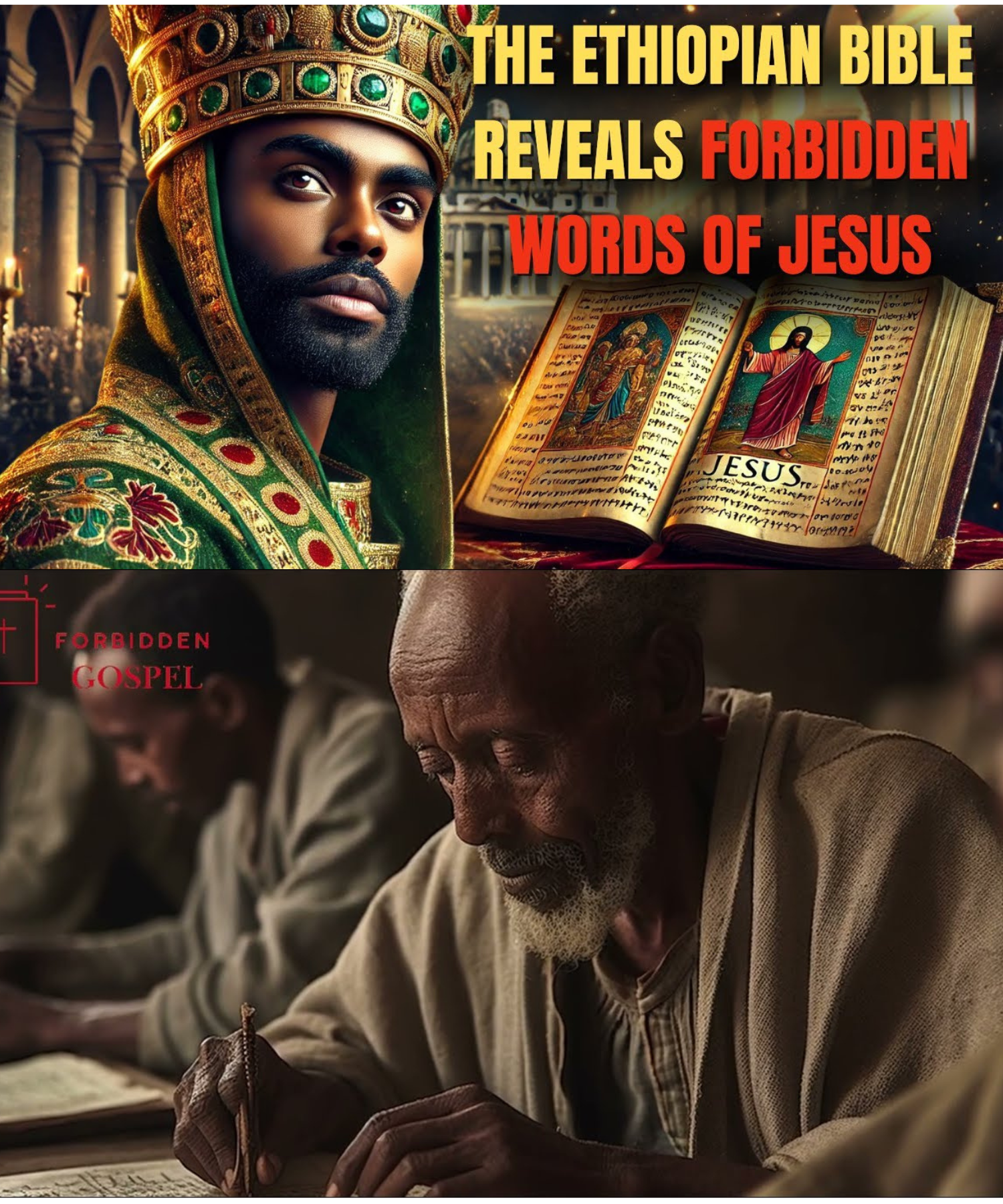
The video, which has been widely circulated on social media and YouTube-style platforms, argues that ancient Ethiopian Christian traditions preserved “forbidden” biblical texts that were removed or excluded during the formation of the Western biblical canon.
At the center of the controversy is the Ethiopian Orthodox tradition, one of the oldest continuous Christian communities in the world, which maintains a broader canon of scripture than most Western churches.
Supporters of the narrative claim this represents a “hidden version of Christianity,” while critics argue it is a mixture of historical facts, theological interpretation, and modern speculation.
The Claim: An Expanded Bible Preserved in Ethiopia
The video opens with a provocative assertion: that 15 additional books exist in an ancient version of the Bible preserved in Ethiopia — books allegedly excluded from Western Christianity.
It claims that while most modern Bibles contain 66 books, the Ethiopian Orthodox canon includes 81 texts, some of which are described as “dangerous” or “forbidden” in medieval European contexts.
Among the most frequently cited texts are:
The Book of Enoch
The Book of Jubilees
The Shepherd of Hermas
The Apocalypse of Peter
Additional historical and wisdom writings
The narration suggests these texts were removed not because they were false, but because they challenged emerging religious authority structures in early Christianity.
Council of Nicaea and the Question of Canon Formation
A major focus of the narrative is the Council of Nicaea (325 AD), which is often referenced in online discussions about biblical canon formation.
The video argues that early Christianity had many circulating texts — including gospels, apocalyptic writings, and apostolic letters — before a standardized canon was eventually established.
It suggests that only 27 books of the New Testament were officially accepted in later Western tradition, while others were excluded or labeled apocryphal.
However, mainstream historical scholarship notes that the Council of Nicaea primarily addressed Christological debates, not the formal selection of biblical books, which developed gradually over centuries rather than through a single decision.
Ethiopia’s Unique Biblical Tradition
One of the strongest factual foundations behind the discussion is the Ethiopian Orthodox Church’s canon, which is indeed larger than most Western Christian Bibles.
Ethiopian tradition includes books such as:
Enoch
Jubilees
Tobit
Judith
Wisdom of Solomon
Sirach (Ecclesiasticus)
Baruch
1–3 Meqabyan (distinct from Maccabees in Western tradition)
These texts reflect a broader early Christian and Second Temple Jewish literary tradition that was preserved in Ethiopia but not included in later Western canons.
Scholars agree that Ethiopia represents one of the most complete surviving ancient Christian textual traditions, though interpretations differ on theological significance.
The Book of Enoch and Ancient Controversy
A central focus of the viral narrative is the Book of Enoch, an ancient Jewish apocalyptic text describing:
The fall of the “Watchers” (fallen angels)
The birth of the Nephilim (giant offspring)
Cosmic judgment narratives
Detailed angelology and cosmology
The video emphasizes that Jude 1:14–15 in the New Testament appears to reference Enoch directly, raising questions about why the book was later excluded from most biblical canons.
Historically, the Book of Enoch was widely read in Second Temple Judaism and early Christianity but was not included in most Western biblical canons, while it remained part of the Ethiopian tradition.
The Dead Sea Scrolls Connection
The narrative also references the discovery of the Dead Sea Scrolls in 1947, which included fragments of the Book of Enoch and other ancient Jewish writings.
These findings confirmed that texts outside the modern biblical canon were widely read in ancient Jewish communities around the time of early Christianity.
However, scholars caution that the existence of such texts does not automatically imply they were universally considered scripture, but rather that they formed part of a diverse religious literary landscape.
The Book of Jubilees and Alternative Time Systems
Another major focus is the Book of Jubilees, which presents an alternative biblical chronology and a 364-day solar calendar.
The text describes a structured divine calendar in which sacred events occur on fixed days each year, contrasting with lunar or later Gregorian systems.
The video suggests that this calendar system was “suppressed” in favor of later ecclesiastical control over religious timekeeping.
Historically, the 364-day calendar is associated with the Essene community and other Second Temple Jewish groups, but its use was not adopted by mainstream Judaism or Christianity.
The Kebra Nagast and the Ark of the Covenant
The narrative expands into Ethiopian tradition through the Kebra Nagast, a 14th-century Ethiopian text describing:
The visit of the Queen of Sheba to King Solomon
The birth of Menelik I
The establishment of the Solomonic dynasty
The transfer of the Ark of the Covenant to Ethiopia
Ethiopian Orthodox tradition maintains that the Ark is housed in Axum under the guardianship of a single monk, though this claim cannot be independently verified.
Historians treat the Ark narrative as theological tradition rather than confirmed historical fact.
Female Figures and Hidden Traditions
The video also highlights lesser-known or apocryphal texts that elevate female biblical figures such as Mary, Judith, and Deborah.
It argues that early Christianity included stronger representations of women’s spiritual authority than later institutional traditions reflected.
Ethiopian texts, in particular, preserve expanded narratives about Mary as a prophetess and teacher, though these interpretations differ significantly across Christian denominations.
The Shepherd of Hermas and Early Christian Debate
The Shepherd of Hermas, an early Christian text widely read in the 2nd century, is also discussed.
It contains visions, moral instructions, and teachings about repentance after baptism — ideas that were debated in early Christianity and later excluded from the canonical New Testament.
Historical sources such as the Muratorian Fragment confirm that some early churches valued the text, even if it was not universally accepted as scripture.
Apocalyptic Texts and the Apocalypse of Peter
The Apocalypse of Peter, another early Christian writing, is described as a vivid depiction of heaven and hell with detailed moral consequences for specific sins.
While some early Christian communities regarded it as valuable, it was ultimately excluded from the Western canon.
The video suggests it was removed due to its intensity and lack of institutional compatibility, though scholars argue exclusion was based on broader theological consensus over time.
Academic Perspective: Myth, History, and Interpretation
Religious historians emphasize that early Christianity was highly diverse, with many competing texts, traditions, and theological interpretations.
Most scholars agree on several key points:
The biblical canon developed gradually over centuries
Multiple early Christian texts existed outside modern Bibles
Ethiopia preserved a distinct and valuable textual tradition
Canon formation involved theological, linguistic, and historical factors
However, they caution against claims that suggest a centralized “removal” of books for political control alone.
Conclusion: A Debate Between History and Belief
The viral claims about “15 missing books” and an “81-book Bible” highlight a real historical complexity: early Christianity was far more diverse than modern simplified narratives often suggest.
At the same time, the dramatic framing of “hidden scriptures,” “forbidden books,” and “lost truth” reflects a modern reinterpretation of ancient history rather than a settled academic conclusion.
Ethiopian Christianity remains a vital and authentic ancient tradition, but its expanded canon is understood differently across religious and academic contexts.
Ultimately, the controversy raises a broader question:
How much of religious history is discovery — and how much is interpretation?
And as digital media continues to revive ancient debates for global audiences, that question is becoming more relevant than ever.