Western Values Under Fire as America Reopens the Explosive Debate Over Borders, Slavery, and Global Power
Western Values Under Fire as America Reopens the Explosive Debate Over Borders, Slavery, and Global Power
A blistering debate over Western values, colonial guilt, slavery, migration, and the future of global power has landed squarely inside America’s political bloodstream — and it is forcing a brutal question that many elites have spent years avoiding.
Is the West guilty beyond redemption, or is it still the best political and moral system humanity has managed to build?
The clash began with a familiar accusation. Critics of the West argue that Europe and America built their wealth by extracting resources, enslaving people, exploiting colonies, backing coups, and then pretending their prosperity was proof of moral superiority. In that telling, the West is not a “garden” of civilization. It is a fortress built on stolen land, stolen labor, and stolen minerals.
The Democratic Republic of Congo became the emotional example. Belgium’s brutal colonial legacy, Congo’s post-independence chaos, the assassination of Patrice Lumumba, and modern mining interests were all raised as evidence that Western power has too often operated like a parasite: taking from poorer nations, then judging the people who later try to migrate toward the wealth that extraction helped create.
It is a powerful argument because it contains real history.
The West did commit atrocities. Colonialism did devastate societies. Slavery did enrich empires. Western-backed interventions did shape the fate of countries far from Washington, London, Paris, and Brussels. Anyone pretending otherwise is not defending the West. They are lying about it.
But the counterargument, delivered with force by Konstantin Kisin, struck at what he sees as the missing half of the story.
Slavery, conquest, empire, and exploitation were not Western inventions. They were human patterns. Nearly every major civilization practiced domination when it had the power to do so. Empires rose, conquered, enslaved, taxed, extracted, and imposed. The difference, Kisin argued, is not that the West was uniquely evil. It is that the West became uniquely capable.
European powers had ships, weapons, financial systems, navigation, and technology that allowed them to project power across oceans in ways others could not. That does not excuse what happened. But it challenges the idea that Western sins prove Western values are worthless.
This is the distinction now tearing through American politics.
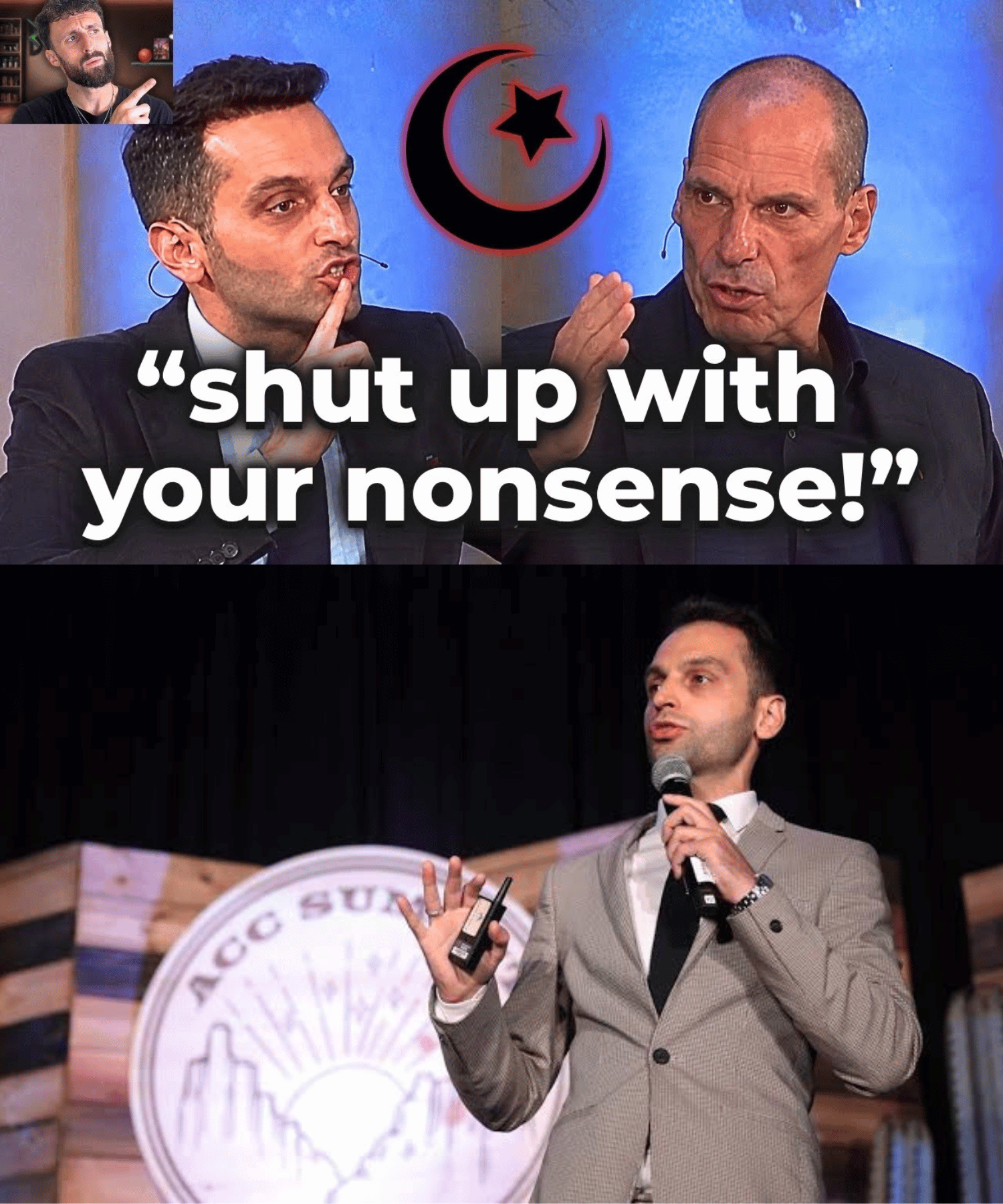
There is Western history, and there are Western values.
They are not the same thing.
Western history includes slavery, empire, racism, conquest, and hypocrisy. Western values include free speech, individual rights, democracy, equality before law, private property, religious liberty, scientific inquiry, and constitutional restraint. The argument from Kisin’s side is that the West should admit its crimes without surrendering the values that eventually helped abolish slavery, expand rights, punish tyranny, and create the conditions for modern prosperity.
That message resonates deeply in the United States because America itself is built on the same contradiction.
The country was born declaring that all men are created equal while allowing slavery to survive. It fought a civil war over that contradiction. It endured segregation. It passed civil rights laws. It built the world’s strongest economy. It became a magnet for millions who saw in America not perfection, but possibility.
That is why the immigration question is so explosive.
If the West is so evil, why do so many people risk everything to reach it?
That question is often asked crudely, but it cannot be dismissed. People do not cross deserts, oceans, cartel territory, and borders because Western civilization has nothing to offer. They come because law, wages, safety, opportunity, education, medical care, and political stability matter. They come because even a flawed America is still more attractive than many alternatives.
But that does not mean borders are immoral.
The transcript’s debate over migration cuts directly into America’s current crisis. One side says wealthy countries owe shelter to people fleeing poverty, violence, war, and exploitation partly created by global inequality. The other side says a nation that cannot control entry is no longer a nation at all.
The hard truth is that both compassion and borders are necessary.
A country can welcome refugees and still reject chaos. It can honor asylum law and still deport those with no valid claim. It can respect migrants and still admit that many people cross borders for a better life rather than because they meet the legal definition of refugee. It can acknowledge Western failures abroad without turning national sovereignty into a suicide pact.
That is where America now stands.
Millions of Americans look at the southern border and ask whether leaders are governing for citizens or for abstract global morality. They see cities overwhelmed, shelters full, schools strained, hospitals pressured, and wages squeezed. They hear economists say immigration grows GDP, but they wonder who benefits when low-wage labor increases while working-class Americans struggle.
That question is not xenophobia. It is democracy.
Citizens have the right to ask whom their government serves.
The debate also touched a larger fear: the rise of a multipolar world. To some critics of American power, multipolarity sounds fair. No single superpower. No Western dominance. No Washington-led order. More voices. More balance. More sovereignty.
But Kisin compared multipolarity to a cartel struggle: when no one holds order, rival powers fight to dominate. That warning hits hard in 2026. America is already confronting an aggressive China, a revanchist Russia, an Iranian axis, fragile alliances, cyberwarfare, and economic fragmentation. A world without American power may not become more peaceful. It may become more predatory.
That is the uncomfortable defense of the Western-led order.
It has been hypocritical, self-interested, and often brutal. But compared to most historical alternatives, it has also produced extraordinary prosperity, relative stability, technological progress, and a global framework in which billions escaped extreme poverty.
That does not mean America should bomb Western values into Iraq, Afghanistan, or anywhere else. The transcript explicitly rejects that idea. Values cannot be imposed by drone strike. Democracy cannot be exported by force like cargo. But the West can defend those values at home.
That is the central point.
America does not have to apologize for wanting secure borders.
It does not have to apologize for believing free speech is better than censorship, constitutional law is better than arbitrary power, women’s rights are better than forced subordination, and religious freedom is better than theocracy.
It does not have to apologize for saying that not all systems are equal.
This is where the argument becomes dangerous, because defending Western values must never turn into claiming Western people are inherently superior. That path leads to the same moral disaster the West is accused of committing. The defense must be institutional, moral, and civic — not racial.
America’s greatness was never that Americans were born better.
It was that America built a system people from every race, religion, and continent wanted to join.
But a system cannot survive if it is forbidden to defend itself. A civilization cannot remain open if openness becomes a weapon used against it. A border cannot protect anyone if leaders are afraid to say why it exists.
The West’s critics are right that history demands humility.
Kisin’s warning is that humility must not become surrender.
America is now caught between guilt and survival. It can admit the crimes of the past without erasing the achievements of the present. It can welcome the stranger without abolishing the citizen. It can learn from empire without handing the future to powers that would be far less merciful.
The choice is not between blind patriotism and endless apology.
The choice is whether America still believes its values are worth preserving.
And if it no longer believes that, the world waiting to replace it may be far darker than its critics imagine.