Viral Zionism Debate Explodes Across America After Jewish Voices Push Back Against Candace Owens and the “Anti-Zionist Jew” Argument
Viral Zionism Debate Explodes Across America After Jewish Voices Push Back Against Candace Owens and the “Anti-Zionist Jew” Argument
A fiery online debate about Zionism, Jewish identity, and the meaning of Israel has ignited a new storm across American political media, after Jewish commentators accused high-profile anti-Israel voices of flattening a complex religious and historical question into a weaponized talking point.
At the center of the controversy is a phrase now heard constantly in U.S. debates over Israel and Gaza: “Even Jews are anti-Zionist.”
For many activists, the phrase is used as proof that opposition to Zionism cannot be antisemitic. For many Jewish Israelis and diaspora Jews, however, the phrase lands very differently. They argue that it is often used without context, without history, and without any understanding of the internal Jewish debates that existed long before modern social media discovered the word “Zionism.”
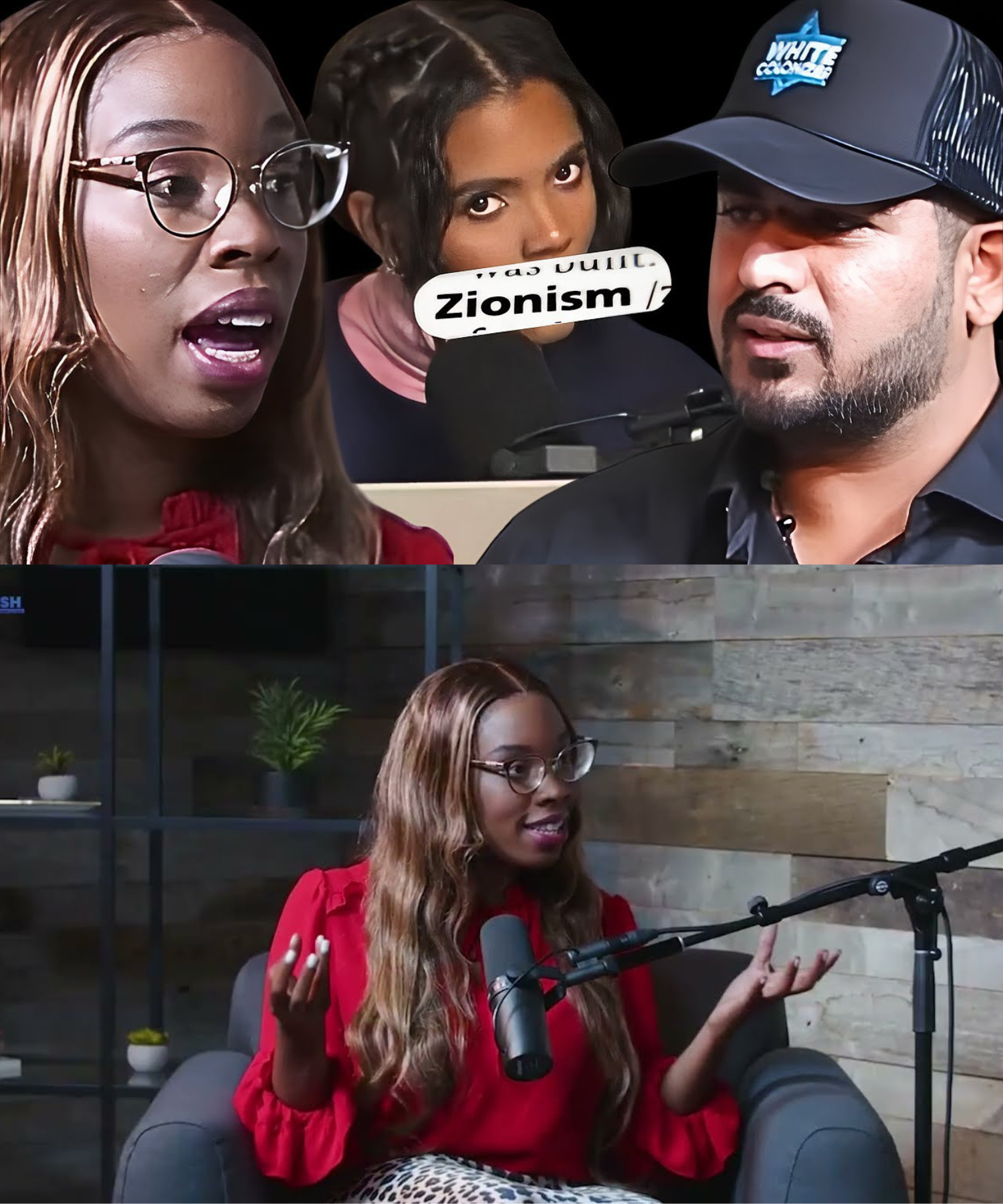
The viral exchange began when a Jewish speaker expressed frustration over the way commentators, including Candace Owens and others, cite anti-Zionist Jews as if that alone settles the argument. The speaker argued that people are failing to distinguish between political Zionism in Europe, religious longing for the land of Israel, ultra-Orthodox theological objections to a secular Jewish state before the Messiah, and the lived reality of Jewish families who survived only because Israel exists.
That distinction has now become the center of a growing American debate.
To the speakers in the video, Zionism is not merely a modern political slogan. It is not only a movement that emerged in Europe in the 19th century. It is also tied to an ancient Jewish connection to the land, to prayer, to exile, to religious memory, to identity, and to the belief that Jews are indigenous to Israel.
That is why they say the phrase “even Jews are anti-Zionist” feels dishonest when used casually.
One speaker said that when critics throw out that line, they often ignore what anti-Zionism actually means inside different Jewish communities. Some ultra-Orthodox Jews oppose the modern state of Israel for theological reasons, believing that Jews should wait for the Messiah before full national restoration. Others oppose Israeli government policy. Some reject nationalism altogether. Some belong to small sects whose views are deeply marginal within the broader Jewish world. And some are politically anti-Zionist from a secular left-wing perspective.
But the speaker’s point was clear: not all of those positions mean the same thing, and they cannot honestly be used as interchangeable weapons in a debate about whether Jews have a right to national self-determination.
That argument has exploded in the United States because the American conversation around Israel has become increasingly hostile, emotional, and simplified. On campuses, in podcasts, on TikTok, and in cable news panels, “Zionism” is often treated as a dirty word, while many Jewish Americans hear it as something far more basic: the belief that Jews have a right to exist safely in their ancestral homeland.
The second speaker made the point personal.
She argued that being an anti-Zionist Jew in today’s world often requires a level of privilege many Israeli Jews simply do not have. Her family, she said, directly required the creation of the state of Israel in order to survive. Without Israel, they would not be alive today.
That statement cut through the abstract language of political theory.
For Jews whose families fled persecution, expulsion, pogroms, Arab countries, Europe, North Africa, or the Middle East, Israel is not an idea debated comfortably from a studio. It is the reason their parents, grandparents, cousins, and children had somewhere to go when the world became dangerous. To them, anti-Zionism is not merely criticism of policy. It can sound like a demand that their family’s refuge should never have existed.
The speaker described her own family as Mizrahi Jews who did not arrive in Israel as conquerors or elites. They did not take palaces. They did not inherit wealth. They struggled, worked, survived, and built ordinary lives. That story challenges a common American narrative that frames Zionism only through the lens of European colonialism.
For many Mizrahi and Sephardi Jews, the story is different.
Their families came from Iraq, Yemen, Morocco, Egypt, Iran, Syria, Libya, Tunisia, and other regions where Jewish life became increasingly unsafe or impossible. Many did not experience Israel as a European colonial project. They experienced it as rescue, return, and survival.
That is why the debate has become so intense.
When American commentators reduce Zionism to one political ideology, many Jews respond that they are erasing centuries of exile and the diversity of Jewish experience. When critics cite anti-Zionist Jews as evidence against Zionism, Jewish defenders argue that they are often cherry-picking the smallest voices to delegitimize the majority.
The name Candace Owens entered the controversy because one speaker said she had made a respectful video trying to explain the nuance behind Jewish Zionism, anti-Zionist Jews, and Israeli family histories. According to the speaker, Owens responded dismissively, treating the argument as laughable rather than engaging with it seriously.
That reaction enraged many viewers.
To supporters of the speaker, the moment showed exactly what is wrong with the American media environment: people want to use Jewish identity when it supports their argument, but ignore Jewish lived experience when it complicates the story. They want anti-Zionist Jews as rhetorical tools, but do not want to hear from Israeli Jews whose lives depend on Zionism.
Critics of Zionism disagree. They argue that Jewish disagreement over Israel is real and should not be dismissed as privilege or betrayal. They say that some Jews oppose Zionism because of genuine moral, religious, or political conviction, and that no one Jewish voice can speak for all Jews. They also argue that criticism of Zionism is not automatically hatred of Jews.
That point is important.
But the viral debate is not really about whether Jews are allowed to disagree. Of course they are. The deeper issue is whether non-Jewish commentators are using Jewish disagreement honestly — or exploiting it to make a broader anti-Israel argument look morally safer.
The speakers argue that context is everything.
Political Zionism in Europe was shaped by antisemitism, nationalism, pogroms, and the realization that Jewish equality in Europe could vanish overnight. Religious Zionism draws from ancient longing for Zion and Jerusalem. Cultural Zionism emphasized Hebrew language and Jewish renewal. Labor Zionism built kibbutzim and socialist institutions. Revisionist Zionism stressed security and sovereignty. Ultra-Orthodox anti-Zionism often comes from a completely different theological universe.
To collapse all of that into “even Jews are anti-Zionist” is, in their view, intellectually lazy.
The debate also reopens a larger question now dividing America: who gets to define Jewish identity?
Is Zionism a political ideology that can be rejected like any other? Is it a core part of Jewish peoplehood? Is anti-Zionism a legitimate critique of nationalism, or does it too often become a denial of Jewish history and safety? Can Americans criticize Israel without erasing why Israel matters to Jews?
The viral clip does not answer all of those questions. But it does force one uncomfortable truth into the open: many people using the word Zionism do not understand what it means to the people whose lives are bound to it.
For some, Zionism is a headline.
For others, it is the reason their family survived.
And that difference may be the reason this debate has become impossible to ignore.