Viral Tommy Robinson Quran Debate Hits America as Scripture, Extremism, and Free Speech Collide
Viral Tommy Robinson Quran Debate Hits America as Scripture, Extremism, and Free Speech Collide
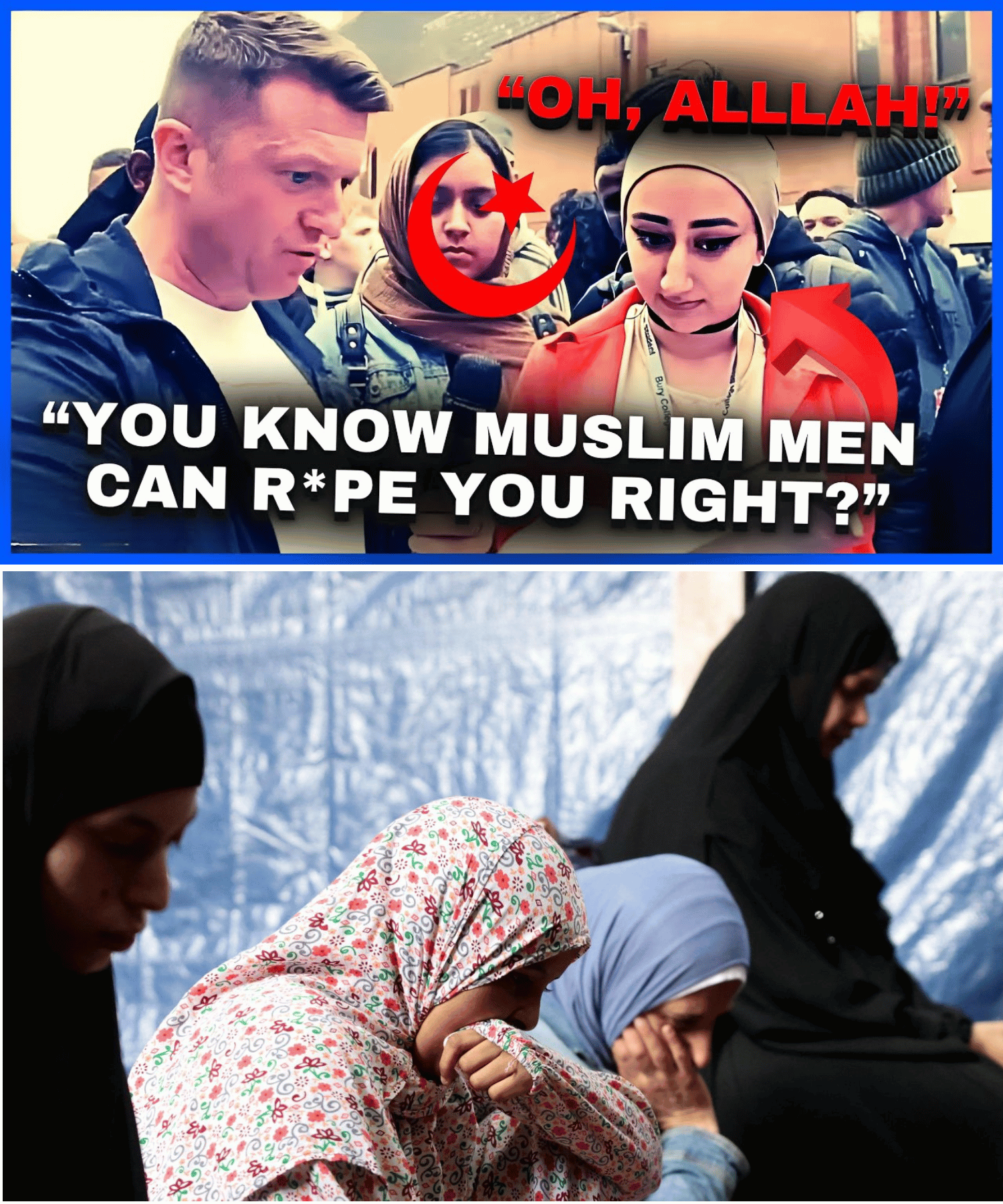
A viral street debate involving Tommy Robinson and a group of Muslim students has exploded far beyond Britain, igniting a fierce conversation in America about Islam, extremism, religious interpretation, and whether Western societies can still discuss these issues honestly without collapsing into fear, censorship, or hatred.
The clip, circulated by a pro-Israel commentator, shows Robinson speaking with young Muslims about the Quran, translation, interpretation, terrorism, and controversial passages that critics claim have been used by extremists. The exchange is tense but unusually revealing. It is not a screaming match. It is not a street brawl. It is a debate over words — and in the modern West, words about religion may be the most explosive weapons of all.
For American viewers, the debate lands at a volatile moment.
From New York to Michigan, from college campuses to city council meetings, the United States is already struggling with questions about Islam, antisemitism, Israel, Palestine, free speech, immigration, and radicalization. The same arguments that once felt like Europe’s problem are now appearing in American neighborhoods, American universities, American protest movements, and American elections.
That is why this video matters.
At the center of the exchange is a deceptively simple question: who gets to interpret scripture?
One Muslim student argues that translations of the Quran can never be fully literal because no language transfers perfectly into another. Different Muslims, she says, may understand certain passages differently, and intention plays a central role in Islamic belief. Robinson pushes back by pointing to well-known Islamic commentary and asking why certain controversial interpretations remain available, sold, taught, or referenced if they are supposedly fringe.
That tension defines the entire debate.
The students are arguing that Islam cannot be reduced to the actions of extremists. Robinson is arguing that extremists are not inventing their claims out of thin air, but drawing from texts and commentaries that Western societies are often afraid to examine.
This is where the discussion becomes dangerous, because both sides touch something real.
It is true that most Muslims are not terrorists. Millions of Muslims live peaceful lives, raise families, work, study, serve in the military, run businesses, and reject violence. Blaming ordinary Muslims for terrorism is not only unjust — it is destructive.
But it is also true that Islamist extremists often justify their actions using religious language. They cite verses, invoke historical examples, claim divine permission, and present themselves as soldiers of a sacred cause. Pretending that ideology plays no role at all is equally dishonest.
The hardest truth is that America must be able to say both things at once.
The debate becomes especially heated when Robinson raises the murder of British soldier Lee Rigby, arguing that one of the killers presented Quranic verses as justification for the attack. Robinson’s broader point is that governments cannot solve radicalization if they refuse to confront the religious arguments extremists themselves claim to believe.
The student counters by pointing to deprivation, alienation, vulnerability, and social background as factors that can lead young men toward extremism. Robinson responds that not all deprived young men become terrorists and that many terrorists have been educated, financially stable, or professionally trained.
Again, both arguments matter.
Radicalization is rarely caused by one thing. Poverty alone does not explain it. Religion alone does not explain it. Foreign policy alone does not explain it. Identity crisis, grievance, ideology, online propaganda, charismatic recruiters, social isolation, anger, and a search for purpose can all become part of the same combustible mix.
That complexity is exactly what American officials, educators, religious leaders, and media outlets often fail to communicate.
Instead, America tends to split into two camps. One side wants to talk only about ideology and sometimes slides into suspicion of Muslims as a whole. The other side wants to talk only about social conditions and sometimes avoids religious content entirely. The result is a broken conversation where each side sees the other as either bigoted or naïve.
The Robinson debate exposes that fracture.
One of the most dramatic moments comes when the discussion turns to the Quranic phrase often translated as killing one person being like killing all mankind. The student presents it as a powerful statement about the sanctity of life. Robinson then points to surrounding verses and commentary, arguing that exceptions involving corruption or mischief in the land have been interpreted by extremists in ways that justify violence.
To many Muslims, this kind of argument feels unfair because it ignores centuries of scholarship, context, legal debate, and the lived reality of peaceful Muslim communities. To many critics of Islamism, however, refusing to discuss those interpretive disputes feels like evasion.
This is the dilemma now confronting America.
How can a country protect religious freedom while still allowing hard questions about religion?
How can Muslims be protected from hate while Islamism is criticized openly?
How can authorities address radicalization without treating an entire faith community as suspects?
How can journalists, politicians, and educators talk about violent ideology without giving ammunition to anti-Muslim bigotry?
There is no easy answer, but silence has not worked.
That is why the video struck such a nerve. Robinson repeatedly insists that he does not hate Muslims and that he has known Muslims personally. His supporters point to the calm tone of the exchange and say it proves he is raising legitimate concerns, not spreading hate. His critics argue that even polite language can still frame Islam itself as a threat and fuel hostility toward ordinary Muslims.
The truth is that public debates are shaped not only by what is said, but by what audiences do with it.
A serious conversation about extremist interpretations can become valuable civic discussion. But in the wrong hands, the same conversation can become collective blame. It can turn from “How do we stop radicalization?” into “Muslims do not belong here.” That leap is where democracies become dangerous.
America has seen this pattern before.
After major attacks, Muslim Americans often face pressure to condemn crimes they did not commit. Mosques increase security. Hijab-wearing women report harassment. Sikh Americans have sometimes been targeted by people who cannot even distinguish one faith from another. At the same time, many citizens feel their leaders dismiss security concerns too quickly and hide behind polite language.
That mutual distrust is growing.
In American cities with large Muslim populations, the conversation is no longer abstract. It touches schools, prayer spaces, protests, campus politics, interfaith relations, policing, foreign policy, and local elections. It also intersects with Jewish fears after the rise of anti-Israel and sometimes antisemitic rhetoric in public demonstrations.
The question is not whether these debates will come to America.
They are already here.
The question is whether America can handle them better than Europe has.
That means rejecting two forms of cowardice. The first is the cowardice of refusing to discuss religious extremism because the subject is uncomfortable. The second is the cowardice of turning fear into hatred of innocent people.
A constitutional republic must be stronger than both.
Muslims must be free to worship, speak, publish, study, convert, raise families, and participate fully in American life. Critics must be free to question Islam, Islamic texts, Islamic history, Islamist movements, and religious claims without being censored or threatened. Law enforcement must target credible threats, not entire communities. Religious leaders must confront dangerous interpretations honestly. Politicians must stop using the issue either as a weapon or as something too sensitive to touch.
That is the only way forward.
The Tommy Robinson clip did not settle the Quran. It did not settle Islam. It did not settle terrorism, immigration, or integration. But it did reveal the debate the West can no longer escape.
The future of religious freedom may depend on whether America can hold two truths in the same room: Muslims are not collectively guilty, and extremist ideology must be confronted without apology.
If America cannot say both, the conversation will be captured by the loudest voices on either side.
And once that happens, the country will not be debating anymore.
It will simply be choosing which fear controls the room.