Viral Subway Speaker Meltdown Sparks Outrage Over Transit Safety, Public Disorder, and America’s Mental Health Crisis
Viral Subway Speaker Meltdown Sparks Outrage Over Transit Safety, Public Disorder, and America’s Mental Health Crisis
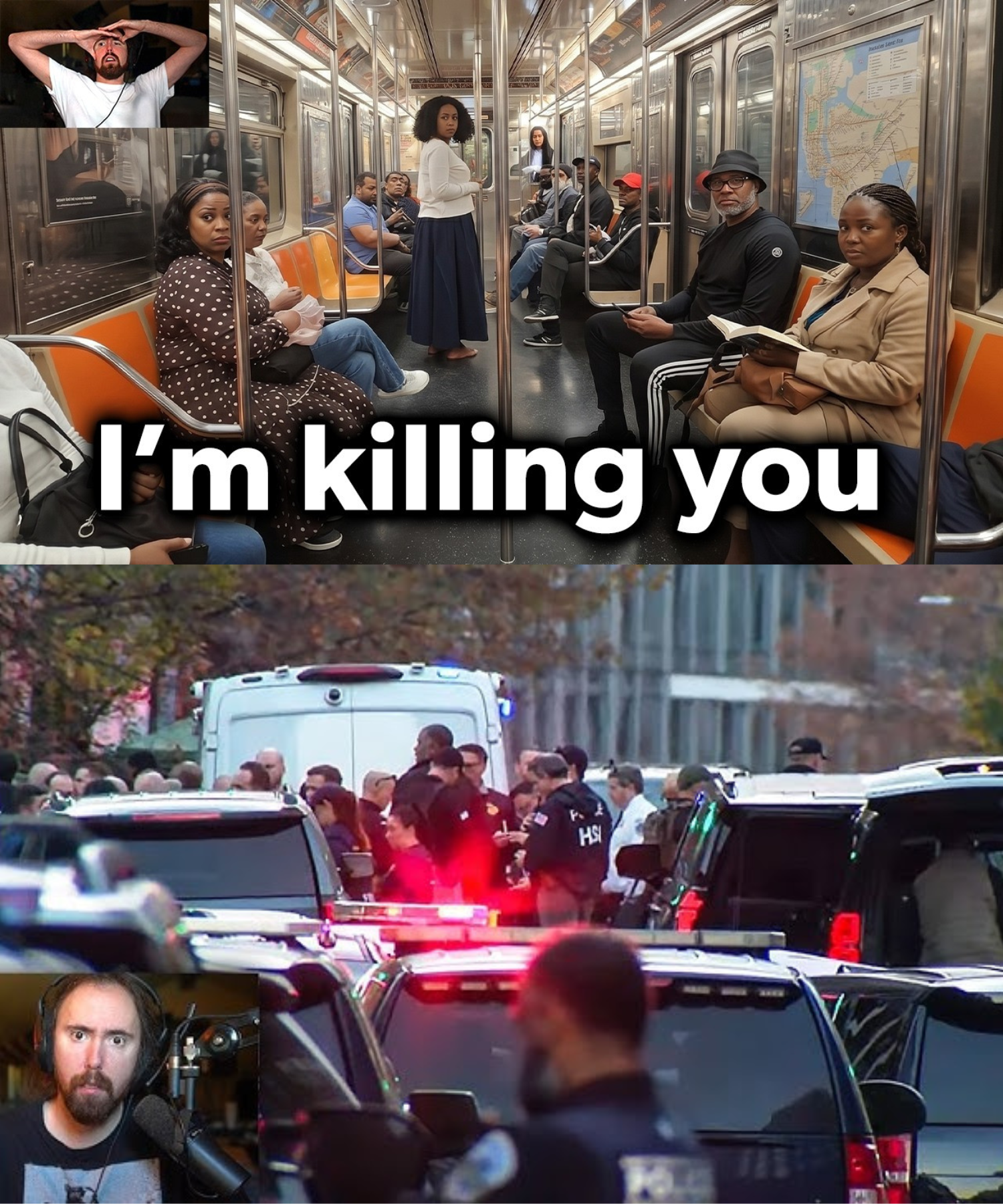
New York — A viral subway confrontation has reignited America’s growing anxiety over public transportation safety, after a passenger who was reportedly asked to lower the volume of a speaker erupted into threats, profanity, and intimidation inside a train car.
The clip, now spreading rapidly across social media, appears to show a man reacting furiously after another rider asked him to turn down his speaker. Instead of lowering the volume or ignoring the request, the man became aggressive, shouting at the passenger, mocking him for wearing headphones, and allegedly threatening to cut his face.
The passenger at the center of the incident appeared to be trying to read a book.
That detail has turned the video into something larger than a typical subway argument.
To many viewers, the footage captures the exact fear that has haunted commuters in New York, Chicago, Philadelphia, Washington, D.C., Los Angeles, and other major cities: an ordinary person doing nothing wrong can suddenly become the target of a volatile stranger in a confined public space.
The confrontation begins with what should have been a minor issue. One rider was playing audio loudly. Another rider apparently asked him to turn it down. In a functioning public environment, the exchange might have ended with a complaint, a shrug, or an awkward silence.
Instead, the man in the video appears to interpret the request as disrespect.
His anger escalates quickly. He demands that others mind their business. He challenges anyone who wants a confrontation. He allegedly threatens violence. Nearby passengers begin recording, while the atmosphere inside the train car grows visibly tense.
The video has prompted one central question across social media: why are commuters expected to tolerate this?
A Symbol of Everyday Transit Fear
For many Americans, the most disturbing part of the clip is not just the threat itself. It is how familiar the scene feels.
Across major cities, riders have become accustomed to unpredictable behavior on trains and platforms. Loud speakers, drug use, harassment, untreated mental illness, aggressive panhandling, and random confrontations have become part of the daily transit experience for many commuters.
Most of the time, people avoid eye contact. They move cars. They stay silent. They calculate risk.
That is what makes the video so unsettling. The targeted passenger did something many people wish they felt safe enough to do: he asked for basic courtesy.
Within seconds, he was threatened.
This is the everyday breakdown that transit agencies struggle to explain. Crime statistics may rise or fall, but public perception is often shaped by moments like this — moments where riders feel trapped, exposed, and abandoned.
Online Commentary Turns Explosive
The video also sparked controversy because of the harsh commentary surrounding it. Some online voices used the clip to argue that aggressive, unstable individuals should be immediately removed from public transit, arrested, institutionalized, or met with force if they become violent.
Others warned that such rhetoric can cross dangerous lines, especially when it uses dehumanizing language or calls for extreme responses before any legal process has taken place.
That divide now sits at the center of America’s public safety debate.
One side argues that cities have tolerated disorder for too long and that ordinary citizens are being sacrificed in the name of compassion. The other side argues that mental illness, homelessness, and instability cannot be solved with rage, cruelty, or blanket calls for force.
But nearly everyone agrees on one point: passengers should not have to sit in fear while someone makes violent threats inside a subway car.
The Mental Health System Behind the Crisis
The incident has renewed attention on America’s broken mental health infrastructure.
Many viral subway confrontations involve people who appear emotionally unstable, intoxicated, homeless, or in crisis. But by the time they are threatening strangers on a train, the system has already failed multiple times.
Mental health outreach did not reach them.
Housing systems did not stabilize them.
Courts did not intervene effectively.
Hospitals often lack capacity.
Police are then left as the final response to a crisis they did not create.
That reality frustrates everyone involved. Riders want safety. Police want clear authority. Advocates want treatment instead of jail. City leaders want solutions that do not create political backlash.
Yet the result often feels like paralysis.
The person in crisis remains in public.
The commuter absorbs the risk.
The city promises reform after the next viral clip.
Public Disorder vs Criminal Threats
A key issue raised by the footage is the line between disruptive behavior and criminal threat.
Playing music loudly is rude and disruptive. Threatening to cut someone’s face is something else entirely.
That distinction matters.
Public transit cannot function if every rider must wonder whether a simple request will trigger violence. Cities depend on millions of people choosing trains and buses every day. If riders lose confidence, the entire system suffers.
Business owners lose workers.
Students miss school.
Tourists avoid the city.
Families stop using public transit.
A subway system is more than transportation. It is a test of civic order.
When people believe the train is unsafe, they begin to believe the city itself is unsafe.
Why Riders Stay Silent
The video also reveals why many commuters no longer intervene.
Most people know that confronting disorder can be dangerous. Even polite requests can be interpreted as insults. A passenger asking someone to lower music, stop smoking, move away, or stop harassing another rider may become the next target.
That fear creates a culture of silence.
Nobody wants trouble.
Nobody wants to be stabbed.
Nobody wants to become the next viral victim.
So people endure things they should not have to endure.
That silence is not apathy. It is self-preservation.
Political Pressure Builds
The viral clip is likely to fuel pressure on mayors, transit police, prosecutors, and governors to take visible action.
In New York, public safety on the subway has already been a major political issue. Increased patrols, National Guard deployments, mental health outreach teams, surveillance upgrades, and involuntary hospitalization policies have all been debated or implemented in different forms.
But critics say these measures are often temporary, symbolic, or inconsistent.
Public safety advocates argue that repeat offenders and people making violent threats must be removed quickly and reliably.
Civil liberties groups counter that expanded enforcement must not become an excuse for sweeping up homeless people, mentally ill individuals, or poor residents without due process.
The challenge is not choosing between safety and rights.
It is building a system that protects both.
A City’s Breaking Point
The reason this clip has gone viral is because it captures a breaking point.
People are tired of being told that what they see with their own eyes is not a problem. They are tired of adjusting their lives around disorder. They are tired of feeling that the rules apply only to those still willing to follow them.
At the same time, America cannot solve urban dysfunction by treating unstable people as disposable.
A functioning society must protect the peaceful without abandoning the broken.
That requires police who can act, courts that can intervene, hospitals with capacity, shelters that work, and leaders willing to admit that slogans are not enough.
The Question America Must Answer
The viral subway video leaves the country with a simple but brutal question:
Can an ordinary person ride public transit, read a book, and ask for basic courtesy without being threatened?
If the answer is no, then the crisis is deeper than one loud speaker or one angry rider.
It is about whether American cities can still defend the basic social contract of public life.
Because public transit only works when people believe they are safe sharing space with strangers.
And right now, too many riders are no longer sure.