Viral Robert Spencer Interview Reignites U.S. Firestorm Over Hamas, Israel, and the “Peace Process Illusion”
Viral Robert Spencer Interview Reignites U.S. Firestorm Over Hamas, Israel, and the “Peace Process Illusion”
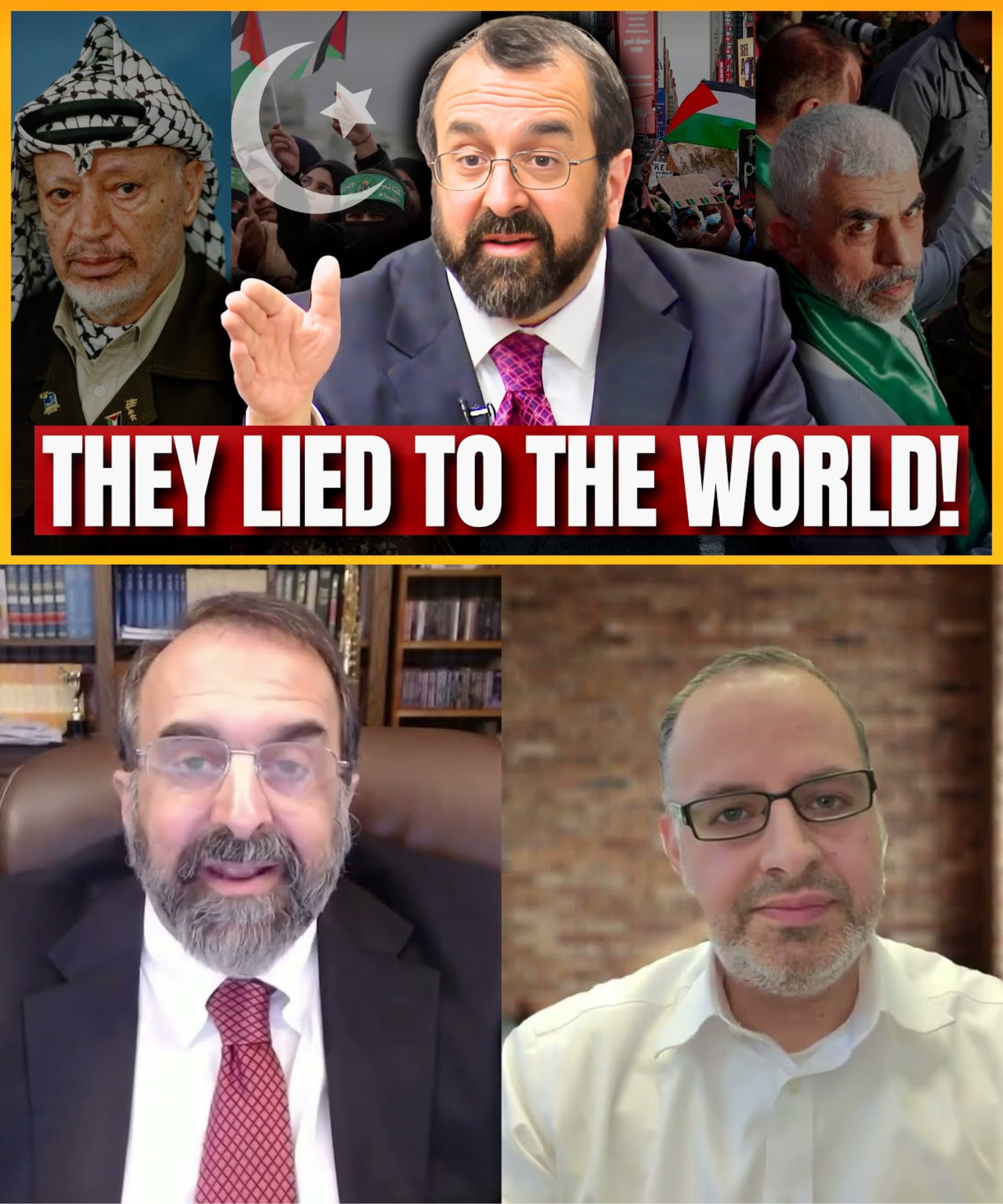
Washington — A new interview with author and commentator Robert Spencer has gone viral across American political circles, reviving one of the most divisive debates in U.S. foreign policy: why has every major effort to solve the Israeli-Palestinian conflict failed — and are American leaders still misunderstanding the nature of the war?
The interview, hosted on a pro-Israel platform, frames the conflict not as a dispute over borders, settlements, or diplomatic formulas, but as a much deeper ideological confrontation rooted in history, religion, political Islam, and the long collapse of the Middle East peace process.
Supporters of Spencer say the interview exposes truths Washington refuses to say out loud. Critics argue that his framing is sweeping, inflammatory, and risks reducing millions of Muslims and Palestinians to an ideological stereotype.
But the video has spread because it asks questions many Americans are now wrestling with after October 7: Did the West misread Hamas? Did universities and media help sanitize extremism? And is the dream of a negotiated peace built on assumptions that the region itself does not share?
“October 7 Was Not the Beginning”
Spencer begins by arguing that the massacre of October 7 was not an isolated event, but one chapter in a much longer war against Jewish sovereignty in the land of Israel.
He claims that the roots go back to the early twentieth century, when large-scale Jewish immigration into the territory then called Palestine triggered fierce opposition from Arab Muslim leaders.
According to Spencer, the common framing — that there was a Palestinian nation suddenly displaced by outside Jewish newcomers — misses the older Jewish connection to Judea and Samaria, the Roman renaming of the region, and the centuries-long Jewish presence in the land.
That argument has become a central pillar of modern pro-Israel activism in the United States, especially among conservatives and evangelical Christians.
But historians and Palestinian advocates strongly contest Spencer’s claim that Palestinians “do not exist” as a people. They argue that national identities often develop over time and that Palestinian identity, like many modern national identities, became more clearly political in the twentieth century without being illegitimate.
That dispute is exactly why the interview has exploded online.
It does not simply debate policy. It challenges identity itself.
The Grand Mufti, Nazi Germany, and Early Anti-Jewish Violence
A large part of the interview focuses on Haj Amin al-Husseini, the Grand Mufti of Jerusalem, whom Spencer describes as a key figure in early anti-Jewish violence and Arab opposition to Zionism.
Spencer discusses al-Husseini’s ties to Nazi Germany, his wartime broadcasts, and his role in inciting hostility toward Jews before Israel’s founding.
This section has drawn intense reaction because it connects the Israeli-Palestinian conflict to World War II, antisemitism, and the ideological infrastructure of later militant movements.
Pro-Israel commentators argue that Americans cannot understand the conflict without acknowledging this history.
Critics warn that invoking the Mufti too broadly can be used to cast all Palestinian nationalism as Nazi-adjacent, which they say is historically and morally unfair.
Still, the interview’s message is clear: in Spencer’s view, the conflict was never merely about 1967 borders or settlements. It was always about rejecting Jewish sovereignty.
The Muslim Brotherhood and Hamas
The discussion then moves to the Muslim Brotherhood, founded in 1928, and its goal of restoring Islamic political unity after the abolition of the Ottoman caliphate.
Spencer argues that Hamas emerged from this ideological world, calling itself the Muslim Brotherhood’s Palestinian branch and openly seeking the destruction of Israel.
He points to Hamas’s own charter and rhetoric as evidence that the organization sees the conflict in Islamic terms, not merely nationalist ones.
That claim has major implications for Washington.
For decades, U.S. presidents have tried to manage the conflict through diplomacy, incentives, pressure, concessions, and ceasefire formulas. Spencer’s argument is that American leaders repeatedly fail because they treat Hamas and other rejectionist groups as rational political actors seeking a negotiable compromise.
In his view, they are ideological actors seeking ultimate victory.
Oslo and the Collapse of the Peace Process
The interview sharply criticizes the Oslo Accords and the broader peace process.
Spencer argues that Yasser Arafat never truly intended to make permanent peace with Israel and instead used negotiations as a tactical pause. He invokes the Islamic tradition of the Treaty of Hudaybiyyah as a model for temporary truces used to gather strength before resuming conflict.
This claim has long been common in hardline pro-Israel circles.
Supporters say Oslo proved disastrous because it gave Palestinian leaders territory, legitimacy, weapons, and international status without ending incitement or violence.
Critics respond that Oslo failed for multiple reasons, including Israeli settlement expansion, Palestinian extremism, leadership failures on both sides, and the collapse of mutual trust.
But Spencer’s core point is stark: he believes the peace process failed because Washington misunderstood what the other side wanted.
Trump, Ceasefires, and the Nobel Prize Question
The interview also takes aim at Donald Trump’s current or recent peace efforts, suggesting that Trump, like presidents before him, may be driven by a desire to make “the deal” that finally ends the conflict.
Spencer argues that such deals are destined to fail if Hamas survives and if Israel is stopped from fully dismantling the organization.
That argument is politically explosive because many American conservatives strongly support Trump and his pro-Israel record.
Yet the interview suggests that even a pro-Israel president can make the same mistake as his predecessors if he prioritizes diplomacy over victory.
The warning is blunt: a ceasefire that leaves Hamas standing may simply guarantee the next attack.
October 7 and the Information War
Perhaps the most timely part of the interview concerns media coverage after October 7.
Spencer claims that a propaganda machine was ready almost immediately to recast Israel as the aggressor, even before Israel had launched major operations inside Gaza.
He points to the speed with which genocide accusations spread in media, campuses, activist circles, and parts of the political right and left.
This theme has resonated intensely in the United States, where universities have been rocked by pro-Palestinian encampments, congressional antisemitism hearings, donor revolts, and bitter disputes over whether criticism of Israel has crossed into anti-Jewish hostility.
Spencer blames what he calls a Marxist oppressor-oppressed framework dominating American academia.
In that framework, he argues, Palestinians are cast as colonized victims and Israelis as white colonial oppressors, regardless of the complexity of Jewish history, Mizrahi Jews, or Hamas’s own actions.
Critics argue that this framing dismisses genuine Palestinian suffering and ignores the reality of occupation, civilian casualties, and displacement.
The clash is now central to American campus politics.
The United Nations and Global Bias Claims
The interview also attacks the United Nations, accusing it of systemic hostility toward Israel.
Spencer argues that communist and Muslim-majority blocs have long worked together to isolate Israel diplomatically, while far more abusive regimes receive less scrutiny.
This claim is familiar to pro-Israel advocates in Washington, who often point to the disproportionate number of UN resolutions targeting Israel compared with other nations.
Critics say Israel’s occupation and military conduct deserve international scrutiny, but even some moderates acknowledge that the UN’s Israel focus has often appeared uniquely intense.
Qatar’s Double Game
One of the interview’s sharpest sections concerns Qatar.
Spencer accuses Qatar of playing both sides: presenting itself as a mediator while hosting or supporting figures linked to Hamas and the Muslim Brotherhood.
This issue has become urgent in Washington because Qatar has often served as a key diplomatic channel in hostage negotiations and ceasefire talks.
Supporters say Qatar is useful precisely because it can talk to actors the U.S. and Israel cannot. Critics say that arrangement rewards duplicity and gives extremists political protection.
Why America Still Needs Israel
The interview ends by defending the U.S.-Israel alliance against the “America First means America alone” argument.
Spencer says Israel provides crucial intelligence and military cooperation and faces enemies that share ideological hostility toward the United States.
That argument remains central as isolationist sentiment grows on parts of the American right.
For pro-Israel voices, abandoning Israel would not reduce America’s burdens. It would strengthen forces already hostile to American power.
The Debate Washington Cannot Escape
The viral interview will not settle the Israeli-Palestinian conflict.
It will deepen the divide over how Americans understand it.
One side sees a territorial conflict requiring compromise.
The other sees an ideological war in which compromise has repeatedly empowered rejectionists.
After October 7, that argument has become far harder to ignore.
For Washington, the question is no longer simply how to restart the peace process.
The question is whether the peace process was ever built on reality.