Viral Penn State Equity Debate Reignites America’s War Over Merit, Race, and the Future of College Admissions
Viral Penn State Equity Debate Reignites America’s War Over Merit, Race, and the Future of College Admissions
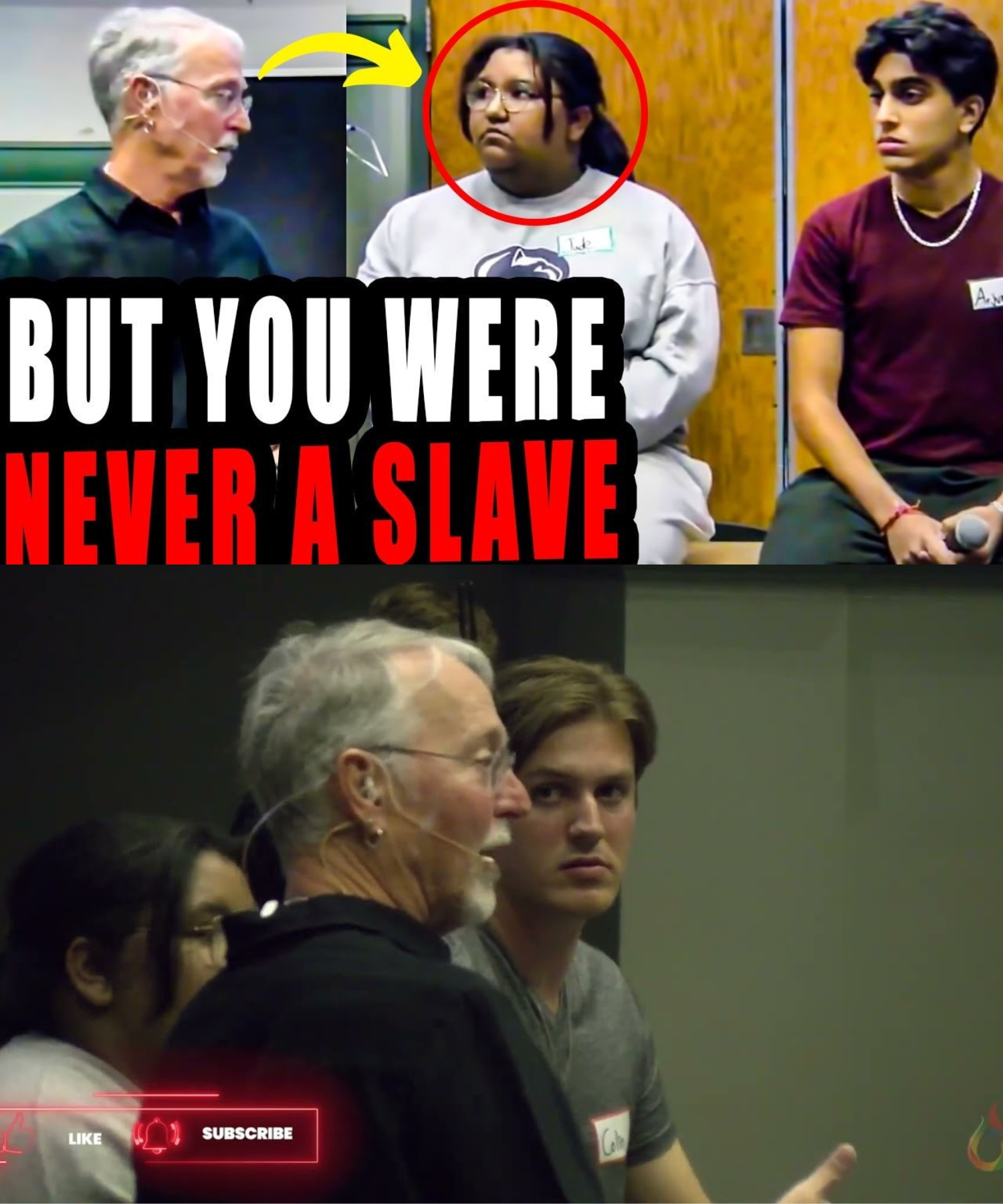
University Park, Pennsylvania — A tense classroom exchange at Penn State has erupted across social media, reigniting one of America’s most bitter national arguments: should elite universities judge students only by measurable achievement, or should they account for the unequal histories, families, schools, and resources that shape those achievements before a student ever applies?
The viral clip, taken from a lecture led by sociologist Sam Richards, shows students and instructors wrestling with affirmative action, equity, inherited privilege, poverty, historical injustice, family culture, and whether the American promise of “equal opportunity” is real — or only real for those born close enough to the starting line.
The video has struck a nerve because it lands in the middle of America’s post-affirmative-action era, after the Supreme Court sharply limited race-conscious admissions and forced colleges to rethink how they define fairness.
For conservatives, the clip is proof that elite universities have become ideological factories obsessed with race and group identity. For progressives, it is proof that ignoring structural inequality does not make society fair — it simply protects people who already have advantages.
And for students, the argument is painfully personal.
A college acceptance letter may look like one decision. But the debate asks whether that decision reflects a lifetime of unequal chances.
The Core Question: What Is Fair?
The exchange begins with a seemingly simple issue: two students apply to a university. One comes from a wealthy, highly educated family. The other comes from a poor background, weaker schools, fewer role models, and less access to tutoring, college visits, internships, and support.
If they do not perform equally, should admissions treat them equally anyway?
Richards pushes students to consider the deeper structure behind achievement. He argues that success is not only about hard work. It is also about family resources, social networks, school quality, parental education, tutoring, money, housing, time, and expectations.
One student raises the case of young people from Native American reservations or deeply poor communities, where schools may be underfunded and college access limited. Another argues that if a student cannot get into Penn State, they can attend another school and work harder.
That exchange captures the entire American fight.
One side says fairness means the same standard for everyone.
The other says fairness means recognizing that everyone did not start from the same place.
“Student Loans” vs Structural Inequality
At one point, a student suggests that poor students can use student loans to pay for college, implying that lack of money alone should not justify preferential treatment.
But the discussion quickly moves beyond tuition.
The counterargument is that disadvantage is cumulative. It begins long before college bills arrive. A student from a struggling school may never receive the same academic preparation. They may not have parents who know how admissions work. They may need to work while studying. They may lack test prep, internships, counselors, and professional networks.
That is the heart of the equity argument: college admissions is not an isolated contest. It is the result of years of unequal preparation.
Critics of equity respond that this logic can expand endlessly. If every background factor matters, they ask, where does individual responsibility begin? And if universities start adjusting for group differences, who gets rewarded, who gets penalized, and who decides?
Race, Class, and the Affirmative Action Legacy
The transcript shows the conversation moving from poverty to historical background — including slavery, disenfranchisement, and the long-term effects of exclusion.
Some students argue that the descendants of people harmed by historic systems did not inherit the same wealth, institutions, or social capital as those who benefited from them.
Others push back, asking whether people today should receive advantages or disadvantages based on events generations before they were born.
This remains one of America’s most explosive questions.
Supporters of affirmative action argue that historical injustice did not vanish simply because laws changed. Wealth gaps, school inequality, housing patterns, and family connections can persist for generations.
Opponents argue that using race to correct past injustice creates new injustice in the present, especially against students who did not cause historical discrimination.
The video does not resolve the argument. It shows how hard the argument has become.
Asian-American Students and the Meritocracy Backlash
One of the most powerful moments comes when the discussion turns to Asian families and high-performing students.
Richards notes that Asian families have been central to the backlash against admissions systems that reduce reliance on test scores or traditional metrics. The argument is that if families emphasize education, send children to tutoring programs, and work hard to achieve excellence, universities should not punish that success.
This point has become politically explosive.
Conservatives argue that Asian-American students expose the contradiction in modern equity politics: a minority group can be penalized because it succeeds too much by the very standards universities once promoted.
Progressives respond that admissions must evaluate more than test scores and that no single metric captures fairness.
But the emotional power of the Asian-American argument has reshaped the national debate, especially after court challenges to race-conscious admissions.
The Parent Question
One student makes a point that resonates far beyond the classroom: parents work hard so their children can benefit.
If a family builds wealth, buys property, creates connections, pays for tutoring, or prepares children for elite schools, is that unfair — or is that the entire purpose of family sacrifice?
This argument hits directly at the American middle class.
Many parents do not see themselves as privileged elites. They see themselves as people who worked hard to give their children a better shot.
If universities then treat those advantages as something to be offset, families feel punished for doing exactly what society told them to do.
The debate becomes not only about race or class, but about the moral status of inheritance itself.
Is inherited advantage unfair?
Or is it the reward of generations of effort?
DEI Under Fire
The commentary surrounding the clip takes a sharp turn against diversity, equity, and inclusion programs, accusing universities of becoming ideological institutions that judge people by race, gender, sexuality, and group identity rather than individual merit.
This reflects a broader national backlash.
Across the United States, Republican lawmakers have moved to restrict or dismantle DEI programs in public institutions. Many voters now associate DEI with bureaucracy, ideological training, and racial preference.
Defenders of DEI argue that critics distort its purpose. They say equity programs are meant to address real barriers, expand access, and prevent institutions from reproducing old inequalities.
But the phrase “DEI” has become politically radioactive in much of America.
The Penn State clip shows why. Even in an academic discussion, the terms quickly trigger deeper fears about fairness, punishment, and identity politics.
Equality of Opportunity vs Equality of Outcome
The central philosophical divide is clear.
Conservatives generally argue for equality of opportunity: remove legal barriers, treat individuals equally, and let merit decide.
Progressives argue that opportunity is not equal if some students grow up with dramatically fewer resources, weaker schools, unsafe neighborhoods, or inherited disadvantage.
One side fears forced equality of outcome.
The other fears that “merit” is often just inherited advantage disguised as fairness.
That is why the debate remains so difficult. Both sides are defending a version of justice.
America’s Campus War Is Not Over
The Supreme Court decision restricting affirmative action did not end the fight. It moved the fight into essays, socioeconomic preferences, recruitment strategies, legacy admissions, DEI offices, and state legislatures.
Universities are now trying to preserve diversity without openly using race in the same way. Critics are watching closely. Lawsuits will likely continue.
The Penn State debate went viral because it captures America’s unresolved contradiction.
The country believes in hard work.
But it also knows people do not begin life equally.
It believes parents should help their children.
But it also worries that inherited advantage can become permanent class power.
It rejects discrimination.
But it still struggles with the consequences of discrimination.
The Real Question
At the end, the real issue is not only who gets into Penn State.
It is who America believes deserves a second look.
The student with perfect preparation?
The student who beat the odds?
The family that sacrificed for generations?
The community still recovering from old wounds?
No admissions formula can answer that cleanly.
That is why the debate keeps returning.
Because behind every college application is a much bigger question:
What does America mean by fairness?