Viral Online Debate Feud Between Islamic Apologist and Christian Content Creator Sparks Explosive Free Speech and Legal War
Viral Online Debate Feud Between Islamic Apologist and Christian Content Creator Sparks Explosive Free Speech and Legal War
New York — A fast-escalating online feud involving prominent Islamic apologist Muhammad Hijab and Christian content creators has erupted into a global controversy, raising urgent questions about free speech, copyright law, online debate culture, and the increasingly aggressive legal tactics used in influencer-driven ideological conflicts.
The dispute, which originated from a recorded public debate and subsequent online commentary, has now expanded into allegations of copyright strikes, defamation claims, and active legal proceedings filed in California. The situation has drawn millions of views across YouTube, X (formerly Twitter), and alternative media platforms, where supporters on both sides are treating the case as a symbolic battle over truth, censorship, and ideological control of digital spaces.
Copyright Strikes and Legal Escalation
At the center of the controversy is a claim that Muhammad Hijab, a well-known Islamic debater and public speaker, issued copyright strikes against videos featuring a recorded debate with Christian content creator “God Logic.”
According to commentary circulating online, the debate was originally conducted with consent to publish, but later removed or restricted through legal claims after portions of the footage were uploaded and widely shared.
Supporters of the Christian creator argue that the strikes represent an attempt to suppress unfavorable debate outcomes and limit public access to the original exchange. They claim that the footage shows Hijab reacting negatively during the debate and later pursuing legal remedies to restrict its circulation.
Hijab’s supporters, however, argue that the situation involves misrepresentation of content ownership rights, recording permissions, and fair use disputes that are commonly contested in digital media law.
Lawsuit Filed in California Sparks Further Controversy
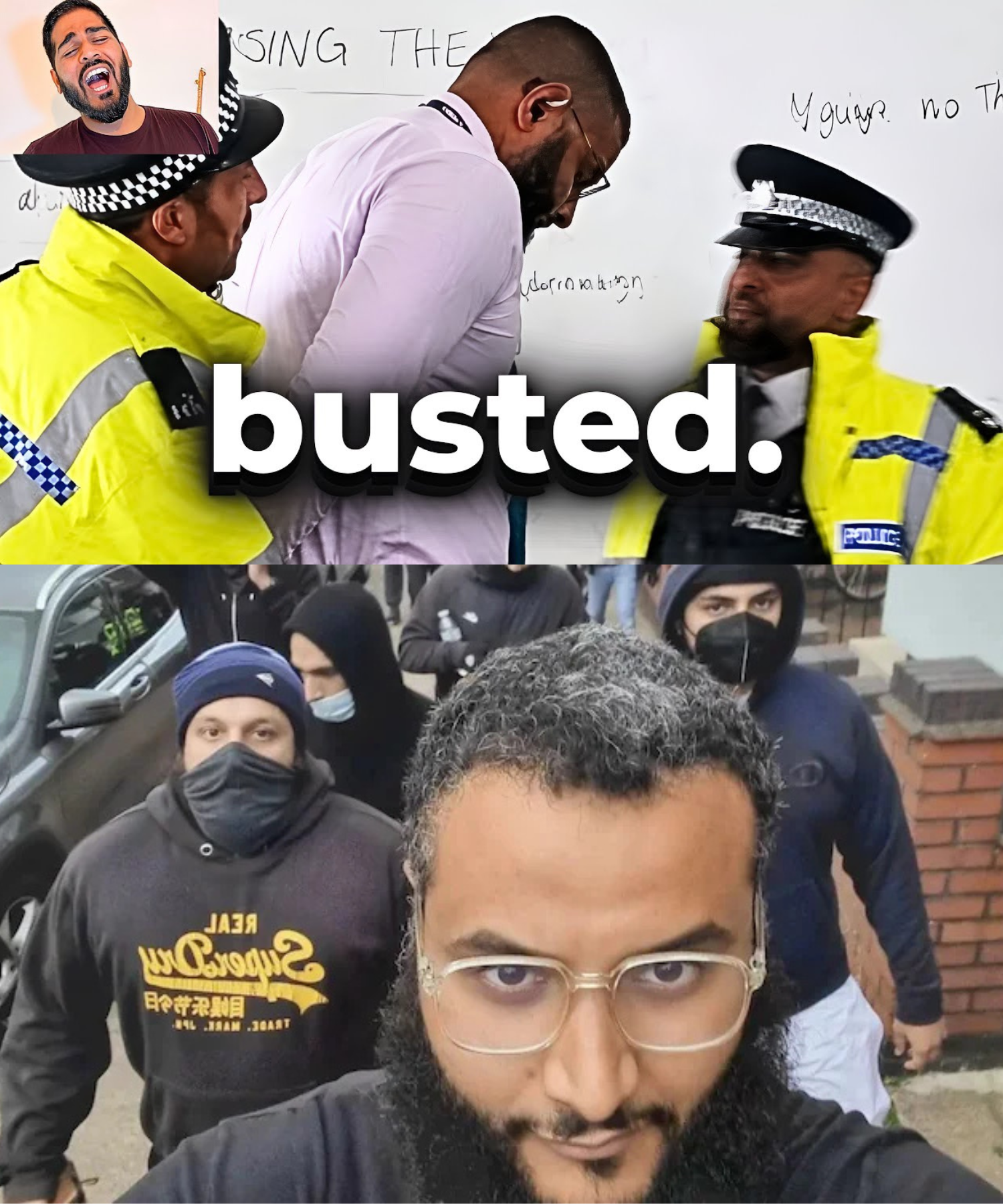
The dispute intensified after reports emerged that a lawsuit had been filed in California connected to the debate footage. Online commentators claim the legal action is part of a broader effort to challenge unauthorized distribution of recorded material.
The case has not been independently verified in full detail through court documentation in the viral video itself, but its existence has been widely discussed across commentary channels.
Some commentators argue that the lawsuit is financially motivated or strategically designed to suppress criticism. Others argue that legal action is a legitimate response to perceived copyright violations and reputational harm.
The lack of clear public legal transparency has fueled speculation and intensified online polarization.
Bankruptcy Claims and Financial Disputes
Adding further complexity, viral commentary also references claims that Muhammad Hijab previously declared bankruptcy following a separate legal case involving defamation allegations.
These claims, widely shared in online discussion threads, have not been uniformly verified in the clip itself but have become part of the broader narrative surrounding the dispute.
Supporters of Hijab reject the framing, arguing that opponents are selectively amplifying financial claims to discredit him personally rather than engaging with the substance of his arguments.
Critics argue that financial strain and legal disputes are relevant to understanding the broader power dynamics of high-profile ideological debates.
“Debate Culture” Under Fire
The controversy has also reignited debate about the culture of online religious argumentation, particularly between Christian and Muslim apologists who frequently engage in high-intensity debates on platforms such as YouTube and livestream channels.
The video commentary describes a pattern in which debates are clipped, edited, re-uploaded, and monetized by opposing communities, often accompanied by emotionally charged framing that portrays one side as victorious and the other as dishonest or evasive.
This cycle has created what media analysts describe as “permanent debate warfare,” where no single discussion ends after the live event, but instead continues indefinitely through reaction videos, legal threats, and audience-driven reinterpretations.
Claims of Suppression vs. Claims of Abuse
One of the most divisive aspects of the feud is the accusation that one side is attempting to “suppress” debate content through copyright law and legal pressure.
Supporters of God Logic and other commentators argue that copyright tools are being used strategically to remove embarrassing footage or limit public access to debates that reflect poorly on certain speakers.
Hijab’s supporters strongly reject this claim, arguing that copyright enforcement is a standard legal mechanism used to protect recorded content and prevent unauthorized redistribution.
The conflict highlights a growing tension in digital media: where does legitimate copyright protection end, and where does censorship begin?
Public Debate Turns Personal
The online discourse surrounding the case has become increasingly personal, with commentators on both sides attacking the credibility, honesty, and financial integrity of opposing figures.
Some Christian commentators describe the legal actions as “bad faith tactics” designed to intimidate critics. Some Muslim commentators argue that the opposing side is exploiting controversy for attention, fundraising, and subscriber growth.
The situation has escalated beyond legal discussion into a broader cultural conflict over religious identity, public debate ethics, and digital influence economies.
GoFundMe Campaigns and Monetization of Conflict
The controversy has also extended into crowdfunding, with supporters reportedly launching GoFundMe campaigns to support legal defense efforts and content production related to the dispute.
This development has raised further questions about how online ideological conflicts are increasingly monetized, with legal battles and public feuds doubling as fundraising opportunities.
Critics argue this creates perverse incentives where conflict is sustained rather than resolved. Supporters counter that legal defense and content creation require financial resources and community support.
Social Media Reaction: Deep Polarization
The viral spread of the feud has triggered sharply divided reactions online.
Supporters of Hijab argue that he is being unfairly targeted and that his legal actions are being misrepresented as censorship. They frame the controversy as part of a broader pattern of hostility toward Islamic speakers in Western online spaces.
Supporters of God Logic and other Christian commentators argue that the situation exposes hypocrisy in debate culture, where public intellectual exchange is allegedly undermined by legal pressure when outcomes are unfavorable.
Neutral observers emphasize that the situation is emblematic of a broader collapse in constructive online discourse, where debates increasingly end not with agreement or disagreement, but with litigation, monetization, and viral outrage cycles.
Experts Warn of “Legalized Debate Warfare”
Media analysts warn that this case reflects a growing trend in which online ideological disputes spill into legal systems, transforming debates into prolonged conflicts fought through copyright claims, defamation suits, and platform takedown requests.
Experts note that while legal tools are legitimate, their use in high-profile ideological conflicts risks turning intellectual debate into procedural warfare rather than substantive dialogue.
A Larger Question About Free Speech Online
At its core, the controversy raises a broader question facing digital platforms: how should societies balance the right to critique, debate, and publish content with the right to control intellectual property and protect reputation?
The answer remains unsettled.
For now, the feud continues to circulate, expand, and mutate across platforms, drawing new audiences into an increasingly complex intersection of religion, law, and internet culture.
No Resolution in Sight
As of now, no final legal resolution has been publicly confirmed, and both sides continue to present sharply conflicting interpretations of the events.
What is clear, however, is that this is no longer just a debate between two individuals.
It has become a case study in how modern ideological conflict is fought — not only with arguments, but with algorithms, lawsuits, and viral media ecosystems that ensure no controversy ever truly ends.