Viral Islam Debate Hits America as Asmongold, Piers Morgan, and Online Commentators Clash Over Free Speech, Women, and Religious Extremism
Viral Islam Debate Hits America as Asmongold, Piers Morgan, and Online Commentators Clash Over Free Speech, Women, and Religious Extremism
A fierce online debate over Islam, Islamism, free speech, women’s rights, Christian persecution, and media censorship has erupted across American social media, after a series of clips involving streamers, commentators, and public figures reignited one of the most explosive questions in Western politics: when does criticism of religious ideology become hatred — and when does fear of being called hateful stop people from telling the truth?
The controversy began with a livestream-style discussion that moved quickly from Islamic history to modern violence, grooming-gang allegations, women’s treatment under religious law, attacks on Christians, and the role of high-profile media figures like Asmongold and Piers Morgan.
At the center of the storm is a growing argument in American and British online spaces: many commentators say the public has been pressured for years to avoid difficult conversations about Islamism, Sharia law, religious extremism, gender inequality, and violence against religious minorities. They argue that any serious criticism is quickly branded “Islamophobia,” shutting down debate before facts can be examined.
But critics of that movement warn that the language often goes too far, painting Muslims as a whole with the same brush as extremists. That distinction — between Muslims as people and Islamism as political-religious ideology — has become the fault line of the debate.
The transcript opens with a technical discussion about Islamic hadith authentication, including references to Sahih al-Bukhari and Sahih Muslim. The speaker argues that the traditional chains of narration are not accepted by many modern academic historians in the same way they are accepted within Islamic scholarship. To religious Muslims, hadith methodology is a serious discipline developed over centuries. To skeptics, however, it can look circular: one narrator trusting another narrator trusting another narrator, all the way back to the Prophet Muhammad.
That alone would have been a serious theological debate.
But then the conversation took a darker turn.
The stream referenced an alleged anti-Muslim stabbing incident in the United Kingdom and the furious online reaction that followed. One side accused right-wing commentators of downplaying violence against Muslims while focusing heavily on grooming-gang scandals. Another side pushed back, arguing that some activists show sympathy only when Muslims are victims but dismiss or minimize reports of abuse when the accused come from Muslim communities.
The emotional core of the clash was clear: who gets empathy, and who gets ignored?
This is where Asmongold entered the conversation.
The popular American streamer, best known for gaming and commentary, has become a surprising figure in broader culture-war debates. According to the discussion, he spent hours reading through a report related to grooming gangs and Islam, reacting in real time as the material moved through accusations about women, children, religious doctrine, social silence, and institutional failure. His reaction drew attention because he did not handle the topic in the polished language of politicians or journalists. He reacted like an ordinary person suddenly confronted with material he found shocking.
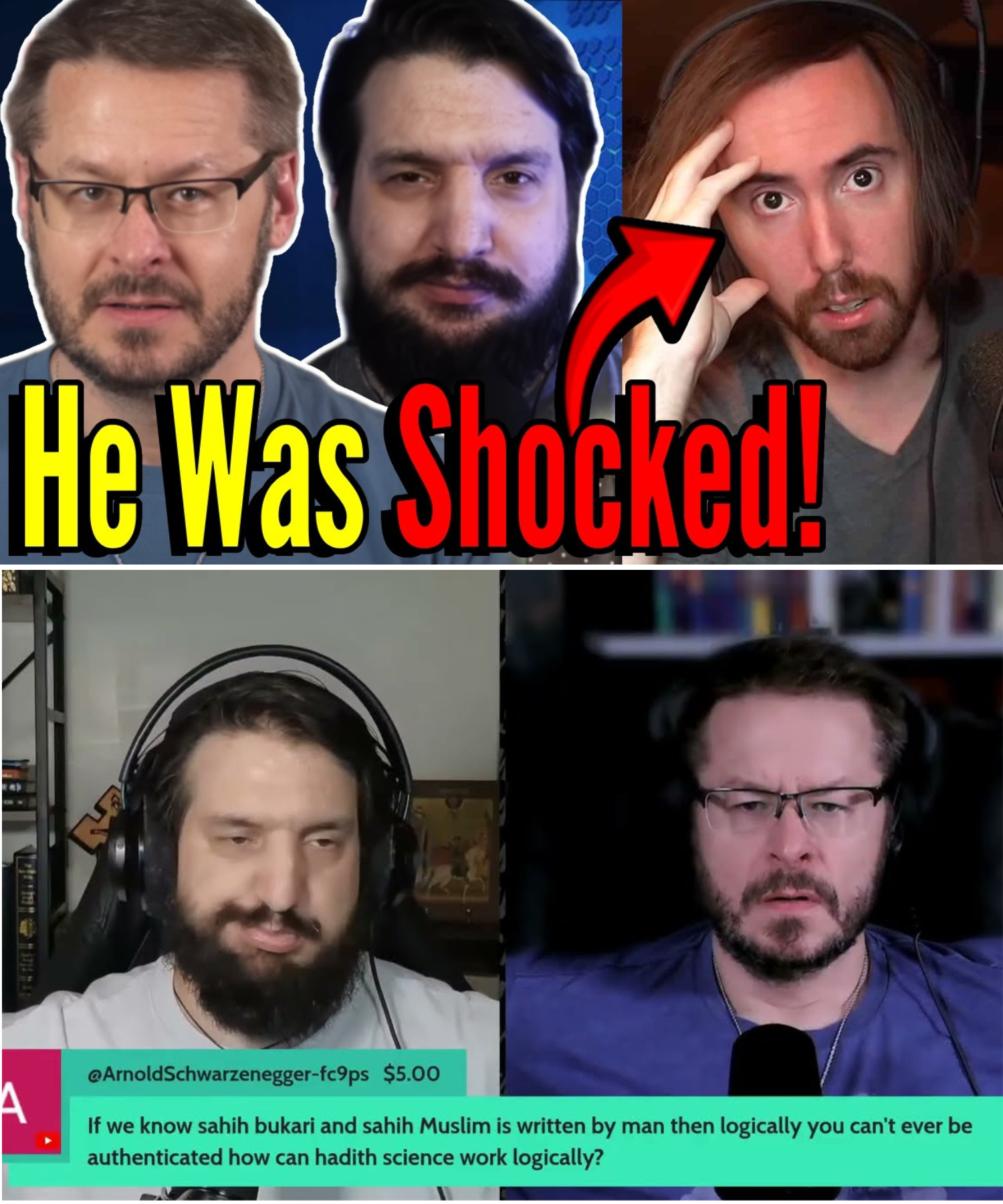
For supporters, that made his response powerful. They saw a mainstream internet figure finally reading the details out loud instead of hiding behind vague phrases. For critics, the danger was obvious: a huge influencer discussing sensitive allegations about Islam and abuse can quickly fuel suspicion against ordinary Muslims who have nothing to do with such crimes.
That tension defines the entire debate.
When the discussion turned to women, it became even more combustible. The transcript references Islamic texts and claims made by critics that women are described as deficient in religion and intelligence, that men hold authority over women, and that certain rules around prayer and marital obligations reflect a deep inequality. The reaction from the streamer was disbelief. He appeared shocked by what he was hearing, especially when women and dogs were mentioned together in relation to prayer interruption.
For American audiences, this lands directly inside a familiar political frame: women’s rights.
The United States has spent years debating gender equality, religious liberty, abortion, school policy, and the limits of cultural accommodation. When critics point to interpretations of Islamic law that appear to subordinate women, they argue that Western liberals must stop pretending every religious practice is compatible with modern equality. But Muslim defenders often respond that critics cherry-pick texts, ignore context, and flatten a diverse global religion into its most controversial interpretations.
Both sides accuse the other of bad faith.
Then came Christian persecution.
The transcript references a video of an African Christian allegedly being beaten in Libya for wearing a cross. The commentator uses the clip to challenge the idea that Christians and Muslims should unite politically against Jews or secular Western power. He cites Quran 5:51 and argues that Islamic scripture itself warns Muslims against taking Jews and Christians as allies.
That claim is heavily contested by Muslim scholars, who often argue that such verses must be read in historical context rather than as a blanket command for all time. But online critics use them as evidence that interfaith unity can be naïve, especially when Christians in parts of the Muslim world face discrimination, intimidation, or violence.
In America, that message resonates with conservative Christians who already feel that Western elites ignore Christian suffering abroad while constantly warning about prejudice against Muslims at home.
The controversy widened further when Piers Morgan was mentioned. Morgan has often argued that entire religious communities should not be blamed for the crimes of a minority. In the transcript, that position is mocked by critics who say public figures like Morgan lecture others about demonization while refusing to confront what they see as real ideological problems.
This is the media dilemma.
Responsible journalists and broadcasters do not want to inflame hatred against innocent people. But if they become too cautious, critics say they end up minimizing or softening issues that deserve direct scrutiny. On the other hand, if commentators use careless language, they can help create a climate where innocent Muslims are treated as enemies.
The American debate is now trapped between those two dangers.
One danger is silence. If fear of offense prevents discussion of grooming gangs, women’s rights, apostasy laws, religious persecution, or extremist ideology, then victims may be abandoned and institutions may keep failing.
The other danger is collective blame. If every Muslim is treated as a representative of the worst interpretation of Islam, then millions of peaceful people are unfairly targeted, and society becomes more divided, not safer.
That is why this viral debate matters.
It is not just about Asmongold’s eyebrows, Piers Morgan’s insults, or streamers yelling at each other. It is about whether the West can still talk honestly about religion, immigration, violence, gender, and law without collapsing into either cowardice or bigotry.
The answer may determine the future of free speech in America.
Because if every criticism of ideology is called hate, serious debate dies.
But if every believer is treated like an extremist, social trust dies.
And right now, across the American internet, both sides believe the other is destroying the truth.