Viral Haifa Interview Turns Israel Apartheid Debate Upside Down as Palestinian Woman Says Life There Is “Normal”
Viral Haifa Interview Turns Israel Apartheid Debate Upside Down as Palestinian Woman Says Life There Is “Normal”
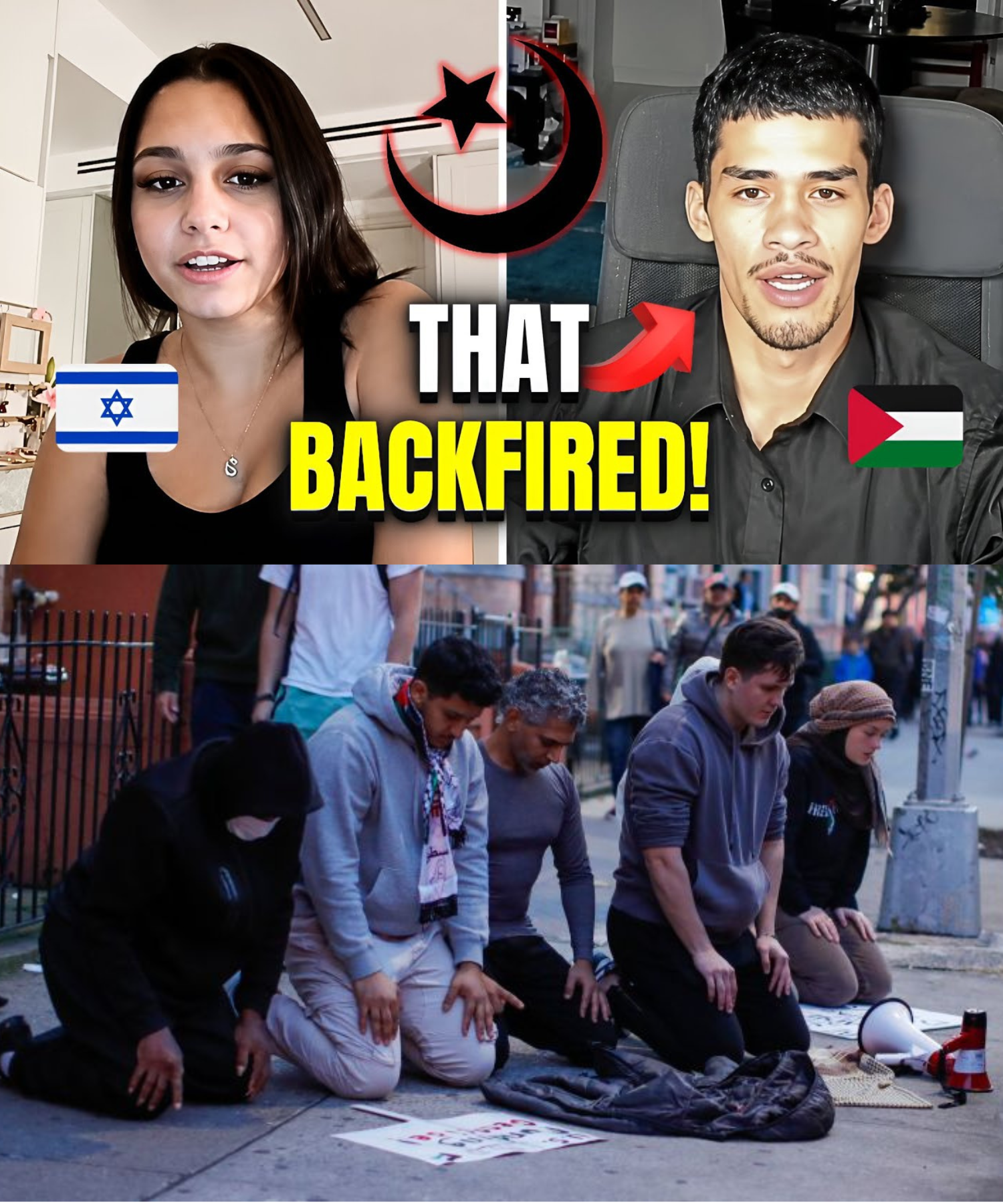
A short street interview with a 19-year-old Palestinian woman from Haifa has exploded into a much larger online battle in America, after the clip appeared to disrupt one of the most repeated claims in the Israel–Palestine debate: that Arab citizens inside Israel live under total social exclusion.
The exchange began casually. A man from New York asked a young woman where she was from. She answered: Israel. More specifically, Haifa. Then came the question that changed the tone of the entire clip.
“Are you Lebanese?”
“No,” she said. “I’m Palestinian.”
That answer instantly placed the conversation inside one of the most emotionally charged conflicts in the world. In the American online space, where Israel is debated daily on college campuses, podcasts, TikTok livestreams, and cable panels, identity itself has become political. Was she Israeli? Palestinian? Arab? Muslim? A citizen? A minority? A victim? A normal young woman from a mixed city?
The clip forced viewers to confront something many slogans avoid: in Israel, those categories can overlap.
The interviewer pressed her. Did she want to “free Palestine”? She said yes. Was it dangerous where she lived? She said no. What was Haifa like? “Normal,” she said, comparing it to life in America. Were Israelis nice? Not all of them, she answered. Then she gave the line that sent the clip viral: just as there are bad Arabs and good Arabs, there are bad Jews and good Jews.
It was not a polished political statement. It was not a speech. It was not written by a lobbyist, a government office, or an activist organization. It was a young woman answering questions in real time — and that is exactly why the clip hit so hard.
For pro-Israel commentators, the moment was devastating to the “apartheid” narrative. Here was a Palestinian Muslim woman from Haifa saying she lived a normal life, had been to Al-Aqsa many times, attended school, moved through Israeli society, and spoke about Jews and Arabs in ordinary human terms rather than in totalizing political categories.
For critics of Israel, the clip did not erase the larger Palestinian experience. They argued that one woman’s life in Haifa cannot explain Gaza, the West Bank, checkpoints, home demolitions, security raids, inequality, discrimination, or the unresolved national question. But even critics had to admit that the clip complicated the simplified version of Israel often presented online.
That is what made it powerful.
The interviewer seemed to expect a sharper condemnation. Instead, he got ambiguity. When he suggested that Israelis look down on Arabs, she agreed that some do. But she did not turn that into a blanket accusation against all Jews. She said some are racist and some are not. She also admitted she did not really have Jewish friends, even though she saw Jewish Israelis around her regularly.
That answer was more revealing than a slogan.
It suggested coexistence, but not intimacy. Proximity, but not necessarily friendship. Normal life, but not complete social integration. Tension, but not collapse. That gray zone is where much of Israeli Arab life actually exists — and it is exactly the kind of reality social media usually destroys.
Then came the Al-Aqsa moment.
The interviewer said he wanted to go to the mosque in Jerusalem but struggled badly with the pronunciation. The young woman corrected him, laughing at the mistake. Then she said she had been there many times. For the commentator reacting to the clip, this became another point against viral claims that Muslims are categorically barred from the site. He argued that the woman’s answer showed the difference between political messaging and lived experience.
But the clip did not stop there.
The reacting commentator then shifted to his own Haifa footage, presenting the city as a direct challenge to the apartheid accusation. In that footage, Haifa is described as one of Israel’s most mixed cities, with Arabs, Jews, Muslims, Christians, and others living, working, eating, and doing business in the same urban space. An Arab restaurant owner says he feels equality and describes no difference between Muslims, Jews, and Christians in his daily life. When asked whether he could vote, start a business, or remain in the country as his home, he answered yes.
That sequence turned the video from a street interview into a political argument.
The claim was simple: if Arab Israelis can vote, own businesses, attend schools, visit holy sites, run restaurants, operate jewelry stores, live in Haifa, and speak freely about racism without being dragged away, then the word “apartheid” becomes harder to use in the simple way activists often use it.
But this is where the American debate becomes dangerous if it moves too fast.
Because one viral clip cannot prove paradise.
Arab citizens of Israel do have citizenship, voting rights, representation, businesses, universities, medical careers, and public visibility. Many live deeply integrated lives. Some serve in state institutions. Some identify strongly as Israeli. Others identify as Palestinian citizens of Israel. Some do both. Some feel pride. Some feel alienation.
At the same time, many Arab citizens describe discrimination in housing, budgets, policing, language, education, and political belonging. Mixed cities can show coexistence on one street and separation on the next. Haifa can be held up as a model while still containing social cracks. The truth is not as clean as propaganda from either side wants it to be.
That is why the clip matters.
It does not end the debate. It breaks the lazy version of it.
For American viewers, especially those who only know Israel through protest signs and war footage, the interview offered something jarring: an Arab Palestinian woman from inside Israel who did not sound like a hostage in her own city. She sounded cautious, imperfect, opinionated, young, normal, and contradictory — like a real person.
That alone is enough to unsettle the narrative machine.
The online left often wants Israel reduced to oppressor and Palestinians reduced to victims. The online right often wants Israel reduced to democracy and Palestinian identity reduced to propaganda. But this woman from Haifa did not fit neatly into either box. She wanted Palestine free. She also said life in Haifa was normal. She acknowledged racism. She also refused to portray every Jew as racist. She was Muslim. She had visited Al-Aqsa. She was Palestinian. She was from Israel.
That combination is why the video spread.
It is easy to argue against a slogan. It is harder to argue against a person.
In America, where the Israel debate has become increasingly performative, clips like this expose the gap between internet warfare and lived reality. Students chant. Influencers clip. Commentators accuse. Politicians posture. But somewhere in Haifa, real people are running restaurants, going to school, visiting holy sites, avoiding uncomfortable conversations, and living beside people they may not fully trust but still share a city with.
That reality is messy.
It is also more honest.
The viral Haifa interview did not prove that Israel has no problems. It did not erase Palestinian grievances. It did not settle the meaning of apartheid, occupation, nationalism, or identity. But it did something just as disruptive.
It forced the American audience to look at a Palestinian woman inside Israel and hear her say the one word activists on both sides rarely know how to handle:
“Normal.”