Viral “Ex-Muslim Testimony” Video Sparks Explosive Debate Over Slavery History, Islam, and Western Identity Narratives
Viral “Ex-Muslim Testimony” Video Sparks Explosive Debate Over Slavery History, Islam, and Western Identity Narratives
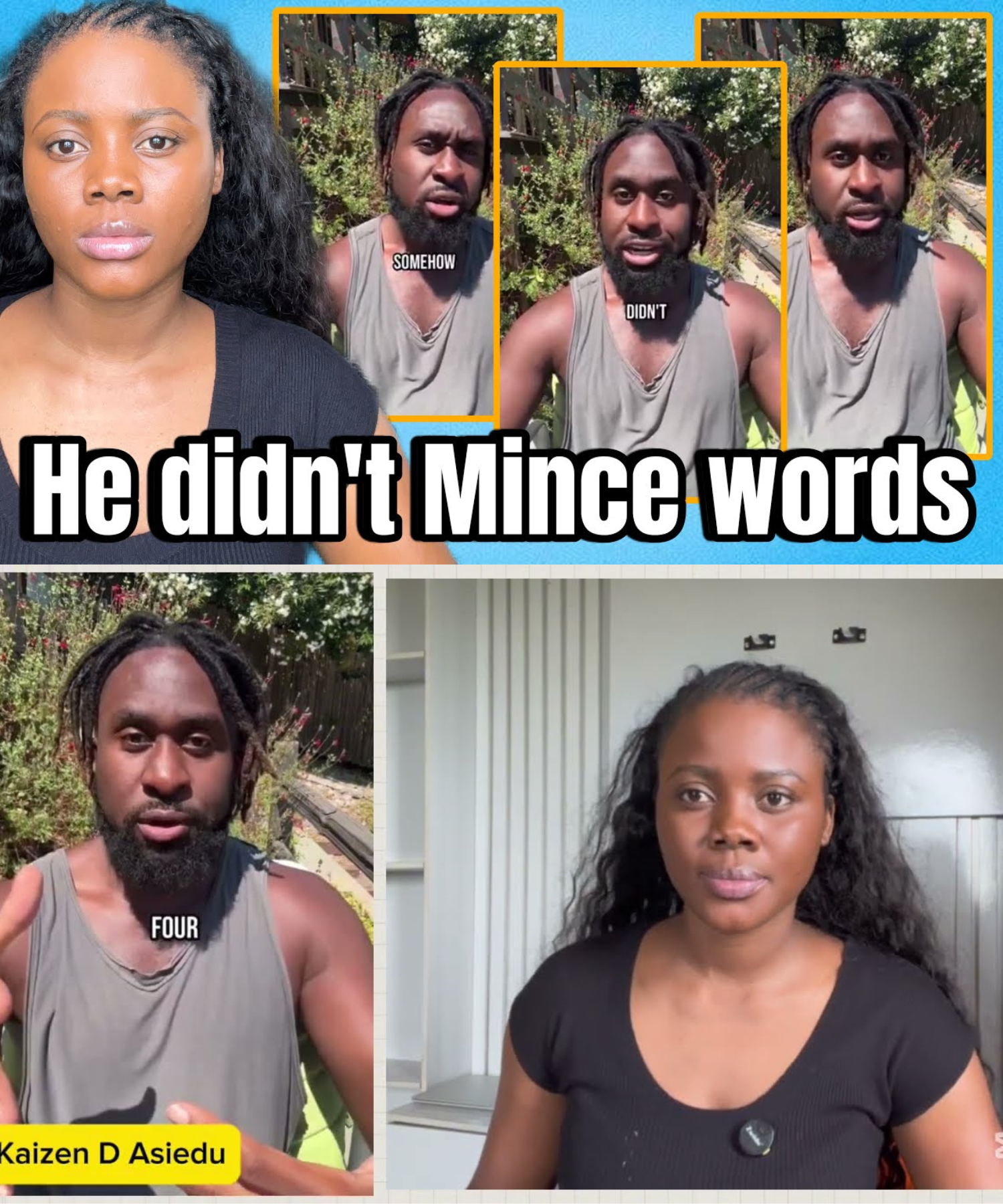
New York — A viral video featuring a man identifying as a Black ex-Muslim has ignited a major international controversy, triggering one of the most intense cultural debates currently circulating across Western social media: how history should be taught, who is responsible for slavery narratives, and whether Islam and Western civilization are being misrepresented in public discourse.
The footage, widely shared across platforms in the United States, United Kingdom, and Europe, presents a highly charged historical argument in which the speaker challenges common narratives about slavery, race, and religion. His remarks have been praised by some as a “hard truth historical correction” and condemned by others as a selective and politically motivated reinterpretation of global history.
“Slavery Was Not Invented by White People”
At the center of the video is the speaker’s claim that slavery is a universal historical institution rather than a phenomenon tied exclusively to Western civilization.
He argues that slavery existed across ancient Egypt, Greece, Rome, China, the Ottoman Empire, and pre-colonial African kingdoms, and that it was practiced globally across cultures long before European colonial expansion.
The speaker states that “slavery was humanity’s original sin, not Europe’s,” asserting that moral responsibility for historical slavery should not be assigned to a single race or civilization.
This framing immediately sparked debate among historians and social commentators, many of whom argue that while slavery was indeed global, the transatlantic slave trade introduced unique industrial scale and racialized systems that had long-term consequences still felt today.
The British Empire and the Abolition Narrative
A significant portion of the video focuses on the British Empire’s role in abolishing slavery.
The speaker argues that Britain was the first major global power to actively suppress and abolish the slave trade, citing the 1807 abolition of the transatlantic slave trade and the Royal Navy’s anti-slavery patrols along the African coast.
He references historical figures such as William Wilberforce and the British Parliament’s anti-slavery movement, framing them as key drivers of global abolition efforts.
Supporters of this argument say it highlights an underappreciated aspect of Western history — that Britain played a leading role in ending slavery.
Critics, however, argue that this framing risks downplaying the economic benefits Britain and other European powers derived from slavery during earlier centuries, and oversimplifies a complex historical transition that involved global resistance movements.
African Kingdoms and Internal Slave Trade
One of the most controversial segments of the video focuses on African involvement in the slave trade.
The speaker claims that African kingdoms participated actively in capturing and selling enslaved individuals, often through inter-tribal warfare and political alliances with European traders.
He argues that African elites were not passive victims but active participants in parts of the slave trade system, citing historical examples of kingdoms such as Dahomey and Ashanti.
Historians generally agree that African societies did participate in slave trading systems, but emphasize that the transatlantic slave trade introduced new economic structures and racial hierarchies driven by European demand and industrial-scale transport.
The speaker’s framing has been criticized for blending historical facts with interpretive conclusions that some scholars say oversimplify power dynamics.
The Arab Slave Trade and Global Comparison
The video further expands into discussion of the Arab slave trade, claiming that millions of Africans were enslaved over centuries through trans-Saharan and Indian Ocean trade routes.
The speaker argues that this historical reality is often underrepresented in modern discussions of slavery and racial justice.
He compares different slave systems across civilizations, suggesting that all major societies participated in slavery in some form, including Europe, Africa, the Middle East, and Asia.
While historians acknowledge the existence of multiple slave systems, they caution against directly equating them without accounting for differences in scale, duration, legal structures, and economic context.
Race, Morality, and “Victim Narratives”
A central philosophical argument in the video is that modern discourse around slavery and race has become overly simplified, with moral categories assigned based on racial identity.
The speaker argues that assigning collective guilt or victimhood to entire racial groups is historically inaccurate and socially harmful.
He warns that narratives framing “white equals oppressor” and “black equals victim” risk deepening division rather than promoting understanding.
Civil rights advocates counter that acknowledging systemic historical injustice is not about assigning permanent guilt but about understanding structural inequalities that persist across generations.
Critique of Education and “Social Media Narratives”
The video also criticizes what the speaker describes as widespread misinformation in educational institutions and social media, particularly around slavery history.
He argues that simplified narratives are being reinforced in academic and cultural spaces, which he believes leads to misunderstanding of global history.
He calls for a “full historical account” that includes all regions and actors involved in slavery systems, rather than focusing selectively on Western involvement.
Educators and historians emphasize that curriculum debates often reflect broader political disagreements about identity, memory, and responsibility.
Islam, Identity, and Expansion Claims
Although the video primarily focuses on slavery, it also includes commentary on Islam and integration, with the speaker claiming that Islamic systems historically expanded through conquest and therefore may struggle to integrate into Western frameworks.
These claims are highly contested, with religious scholars and political scientists emphasizing that Islam, like other major religions, has diverse interpretations and historical experiences across regions.
Critics argue that such generalizations risk conflating theology with political history.
Social Media Reaction: Deep Polarization
The viral spread of the video has generated sharply divided responses online.
Supporters describe it as a necessary correction to what they see as overly simplified or politically motivated historical narratives. They argue that the video highlights uncomfortable truths about global slavery systems and challenges selective historical memory.
Critics argue that the video uses selective framing and rhetorical comparisons to blur important distinctions between different historical systems of slavery and to minimize the long-term impact of the transatlantic slave trade.
A Debate Over History Itself
Experts say the controversy reflects a broader struggle in Western societies over how history should be interpreted and taught.
At the core of the debate is not only slavery, but the question of moral responsibility: whether it should be assigned collectively, structurally, or historically contextualized.
Some argue that historical accountability must acknowledge systems of oppression tied to specific institutions and economic structures. Others argue that universalizing slavery across all civilizations risks erasing key distinctions.
No Consensus, Only Escalation
As the video continues to circulate, no consensus has emerged.
Instead, it has become part of a larger cultural conflict over race, religion, and historical memory in Western discourse.
For some, it represents an attempt to restore balance to historical narratives that have become politically one-sided.
For others, it represents a dangerous oversimplification of complex histories involving millions of lives across centuries.
What remains clear is that the debate is far from settled — and increasingly central to how modern societies understand their past and define their identity today.