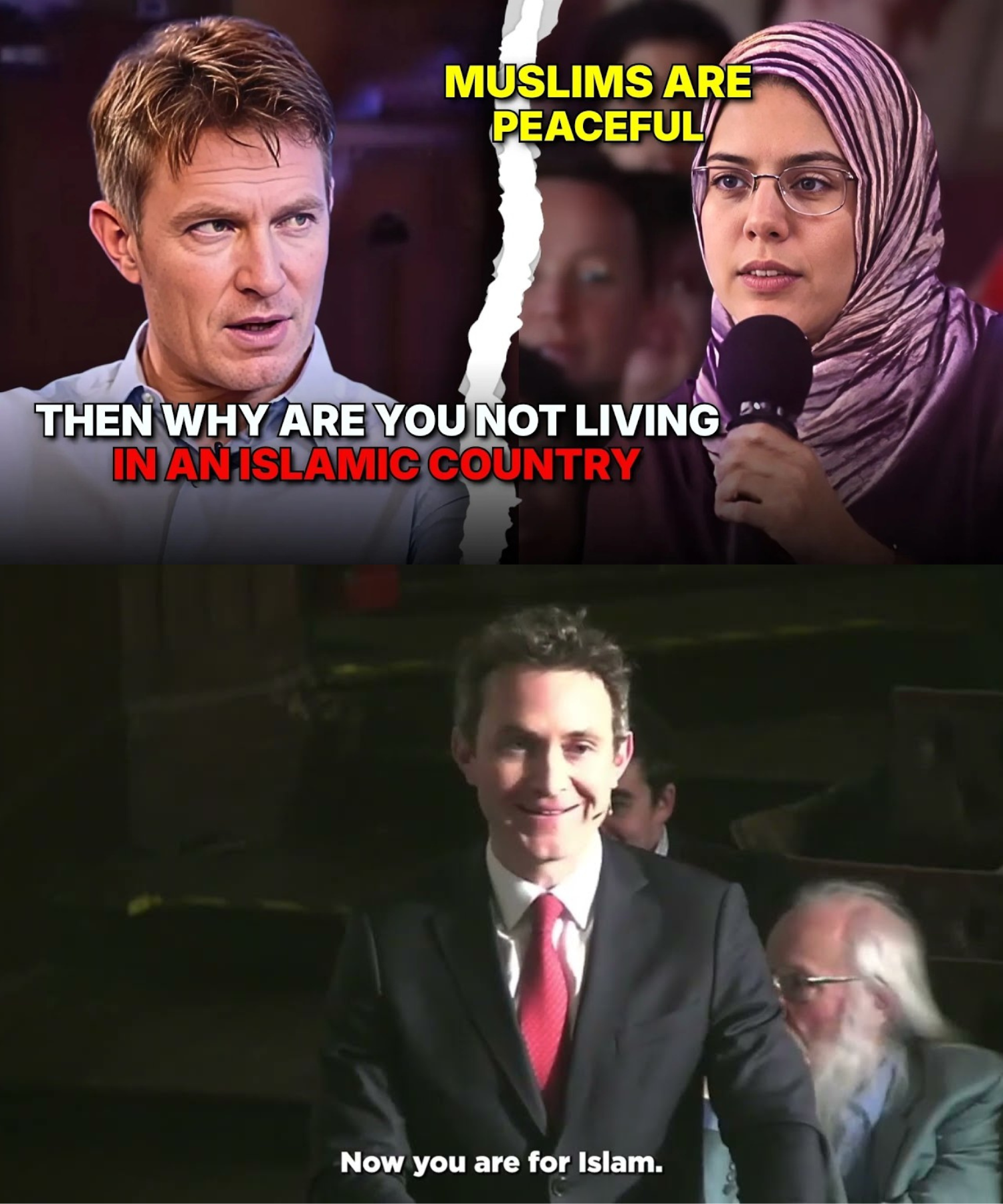
Viral Douglas Murray Debate on Immigration, Refugees, and Western Responsibility Sparks Fierce Global Backlash
Viral Douglas Murray Debate on Immigration, Refugees, and Western Responsibility Sparks Fierce Global Backlash
London — A heated public debate featuring writer Douglas Murray has gone viral across social media, reigniting a deeply polarizing international argument over immigration policy, refugee responsibility, cultural identity, and whether Western nations are being asked to shoulder an unfair global burden.
The exchange, widely circulated in both the United Kingdom and the United States, features a sharp confrontation over Europe’s asylum system, demographic pressure, cultural integration, and the moral responsibilities of wealthy nations toward displaced populations.
The debate has since become a focal point for broader political tensions, dividing audiences over questions of humanitarian obligation, national sovereignty, and the limits of multicultural policy.
“Millions of Refugees, but Who Takes Responsibility?”
The discussion begins with a focus on refugee flows into Europe, particularly during the 2015–2016 migration crisis.
Murray references figures indicating that millions of asylum seekers entered Europe during that period, with countries like Germany and Sweden absorbing significant proportions of their populations in a short timeframe.
He argues that while many refugees remain in neighboring regions of conflict, Europe is still expected to take a disproportionate share of responsibility for resettlement.
His opponent challenges this framing, emphasizing that most refugees historically remain in nearby countries such as Lebanon, Jordan, and other regional states, which already host large displaced populations.
This disagreement sets the foundation for a broader debate over global responsibility sharing and the ethics of asylum policy.
“Colonialism and Moral Responsibility” Debate Intensifies
The conversation quickly expands into historical accountability, with the guest arguing that Western countries cannot ignore their role in destabilizing regions through military intervention, political interference, and arms sales.
Murray acknowledges past Western interventions, including the Iraq war, but argues that other global actors — including Russia, Iran, and regional powers — have also played major roles in destabilizing conflicts such as Syria and Libya.
He rejects the idea that responsibility for refugee crises can be attributed solely to Western nations, arguing that global conflicts involve multiple overlapping actors.
Experts note that debates over responsibility for modern displacement crises remain deeply contested, with scholars dividing between structural and geopolitical explanations.
Refugee Tragedy at Sea Becomes Emotional Flashpoint
A particularly emotional segment of the debate references a maritime disaster involving refugees attempting to cross the Mediterranean.
The transcript includes a distress call from a sinking vessel carrying hundreds of passengers, including women and children, urgently requesting rescue assistance.
The incident is used in the debate to highlight the human cost of migration policy failures and the limitations of current rescue coordination systems.
Murray argues that such tragedies demonstrate the need for clearer responsibility-sharing frameworks between states, rather than ad hoc responses that shift burden across borders.
Critics emphasize that these events underscore the humanitarian urgency of improving safe migration pathways and rescue operations.
“1951 Refugee Convention and Burden-Sharing”
A key point of contention is the interpretation of the 1951 Refugee Convention and how responsibility is distributed among signatory and non-signatory states.
Murray argues that countries that have signed international refugee agreements bear disproportionate obligations compared to nations that have not.
He suggests that this creates structural imbalance in global asylum systems, particularly when wealthier nations are expected to absorb larger numbers of displaced people.
His opponent argues that moral responsibility extends beyond legal frameworks and should include broader humanitarian considerations.
Legal experts note that while the 1951 Convention establishes important obligations, it does not fully resolve modern questions of mass displacement and global burden-sharing.
Europe’s Capacity and Public Perception
The debate also examines Europe’s capacity to absorb large-scale migration.
Murray references statistics indicating that millions of people sought asylum in Europe over short time periods, arguing that such inflows place significant pressure on housing, public services, and social cohesion.
He emphasizes that even when migration represents a small percentage of total population, rapid influxes can create visible and political tension in receiving societies.
His opponent argues that concerns about migration are often exaggerated and that economic data frequently shows migrants contributing positively to labor markets and public services over time.
Economists note that migration impacts vary significantly depending on labor demand, integration policy, and regional distribution.
“Cultural Identity vs Humanitarian Obligation”
A central theme in the debate is the tension between cultural identity and humanitarian responsibility.
Murray argues that governments must balance compassion for refugees with obligations to their own citizens, including maintaining social cohesion and institutional stability.
He suggests that unchecked migration without integration planning can lead to long-term cultural and political friction.
His opponent argues that framing migration as a cultural threat risks reinforcing xenophobia and undermines the humanitarian principles behind asylum systems.
This divide reflects a broader ideological split in Western politics over immigration policy design.
Qatar, Gulf States, and Global Responsibility Questions
The debate also raises questions about why certain wealthy states in the Gulf region host fewer refugees compared to European countries.
Murray asks why more Gulf nations do not resettle displaced populations at scale, despite geographic proximity to conflict zones.
His opponent suggests that global responsibility is shared unevenly and that focusing on Gulf states alone oversimplifies complex international relations.
Political analysts note that refugee policy varies widely depending on legal frameworks, economic structures, and geopolitical alliances.
Social Media Reaction: Deep Polarization
The viral spread of the debate has generated sharply divided reactions across social media.
Supporters of Murray argue that he is raising necessary questions about fairness, burden-sharing, and the sustainability of current migration systems.
Critics argue that his framing risks minimizing humanitarian obligations and oversimplifying the causes of displacement.
Human rights advocates emphasize that refugees flee life-threatening conditions and that international law prioritizes protection regardless of political complexity.
Experts Warn of “Migration Narrative Polarization”
Political scientists describe the exchange as an example of “migration narrative polarization,” where debates over asylum policy become proxies for broader cultural and identity conflicts.
They warn that when migration is framed primarily as either a threat or a moral duty, nuanced policy solutions become more difficult to achieve.
Experts also note that public opinion often shifts more slowly than migration patterns, leading to persistent political tension even when economic data is mixed or context-dependent.
A Debate With No Easy Resolution
As the video continues to circulate, no consensus has emerged.
Instead, it has become part of a broader transatlantic conversation about immigration, humanitarian responsibility, and the future of global asylum systems.
For some viewers, the debate represents a necessary confrontation with the practical limits of migration policy.
For others, it reflects an overly restrictive framing that underestimates the moral urgency of refugee protection.
What remains clear is that the questions raised — about borders, responsibility, and human suffering — are not going away, and continue to shape political discourse across Europe and beyond.