Viral Douglas Murray Clip Sparks Fierce U.S. Debate Over Immigration, Islam, Terrorism, and Western Political Fear
Viral Douglas Murray Clip Sparks Fierce U.S. Debate Over Immigration, Islam, Terrorism, and Western Political Fear
A viral clip featuring British commentator Douglas Murray has exploded across American political media, reigniting one of the most divisive debates in the Western world: whether leaders in Europe and the United States have failed to confront the connection between immigration, radical ideology, public safety, and cultural confidence.
The video, now spreading across U.S. social media platforms, podcasts, and conservative commentary pages, shows Murray arguing that Western publics are no longer simply reacting to “populist narratives.” They are reacting to facts they can see with their own eyes — terrorist attacks, blasphemy controversies, public fear, and political leaders who appear unable or unwilling to speak plainly.
For American audiences, the clip has landed in a country already divided over border security, refugee policy, campus protests, religious liberty, antisemitism, and the limits of multiculturalism. Although Murray’s focus is Britain and Europe, the reaction in the United States has been immediate because the questions he raises feel painfully familiar.
How many risks should a country accept in the name of tolerance? When does compassion become denial? And when citizens notice patterns that elites refuse to discuss, does that make them extremists — or simply awake?
The most explosive part of the clip centers on Murray’s argument that the West has imported a religious and cultural conflict it did not create. He describes it as a “civil war within a religion” that has now become a problem for Western societies. His point is not merely about immigration numbers, but about values: sexuality, free speech, blasphemy, women’s rights, and the right to live without fear of religious violence.
Murray argues that political leaders spent decades pretending there was broad agreement on liberal values, only to discover that some imported communities did not share those assumptions. He points specifically to polling and public attitudes among some Muslim communities in Britain regarding homosexuality, claiming that the liberal consensus around gay rights has been weakened by the arrival of groups with very different religious convictions.
That claim has triggered fierce reaction in the United States.
Supporters say Murray is stating what many voters privately believe but politicians fear saying aloud. They argue that Western governments have spent years condemning ordinary citizens for noticing cultural friction while avoiding the harder question of whether mass immigration from illiberal societies can transform public life.
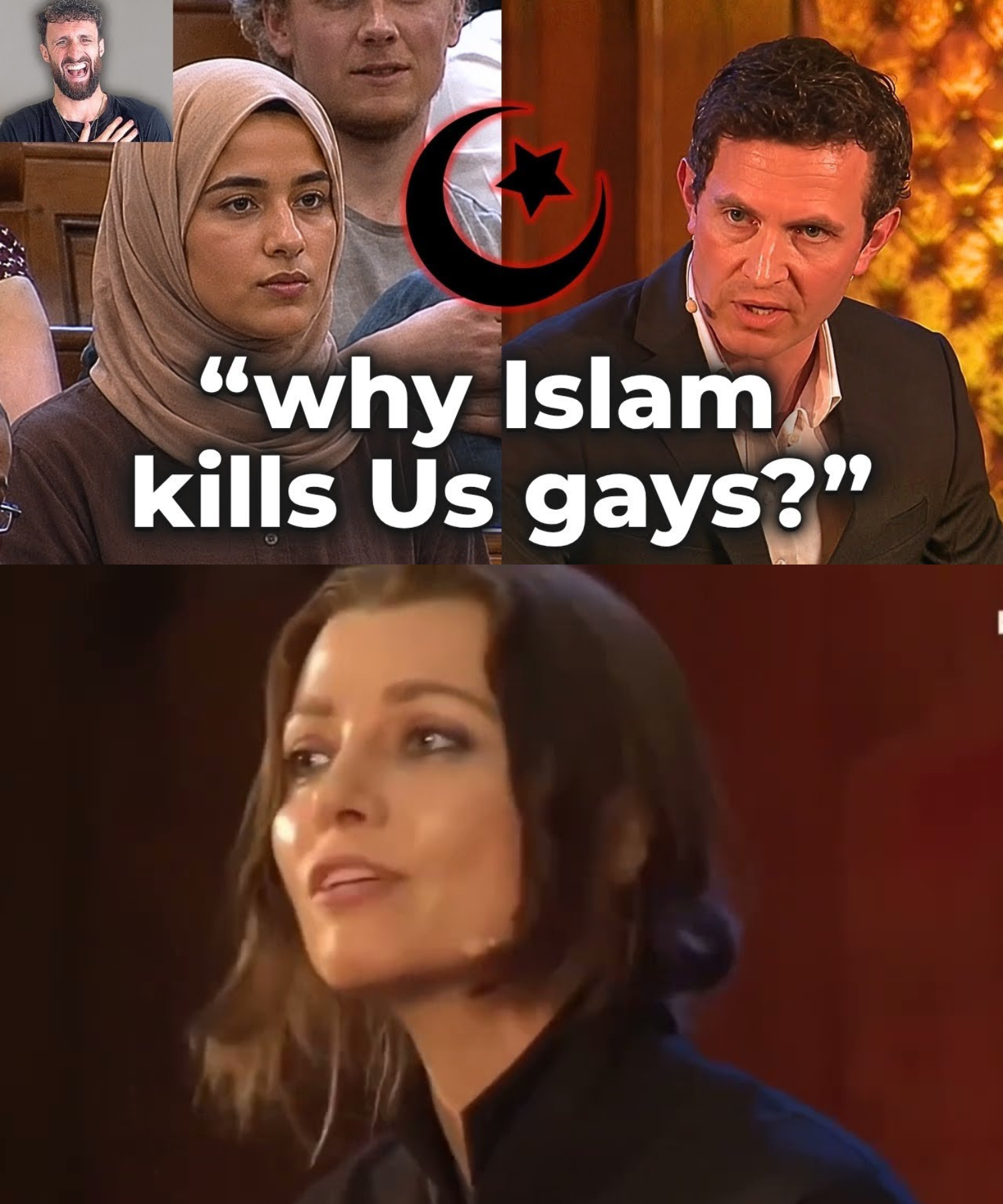
Critics call the framing dangerous. They warn that discussing Muslims as a collective threat risks demonizing millions of peaceful people who have nothing to do with extremism. Muslim Americans, they argue, are doctors, business owners, soldiers, teachers, students, parents, and neighbors. Many fled authoritarianism and religious coercion themselves. They should not be blamed for the views or crimes of radicals.
But the video’s defenders say that is exactly the trap: every discussion of extremism is shut down by accusations of bigotry, leaving the public with no honest way to talk about risk.
The clip also revisits Europe’s long and painful blasphemy debates. Murray argues that Western countries, which once considered themselves beyond religious censorship, slowly accepted that certain religious criticisms could carry deadly consequences. In his telling, the public was forced to adapt to a new reality: some jokes, cartoons, books, and arguments could provoke violence, and political leaders quietly adjusted the limits of public speech rather than confront the threat directly.
That idea resonates strongly in America, where free speech remains a core national principle but has become deeply contested. From college campuses to comedy clubs to online platforms, Americans are fighting over what can be said, who can be offended, and whether fear of backlash is quietly reshaping speech itself.
The most haunting section of the clip comes when Murray discusses terrorism as a “cost-benefit analysis.” He challenges leaders to say plainly what they appear to imply: that Western societies may simply have to accept occasional bombings, stabbings, and attacks as part of the price of current immigration and integration policies.
The comment is deliberately brutal.
He references the Manchester Arena bombing, where young people attending an Ariana Grande concert were killed. His point is not statistical; it is moral. If leaders are willing to accept risk, he argues, they should admit it publicly — and explain it to the families whose children may pay that price.
That line has become one of the most shared moments in the American reaction.
For parents, it cuts deep. A concert, a beach, a shopping street, a Christmas market, a synagogue, a parade — these are ordinary places where ordinary people expect to be safe. When terrorism strikes such spaces, it destroys more than lives. It destroys the assumption that civic life can continue normally.
The viral commentary layered over Murray’s remarks emphasizes one question again and again: why?
Why do attackers target concerts, beaches, festivals, crowds, and Jewish communities? Why do some people raised or sheltered in Western countries turn against them? Why are some leaders more comfortable discussing prejudice than ideology? Why does every tragedy become a debate about language instead of motive?
That “why” has become the center of the American conversation.
National security analysts often warn that motive matters. Without understanding ideology, recruitment, grievance, theology, propaganda, and social networks, governments cannot prevent future violence. But civil rights advocates caution that motive must be studied carefully, not turned into suspicion against an entire faith.
The balance is difficult — and the video shows how fragile it has become.
Murray also criticizes what he sees as Europe’s exhaustion and guilt. He argues that Western societies have become vulnerable to anyone who says, “This is your fault.” Colonial guilt, war guilt, racial guilt, and moral fatigue have made leaders hesitant to defend national borders or cultural norms. In his view, this weakness has prevented Europe from making clear distinctions between genuine refugees, economic migrants, extremists, and citizens who simply expect their government to protect them.
That argument now echoes loudly in America.
The United States is not Europe, but it faces similar pressures: illegal immigration, asylum backlogs, refugee debates, religious tensions, antisemitism, political violence, and a public that increasingly distrusts institutions. Many Americans look at Europe and wonder whether it is a warning of what happens when leaders lose control of borders and then shame citizens for noticing the consequences.
Yet America’s own story complicates the debate. The United States is built on immigration and constitutional freedom. It cannot simply reject pluralism without rejecting part of itself. The question is not whether America should be open or closed. The question is whether openness can survive without shared loyalty, enforceable law, and honest speech.
That may be the real reason the clip has gone viral.
It forces Americans to confront a problem their leaders often soften with slogans. Diversity can enrich a nation, but only if newcomers and citizens share a commitment to the same civic rules. Religious freedom is essential, but no religious ideology can be allowed to override constitutional law. Compassion is noble, but compassion without judgment can become dangerous.
By the end of the video, Murray’s argument is not a policy paper. It is a warning.
He says the first step is admitting there is a problem. The second is slowing or stopping the flow. The third is working with the communities already present and hoping, over generations, that integration succeeds. But the shadow over that hope is the case of radicals born or raised in the very countries that sheltered their families.
That is the part Americans cannot ignore.
The debate is no longer only about who enters a country. It is about what they are taught after they arrive, what values they adopt, what grievances they inherit, and whether society has enough confidence to defend itself.
For supporters, Murray is a truth-teller sounding an alarm before it is too late. For critics, he is a provocateur whose language risks deepening division.
But the viral response proves one thing clearly: millions of Americans are tired of being told that asking hard questions is the same as hatred.
The question now is whether those hard questions can be asked responsibly — before fear, silence, and anger do the talking instead.