Viral Douglas Murray Clip Ignites Fierce U.S. Debate Over Islam, Liberalism, Free Speech, and the Future of the West
Viral Douglas Murray Clip Ignites Fierce U.S. Debate Over Islam, Liberalism, Free Speech, and the Future of the West
A resurfaced debate clip featuring British commentator Douglas Murray has exploded across American social media, reigniting one of the most difficult questions in modern Western politics: can conservative interpretations of Islam fully coexist with liberal democracy, free speech, women’s rights, and LGBTQ equality?
The clip, now circulating heavily among U.S. political commentators, campus debate pages, religious discussion forums, and culture-war accounts, shows Murray arguing that Western societies cannot afford to avoid hard questions about Islamic texts, religious authority, and the beliefs held by some Muslim communities in the West. His remarks were sharp, controversial, and immediately polarizing.
For supporters, Murray said what many politicians are afraid to say. For critics, the clip risks turning complex internal religious debates into broad suspicion toward Muslims as a whole.
Either way, the video has become another flashpoint in America’s already combustible argument over immigration, religion, secular law, and cultural identity.
In the clip, Murray begins by rejecting a simplified definition of Islam. He argues that Islam must be understood in three layers: the original texts, including the Quran and Hadith; the centuries of law and interpretation known as Sharia; and the lived reality of what Muslims today actually believe and practice. That distinction became central to the debate.
Murray’s point was not that every Muslim lives the same way or believes the same thing. Instead, he argued that public discussion often avoids the most difficult parts of Islamic tradition, especially when those parts collide with modern liberal values.
The most explosive section concerned LGBTQ rights.
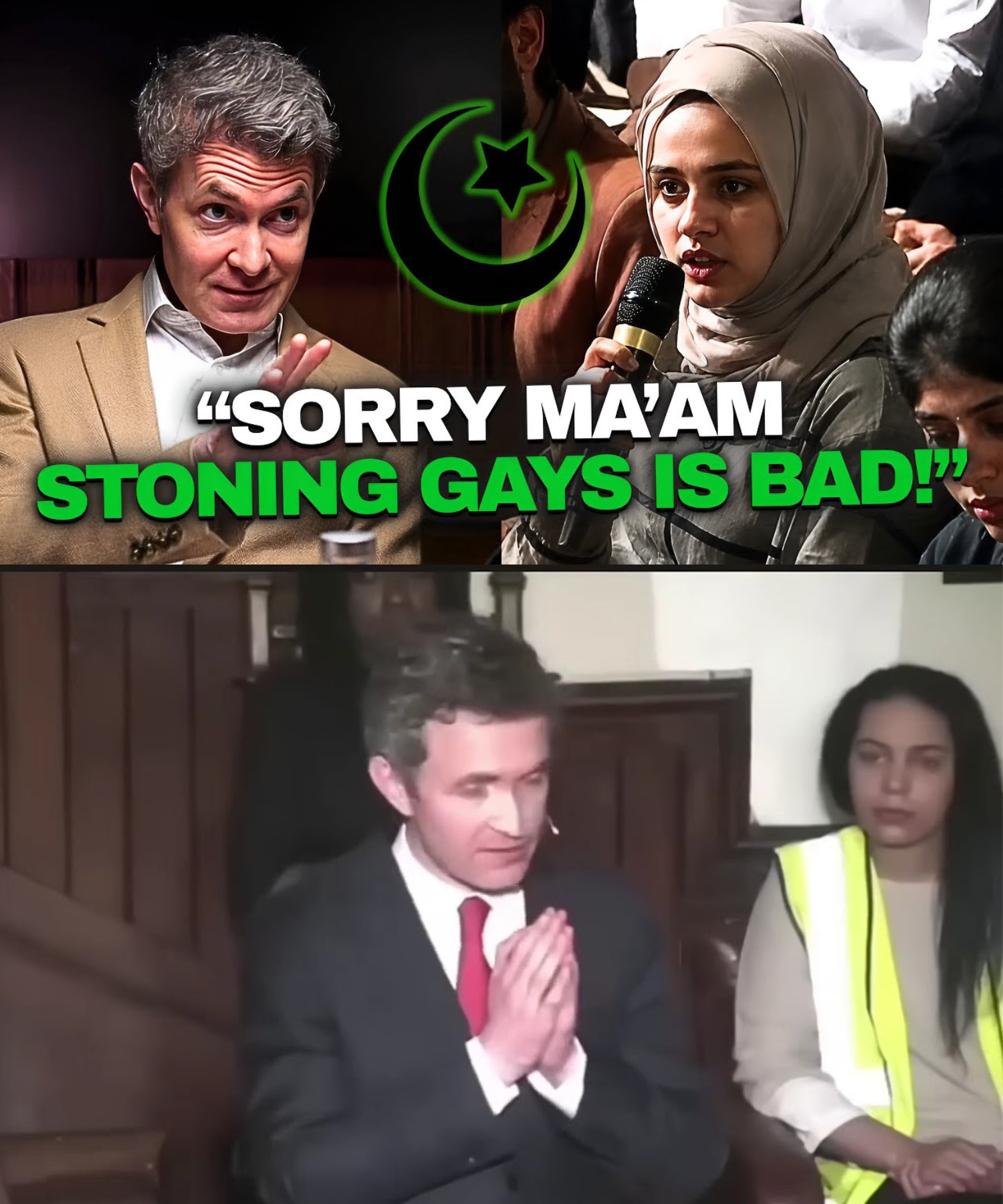
Murray cited polling about British Muslim attitudes toward homosexuality and argued that Western liberals cannot honestly discuss integration while ignoring conservative religious views that oppose same-sex relationships. He contrasted modern liberal expectations with traditional religious texts and said the conversation must begin with a clear admission that certain authoritative Islamic sources are not “gay liberation documents” or “women’s liberation documents.”
That line quickly became one of the most widely shared parts of the clip.
In the United States, where battles over LGBTQ rights, religious freedom, school policy, and parental authority have become central political issues, the clip landed like gasoline on an open flame. Conservative viewers praised Murray for confronting what they describe as a double standard: Christianity is routinely criticized for conservative views on sexuality, they argue, while Islam is often treated more cautiously by progressive institutions.
Progressive critics fired back, saying the comparison is more complicated. They argued that conservative attitudes toward homosexuality exist in many religious communities, including Christian, Jewish, Hindu, and secular traditional cultures. They warned that focusing only on Islam can feed anti-Muslim prejudice, especially when Muslim Americans are already vulnerable to discrimination, surveillance, and hate crimes.
That disagreement became the heart of the American reaction.
Murray was challenged in the clip by a questioner who asked whether anti-gay attitudes among British Muslims might come less from religion itself and more from tribal or regional cultures, particularly in parts of South Asia. The questioner also pointed out that opposition to homosexuality is not limited to Muslims, noting that similar views exist among some Christians in African countries and among other religious groups.
Murray rejected that as an evasion. He argued that while culture matters, religious texts and authoritative traditions cannot simply be dismissed when they become inconvenient. If reform is needed, he said, Muslims themselves must acknowledge what exists in the texts and move beyond it honestly.
That argument has now become the center of the U.S. debate surrounding the clip.
Some American commentators say Murray’s point applies far beyond Islam. They argue that all religious communities must decide how to handle ancient scriptures in modern democratic societies. Christians have had to debate slavery, women’s roles, divorce, sexuality, and church authority. Jews have had to wrestle with ancient law and modern citizenship. Muslims, they say, face a similar challenge — and avoiding the conversation helps no one.
Others say the framing is dangerous because it treats Muslims as uniquely suspect. They argue that millions of Muslims in America already live peacefully under constitutional law, support democracy, work in public service, defend LGBTQ friends and family members, and reject extremism. To them, the question should not be whether “Islam” is compatible with liberalism, but which interpretations of Islam are being promoted, funded, taught, and practiced.
That distinction is critical.
America is not Britain. The United States has its own constitutional framework, its own Muslim communities, and its own fierce tradition of religious liberty. Muslim Americans are doctors, soldiers, teachers, entrepreneurs, police officers, lawmakers, students, and neighbors. Many came to America precisely because it protects freedom of conscience in a way authoritarian regimes do not.
But America is also struggling with a larger question: how does a liberal society respond when any religious group — Muslim, Christian, Jewish, or otherwise — holds views that conflict with modern secular norms?
That question has no easy answer.
Free speech means religious conservatives can say homosexuality is wrong. Liberal democracy means LGBTQ citizens must still enjoy equal protection under the law. Religious freedom means believers can follow their conscience. Civil rights mean they cannot use the state to strip others of citizenship, safety, or dignity.
The conflict comes when private belief becomes political demand.
That is why Murray’s clip spread so quickly. It touched the deepest fear on both sides. One side fears Western elites are ignoring religious illiberalism because they are afraid of being called bigots. The other side fears anti-extremism rhetoric is being used to stigmatize an entire minority community.
The clip also raised free speech concerns. Murray cited examples involving cartoons of Muhammad and public reaction to satire, arguing that liberal societies must defend the right to offend religious feelings. That theme resonated strongly in America, where debates over campus speech, comedy, blasphemy, protest, and online censorship have intensified over the last decade.
For many Americans, free speech is the line that cannot be crossed. A person may practice religion, defend religion, and criticize insults against religion — but they cannot demand that the state punish journalists, artists, or critics simply for offending religious doctrine.
At the same time, civil liberties advocates note that the right to criticize religion must also include responsibility. Criticism of doctrine is not the same as harassment of believers. Opposing extremism is not the same as treating every mosque as a threat. Defending liberal values should not become permission to dehumanize minorities.
Near the end of the clip, the discussion turns toward reform. The commentator reacting to Murray’s speech warns Muslim audiences that a “storm” is coming in the Western world if communities do not address internal problems around public image, extremism, and intolerance. He urges Muslims to take reform seriously, not because outsiders demand humiliation, but because unresolved issues will eventually create backlash.
That warning may be the most important part of the debate.
America is watching similar tensions build inside its own borders. Universities are divided. Religious communities feel under pressure. LGBTQ activists fear regression. Conservative voters fear cultural surrender. Muslim Americans fear collective blame. Jewish Americans fear rising antisemitism. Christian Americans fear their own beliefs are increasingly treated as unacceptable in public life.
The viral Murray clip did not settle any of these debates.
It made them louder.
But beneath the outrage, there is a serious question America cannot avoid forever: how can a free society protect religious liberty while also defending the rights of people whom some religious traditions reject?
The answer will require honesty, restraint, and courage from every side.
Because if Americans cannot discuss these issues without either censorship or hatred, the real danger will not come from one religion alone.
It will come from a society that no longer knows how to defend freedom without tearing itself apart.