Viral Debate Over Sharia, Citizenship, and Western Survival Sparks Firestorm Across America
Viral Debate Over Sharia, Citizenship, and Western Survival Sparks Firestorm Across America
Washington — A newly viral debate clip has erupted across American political media, reigniting one of the most explosive questions facing Western democracies: what happens when citizens use the freedoms of a liberal society to advocate replacing that society’s legal order with something fundamentally different?
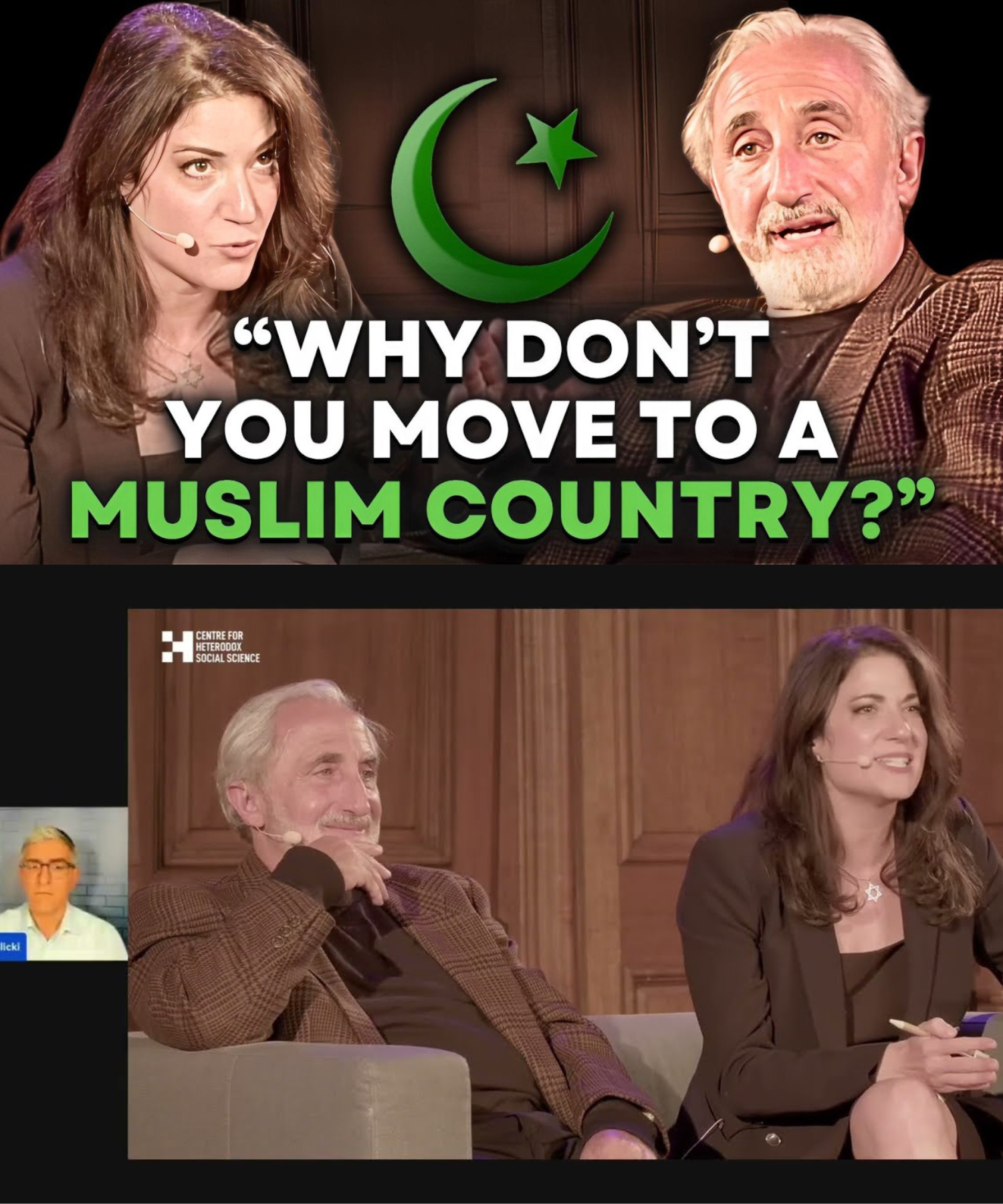
The video, now spreading rapidly across conservative, religious, and national-security circles, centers on a tense public exchange involving political commentators discussing Islam, Sharia law, citizenship, national identity, and the limits of Western tolerance.
The argument is not merely academic. It cuts straight into the anxieties that have defined post-9/11 politics: religious liberty, free speech, national security, immigration, and whether the West’s deepest constitutional principles can be exploited by movements that do not share those same principles.
Supporters of the clip say it exposes the central vulnerability of liberal democracy. Critics say it risks conflating Muslims with extremists and turning religious identity into a test of citizenship.
Either way, the debate has become a political firestorm.
“The Constitution Is Not a Suicide Pact”
The video opens by referencing a famous legal phrase revived after 9/11: “The Constitution is not a suicide pact.”
The phrase is used to argue that constitutional liberties — speech, religion, association, due process — do not require a society to sit passively while organized forces seek to destroy or replace its legal system.
The speaker points to Judge Richard Posner’s post-9/11 writing on civil liberties and national emergencies, framing the issue as a clash between rights and survival.
That framing has landed powerfully in the United States, where the constitutional order is built around broad protections for speech and religion. But it also raises a chilling question: when does protected belief become political subversion?
Civil liberties advocates warn that this line must be drawn carefully. A democracy cannot punish citizens merely for unpopular opinions or religious beliefs. But national-security voices argue that when a movement moves from personal belief to organized replacement of the state, a different legal conversation begins.
Sharia as Religion or Political Program?
At the center of the debate is Sharia law.
One side argues that Sharia cannot be treated simply as private spirituality when activists openly call for it to replace Western civil law. In that view, the issue is not Islam as personal faith, but political Islam as a governing project.
The claim is direct: if someone wants to reform a democracy from within, that is legitimate politics. But if someone wants to replace the entire legal order with a religious system, that becomes a challenge to the state itself.
Critics push back by saying millions of Muslims live peacefully under Western law, serve in public office, work in civic institutions, and reject violence or theocratic politics.
This distinction matters. The debate is not about whether Muslims can be citizens. They can and are. The debate is about whether a state can tolerate organized efforts to replace its constitutional system with religious governance.
The UK Example Becomes America’s Warning
Much of the viral exchange centers on Britain, where the speaker references grooming gang scandals, community cohesion failures, and concerns that authorities avoided difficult conversations out of fear of being accused of racism or Islamophobia.
One questioner alleges that British institutions failed vulnerable children because officials were afraid to criticize certain communities. The point is used to argue that political correctness can become dangerous when it silences reporting, policing, or public accountability.
In America, this lands in a familiar context.
The United States has had its own battles over whether institutions suppress uncomfortable facts to protect political narratives. Whether the subject is crime, immigration, terrorism, race, gender, or religion, many voters believe elites often prioritize optics over truth.
That distrust gives the clip its emotional force.
Citizenship: Sacred Right or Conditional Belonging?
The debate then turns sharply toward citizenship itself.
One speaker insists that citizenship is sacred and cannot be stripped or diminished because of ideology, religion, or unpopular beliefs. In her view, citizens are not “guests.” They are full members of the political community, and a democracy ceases to be a democracy if it treats them otherwise.
That argument draws strong support from classical liberal thinkers, who argue that rights must apply equally or they are not rights at all.
But another participant challenges this view by arguing that citizenship is not merely paperwork. It rests on loyalty to a shared legal and civilizational order.
A British Orthodox Jewish questioner says that minority communities should understand themselves as joining an inherited national culture, not possessing an automatic right to reshape it beyond recognition.
That statement shocks one panelist, who calls it deeply sad that any citizen would describe himself as a guest in his own country.
The emotional clash reveals the deeper divide: is citizenship a legal status only, or does it also imply cultural inheritance, responsibility, and allegiance?
Reform vs Replacement
The most important distinction in the debate is between reforming a system and replacing it.
A citizen who criticizes laws, campaigns for change, protests injustice, or seeks reform is participating in democracy. That is the system working.
But the transcript argues that a citizen who wants to replace the entire legal framework with a competing religious or ideological order is doing something different.
The comparison offered is communism or fascism. If a group openly organized to replace the U.S. Constitution with a communist or fascist legal order, few would treat that as ordinary civic participation.
So, the question becomes: should religiously framed political movements be judged differently simply because they use theological language?
That question is now driving the online reaction.
The Talmud Comparison and Legal Inequality
One tense moment comes when Sharia is compared with ancient religious legal traditions, including Jewish law.
A panelist argues that Sharia treats crimes differently depending on the religious identities of victim and perpetrator. Another responds that ancient Jewish legal texts also contain distinctions between Jews and non-Jews.
The counterargument offered later is that modern Israel and modern Western legal systems do not apply ancient religious criminal codes as state law in that way.
This exchange highlights a broader issue: many religious traditions contain ancient legal concepts that conflict with modern equality. The crucial question is whether those concepts remain private theology, historical artifact, or active political program.
America’s Own Pressure Point
The debate has immediate relevance in the United States.
America’s First Amendment protects religious belief and expression more strongly than almost any other country. That protection allows Muslims, Christians, Jews, atheists, Hindus, and others to organize, preach, protest, and vote according to conscience.
But the same freedoms also create anxiety when any movement — religious or secular — appears to reject the constitutional order itself.
That is why the clip has spread so quickly among U.S. audiences.
It captures the American dilemma in one question: can a free society remain free if it refuses to defend the system that makes freedom possible?
Critics Warn Against Collective Suspicion
Muslim advocacy groups and civil liberties defenders warn that this debate can easily become dangerous if it treats ordinary Muslims as suspects.
They argue that most Muslims in the West are not plotting to replace the Constitution with Sharia law and that broad claims about Islam can fuel discrimination, surveillance, and social hostility.
They also warn that extremist ideologies exist across religions and political systems, and that democracies must target conduct and organized threats, not identity.
That warning is essential. The line between criticizing ideas and demonizing people is thin, and viral media often destroys nuance.
The Debate America Cannot Avoid
Still, the central issue will not disappear.
Western democracies must decide how to respond when groups use democratic rights to advocate undemocratic outcomes.
Suppress too much speech, and freedom dies.
Ignore organized anti-democratic movements, and freedom may also die.
That is the knife edge.
The viral debate does not settle the issue. But it exposes a crisis that Americans, Britons, and Europeans are increasingly forced to confront.
Citizenship, religious freedom, national identity, and constitutional survival are no longer abstract topics for law schools and think tanks.
They are now frontline battles in the future of the West.