Viral Confrontation in Muslim Neighborhood Sparks Firestorm Over Preaching, Free Speech, and Religious Tension in America
Viral Confrontation in Muslim Neighborhood Sparks Firestorm Over Preaching, Free Speech, and Religious Tension in America
Houston — A viral video showing a Christian preacher being confronted and nearly attacked in what is described as a Muslim-majority neighborhood has ignited a heated national debate in the United States over religious freedom, street preaching, and rising cultural tensions between faith communities.
The footage, widely circulated on social media, shows a street preacher engaging passersby with strongly religious messages before a confrontation escalates into shouting, accusations, and a chaotic exchange with members of the local community.
At several points in the video, voices can be heard calling the preacher a “terrorist,” while the preacher responds with equally intense religious language, declaring that those confronting him are “children of the devil” and warning of divine judgment.
The exchange quickly turns volatile, with both sides shouting over each other in a moment that viewers online have described as emblematic of growing religious polarization in Western societies.
Street Preaching Meets Community Backlash
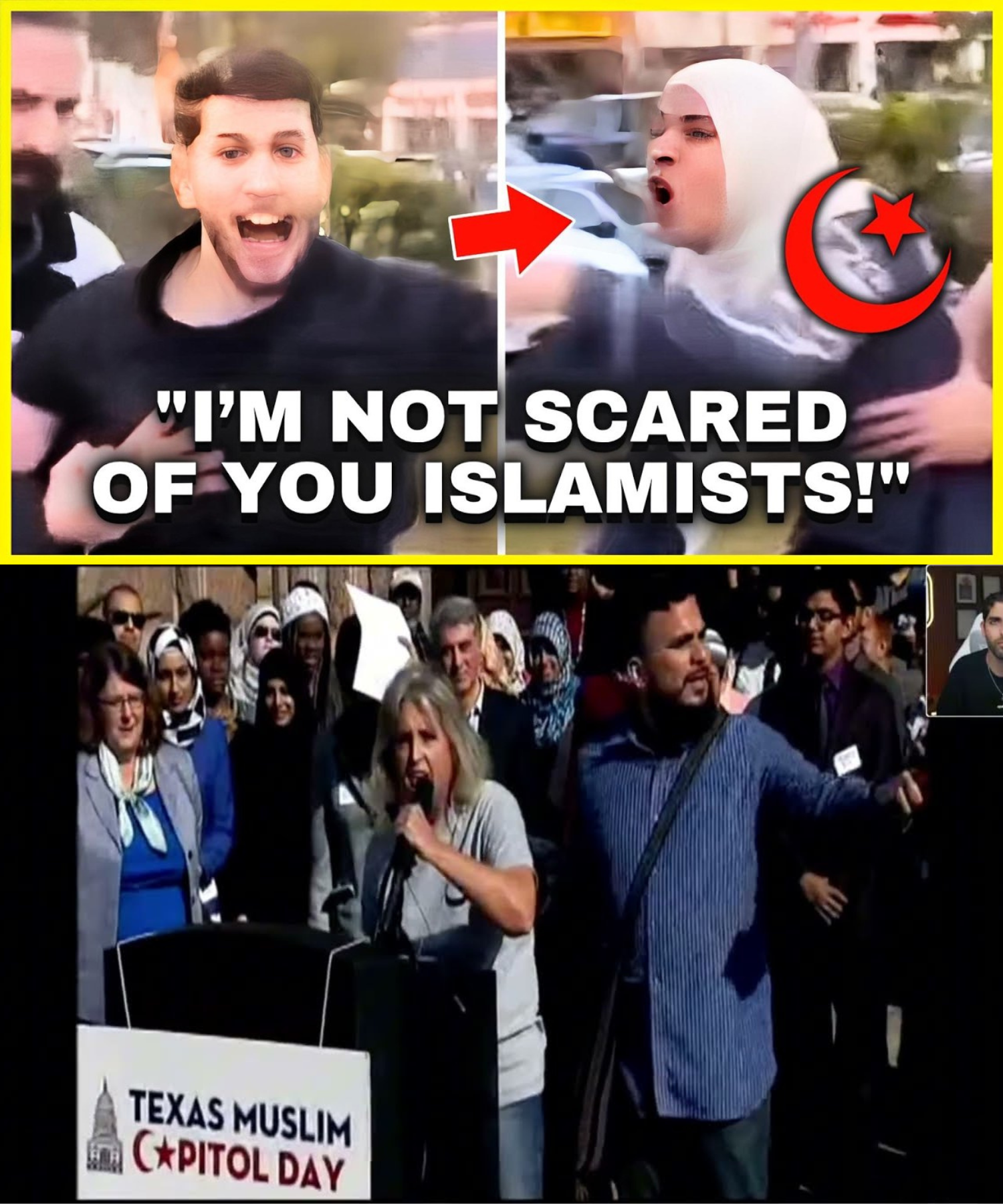
The video begins with the Christian preacher addressing individuals in public space, proclaiming a message centered on Christianity and rejecting Islamic beliefs. He repeatedly declares that “America is a Christian nation” and argues that there is “no room for Sharia law” in the United States.
His statements immediately draw strong reactions from members of the surrounding community, some of whom confront him directly. The tone becomes increasingly hostile as both sides accuse each other of intolerance and disrespect.
At one point, the preacher appears to raise his voice, warning that those opposing him will face divine punishment. Meanwhile, voices off-camera respond with anger, accusing him of provocation and disrespect toward Islam.
What begins as public preaching quickly transforms into a confrontation that nearly turns physical before de-escalating.
Claims of “Religious Takeover” Fuel Tensions
The video then shifts to commentary referencing unrelated incidents, including discussions about schools, religious awareness programs, and events such as “World Hijab Day.” The narrator suggests that Islamic cultural visibility in American institutions is increasing, framing it as part of a broader ideological struggle.
Supporters of the preacher argue that his message reflects legitimate concerns about preserving Christian identity in the United States. They claim that religious expression in public spaces should be balanced and that no single ideology should dominate cultural institutions.
Critics, however, argue that the preacher’s rhetoric crosses into inflammatory territory, particularly when framing Islam as incompatible with American society or suggesting religious exclusion.
The debate reflects a broader national divide over how far religious expression should extend in public spaces — and whether aggressive proselytizing contributes to social division.
Texas Precedent and Public Demonstrations
The video also includes footage from a separate event in Texas, where a similar confrontation takes place during a public religious demonstration. In that segment, a speaker declares opposition to Islam at a state-level gathering while supporters cheer in response.
The inclusion of this clip has further intensified reactions online, with viewers debating whether such public expressions of religious opposition are protected speech or inflammatory provocation.
In the United States, the First Amendment broadly protects religious expression, including preaching in public spaces. However, legal experts note that speech that incites violence or targets protected groups in a threatening manner can cross legal boundaries.
This distinction has become central to the current debate surrounding the viral footage.
Rising Religious Polarization
The incident comes at a time of heightened religious and cultural sensitivity in the United States, where tensions between different faith communities have become increasingly visible in political discourse, social media, and local community disputes.
Experts in religious studies say that while public confrontation between faith groups is not new, the amplification effect of social media has transformed isolated incidents into national flashpoints.
“Small street interactions can now become viral symbols of broader cultural conflict,” one analyst noted. “What you are seeing is not just one confrontation — it is a reflection of deeper anxieties about identity, belonging, and belief in a pluralistic society.”
Competing Narratives Online
Online reactions to the video have been sharply divided.
Supporters of the preacher argue that he is exercising his constitutional right to free speech and religious expression. They say that confronting religious ideas — even strongly — is part of open democratic society.
Critics counter that his language is deliberately provocative and risks escalating tensions in already sensitive communities. They argue that labeling entire religious groups in hostile terms undermines coexistence and mutual respect.
Meanwhile, members of Muslim communities reacting to the video say they feel unfairly portrayed by the framing of the incident, emphasizing that the actions of a few individuals in a confrontation should not be generalized to entire populations.
Christian commentators, on the other hand, say the video reflects growing frustration among believers who feel their religious identity is being pushed out of public life.
Experts Warn of Escalation Risks
Security and community relations experts warn that such incidents — especially when filmed and shared online — can quickly escalate misunderstandings and deepen mistrust between communities.
“Once a confrontation is framed as religious conflict, it becomes much harder to de-escalate,” said one analyst familiar with interfaith dialogue efforts. “Each side begins to see the other not as neighbors, but as ideological opponents.”
They stress that while freedom of speech protects the right to express religious beliefs, responsible communication is essential in diverse societies to prevent escalation into real-world conflict.
A National Conversation Reignited
The viral video has now become part of a broader American conversation about the limits of religious expression in public spaces, the role of faith in national identity, and the challenges of maintaining social cohesion in a deeply diverse society.
For some, the footage is evidence of a society struggling to reconcile competing belief systems. For others, it is a reminder that free speech inevitably includes uncomfortable, even offensive, expressions of faith.
What remains clear is that the debate is far from over.
As the video continues to circulate, it is forcing Americans to confront a difficult question:
How does a nation protect both religious freedom and social harmony when those values appear to collide in the streets?