Viral Christian-Muslim Bible Debate Shakes America as Scripture Clash Turns Into Online Firestorm
Viral Christian-Muslim Bible Debate Shakes America as Scripture Clash Turns Into Online Firestorm
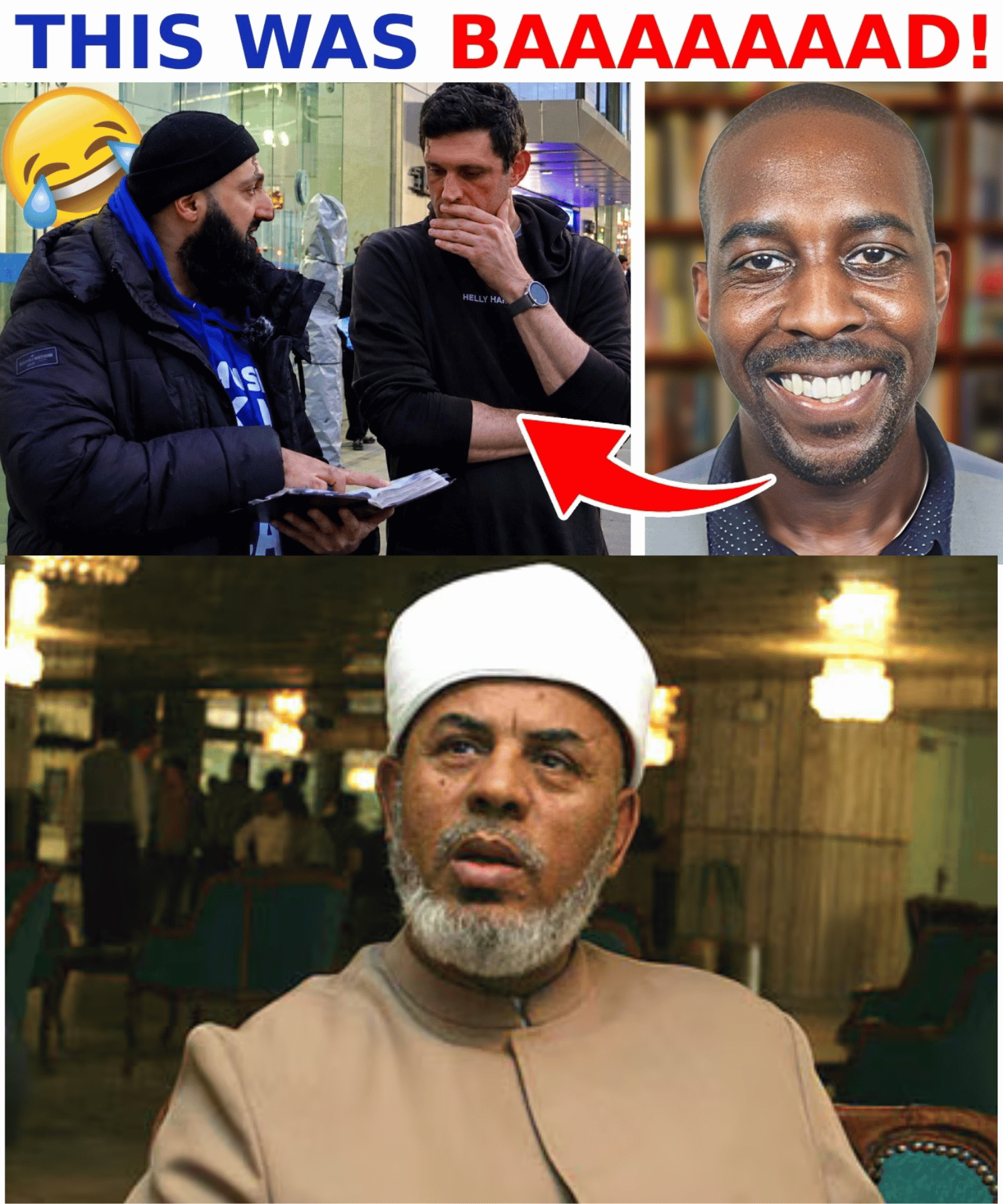
A fiery street debate between a Muslim preacher and a Christian has erupted across American social media, reigniting one of the oldest and most explosive religious arguments in the world: can the Bible be trusted, and who was Jesus really?
The exchange, now being dissected by Christian commentators, Muslim apologists, skeptics, and viewers across the United States, began with a familiar challenge. The Muslim speaker argued that the Bible contains contradictions, that Christian scripture has been corrupted, and that Islam offers a clearer, simpler understanding of God. The Christian response, delivered through commentary and rebuttal, accused the preacher of using false dilemmas, selective readings, and arguments that would also create problems for Islamic claims about the Quran.
What followed was not a polite interfaith seminar.
It was a theological street fight.
The first major flashpoint was Judas. The Muslim speaker pointed to the Gospel of Matthew, where Judas is described as hanging himself, and compared it with Acts, where Judas is associated with a fall and his body bursting open. His question was direct: which version is true?
For many viewers, this was the kind of challenge that sounds devastating in a short clip. Two texts. Two descriptions. One apparent contradiction.
But the Christian commentator pushed back hard, arguing that the two accounts do not necessarily contradict each other. In his view, Judas could have hanged himself and later fallen, with the second description explaining what happened after the first. The accusation was that the Muslim speaker had created an “either-or” choice where the text itself did not demand one.
That became the pattern of the entire debate.
The next example involved the age of King Ahaziah. One biblical passage gives one age, while another gives a different number. The Muslim speaker used this as evidence that the Bible cannot be the perfect word of God. The Christian commentator conceded that many scholars would treat this as a scribal error, but then turned the argument around: if a copying error destroys scripture, what does that mean for Islamic discussions about Quranic manuscripts, variant readings, and early transmission?
That reversal is what made the video spread.
The debate was no longer only about the Bible. It became a duel over standards. If Christians must answer for manuscript transmission, do Muslims have to answer the same kinds of questions about Islamic sources? If Christians are told that scribal variation proves corruption, can Muslims avoid similar scrutiny when their own tradition contains discussions about compilation, memorization, standardization, and preservation?
This is the part of the debate that has electrified American religious YouTube.
Across the United States, apologetics channels have become digital arenas where ancient disputes are transformed into fast, aggressive, highly shareable clips. College students, ex-Muslims, converts, pastors, imams, atheists, and amateur historians now debate subjects once limited to seminaries and religious institutes. The questions are ancient, but the battlefield is new: TikTok, YouTube Shorts, livestream panels, campus events, and street recordings.
The Jesus question brought the argument to its most intense point.
The Muslim speaker argued that Jesus was not God, but a prophet. He pointed to passages where Jesus prays, obeys the Father, receives power from God, performs miracles through God, and speaks as one submitted to divine will. To him, these passages show that Jesus cannot be divine.
The Christian rebuttal rejected that conclusion as another false choice. The commentator argued that Christianity does not claim Jesus is only divine and not human, nor does it claim that a divine Jesus cannot pray, obey, or act in unity with the Father. In Christian theology, Jesus is both fully human and fully divine. Therefore, passages showing Jesus’ humanity do not automatically disprove his divinity.
That distinction is central to the Christian-Muslim divide.
Islam emphasizes absolute divine oneness and rejects the idea that God has a son. Christianity also affirms one God, but understands God through the Trinity — Father, Son, and Holy Spirit. To Muslims, that often sounds like compromising monotheism. To Christians, it is the deepest expression of God’s nature.
The clash became sharper when the Muslim speaker said God has no son, no wife, and no need for food, sleep, or human limitation. The Christian commentator responded that Christians do not believe God needed a wife to have a Son and accused the Islamic framing of misunderstanding what Christians mean by “Son of God.” He also pointed out that the Bible repeatedly uses father-child language for God’s relationship with believers, while Islam rejects that framework.
The debate then moved to prayer.
The Muslim speaker claimed Muslims pray like Jesus, citing moments where Jesus falls on his face in prayer. The Christian commentator fired back by pointing out what Jesus actually says in those prayers: “My Father.” He also highlighted the Lord’s Prayer, where Jesus teaches his followers to begin with “Our Father.” For Christians, that fatherhood language is not a small detail. It is central. For Muslims, it is theologically unacceptable.
That single phrase — “Our Father” — became one of the most powerful moments in the rebuttal.
Then came Paul.
The Muslim speaker accused Paul of changing Jesus’ religion, especially around food laws, circumcision, and the relationship between Jewish law and Gentile believers. This argument is common in Muslim apologetics: Jesus was a prophet who followed the law, while Paul allegedly transformed his message into something else.
The Christian commentator rejected this forcefully. He argued that Paul was not a rogue operator but was recognized by the early church, accepted by other apostles, and aligned with the decision in Acts 15 regarding Gentile believers. Rather than weakening Christianity, the commentator argued, Paul’s conversion actually strengthens the Christian case: why would a persecutor of Christians abandon status and safety to join the very movement he had opposed unless something dramatic had happened?
That point has long been central to Christian apologetics in America.
Paul is not presented merely as a writer. He is presented as evidence of transformation.
By the end of the exchange, the Muslim speaker claimed he had shown the Bible was corrupted. The Christian commentator insisted the case had collapsed under closer examination. Viewers were left watching not only a debate about scripture, but a collision of methods: how should ancient texts be read, how should religious traditions be tested, and what counts as a contradiction?
That is why this video matters.
America is becoming more religiously diverse, but also more religiously confrontational online. Muslims and Christians increasingly meet not only in neighborhoods, campuses, and workplaces, but in viral clips where the pressure to win can be stronger than the desire to understand. Each side hears the other through its own theological lens. Each side accuses the other of inconsistency. Each side believes the other is missing what should be obvious.
The result is explosive.
But underneath the drama is a serious question for American public life. Can religious disagreement remain debate without turning into contempt? Can Christians defend the Bible without mocking Muslims? Can Muslims challenge Christian doctrine without caricaturing it? Can viewers recognize the difference between hard argument and hostility toward an entire faith community?
The internet rewards humiliation.
Truth requires patience.
This viral exchange may not settle the Bible, the Quran, Jesus, Paul, or the Trinity. But it reveals something important about modern America: ancient religious arguments are not disappearing. They are returning with cameras, captions, reaction channels, and millions of spectators.
And in that new arena, every verse becomes evidence, every hesitation becomes a clip, and every debate becomes a battle for the soul of belief.