Tucker Carlson’s Ottoman Interview Ignites America First Civil War Over Islam, Israel, and the Future of the Right
Tucker Carlson’s Ottoman Interview Ignites America First Civil War Over Islam, Israel, and the Future of the Right
A new firestorm inside the American right has erupted after Tucker Carlson’s interview with Christian commentator JD Hall triggered accusations that one of the country’s most influential conservative voices is rewriting history, softening Islam, and reshaping the “America First” movement into something many of his former allies no longer recognize.
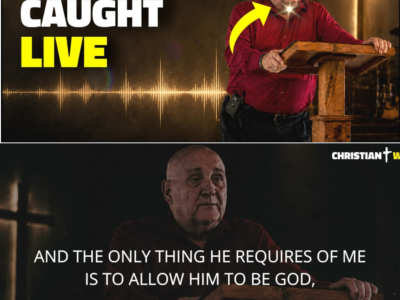
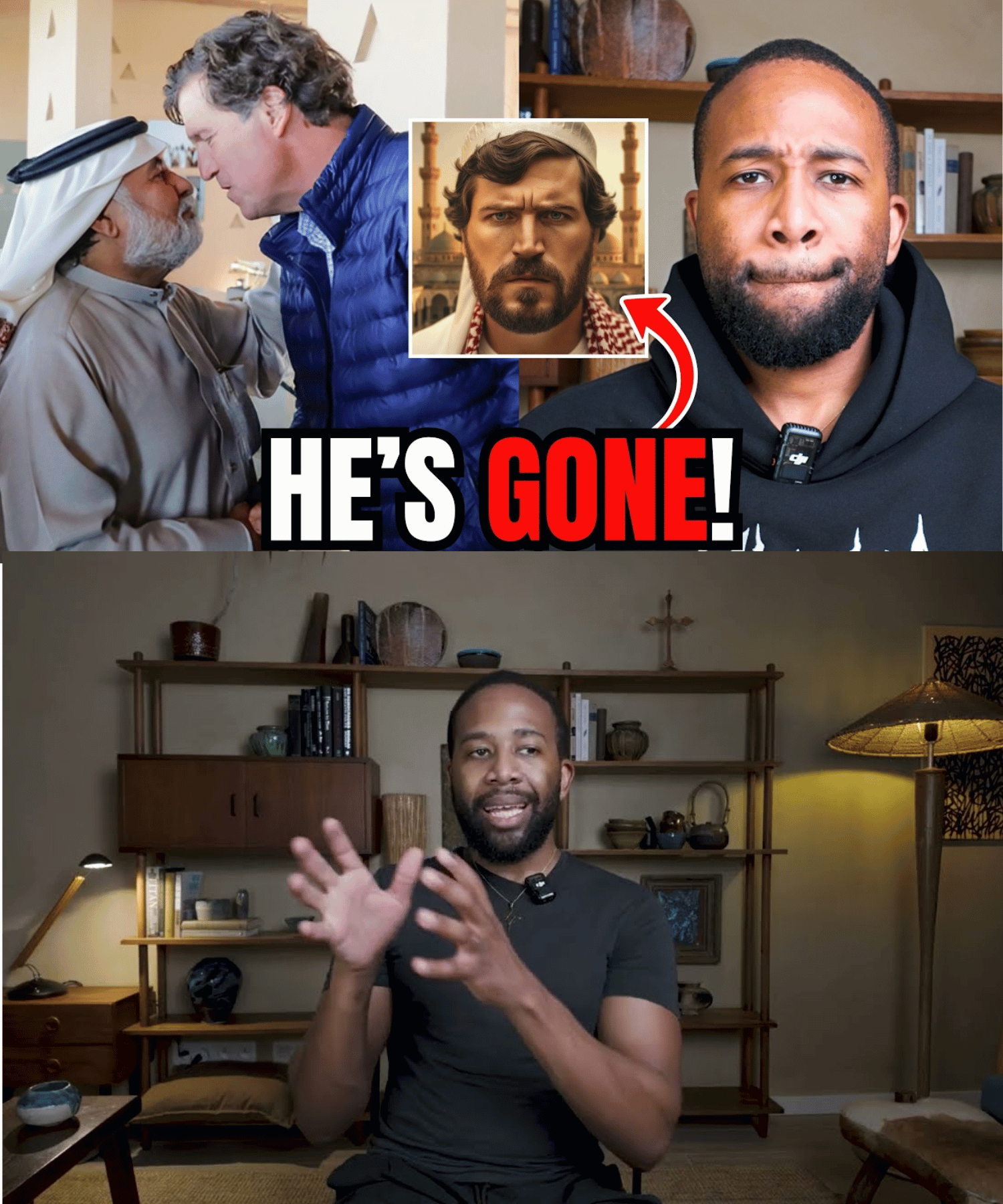
The controversy centers on a striking claim made during the interview: that Muslim rulers during the Ottoman period did not tax churches, treated Christians kindly, protected holy sites, and even helped rebuild the Church of the Holy Sepulchre. Carlson, listening across the table, gave the claim the kind of attention that has made his post-Fox platform so powerful — and so polarizing.
To some viewers, it was a corrective to simplistic anti-Muslim narratives.
To others, it was a dangerous historical whitewash.
Now the debate has become much bigger than one interview.
It has become a battle over what the American right is allowed to say about Islam, Israel, Christianity, antisemitism, Christian Zionism, foreign policy, and the survival of Western identity.
The backlash came fast from pro-Israel and Christian conservative commentators who argued that Carlson was not merely asking questions. They accused him of using guests as vehicles to push a broader narrative: that Islam has been unfairly demonized, that Christians in Muslim-ruled lands were often treated better than critics admit, and that Israel and its supporters have manipulated American Christianity.
That accusation hits at the core of Carlson’s modern brand.
For years, Carlson has presented himself as the man willing to ask forbidden questions. He challenges Washington. He attacks foreign wars. He criticizes both parties. He mocks neoconservatives, globalists, intelligence agencies, corporate media, and anyone who, in his view, places another country’s interest above America’s.
But his critics on the right now say the “just asking questions” routine has become a shield.
They argue that Carlson does not simply question power. He selectively platforms narratives that weaken support for Israel, soften hostile regimes, and blur the difference between legitimate criticism of American foreign policy and apologetics for forces that oppose the West.
That is why the Ottoman discussion detonated.
History is not neutral ground in this fight. The Ottoman Empire ruled over vast Christian and Jewish populations for centuries. It preserved some religious communities, allowed certain forms of communal autonomy, and managed a multiethnic empire with a complexity that modern political slogans often flatten. But non-Muslims were not equal citizens in the modern liberal sense. They existed under a Muslim imperial order, often with special taxes, legal disadvantages, and social restrictions.
That means both extremes can mislead.
It is wrong to pretend every Christian under Ottoman rule lived under constant massacre.
It is also wrong to pretend Christians lived as full equals in a tolerant paradise.
The truth is more complicated — and in the digital age, complication rarely goes viral.
Carlson’s defenders argue that this is exactly the point. They say he is trying to break a simplistic pro-war narrative that paints every Muslim society as barbaric and every Israeli policy as beyond criticism. They argue that American Christians should be free to examine Israel, Christian Zionism, Middle Eastern history, and U.S. foreign policy without being smeared as traitors.
But Carlson’s critics see something more alarming.
They say he is not simply criticizing Israel. They say he is increasingly normalizing anti-Israel hostility while giving Islamists, authoritarians, and anti-Western voices the benefit of nuance he rarely extends to his domestic enemies. Some point to previous Carlson segments involving Iran, the Taliban, Hamas, Russia, and the Middle East as part of a pattern.
In their view, Carlson has become a gateway for a new right-wing confusion: anti-woke, anti-globalist, anti-neocon, but increasingly friendly to movements and regimes that do not share American liberty, religious freedom, or Judeo-Christian values.
That argument is now tearing through conservative media.
The split is no longer simply Republican versus Democrat. It is not even old right versus new right. It is becoming a deeper question: what is the American right actually trying to conserve?
For Christian Zionists, the answer is clear. They believe America’s biblical heritage, support for Israel, and defense of persecuted Christians are inseparable. They see Israel as a frontline democracy in a hostile region and view growing hostility toward Zionism as a sign of moral collapse. To them, Carlson’s rhetoric feels like betrayal from inside the house.
For Carlson’s camp, the answer is different. They argue that American Christians have been manipulated into supporting wars, foreign aid, and Middle East policies that do not serve American families. They believe the right must stop treating Israel as untouchable and start asking whether American interests have been subordinated to foreign causes.
That disagreement was already intense.
The Ottoman interview poured gasoline on it.
Because Islam sits at the center of the fracture. Carlson’s critics argue that Islamism remains one of the greatest threats to Christians, Jews, women, dissidents, and religious minorities around the world. They point to attacks on Christians in parts of Africa and the Middle East, persecution in authoritarian religious states, and the long history of jihadist violence.
But here, too, the line is dangerous.
A serious debate about Islamism must not become collective hatred of Muslims. Millions of Muslims live peacefully in America, serve in the military, vote, work, build businesses, and reject extremism. A movement that claims to defend Western civilization cannot abandon the basic principle of individual justice.
At the same time, a serious debate about tolerance cannot ignore religious persecution, antisemitism, authoritarian regimes, or ideological extremism because the subject is uncomfortable.
That is the narrow road America now has to walk.
Carlson’s rise has exposed a deep hunger among conservatives for voices willing to challenge consensus. But the current backlash shows that many on the right fear the rebellion has gone too far — from questioning foreign policy into distorting history, from opposing endless wars into excusing hostile powers, from criticizing Israel into feeding resentment against Jews and Christian Zionists.
The stakes are high because Carlson is not a fringe podcaster. He is one of the most influential broadcasters in America. His interviews shape conversations on the right, influence younger conservatives, and often preview where populist politics may go next.
That is why this controversy matters.
If Carlson’s critics are right, the America First movement is being pulled into a dangerous alliance with forces that do not actually believe in America’s founding principles. If Carlson’s defenders are right, the old conservative establishment is trying to shut down uncomfortable questions by labeling dissent as betrayal.
Either way, the old coalition is cracking.
The conservative movement once united around anti-communism, Christian values, support for Israel, military strength, free markets, and opposition to the progressive left. Today, those pieces no longer fit neatly together. Some conservatives want a harder nationalist turn. Some want Christian revival. Some want neutrality abroad. Some want stronger support for Israel. Some want to confront Islamism. Others want to stop treating the Muslim world as an enemy.
The Tucker interview did not create that conflict.
It revealed it.
And now America’s right must answer a question it has avoided for too long: is “America First” a defense of Western civilization, or merely a revolt against the old order with no clear moral center to replace it?
That question is no longer theoretical.
It is playing out in podcasts, churches, campaigns, comment sections, and living rooms across the country.
And Tucker Carlson, once seen by many conservatives as the man asking the questions others feared, is now becoming the question himself.