They Nearly Killed Me for Leaving Islam and Following Christ
“I Was Nearly Killed for Leaving Islam”: UK Convert’s Explosive Testimony Sparks Fierce Debate on Religion, Identity, and State Failure
A deeply controversial testimony from a British-Pakistani Christian convert has gone viral after he described years of alleged intimidation, violent attacks, and social isolation following his conversion from Islam — reigniting a heated debate in the UK and beyond about religious freedom, integration, and state protection.
The account, delivered by a man identifying himself as Nissar Hussain, details a decades-long personal journey from a culturally Muslim upbringing in Britain to a public Christian identity that he says placed his life in danger.
His testimony includes claims of mob intimidation, police inaction, political correctness within institutions, and multiple violent attacks — including a severe assault outside his home in 2015.
A Childhood Between Two Worlds
Hussain describes growing up in a British-Pakistani household that was culturally Muslim but not strictly religious.
He says his family had largely assimilated into British society, with Western schooling, friendships with non-Muslims, and relatively secular lifestyles compared to newer immigrant generations.
According to his account, religion in his early life was more cultural identity than strict religious observance — something tied to heritage, community belonging, and honor rather than daily ritual practice.
However, he says that changed after a series of personal events led him toward Christianity in adulthood.
A Turning Point: Family Tragedy and Spiritual Search
Hussain says his initial exposure to Christianity came through a school friend named “John Lennon,” whose personal transformation into a born-again Christian deeply influenced him.
He describes observing a radical change in the young man’s behavior and outlook, which sparked curiosity and eventually led him to explore Christian teachings.
This curiosity intensified following a personal family tragedy — the sudden death of his younger brother in 1996, which Hussain describes as a defining emotional crisis.
He says that during this period of grief, he began seriously reading Christian scripture and privately committing to faith in Jesus.
Secret Conversion and Fear of Exposure
Despite his personal belief, Hussain states that he lived for years without openly declaring his Christian faith due to fear of community reaction.
He describes an environment where apostasy — leaving Islam — was considered not just a religious issue but a profound cultural betrayal.
He claims he understood early on that revealing his faith could carry severe social consequences, including rejection, isolation, and possible violence.
This fear, he says, shaped his behavior for years, forcing him to navigate between two identities: private belief and public conformity.
From Private Belief to Public Exposure
According to his testimony, the situation escalated when his conversion became known within his social circle.
He says a former friend publicly exposed his Christian identity, triggering a chain reaction within the local Pakistani-Muslim community.
He describes being socially isolated, verbally threatened, and labeled as a “traitor” by individuals he once considered close.
From that point, he claims, tensions escalated from social pressure into physical danger.
Allegations of Violence and Intimidation
Hussain reports multiple incidents of alleged violence and intimidation over several years.
These include:
Repeated vandalism of his property
Arson attacks on his vehicle
Physical assault outside his home
Ongoing surveillance and threats from individuals he associates with a local clan group
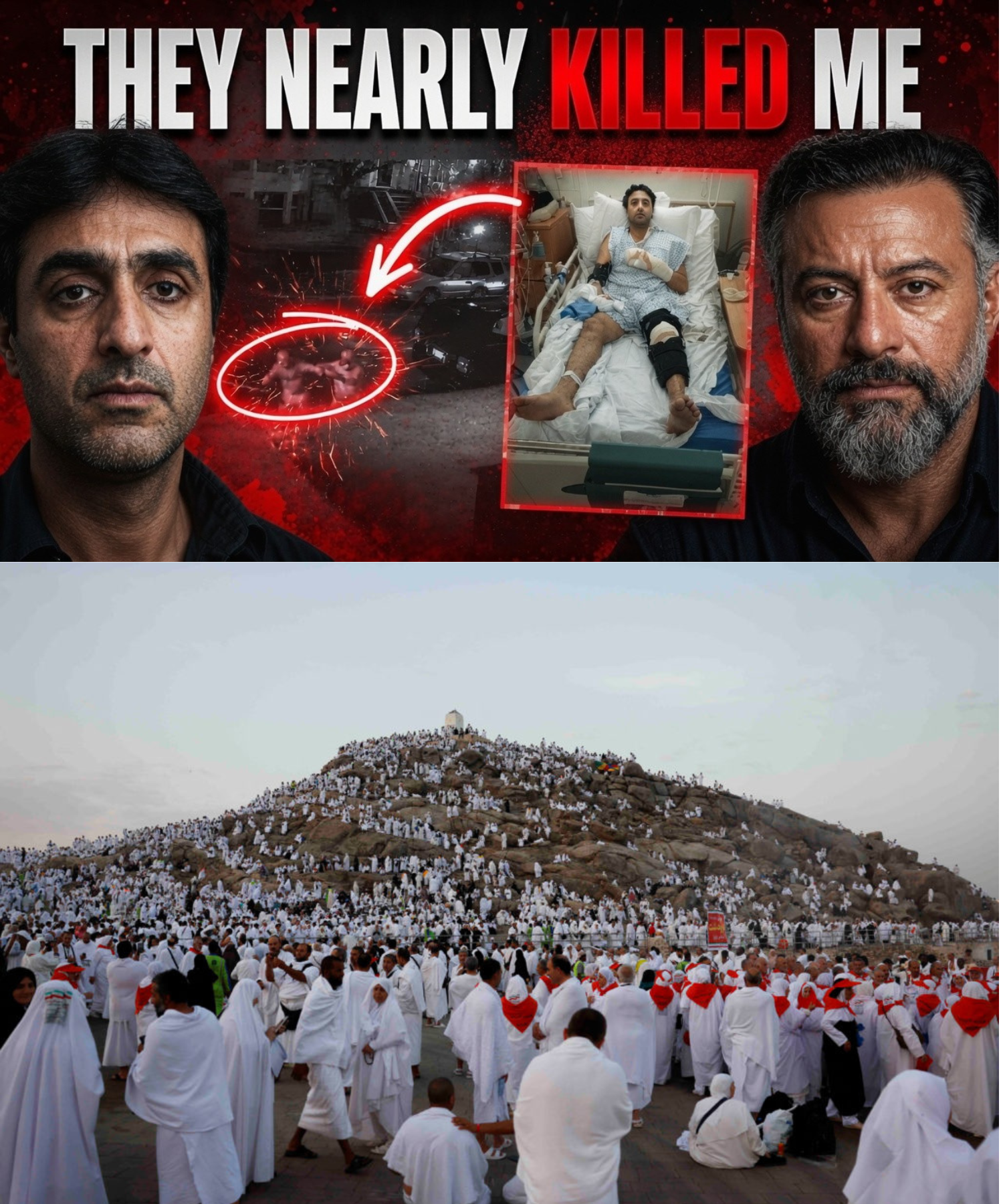
The most severe incident occurred in November 2015, when he says he was attacked outside his car by three masked men wielding baseball bats.
He describes being struck repeatedly and left concussed, only surviving after bystanders intervened.
Claims of Police Failure
A central theme of Hussain’s testimony is what he describes as repeated failure by law enforcement to respond effectively to his complaints.
He claims that warnings he provided prior to attacks were dismissed and that authorities failed to treat his case with sufficient seriousness.
In one account, he says he was advised by a police officer to relocate rather than pursue protection or investigation.
Hussain interprets this as institutional neglect driven by fear of being seen as discriminatory or “Islamophobic.”
Life in Constant Relocation and Fear
Following escalating threats, Hussain says his family was forced to move multiple times within the UK in an attempt to find safety.
However, he claims that relocation did not stop the intimidation, which he says followed him to new neighborhoods.
He describes living under increasing stress, with concerns for his wife and children becoming a constant presence in daily life.
At one point, he says he was placed under police protection and relocated to a secure, undisclosed location where he has lived for years.
The Role of Media and Public Exposure
Hussain says his situation became widely known after he participated in a documentary examining the experiences of Christian converts from Muslim backgrounds in Britain.
He claims that shortly after the program aired, harassment and threats intensified again, suggesting that public exposure increased his vulnerability rather than providing protection.
He argues that visibility brought both awareness and renewed targeting from individuals in his former community.
A Broader Debate on Integration and Identity
The testimony has reignited broader political debate in the UK about integration, multiculturalism, and the protection of religious minorities.
Supporters of Hussain argue that his case highlights serious gaps in law enforcement and the risks faced by religious converts in certain communities.
They say authorities have been reluctant to intervene due to concerns about community relations and accusations of bias.
Critics, however, caution against generalizing individual experiences into broad claims about entire communities, warning that such narratives can fuel social division and prejudice.
Clash Over “Honor Culture” and Religious Identity
A recurring theme in Hussain’s account is the concept of honor-based social pressure within parts of the Pakistani-Muslim diaspora.
He argues that apostasy is often interpreted less as a theological issue and more as a perceived betrayal of community identity.
In his view, this dynamic transforms religious disagreement into a social and cultural conflict, where leaving the faith is treated as rejection of group loyalty.
This interpretation remains highly contested among scholars and community leaders.
Political Reactions and Controversy
The testimony has also been cited in broader political debates about immigration, integration policy, and religious freedom in Europe.
Some politicians and commentators argue that cases like Hussain’s demonstrate the need for stronger protections for converts and clearer enforcement against intimidation.
Others warn that such narratives are being used to advance politically charged arguments about entire religious or ethnic groups.
The debate has become increasingly polarized, reflecting wider tensions in British society over identity and multicultural policy.
Conclusion: A Story at the Intersection of Faith and Fear
Nissar Hussain’s testimony remains deeply controversial and highly contested, with no independent legal findings fully confirming all claims made in his account.
However, his story has become a focal point in discussions about religious conversion, freedom of belief, and the challenges faced by minority faith communities in Western societies.
At its core, the narrative raises difficult questions:
How should liberal democracies balance cultural diversity with protection from intra-community intimidation?
And what happens when private belief becomes a public risk?
For Hussain, the answer is personal and unresolved — a life rebuilt in secrecy, shaped by faith, fear, and the search for safety in a society he says failed to protect him.