Shabana Mahmood Faces Commons Firestorm as Grooming Gang Evidence Scandal Rocks Britain and Sparks U.S. Outrage
Shabana Mahmood Faces Commons Firestorm as Grooming Gang Evidence Scandal Rocks Britain and Sparks U.S. Outrage
A brutal political confrontation in the House of Commons has thrown Britain’s grooming gangs inquiry back into crisis, after Home Secretary Shabana Mahmood came under intense pressure over claims that vital evidence may already have been lost before the long-awaited national investigation could fully begin.
The scandal has now crossed the Atlantic, where American commentators are watching the British political class tear itself apart over a subject that has haunted the United Kingdom for years: the systematic sexual exploitation of vulnerable girls, the institutional failures that allowed it to continue, and the explosive question of whether officials avoided difficult truths because they feared accusations of racism, religious prejudice, or political incorrectness.
For U.S. audiences, the story has become another warning about what happens when governments lose public trust on child protection, immigration, policing, and uncomfortable cultural issues. The details are grim. For years, survivors of grooming gang abuse said they were ignored, disbelieved, blamed, or failed by authorities that should have protected them. Police, councils, social services, health agencies, prosecutors, and politicians have all faced accusations of missing warning signs or looking away.
Mahmood herself acknowledged the darkness of the scandal when announcing the inquiry. She said victims had been abused by predators and then belittled or blamed when they deserved justice. She also said the state had failed in its most basic duty: protecting the young and vulnerable.
But now the question ripping through Westminster is even more damaging: did the government move too slowly to protect the very records needed to uncover the truth?
According to reports and parliamentary pressure, the Home Office took months to issue formal instructions to police forces, local authorities, and relevant agencies to preserve records connected to grooming gangs. Critics say that delay may have allowed crucial documents to be destroyed under routine retention policies. In plain English, evidence that could have shown who knew what, when they knew it, and why they failed to act may no longer exist.
That possibility has enraged victims, MPs, and campaigners.
The concern is not technical. It is existential. If the purpose of the inquiry is to expose institutional failure, then documents are not paperwork. They are memory. They are accountability. They are proof. They may contain warnings ignored by officials, records of missing girls, police decisions, council correspondence, school referrals, social care reports, and internal discussions that reveal whether authorities truly failed by accident or chose silence.
That is why the evidence scandal has cut so deep.
Dame Karen Bradley, chair of the Home Affairs Committee, demanded answers from Mahmood over the delay. Critics asked why urgent preservation notices were not issued immediately after Baroness Casey’s national audit recommended action. Conservative MPs described the situation as a staggering failure at the heart of government. Survivors asked how they could trust an inquiry if the records needed to validate their suffering may have been allowed to disappear.
The timing could hardly be worse for Mahmood.
The national inquiry, chaired by Baroness Anne Longfield, is supposed to represent a turning point. It has statutory powers. It can compel witnesses. It can demand documents. It is expected to examine not only local failures, but national failures too. It will look at Oldham, Bradford and Keighley, and London in its first phase, with hearings expected to force institutions to explain what they did — or did not do — to protect children.
But if evidence was lost before the inquiry got rolling, the entire promise of accountability becomes vulnerable.
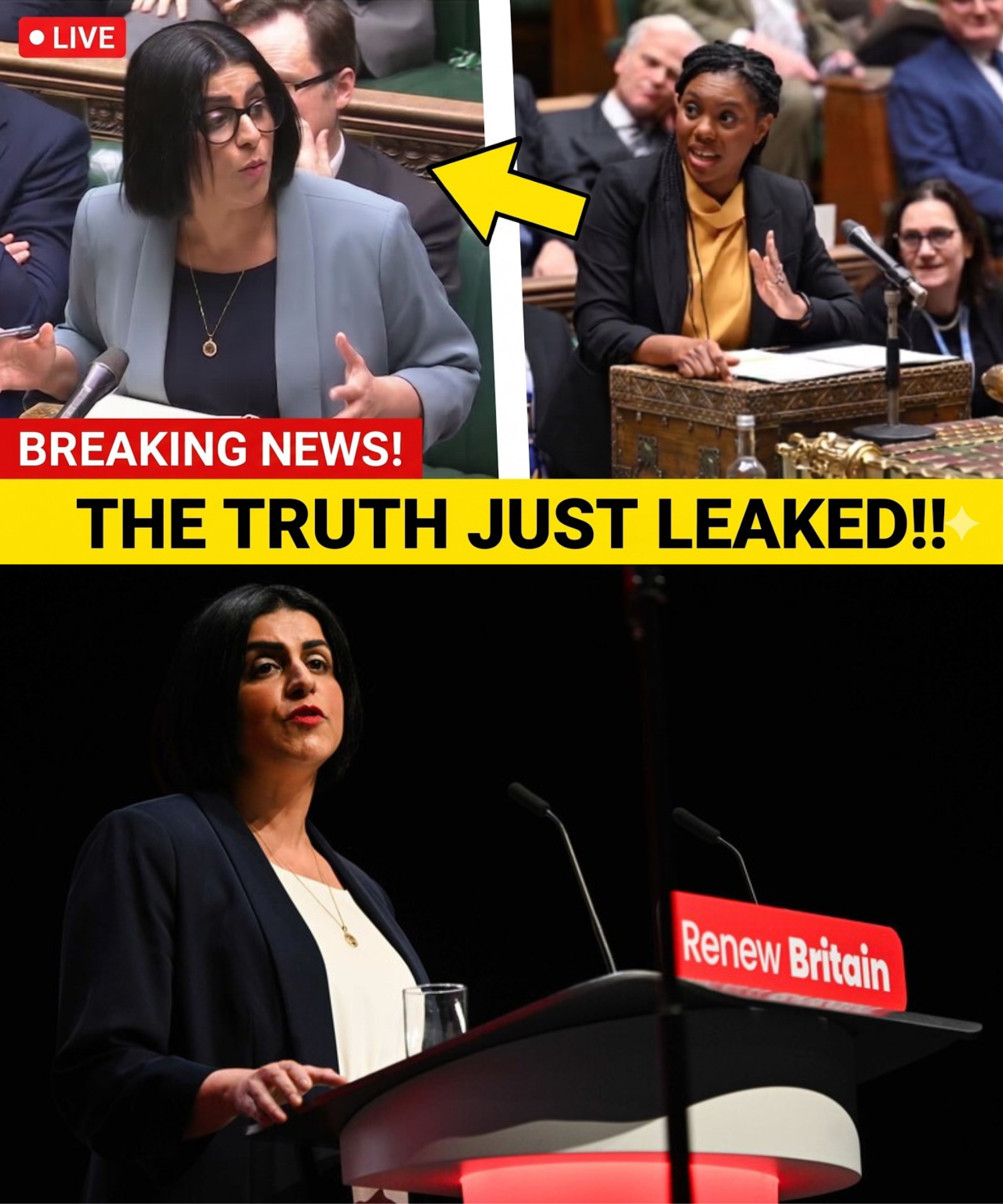
That is what made the Commons exchange so explosive.
For years, politicians promised that lessons would be learned. Survivors were told inquiries would uncover the truth. Campaigners were told institutions would be held to account. But every new revelation of delay, missing records, or bureaucratic confusion feeds a darker suspicion: that the system is still protecting itself.
The scandal is particularly sensitive because grooming gang cases in several towns raised painful questions about ethnicity, religion, culture, policing, and political fear. Serious investigators have stressed that entire communities must not be demonized for the crimes of offenders. At the same time, the Casey audit and the inquiry’s terms of reference make clear that these factors cannot be ignored where evidence shows they affected decisions.
That balance is exactly where British politics has struggled.
One side says the issue was buried for years because officials were afraid to talk about perpetrators’ backgrounds. The other warns that extremists exploit the scandal to spread hatred against minorities. Survivors, meanwhile, often say both sides have failed them when politics becomes louder than their pain.
Mahmood has tried to walk that line. She has condemned the crimes as evil, promised truth and accountability, and warned against marginalizing law-abiding communities. But the evidence scandal has left her facing a far harsher test: not whether she says the right words, but whether her department acted quickly enough when the moment demanded urgency.
In America, the story has found an eager audience among conservatives who argue that Britain’s grooming gangs scandal is a case study in institutional cowardice. They say the same pattern appears whenever authorities fear telling the truth about crime, migration, religion, or culture. To them, the possible loss of evidence is not just a bureaucratic error. It is another chapter in a cover-up culture.
Progressive critics push back, arguing that the scandal should not be used as a weapon against immigrants or Muslims broadly. They say the focus must remain on perpetrators, negligent institutions, and victims — not on whipping up suspicion against entire communities.
But even many moderates agree on one point: if records were allowed to vanish, the public deserves answers.
The inquiry is expected to run for years, but patience is already thin. Survivors have waited too long. Families have heard too many apologies. The public has watched too many institutions deny, deflect, and delay. Every missing file now carries symbolic weight.
Was it incompetence?
Was it indifference?
Was it fear?
Or was it something worse?
Those are the questions now shadowing Mahmood in the Commons and beyond.
The Home Office insists the inquiry has powers to order documents and that failure to comply can be punished. But that assurance does not solve the central problem. Statutory powers can compel production of records that exist. They cannot resurrect records already destroyed.
That is why this moment matters.
The grooming gangs inquiry was supposed to be the reckoning. It was supposed to shine light into the darkest corners of state failure. It was supposed to tell survivors that this time, finally, the system would not look away.
Instead, before the inquiry has even reached its full force, Britain is facing another devastating question: did the state fail the victims again?
For American viewers, the lesson is chilling. Child protection collapses when officials fear headlines more than predators. Justice collapses when records disappear. Trust collapses when survivors are told to wait while bureaucracies protect themselves.
And in Westminster, Shabana Mahmood now faces the question no minister wants to answer:
How can an inquiry leave no stone unturned if the stones may already have been removed?