Piers Morgan Debate Featuring Andrew Wilson and Tommy Robinson Sparks Fierce Immigration and Identity Firestorm in the UK
Piers Morgan Debate Featuring Andrew Wilson and Tommy Robinson Sparks Fierce Immigration and Identity Firestorm in the UK
New York — A heated televised debate involving broadcaster Piers Morgan, political commentator Andrew Wilson, and references to activist Tommy Robinson has gone viral, reigniting one of the most polarizing debates in British politics: immigration, cultural integration, and whether the UK is experiencing irreversible social fragmentation.
The discussion, originally broadcast on a UK current affairs program, quickly escalated from a debate about national identity into a broader confrontation over religion, migration policy, free speech, and political labels such as “racist” and “far-right.”
At the center of the controversy are remarks suggesting that mass migration from Muslim-majority countries is incompatible with British society — claims that have drawn both strong support and fierce condemnation across social media.
“Remove the Muslim Element” Comment Triggers Immediate Backlash
The most controversial moment in the broadcast came when a speaker referenced in the discussion argued that continued migration from Muslim-majority countries should be halted, using language that critics have described as exclusionary and inflammatory.
The speaker also suggested that cultural tensions arise when communities with fundamentally different traditions and legal-religious frameworks are introduced into Western liberal democracies at scale.
When challenged, the argument was clarified to refer specifically to immigration policy rather than individuals already residing in the UK. The speaker stated that people already living in the country could not be “removed,” but argued that future immigration flows should be restricted based on cultural compatibility.
These remarks immediately sparked accusations of extremism from critics, while supporters defended them as a blunt articulation of immigration concerns that are often avoided in mainstream political discourse.
Debate Over “Muslim Countries” and Migration Patterns
A central point of disagreement in the debate focused on whether immigration from Muslim-majority countries presents unique integration challenges.
One participant argued that claims of large-scale migration intended to “replace” or fundamentally transform British society are not supported by official migration data. They accused the opposing side of relying on selective narratives and politically motivated interpretations.
The counterargument claimed that concerns are not about individual migrants but about ideological compatibility, particularly regarding governance systems, religious law, and attitudes toward Western liberal norms such as free speech.
The debate reflected a broader tension in European politics: whether immigration should be assessed primarily through economic and legal frameworks, or through cultural and ideological compatibility.
Tommy Robinson and the Question of Political Labeling
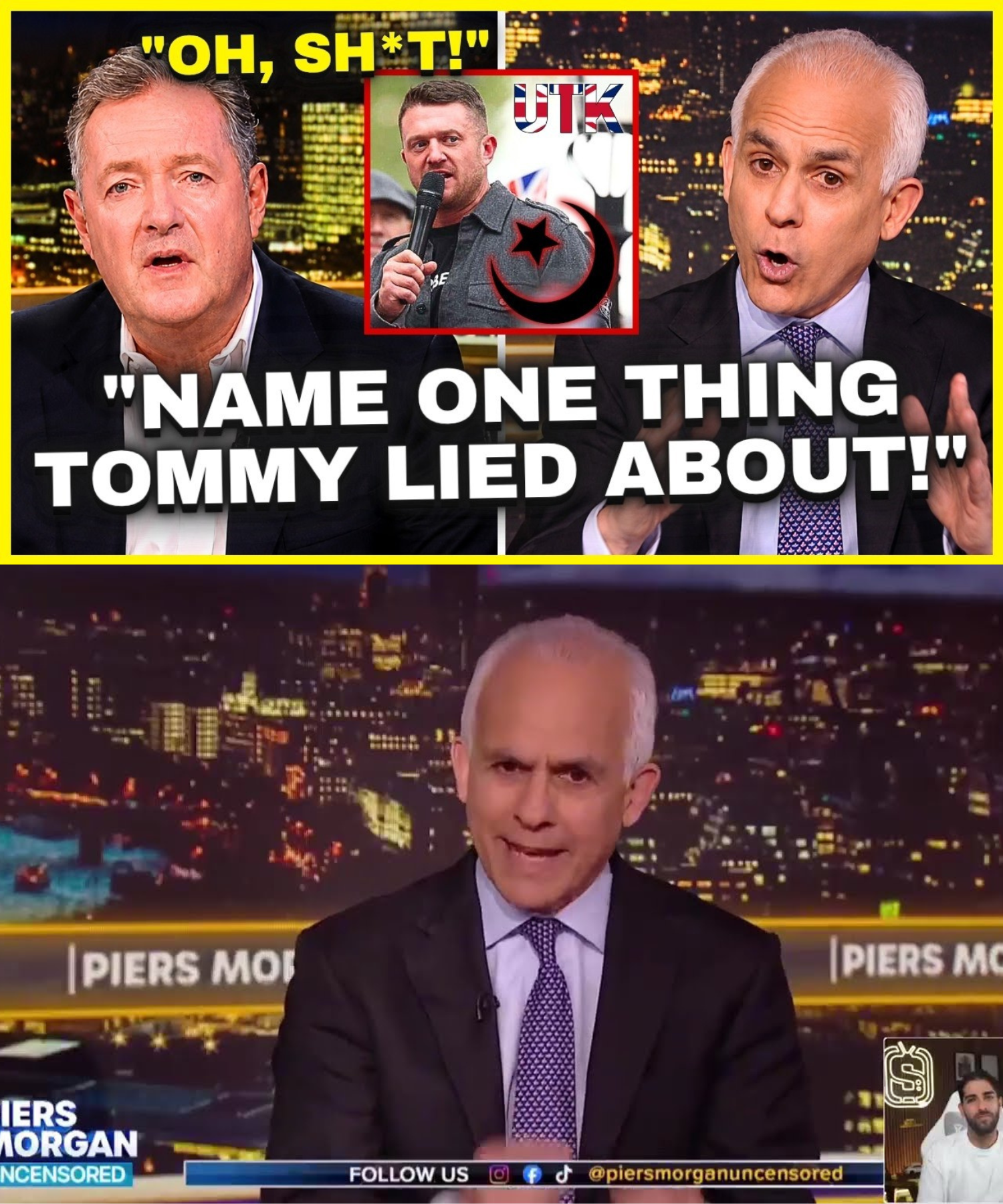
The discussion also referenced activist Tommy Robinson, a highly controversial figure in British politics who has been labeled by critics as far-right and by supporters as a free speech advocate.
Supporters in the debate argued that Robinson is frequently mischaracterized by media and political institutions, and that accusations of racism are often used to dismiss his broader concerns about immigration and integration.
Critics countered that Robinson’s rhetoric and associations justify the far-right label, and that attempts to reframe him as a victim of political prosecution ignore broader concerns about community tensions and public safety.
The debate became particularly heated when questions were raised about whether criticism of immigration policies is being unfairly conflated with racism.
Cultural Integration and “Non-Homegrown” Identity
One of the most widely shared clips from the broadcast involved a discussion about “imported cultures” and whether different cultural systems can coexist within the UK without friction.
The phrase “cultures not homegrown” was heavily debated online after the broadcast. Critics interpreted it as implying that immigrant cultures are inherently foreign or incompatible with British identity. Supporters argued that it was a descriptive term referring to cultural origins rather than a value judgment.
The speaker clarified during the debate that the comment was not intended as a racial or ethnic judgment, but rather as an observation about cultural systems entering a shared national space.
Nevertheless, the phrase became a focal point of online controversy, with social media users split over its meaning and implications.
Piers Morgan’s Role and Moderation Style
Throughout the exchange, Piers Morgan played a central moderating role, repeatedly pressing participants to clarify their statements and challenge sweeping generalizations.
Morgan questioned whether arguments about immigration were being grounded in data or shaped by political narratives, and attempted to steer the discussion toward specific policy implications rather than broad cultural claims.
At several points, Morgan pushed back on claims that entire religious or national groups could be generalized based on extremist behavior, emphasizing the importance of distinguishing between individuals and ideology.
His interventions highlighted the difficulty of moderating discussions on immigration in real time, particularly when participants hold fundamentally opposing worldviews.
Claims About Integration and National Identity
The debate also touched on the question of integration and whether migrants are expected to adopt British values or retain distinct cultural identities.
One participant argued that successful integration requires alignment with core national values, including commitment to democratic institutions, the rule of law, and civic cohesion.
Another argued that multicultural societies must allow for cultural diversity without forcing assimilation, warning that excessive pressure to conform risks alienating minority communities.
This tension reflects a long-standing debate in British politics that has intensified in recent years amid rising immigration and growing political polarization.
Social Media Reaction and Political Fallout
Following the broadcast, clips from the debate spread rapidly across social media platforms in both the UK and the United States.
Supporters of stricter immigration controls praised the discussion for addressing what they see as long-avoided questions about cultural compatibility and national identity.
Critics accused participants of amplifying divisive rhetoric and oversimplifying complex social realities involving millions of immigrants and second-generation citizens living in the UK.
Political analysts note that the viral reaction underscores how immigration debates have become central to broader culture-war conflicts, where issues of identity, speech, and national belonging intersect.
A Debate With No Clear Resolution
Despite repeated attempts to clarify positions, the debate ended without consensus.
Participants remained divided over whether current immigration patterns represent a manageable phase of integration or a deeper structural challenge to British identity.
What remains clear is that the conversation reflects a broader uncertainty across Western democracies about how to balance openness, security, cultural identity, and free expression.
As the clips continue to circulate online, the debate shows no sign of fading — instead becoming another flashpoint in an already deeply polarized political landscape.
For now, the question at the heart of the controversy remains unresolved:
Can liberal democracies maintain cultural cohesion while continuing to embrace large-scale immigration — or are they entering a period of irreversible transformation?