“Islam vs Western Liberalism” Debate Goes Viral as Clash Over Free Speech, Religion, and Identity Divides Audience
“Islam vs Western Liberalism” Debate Goes Viral as Clash Over Free Speech, Religion, and Identity Divides Audience
New York — A heated public debate questioning whether Islam is compatible with Western liberal society has gone viral across social media, reigniting one of the most sensitive cultural and political arguments in modern Europe and the United States.
The discussion, originally held in a university-style forum, featured a speaker arguing that liberal societies are engaging in what he described as “blind faith” by assuming Islam can seamlessly integrate into Western democratic systems without fundamental tension.
His remarks immediately sparked backlash and agreement in equal measure — reflecting a deepening divide in how Western societies interpret religion, free speech, and cultural integration.
At the center of his argument is the claim that Islam, unlike other religions, contains structural incompatibilities with Western liberal values, particularly regarding free speech, homosexuality, and criticism of religious authority.
“A Combustible Religion” or Misunderstood Faith?
The speaker argued that Western societies are avoiding difficult conversations by promoting what he called a “kumbaya version of Islam,” suggesting that public discourse often downplays theological and legal tensions between Islamic doctrine and Western liberal norms.
He pointed to examples of countries where insulting religious figures, particularly Prophet Muhammad, has led to legal consequences or social violence, arguing that this demonstrates a fundamental conflict with Western free speech traditions.
Critics in the audience challenged this framing, accusing him of oversimplifying a diverse global religion practiced by more than a billion people across vastly different cultures and legal systems.
They argued that violence or repression in certain countries cannot be used to define an entire faith, and that religious practice in Western democracies varies widely among Muslim communities.
Free Speech and the Limits of Criticism
A central theme of the debate was whether Islam can be openly criticized without fear of retaliation.
The speaker argued that true compatibility with Western liberalism requires unconditional protection of speech — including the ability to criticize religious figures and doctrines without consequence.
He claimed that in many Muslim-majority societies, criticism of Islam or depictions of the Prophet Muhammad can lead to threats or violence, which he sees as evidence of incompatibility with Western norms.
Opponents pushed back, noting that many Muslim individuals living in Western countries actively defend free speech while also asking for respect toward religious symbols. They argued that legal restrictions in some countries should not be conflated with the beliefs of all Muslims worldwide.
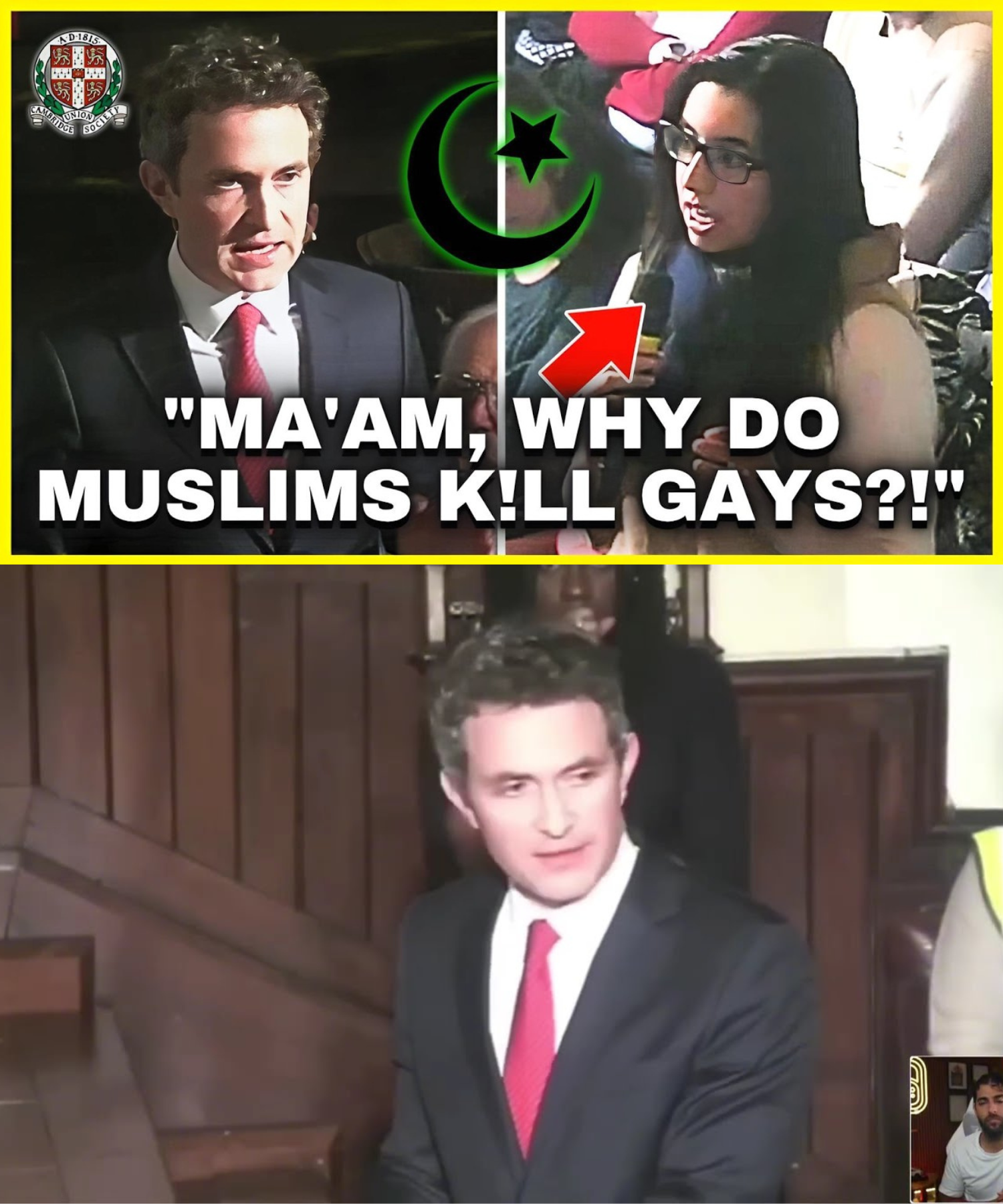
The Homosexuality Debate and Religious Texts
The discussion escalated further into questions of LGBTQ rights and religious law.
The speaker argued that Islamic texts and jurisprudence contain positions on homosexuality that are incompatible with modern Western liberal values, particularly regarding punishment or social treatment in certain historical interpretations.
He contrasted this with other religions, stating that while homophobia exists across different traditions, it is more explicitly codified in certain Islamic legal frameworks as interpreted in some countries today.
Critics responded by pointing out that religious texts across Judaism, Christianity, and Islam contain passages that modern societies reinterpret or do not enforce literally. They argued that selective reading of religious doctrine can lead to misleading conclusions about any faith tradition.
“Essentializing” Western Culture
Another major flashpoint came when the speaker accused his opponents of “essentializing” Western culture by reducing it to colonialism, racism, or historical wrongdoing.
He argued that Western civilization includes achievements in law, democracy, science, and free expression that are often ignored in critical academic discourse.
Opponents countered that acknowledging historical colonialism does not negate Western achievements but is necessary for honest analysis of global power dynamics.
The debate revealed a broader philosophical divide: whether cultures should be judged primarily by their ideals, their history, or their current practices.
Colonialism, Religion, and Cultural Identity
The speaker also pushed back against arguments that issues within Muslim-majority societies are primarily the result of Western colonial influence.
He argued that attributing all cultural or legal tensions to colonial history ignores internal religious and social dynamics that predate modern Western involvement.
Critics challenged this view, saying it risks oversimplifying centuries of geopolitical history and ignoring the impact of colonial borders, foreign intervention, and post-colonial instability.
The disagreement highlighted one of the most contested questions in modern political discourse: where responsibility lies for cultural and legal norms in post-colonial societies.
A Clash Over Interpretation
A key moment in the debate came when participants discussed religious texts such as the Hadith and Leviticus, comparing how different religions handle controversial passages.
The speaker argued that many religious communities selectively reinterpret or ignore problematic texts, but that Islam is often treated differently because some interpretations are more visibly enforced in certain countries.
Opponents responded that this argument risks generalizing billions of people based on the actions of specific governments or extremist groups.
Audience Reaction and Growing Polarization
The debate audience was sharply divided, with some applauding the speaker’s call for “honest discussion” about religious compatibility with liberal democracy, while others accused him of promoting fear-based narratives about Muslims.
Online reaction has been even more polarized. Supporters say the debate exposes uncomfortable truths about integration, free speech, and religious law. Critics argue it contributes to stigma against Muslim communities living peacefully in Western countries.
A Debate Reflecting a Larger Western Crisis
Experts say the viral nature of the debate reflects a broader cultural crisis in the West, where questions of immigration, identity, religion, and free speech are increasingly intertwined.
At the heart of the issue is not only Islam, but the challenge of pluralism itself: how liberal societies accommodate deeply different belief systems while maintaining shared civic values.
Some argue that Western democracies must reaffirm absolute free speech and secular law as non-negotiable foundations. Others warn that framing entire religions as incompatible risks deepening division and undermining social cohesion.
No Consensus, Only Escalation
By the end of the debate, no agreement was reached.
Instead, the discussion crystallized into two opposing worldviews:
One side sees Islam as fundamentally incompatible with Western liberalism unless significant reinterpretation occurs.
The other sees Islam as a diverse, evolving global faith unfairly reduced to its most restrictive interpretations.
What remains clear is that the debate is far from over — and increasingly central to political discourse in both Europe and the United States.
As the clip continues to circulate online, it raises a larger question that Western societies have yet to answer:
Can liberal democracy maintain its commitment to free speech while also integrating deeply different religious and cultural traditions — or are these values destined to collide?