“Is Islam Compatible With the West?” Debate Goes Viral as Scholars Clash Over Violence, History, and Free Speech
“Is Islam Compatible With the West?” Debate Goes Viral as Scholars Clash Over Violence, History, and Free Speech
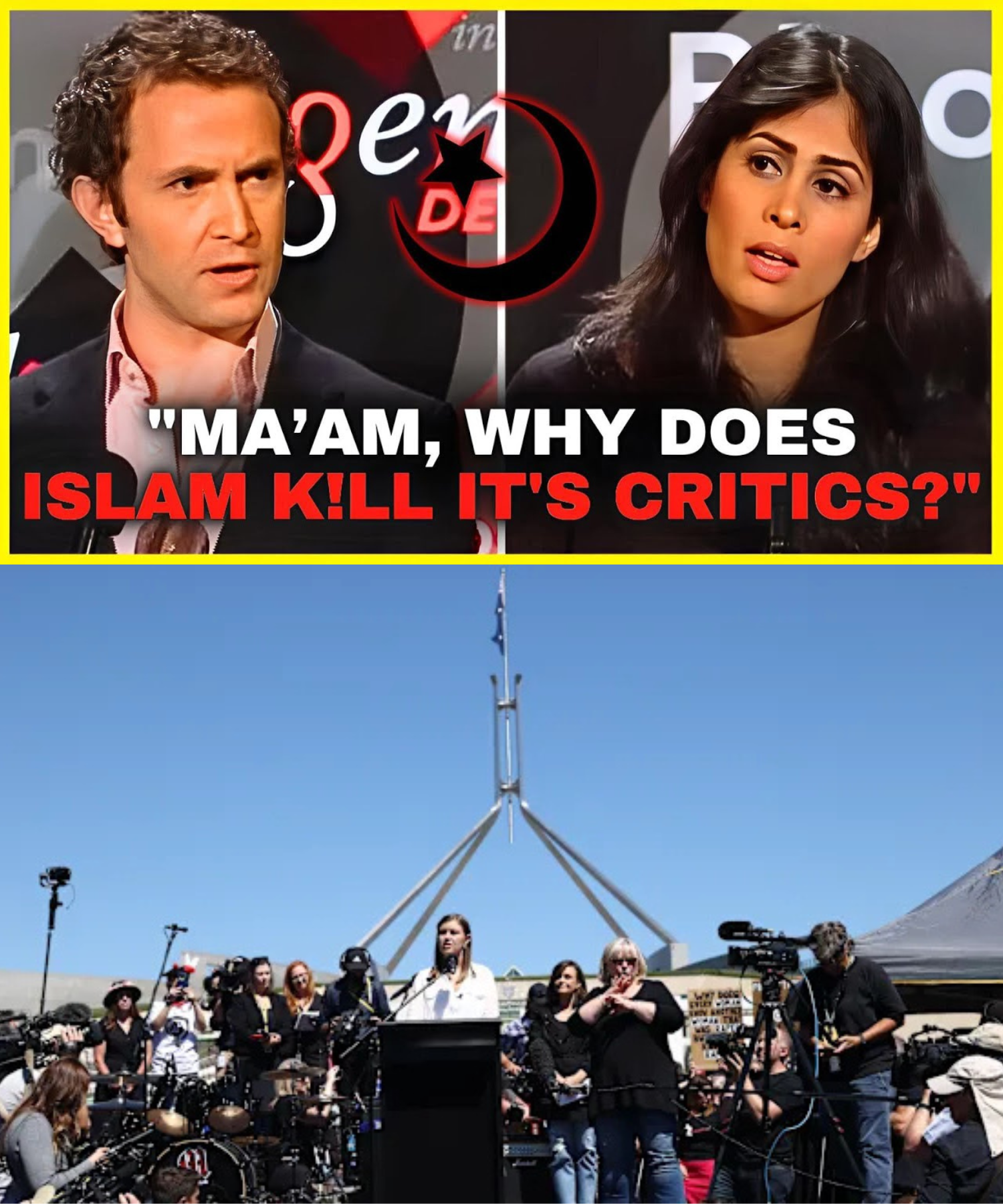
New York — A heated academic-style debate questioning whether Islam is compatible with Western liberal democracy has gone viral, reigniting one of the most controversial and emotionally charged discussions in global politics since 9/11.
The exchange, which featured scholars, activists, and former Muslims, quickly escalated from a theological discussion into a sweeping argument about violence, history, terrorism, and whether criticism of Islam is suppressed in Western societies.
At the center of the controversy is a speaker who argued that Islam cannot be simplistically described as a “religion of peace,” claiming that such a description ignores historical conquest, theological complexity, and modern political realities.
The remarks have triggered intense backlash and support online, with critics accusing the speakers of generalizing an entire faith and supporters arguing that uncomfortable truths about religious ideology are being avoided in mainstream discourse.
“A Religion of Peace or a Political Narrative?”
One of the most controversial claims made during the debate was that describing Islam as a “religion of peace” is based on optimism rather than historical evidence.
The speaker argued that Islamic history includes periods of military expansion and political conquest, and said that modern attempts to frame the religion exclusively in peaceful terms emerged prominently after 9/11 as part of Western political messaging.
Another participant echoed the sentiment, claiming that Western leaders promoted the idea of Islam as peaceful in order to separate extremists from the broader Muslim population in the aftermath of terrorist attacks.
Critics of the debate, however, argue that such framing erases the diversity of interpretation within Islam and ignores the lived experiences of more than a billion Muslims worldwide, most of whom do not engage in or support violence.
Historical References and the Mutazilite Argument
The discussion also referenced the Mutazilites, a rationalist Islamic school of thought that existed in early Islamic history and attempted theological reform. One speaker argued that earlier reform movements were ultimately suppressed, using this as evidence that internal reform within Islam has historically faced resistance.
This claim has been heavily disputed by Islamic scholars, who argue that Islamic intellectual history is far more diverse, with multiple schools of jurisprudence, philosophy, and interpretation evolving over centuries across different regions.
Nevertheless, the reference was used in the debate to suggest that reform within Islam has historically been difficult, a claim that fueled further controversy online.
Terrorism, Extremism, and Representation
A major portion of the debate focused on terrorism and whether modern extremist violence is disproportionately associated with Islam.
One speaker questioned why, in global media coverage, a significant number of terrorist incidents are linked to Muslim extremists, while similar patterns are less visible in other religious or ideological groups.
Critics responded that such framing risks conflating political violence with an entire religion practiced by billions of people across vastly different cultures, countries, and legal systems.
The debate highlighted a central tension in Western discourse: how to discuss extremist violence without generalizing or stigmatizing broader religious communities.
Apostasy, Fear, and Free Speech
One of the most emotionally charged moments came when a participant described fear of criticizing Islam openly due to concerns about backlash or threats.
The speaker argued that Islam is unique among major world religions in the degree to which public criticism can provoke strong reactions, including security concerns in certain contexts.
This claim sparked immediate disagreement from others in the room, who argued that all religions have periods of historical intolerance and that modern Muslim communities in Western countries regularly participate in democratic discourse, including criticism of their own faith.
The issue of apostasy laws in certain countries was also referenced, with speakers arguing that legal penalties for leaving Islam in some jurisdictions create additional tension when discussing religious freedom.
“Islamism vs Islam” and the Language of Definition
A key disagreement in the debate centered on terminology — specifically the distinction between “Islam” and “Islamism.”
One speaker argued that violence associated with extremist groups is often labeled “Islamism” rather than Islam itself, suggesting that this distinction may obscure underlying ideological connections.
Opponents argued that this distinction is essential to prevent the stigmatization of ordinary Muslims and to separate political extremism from religious belief.
The debate over language quickly became a debate over meaning: whether terminology clarifies reality or sanitizes it.
Colonialism, History, and Western Responsibility
The discussion also touched on colonial history and its relationship to modern tensions.
One participant argued that historical Western intervention in Muslim-majority countries has contributed to instability and that focusing solely on internal religious explanations ignores external geopolitical factors.
Another speaker countered that internal ideological and theological factors must also be acknowledged when analyzing modern political violence.
This disagreement reflected a broader academic divide over whether modern conflicts are primarily shaped by external intervention or internal belief systems.
9/11 and the Shift in Public Discourse
The debate repeatedly returned to the impact of the September 11 attacks on how Islam is discussed in the West.
Speakers argued that post-9/11 political discourse reshaped how governments and media outlets describe Islam, terrorism, and Muslim communities, leading to both increased scrutiny and efforts to emphasize separation between extremists and mainstream believers.
Some participants suggested that before 9/11, criticism of Islam was more openly expressed in Western societies, while others argued that contemporary discourse is more nuanced and careful due to increased awareness of discrimination and stereotyping.
Violence, Interpretation, and Responsibility
Toward the end of the exchange, the conversation shifted to whether violent acts committed in the name of religion can be attributed to ideology, misinterpretation, or political manipulation.
One speaker argued that certain interpretations of religious texts can be used to justify violence and that ignoring this reality prevents honest discussion.
Opponents responded that nearly all religious traditions have texts that can be misused, and that responsibility lies with individuals and political actors rather than entire faiths.
A Debate Without Resolution
As the discussion concluded, no consensus was reached.
Instead, the exchange crystallized into two fundamentally different perspectives:
One side views Islam as a system with historical and textual elements that must be critically examined in relation to modern violence and political ideology.
The other side views such critiques as overly broad generalizations that risk stigmatizing an entire global religious community.
A Reflection of a Larger Cultural Divide
The viral nature of the debate reflects a broader crisis in Western public discourse, where questions of religion, identity, free speech, and security increasingly overlap.
For some, these discussions represent necessary honesty about ideological conflict and its consequences.
For others, they represent a dangerous simplification of complex historical and religious realities.
What remains clear is that the question posed at the center of the debate — whether Islam is compatible with Western liberal democracy — is far from settled.
And as the conversation continues to spread online, it shows no signs of becoming less polarizing.