Ex-Muslim Journalist’s Shocking Testimony Sparks U.S. Firestorm Over Sharia, Women’s Rights, and the Price of Leaving Islam
Ex-Muslim Journalist’s Shocking Testimony Sparks U.S. Firestorm Over Sharia, Women’s Rights, and the Price of Leaving Islam
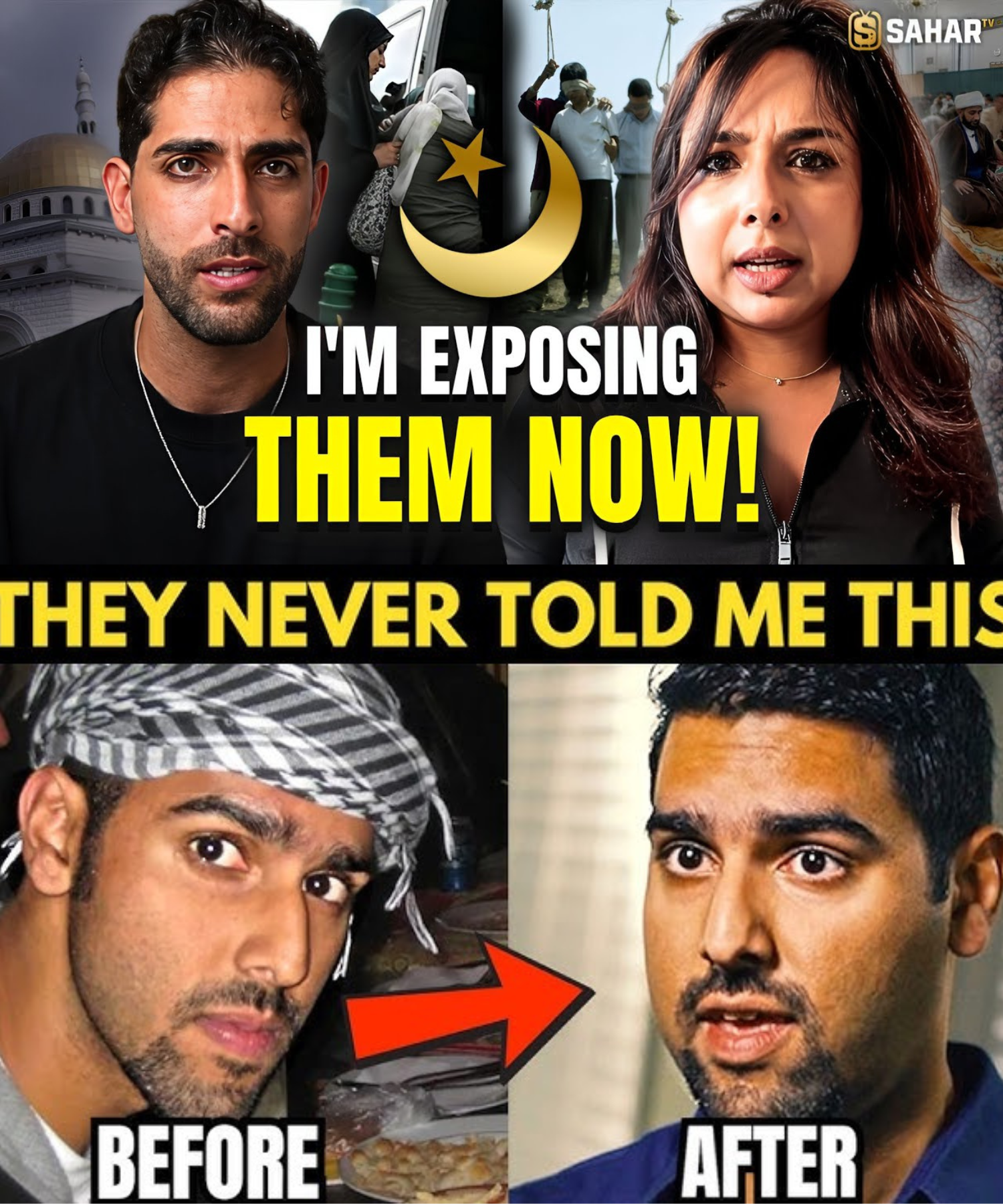
A powerful interview with British ex-Muslim journalist and commentator Nuria Khan has erupted across American political and religious media, after she described her childhood devotion to Islam, her years under Saudi Arabia’s strict religious system, her alleged ordeal under Sharia-influenced family law in Dubai, and the heavy personal cost of leaving the faith.
The conversation, now spreading through U.S. commentary circles, has become one of the most explosive viral testimonies about Islam, women’s rights, apostasy, and Western naivety toward religious authoritarianism. For many viewers, Khan’s story is not merely a personal memoir. It is a warning about what happens when religious law is not simply private belief, but the organizing force of society, courts, police, marriage, family, and female identity.
Khan begins her story in London, where she was born into a British Pakistani family. As a child, she was deeply religious, eager to please her grandfather, and committed to Islam with an intensity that even adults around her did not always share. At only nine years old, she began wearing the hijab, not because her parents forced her, she says, but because she believed she was obeying Allah and protecting her path to heaven.
That detail has stunned many American viewers because it cuts against the simplified debate over whether the hijab is always forced or always freely chosen. In Khan’s telling, the pressure was deeper than parental command. It was theological. She believed the Quran was the direct word of God. She believed modesty rules were divine. She believed adults who did not follow them were risking their souls.
Then came Saudi Arabia.
Khan says her family moved there when she was still a child, and the experience changed the course of her life. She went expecting to be closer to Islam’s holiest world. Instead, she encountered a society where religious enforcement was public, coercive, and inescapable. She described the religious police, known as the mutawa, pressuring men to attend prayer, telling women to cover, and operating with an authority that felt, in her words, like something out of a nightmare.
She recalls hearing announcements from mosques about criminal punishments, including beheadings and amputations. She says petty theft, drug smuggling, bootlegging, blasphemy, and apostasy were discussed in connection with harsh penalties. Although she did not personally witness executions, she says the announcements alone had a chilling effect on her as a child.
For American audiences, this section of the interview has landed with particular force.
The United States debates Islam largely through the language of tolerance, diversity, and religious freedom. But Khan’s testimony forces a different question: what happens when a religious system is backed by the state, enforced by police, and applied to women’s bodies, mobility, and family choices?
She described Saudi society as one where men could be stirred by the sight of a woman’s ankle, where women could not drive at the time, where cinemas were banned, and where gender segregation shaped daily life. Families traveled to Bahrain just to watch movies. Women relied on male drivers. Girls learned early that their bodies were treated as dangerous, tempting, and in need of control.
To Khan, this planted the first seeds of doubt.
She did not immediately leave Islam. In fact, she still loved the faith and remained connected to Islamic identity. But the gap between the ideal religion she had imagined in London and the lived reality she saw in Saudi Arabia began to trouble her.
Later, she moved to Dubai, which at first seemed like the perfect compromise: Islamic identity mixed with modern life, glittering towers, cinemas, driving, business, and international culture. But Khan says that image collapsed when she entered marriage and later tried to leave it.
Her account of divorce under Sharia-influenced law has become the most dramatic portion of the interview.
Khan says she married young, as expected in her cultural environment, but soon found herself in what she describes as an emotionally and psychologically abusive relationship. When she left the marital home and returned to her father, her husband allegedly used the legal concept of a “disobedient wife” to try to force her back.
According to Khan, Dubai police told her there was an order against her and that she could be forcibly returned to her husband’s house, where she would not be able to leave without permission. She says she was threatened with arrest, pressured to bring her passport, and feared a travel ban that could trap her in the country indefinitely.
The details read like a thriller.
She says police came to her home repeatedly, sometimes late at night. She used the same Islamic rules against them, saying they could not take her without her male guardian present or without a female officer. Eventually, after being told to bring her passport, she called the emergency number for British citizens abroad. A consular official allegedly told her to drive away, go straight to the airport, and leave.
She did.
And she never looked back.
For U.S. viewers, this story has become a flashpoint in debates over religious law, women’s agency, and the assumption that glamorous Gulf cities are fully modern simply because they have skyscrapers and luxury malls. Khan’s argument is that beneath the surface, women can still face systems where husbands hold enormous legal and social power.
She also discussed custody and divorce, arguing that in many Sharia-based contexts, men have easier access to divorce while women must sacrifice financial rights, dignity, and legal standing to obtain separation. If children are involved, she said, the situation becomes even more dangerous, with fathers often favored by default.
The interview then moved into the cost of leaving Islam.
Khan said she did not initially tell people she had left the faith because the consequences were too severe. She feared losing family, friends, employment, social standing, and safety. She described the psychological experience of leaving Islam as waking up from an ideological system that had shaped how she saw the world, including how she viewed Jews, the West, women, and non-Muslims.
Her father eventually discovered that she identified as ex-Muslim. She says this caused serious friction and deep personal losses. Longtime friendships ended. Family relationships fractured. She moved away and built a new inner circle.
Still, she says she is happier now than she has ever been.
That statement has become central to the U.S. reaction. Supporters say her testimony proves that many people remain trapped in Islam not because they freely believe, but because the cost of leaving is unbearable. Critics argue that her experience should not be used to demonize all Muslims, many of whom reject coercion, violence, forced marriage, or harsh legal punishments.
That distinction matters.
Ordinary Muslims in America include doctors, teachers, parents, business owners, soldiers, students, and neighbors who live peacefully under U.S. law. Many Muslim women choose their faith sincerely and reject the idea that their religion is inherently oppressive. But Khan’s defenders argue that listening to peaceful Muslims must not mean silencing ex-Muslims who describe fear, coercion, and legal abuse.
The interview also touched on jihad, Islamic reform, and whether Islam can change. Khan argued that traditional Islamic claims make reform difficult because Islam presents itself as the final, perfect revelation and Muhammad as the ideal human model. In her view, changing the system risks admitting that the divine law was flawed.
She did, however, distinguish between Islam as doctrine and individual Muslims, saying some Muslims and sects can become more moderate, especially those who reject hadith-heavy interpretations or embrace more mystical approaches.
That nuance is important, but it has not softened the controversy.
Across America, the interview is being interpreted as part of a larger battle over immigration, free speech, women’s rights, and religious criticism. Can Western societies protect Muslim citizens from hatred while also protecting ex-Muslims from intimidation? Can women openly criticize Sharia without being accused of bigotry? Can America defend religious freedom while still questioning systems that restrict female autonomy?
Khan’s story does not answer every question.
But it forces one issue into the open: when a woman says she lived under religious control and escaped, she deserves to be heard.
Not used as a weapon against innocent people.
Not silenced to protect a political narrative.
Heard.
And that is why her testimony is shaking audiences far beyond Britain.