England Fans Storm Texas Pubs as World Cup Fever Turns Dallas Into a Red-and-White Football Carnival
England Fans Storm Texas Pubs as World Cup Fever Turns Dallas Into a Red-and-White Football Carnival
Texas has seen rodeos, Super Bowls, college football madness, country music crowds, and late-night bar crawls that spill into the streets. But this World Cup has brought something different — an English football invasion that has turned American pubs into temporary pieces of Wembley, complete with flags, chants, cowboy hats, beer-soaked songs, and a level of traveling passion many locals had never witnessed before.
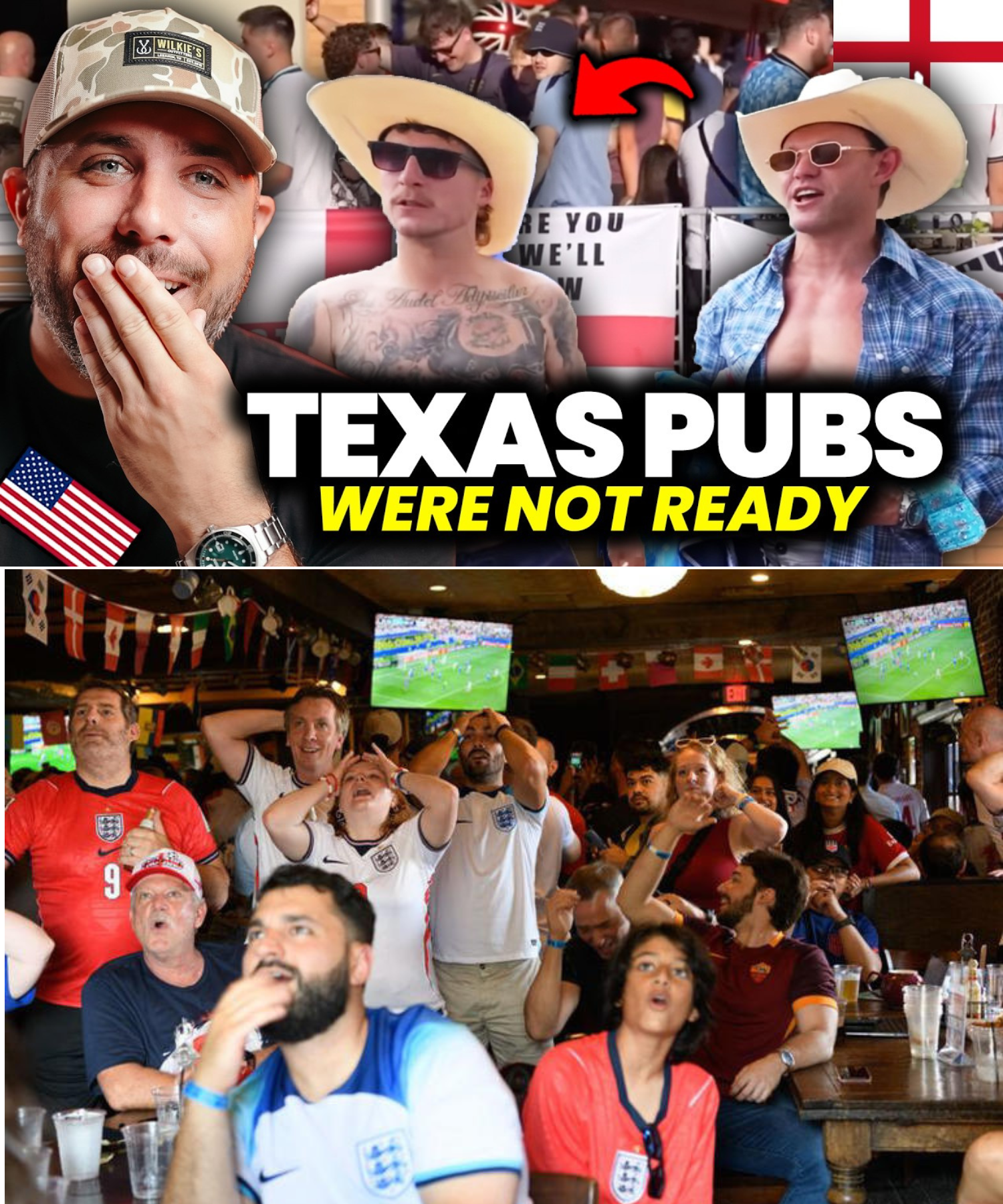
In the days surrounding England’s first World Cup match in the United States, fans from across England descended on Texas with the force of a traveling army. They did not arrive quietly. They did not blend into the background. They came singing, drinking, laughing, twosteping, and turning ordinary bars into roaring football headquarters.
One viral clip showed England supporters packing a Texas pub so tightly that staff could barely describe what was happening. According to the people working there, out-of-town visitors are nothing new. Texas hosts tourists constantly. But this was different. These fans did not arrive in small groups. They moved together. When one venue closed, they marched to the next. When one bar filled up, the crowd overflowed somewhere else. Songs followed them from doorway to doorway, street to street, pint to pint.
The English were not simply visiting Texas.
They were taking it over.
The scene was chaotic in the best possible way. Supporters wore England shirts, club flags, strange boots, and cowboy hats — an absurd but perfect fusion of British football culture and Texas identity. Some looked like they had stepped out of a pub in Stoke, Hartlepool, Bristol, or London, then been dropped directly into Fort Worth heat with a cowboy hat slapped on their heads. Others embraced the local mood fully, learning to twostep, chatting with Americans, and treating the entire trip as something bigger than sport.
For many Americans watching online, it was a cultural shock.
The United States has passionate sports fans, of course. College football Saturdays can shake entire towns. NFL stadiums are massive. Baseball traditions run deep. Basketball crowds can be electric. But international football fandom carries a different energy. It travels differently. It sings differently. It gathers in foreign cities with a strange mix of national pride, working-class humor, nervous hope, and emotional history.
England fans brought all of that with them.
Inside the pubs, locals saw people who did not necessarily know each other suddenly become one group because of the flag on their shirt. That is one of the most powerful things about international football. A chef from one town, a builder from another, a father on holiday, a group of friends from the Midlands, a man who left a job to stay longer for a match — all of them can become one voice once the songs begin.
In Texas, Americans seemed fascinated by it.
One local described meeting dozens of English fans early in the morning and loving every minute of it. The heat was brutal. The humidity was not what many expected. Getting around was not simple. The stadium was a trek. But the atmosphere was unlike anything the area usually sees. Fans were not just attending a match. They were building a traveling village around it.
That village had beer, flags, banter, and endless logistics.
Some fans had already attended other matches, including a Netherlands-Japan game, before turning their attention to England. Others had bought tickets through early draws, ballots, resale markets, and last-minute deals. The ticket conversation became its own drama. Some supporters said they managed to secure face-value seats early. Others described resale prices climbing toward $800, thousands of dollars, or even more depending on the stage and location.
For American viewers, this was another shock.
The World Cup is not a one-day event. It is a sprawling, six-week marathon of games, travel, airports, hotels, resale tickets, stadium transfers, heat, hope, and heartbreak. The scale can overwhelm even dedicated fans. Matches happen every day. Multiple matches happen in a day. Cities change. Flights change. Fans chase their teams across a country the size of a continent.
That became obvious when English supporters casually talked about moving from Texas to Boston or New York as if it were a quick hop.
For Americans, Texas to Boston is a serious trip. It is not like taking a train across a small country. It is a flight, a hotel reset, new costs, new heat or new weather, and possibly hundreds of dollars just to move from one stage of the adventure to the next. But World Cup fans think differently. If England is playing there, they calculate, gamble, and go.
The Dallas stadium also became a major talking point.
English fans were stunned by the scale and comfort. Air conditioning mattered. In Texas heat, it mattered a lot. Supporters praised the stadium as exceptional, especially compared with what some jokingly described as aging grounds back home. One fan even told Americans asking about Wembley that they might be disappointed. It was said with humor, but it captured something real: the U.S. has built sports palaces, and the World Cup is now showing them off to the world.
Still, the American stadium experience comes with American distance.
Fans joked about travel routes involving trains, buses, shuttles, Greyhound-style solutions, and long treks just to reach the ground. In England, the stadium is often woven into the city. In America, the stadium can feel like a destination on its own planet. That contrast became part of the adventure — confusing, expensive, sometimes inconvenient, but unforgettable.
Then came the football anxiety.
England fans are famous for hope and dread existing in the same sentence. Even when the team looks strong, the national mood can turn dark quickly. Supporters talked about England’s opener, the coming match against Ghana, and the emotional weight of past tournaments. There was confidence, but never pure confidence. There was always a joke, a warning, or a nervous laugh underneath.
That is the English way.
They believe and doubt at the same time.
They sing like champions before kickoff and prepare emotionally for disaster before halftime.
In Texas, that psychology met American optimism. Locals welcomed them warmly. Some drank with them. Some danced with them. Some simply watched the spectacle unfold and admitted they had never seen anything quite like it. For many Texans, the English fans were loud, strange, hilarious, and good for business. Bars were packed. Streets were alive. Conversations were everywhere.
The World Cup had done exactly what it was supposed to do.
It had turned strangers into temporary neighbors.
And now the story is moving.
England’s road continues beyond Texas, with fans eyeing Boston, Ghana, and whatever comes next. Scotland’s supporters are moving through other cities. Dutch fans, Japanese fans, Norwegian fans, and others are leaving their own marks across America. Every day brings new clips, new songs, new crowds, and new evidence that the world’s game is no longer just visiting the United States.
It is changing the atmosphere.
For decades, Americans were told that soccer would someday arrive. This World Cup feels like that arrival. Not because Americans suddenly understand every chant, every club flag, every rivalry, or every nervous English joke — but because they are seeing the emotion up close.
They are seeing fans leave jobs to follow their country.
They are seeing pubs overflow.
They are seeing cowboy hats on English heads.
They are seeing Texas become football country for a night.
And if this is only the beginning, America may not be ready for what happens when the knockout rounds arrive.