America’s Origin Story Is Falling Apart as New Archaeological Evidence Pushes Human History Thousands of Years Earlier
America’s Origin Story Is Falling Apart as New Archaeological Evidence Pushes Human History Thousands of Years Earlier
For nearly a century, the story of the first Americans was simple, elegant, and widely accepted.
A single group crossed from Siberia into Alaska during the last Ice Age. They moved south through an ice-free corridor. They spread rapidly across the continents. They became the Clovis people, named after distinctive stone tools first discovered in New Mexico in the 1930s.
For decades, that model — known as “Clovis First” — was treated as settled science.
Now it is collapsing.
A wave of discoveries across North America, from Oregon caves to New Mexico gypsum dunes to Pennsylvania rock shelters and even controversial California excavation sites, is forcing scientists to confront a difficult reality:
Humans were in the Americas far earlier than anyone expected.
And they may have arrived through multiple routes, in multiple waves, across tens of thousands of years.
The Collapse of a Scientific Foundation
The Clovis First model dominated 20th-century archaeology. It proposed that humans entered the Americas around 13,000 years ago via the Bering land bridge, then quickly spread south.
It was clean. Logical. And widely taught.
But as new evidence emerged, that clarity began to fracture.
Researchers began finding sites that simply did not fit the timeline. The reaction inside academia was not immediate acceptance — but resistance.
Some archaeologists describe what became known informally as “Clovis primacy syndrome,” a reluctance to accept pre-Clovis evidence because it challenged decades of established theory.
Entire careers had been built on the assumption that Clovis people were first.
But archaeology, unlike theory, is ultimately decided by what is buried in the ground.
And the ground began to speak differently.
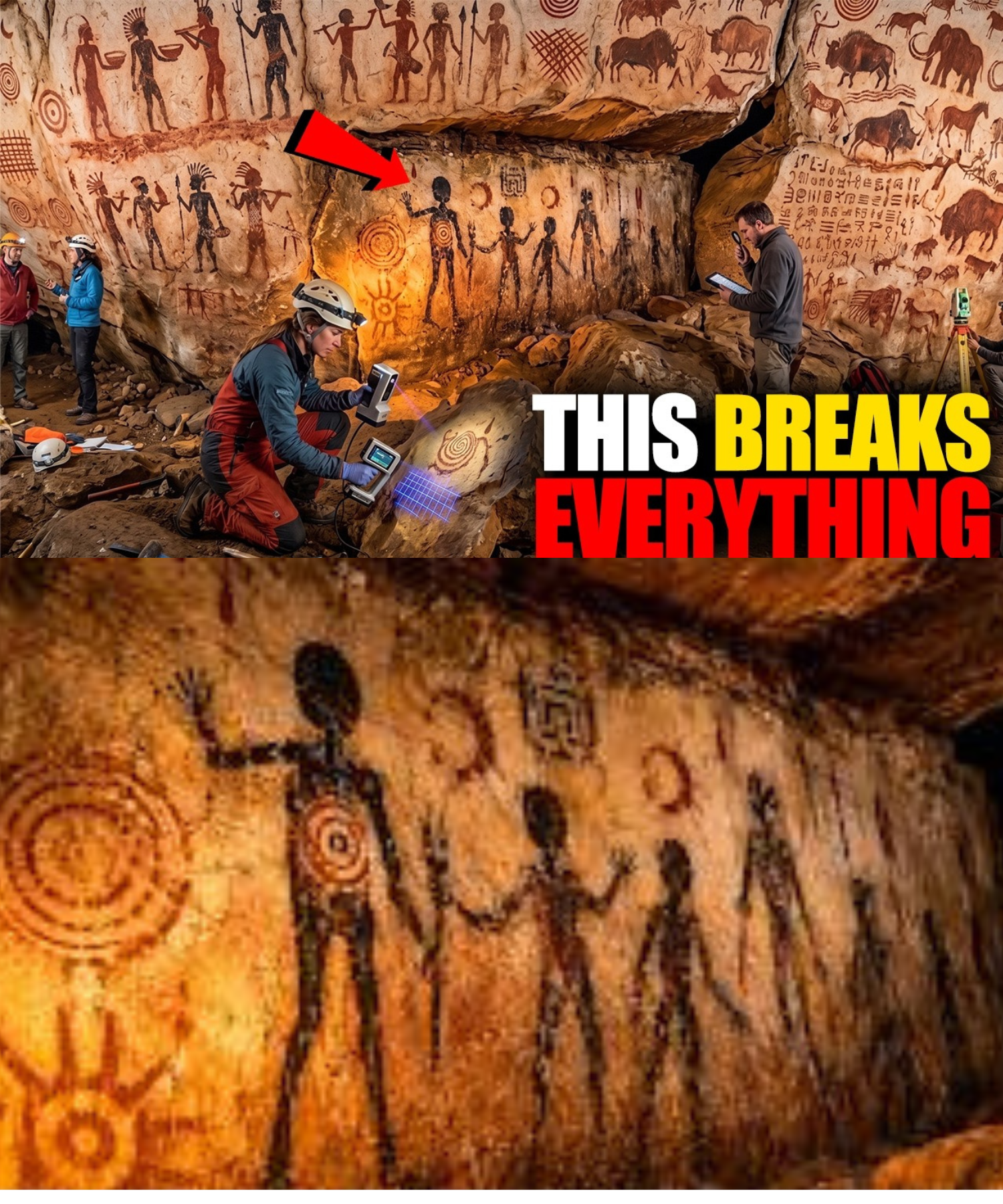
Oregon: Where the Timeline First Broke
One of the earliest major challenges came from Meadowcroft Rockshelter in Pennsylvania, where excavations suggested human presence as far back as 16,000–19,000 years ago — thousands of years before Clovis technology appears in the archaeological record.
The reaction was immediate skepticism. Critics argued contamination, misinterpretation, or flawed dating methods.
But Meadowcroft was only the beginning.
The real shift came in Oregon.
At Paisley Caves, archaeologists uncovered something that changed the debate entirely: preserved human feces containing ancient DNA.
Unlike stone tools, which can be disputed in terms of origin or context, DNA provides biological proof of human presence.
The genetic material extracted from the caves matched haplogroups found in modern Indigenous populations, linking ancient individuals directly to living descendants today.
Radiocarbon dating placed these remains at over 14,000 years old — already older than the Clovis horizon.
This was not a theoretical challenge anymore.
It was biological evidence.
Rimrock Draw: A Tool Beneath Volcanic Time
Even more dramatic findings emerged from Rimrock Draw Rockshelter, also in Oregon.
There, archaeologists discovered stone tools buried beneath a layer of volcanic ash from Mount St. Helens, precisely dated to around 15,400 years ago.
Anything below that ash layer had to be older.
And it was.
Among extinct animal remains — including camel and ancient bison species long vanished from North America — researchers found a carefully worked stone tool made of chalcedony.
Its wear patterns suggested long-term use. Its edges showed multiple functions. One archaeologist described it as resembling a “prehistoric Swiss Army knife.”
Radiocarbon dating of associated material confirmed ages between 21,000 and 22,000 years.
That is nearly 8,000 years before Clovis culture even appears.
White Sands: Footprints in the Ice Age
If stone tools and DNA were not enough, New Mexico added something even more powerful: footprints.
At White Sands National Park, researchers discovered 61 human footprints preserved in ancient gypsum lakebeds.
They are unmistakably human. Some belong to children. Others show adults running or walking along the shore of a now-vanished Ice Age lake.
Even more remarkable — mammoth and giant ground sloth tracks are found alongside them, frozen in the same sediment layer.
The implication is staggering: humans were walking directly among Ice Age megafauna more than 21,000 years ago.
Multiple independent dating methods — including pollen, seeds, and mud samples — consistently confirmed ages between 21,000 and 23,000 years.
Skeptics attempted to challenge the results, but repeated testing reinforced the same conclusion.
The timeline was no longer bending.
It was breaking.
The California Shock: Cerutti Mastodon Site
Then came the most controversial discovery of all.
In San Diego County, construction work uncovered mastodon bones dated to approximately 130,000 years ago.
At the Cerutti Mastodon site, researchers reported spiral fractures in bones consistent with deliberate breakage. Nearby stones were interpreted by some scientists as potential hammering tools.
If accurate, the implications would be extraordinary — suggesting human or human-like activity in North America more than 100,000 years before modern humans are believed to have arrived.
But this site remains highly disputed.
Some researchers argue the fractures could be natural. Others suggest geological movement or construction disturbance.
The scientific community remains divided.
But even critics acknowledge something important:
The site cannot be easily dismissed.
It demands explanation.
A New Migration Story Emerging
Taken individually, each site is controversial. Taken together, they form a pattern that is becoming difficult to ignore.
Humans were present in the Americas:
At least 14,000 years ago in Oregon DNA evidence
18,000+ years ago at Rimrock Draw
21,000–23,000 years ago at White Sands
Possibly far earlier in California (highly disputed)
This destroys the simplicity of the Clovis First model.
Instead of a single migration event, scientists are now considering:
Multiple migration waves
Earlier coastal routes along the Pacific
Lost archaeological sites now underwater
Complex population mixing over tens of thousands of years
The story is becoming less linear — and far more complicated.
Why It Matters
This is not just an academic debate about dates.
It reshapes how we understand:
The peopling of the Americas
Indigenous ancestry and continuity
Early human migration capabilities
Ice Age survival strategies
Maritime or coastal navigation skills far earlier than expected
If humans reached the Americas 23,000 years ago — or earlier — they survived extreme climates, migrated across vast landscapes, and adapted in ways still not fully understood.
A Story Still Being Written
Despite decades of resistance, the accumulation of evidence is forcing archaeology to reconsider its foundations.
Clovis First is no longer a dominant certainty.
It is a historical hypothesis under revision.
And as new caves, footprints, DNA, and tools continue to emerge from the soil of North America, one thing is becoming clear:
The first Americans did not arrive in a single moment.
They arrived across time.
And the timeline is still expanding.
Because the deeper scientists dig, the further back the story seems to go.