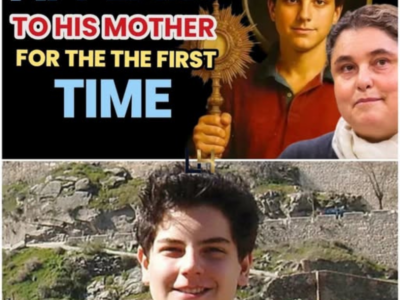
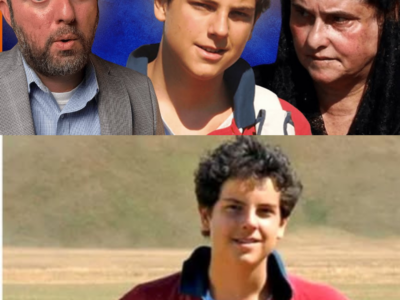
My son told me he would die at 70kg… And it happened exactly – Mother of Saint Carlo Acutis
The Mother Who Witnessed a Saint: The Extraordinary Story of Antonia Salzano and Carlo Acutis
For most mothers, hearing a teenage son speak about his own death would be a source of deep concern.
For Antonia Salzano, those unsettling words would later become part of one of the most remarkable stories in modern Catholic history.
Years before his passing, Carlo Acutis reportedly told those closest to him that he would die when he reached a weight of seventy kilograms.
He also spoke about the manner of his death and, according to his mother, even predicted future events that seemed impossible at the time.
What appeared to be unusual remarks from a young boy would later become central elements in the story of a teenager whose life inspired millions around the world.
That story reached a historic milestone when the Catholic Church officially recognized Carlo Acutis as a saint.
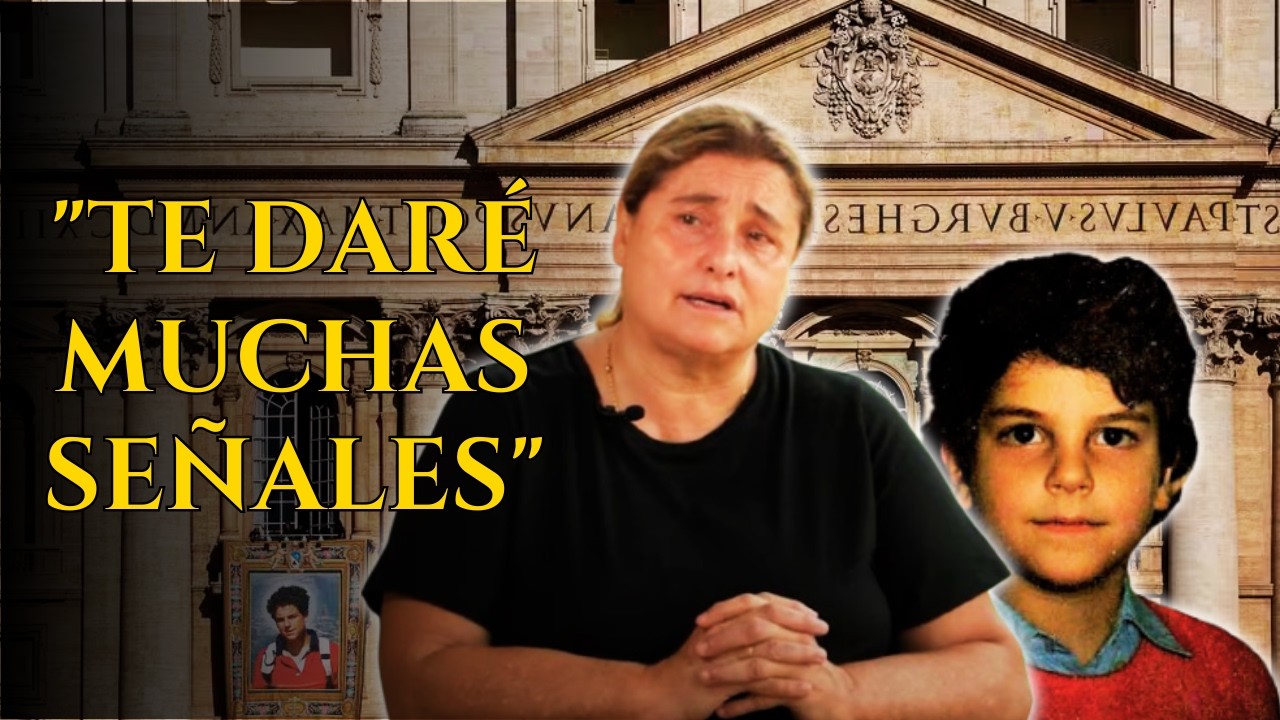
For Antonia Salzano, the canonization represented the culmination of a journey that began decades earlier and transformed her understanding of faith, suffering, and holiness.
Carlo was born in London on May 3, 1991.
From the beginning, Antonia remembered a series of details that later appeared significant to her.
The hospital where he was born traditionally announced births in a major London newspaper.
Seeing her son’s name in print shortly after his birth left a lasting impression.
Years later, as Carlo became known across continents, the memory seemed almost symbolic.
Fifteen days after his birth, Carlo was baptized.
The date coincided with the birthday of Pope John Paul II, a coincidence that Antonia later viewed as meaningful.
At the time, however, she was not deeply involved in religious life.
Like many people of her generation, she identified as Catholic but did not practice her faith with particular intensity.
Everything changed in 1994 when Carlo was three years old.
Antonia experienced what she described as a profound spiritual awakening.
The teachings of the Church, the sacraments, and the presence of Christ in the Eucharist suddenly acquired a new significance.
What surprised her most was that her own son seemed to possess an understanding of these realities that far exceeded his age.
As Carlo grew, his devotion became increasingly evident.
He displayed a strong attraction to prayer, the Eucharist, and the Virgin Mary.
Family members often remarked on the seriousness with which he approached spiritual matters.
One question remained deeply etched in Antonia’s memory.
When Carlo was still very young, he reportedly asked why so many people failed to recognize the presence of Jesus in the Eucharist.
The question struck her because it reflected a theological awareness rarely associated with a child.
Throughout his childhood, Carlo combined ordinary interests with an extraordinary spiritual life.
He enjoyed technology, school, sports, and friendships.
Yet he also attended Mass frequently, prayed daily, and devoted significant time to learning about the faith.
As the years passed, Antonia began noticing another aspect of her son’s character.
He seemed capable of influencing people through example rather than persuasion.
One of the most frequently recounted stories involved a young man from India who worked in the family home.
Raised within a Hindu background, he initially had little connection to Christianity.
Over time, however, he became increasingly interested in the faith after observing Carlo’s behavior.
The teenager never pressured him.
Instead, Carlo shared stories about saints, Marian apparitions, and Christian teachings while demonstrating consistency between his beliefs and his actions.
Eventually, the young man requested baptism and embraced the Catholic faith.
For Antonia, this transformation represented one of the clearest examples of her son’s spiritual influence.
She believed that Carlo possessed a rare ability to communicate faith through kindness, authenticity, and personal example.
Another characteristic frequently observed by those around him was his commitment to prayer.
Carlo believed strongly in the power of intercession and often prayed persistently for specific intentions.
Family members recalled occasions when he repeated novenas many times without losing confidence.
His outlook on life reflected a strong awareness of eternity.
He often emphasized the importance of using time wisely and avoiding unnecessary distractions.
According to those who knew him, he viewed every moment as an opportunity for spiritual growth.
As Carlo entered adolescence, conversations about death became more frequent.
Rather than expressing fear, he spoke about mortality with unusual serenity.
Family members initially dismissed such remarks as youthful speculation.
Yet some of his statements would later attract considerable attention.
Among them was his prediction that he would die when he weighed seventy kilograms.
According to family testimony, Carlo recorded this observation before his illness.
At the time, nobody regarded it as significant.
He also reportedly mentioned that his death would involve a problem in the brain.
These comments seemed impossible to verify and were largely forgotten.
In October 2006, events unfolded with startling speed.
After returning home from school and participating in normal activities, Carlo developed symptoms that initially appeared minor.
A slight fever and sore throat suggested a common infection.
Medical examinations did not immediately reveal anything serious.
However, his condition deteriorated rapidly.
Doctors eventually diagnosed acute leukemia, an aggressive illness that progressed with extraordinary speed.
The news devastated the family.
During the journey to the hospital, Carlo reportedly told his mother that he would not leave the facility alive.
Antonia struggled to accept such words, hoping instead for recovery.
When medical staff recorded his weight, the scale showed seventy kilograms.
For family members who remembered his earlier statement, the moment was deeply emotional.
Despite the severity of his illness, Carlo displayed remarkable composure.
Doctors and nurses were struck by his concern for others.
Rather than focusing on his own suffering, he frequently expressed gratitude and compassion toward medical personnel caring for him.
He reportedly offered his suffering for the Pope, the Church, and the salvation of souls.
Such statements reflected a spirituality that many observers considered extraordinary for a fifteen-year-old.
Over the following days, his condition worsened.
Complications from leukemia eventually led to a cerebral hemorrhage.
Carlo died on October 12, 2006, at the age of fifteen.
For Antonia, the loss was almost unbearable.
Yet she later described experiencing a series of events that convinced her her son remained spiritually present.
Among these were vivid dreams in which Carlo appeared healthy, joyful, and surrounded by light.
In one experience, he reportedly told her that he would one day be beatified and canonized.
At the time, such an outcome seemed unimaginable.
Another dream contained an equally surprising message.
Carlo assured his mother that she would have more children.
Since he had been an only child and Antonia was approaching forty years of age, the prediction appeared unlikely.
Several years later, she gave birth to twins.
For Antonia, the event represented another confirmation of her son’s continued intercession.
As devotion to Carlo spread, reports of favors and alleged miracles began emerging from different parts of the world.
Individuals claimed to have received physical healings, spiritual conversions, and answers to prayers after seeking his intercession.
The Church initiated a formal investigation into his life and reputation for holiness.
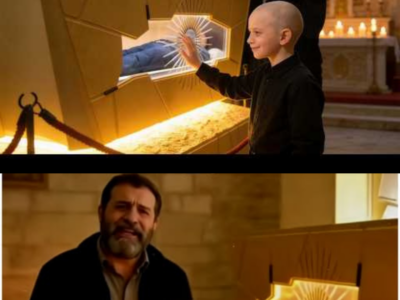
One development that attracted widespread attention occurred during the examination of his remains.
Church officials reported that portions of his body had been preserved in a condition that allowed public veneration.
Although experts explained that conservation measures were used, many believers regarded the state of the remains as a powerful sign.
Pilgrims, especially young people, began traveling to pray at his tomb.
His story resonated strongly with a generation growing up in the digital age.
Unlike many saints from distant centuries, Carlo had lived in a world familiar to contemporary youth.
He used computers, enjoyed technology, and communicated through modern tools while maintaining a deep commitment to faith.
This combination made him uniquely relatable.
Carlo often emphasized what he called a path to holiness accessible to everyone.
His spiritual practices included daily prayer, participation in Mass, regular confession, charitable works, reading Scripture, Eucharistic adoration, and devotion to the rosary.
He believed that holiness was not reserved for a select few but represented the universal calling of every Christian.
One of his most widely quoted ideas centered on individuality.
He encouraged people to embrace their unique identity rather than imitate others blindly.
In a culture often driven by conformity, the message found a receptive audience among young believers.
As years passed, devotion to Carlo continued expanding internationally.
Books, documentaries, educational programs, and prayer groups introduced his story to millions.
His influence extended far beyond traditional Catholic circles.
Many people were drawn not only by reports of miracles but also by the simplicity of his witness.
He demonstrated that sanctity could flourish in ordinary circumstances and that modern technology could serve spiritual purposes rather than distract from them.
For Antonia Salzano, every stage of this journey carried profound meaning.
She had watched her son grow from a curious child into a teenager whose faith inspired others.
She had heard predictions she could not understand, witnessed a devastating illness, endured the pain of losing an only child, and later observed a worldwide movement honoring his memory.
Through it all, she remained convinced that Carlo’s mission did not end with death.
Instead, she believed it entered a new phase.
Today, Carlo Acutis is remembered as a symbol of hope, faith, and holiness in the modern world.
His life continues to inspire young people seeking meaning amid the distractions of contemporary culture.
For countless believers, his story demonstrates that sanctity remains possible in every era, including the digital age.
For Antonia Salzano, however, the story is also deeply personal.
It is the story of a mother who witnessed extraordinary events through the life of her son.
It is a story marked by faith, loss, perseverance, and unexpected grace.
Most of all, it is the story of a young man whose brief life left an enduring impact on the Church and on millions of people around the world.
Whether viewed through the lens of faith or history, the legacy of Carlo Acutis remains one of the most compelling religious stories of the twenty-first century, continuing to inspire new generations long after his passing.