Tucker Carlson and John Kiriakou Expose the TRUTH About JFK and Israel
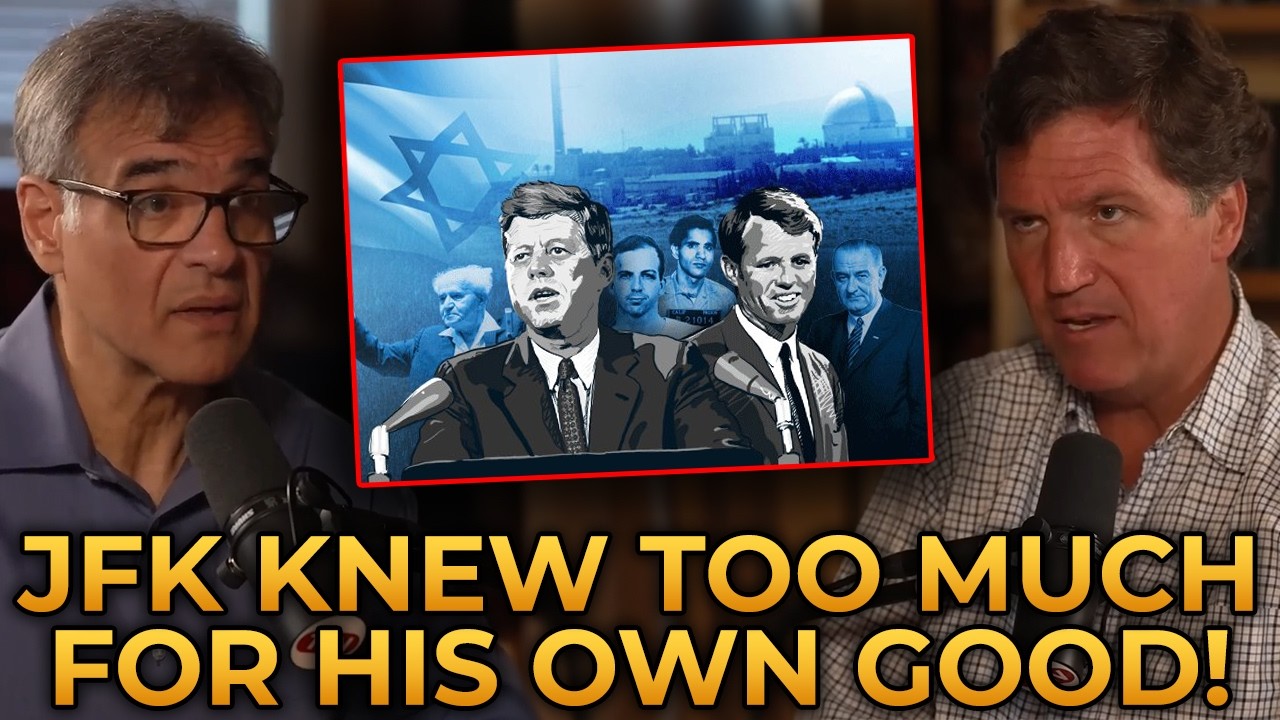
The Conversation That Rekindled Old Questions
A resurfaced interview between former intelligence officer John Kiriakou and commentator Tucker Carlson has reignited debate around long-standing questions: How much influence do foreign governments and lobbying groups have over U.S. policy? And how should Americans interpret unresolved historical controversies like the assassination of John F. Kennedy?
The discussion ranges widely—touching on Cold War-era alliances, intelligence operations, foreign lobbying organizations such as AIPAC, and disputed historical events including the USS Liberty incident and the JFK assassination.
What makes the conversation compelling to its audience is not just the claims themselves, but the broader narrative they sit within: a belief that American foreign policy has, at times, been shaped by forces operating outside democratic accountability.
But separating historical fact, interpretation, and speculation is essential. Many of the assertions raised in such discussions remain heavily debated among historians, intelligence analysts, and political scientists.
JFK, Power, and the Origins of Modern Suspicion
The assassination of President John F. Kennedy in 1963 remains one of the most scrutinized events in American history. The official conclusion of the Warren Commission attributed the killing to Lee Harvey Oswald acting alone, but skepticism has persisted for decades.
Over time, a wide range of alternative theories have emerged—some focusing on the CIA, others on organized crime, and still others on foreign governments or geopolitical tensions during the Cold War.
In the conversation referenced in the script, Kennedy is portrayed as having taken a more confrontational stance toward certain intelligence and foreign policy structures, including opposition to nuclear proliferation and concerns over covert operations.
It is true that Kennedy had significant disagreements with parts of the national security establishment, particularly after events like the failed Bay of Pigs invasion in 1961. Declassified records show tension between the Kennedy administration and intelligence agencies, including President Kennedy’s expressed desire to “splinter the CIA into a thousand pieces.”
However, claims that directly link his assassination to specific foreign governments or lobbying organizations remain unproven and are not supported by consensus historical evidence. Most mainstream historical research attributes the assassination to Oswald, though debates continue regarding whether others may have been involved or aware of broader threats.
The persistence of alternative theories speaks less to confirmed historical conclusions and more to enduring mistrust in government institutions.
The Role of Intelligence Agencies in Public Imagination
A recurring theme in the discussion is the power and autonomy of intelligence agencies, particularly the CIA, during the Cold War era.
It is well documented that the CIA engaged in covert operations throughout the 1950s and 1960s, including attempts at regime change, propaganda efforts, and surveillance programs both domestically and abroad. These activities were later exposed through congressional investigations such as the Church Committee in the 1970s.
This history has contributed significantly to public skepticism. When people hear claims of secrecy or internal conflict within intelligence agencies, they are drawing on real historical precedents—though not necessarily on evidence connected to specific modern allegations.
The challenge lies in distinguishing between verified historical misconduct and speculative extensions of that history.
Israel, U.S. Policy, and the Debate Over Influence
Another major theme in the conversation is the role of pro-Israel lobbying organizations in shaping U.S. foreign policy, particularly referencing groups like AIPAC (American Israel Public Affairs Committee).
AIPAC is a well-known lobbying organization that advocates for strong U.S.–Israel relations. Like other lobbying groups in Washington, it participates in fundraising, policy advocacy, and political engagement. Critics argue that it wields disproportionate influence, while supporters contend it operates within the same legal framework as other advocacy organizations.
One frequently cited historical point in such discussions is the Foreign Agents Registration Act (FARA), which requires individuals and organizations acting on behalf of foreign entities to disclose their activities. Some commentators have argued that certain lobbying structures operate in ways that blur the distinction between domestic advocacy and foreign representation.
However, there is no legal determination that AIPAC or similar organizations are unlawful foreign agents under FARA. The debate instead centers on political influence, transparency, and the broader role of lobbying in U.S. democracy.
This distinction matters: influence in Washington is widespread across industries and interest groups—from defense contractors to energy companies to foreign governments. The Israel policy debate is part of a much larger conversation about how U.S. foreign policy is shaped.
The USS Liberty Incident: A Continuing Point of Tension
The USS Liberty incident in 1967 is another focal point in the discussion. During the Six-Day War, the American intelligence ship USS Liberty was attacked by Israeli forces, resulting in the deaths of 34 American servicemen.
The official explanation from Israel was that the attack was a case of mistaken identity, believing the vessel to be Egyptian. The U.S. government accepted Israel’s apology and concluded the incident was accidental.
However, survivors and some analysts have long disputed this conclusion, arguing that the ship was clearly marked and identifiable. Multiple investigations have revisited the event, and it remains a source of controversy among scholars and veterans.
Despite this, no conclusive evidence has emerged demonstrating intentional targeting by Israel or a coordinated cover-up involving the U.S. government at the highest levels. The incident remains unresolved in public perception but officially closed in diplomatic terms.
From Cold War Alliances to Modern Political Polarization
The broader narrative presented in the script is not just about history—it is about perceived continuity.
The argument advanced in the discussion is that early Cold War alliances, intelligence cooperation, and foreign aid structures created long-term entanglements that still shape U.S. foreign policy today.
There is some truth to the idea that alliances formed during the Cold War continue to influence American strategy. The United States maintains deep security, intelligence, and economic relationships with numerous countries established during that period.
But the interpretation that these relationships amount to unified control by any single foreign lobby is far more contested and not supported by mainstream political science.
What is widely recognized is that Washington operates through a dense ecosystem of lobbying, think tanks, donors, political action committees, and foreign policy institutions. Influence is real—but it is distributed across competing interests rather than controlled by a single actor.
The Rise of Independent Media and Narrative Fragmentation
One of the more grounded observations in the discussion is the changing media landscape.
Over the past two decades, traditional media institutions have lost significant trust among segments of the American public. In their place, independent commentators, podcasts, and online platforms have gained influence.
This shift has created a fragmented information environment where audiences can access alternative interpretations of events—ranging from mainstream analysis to highly speculative theories.
Supporters of this change argue it democratizes information and breaks institutional gatekeeping. Critics argue it also increases the spread of misinformation and encourages selective interpretation of complex geopolitical issues.
Both perspectives contain elements of truth. What is undeniable is that authority over public narratives is no longer centralized.
Populism, Distrust, and the Search for Explanations
A recurring psychological theme in the conversation is distrust—toward government institutions, intelligence agencies, and political elites.
This distrust is not new. It has appeared in waves throughout American history, often during periods of war, political scandal, or economic uncertainty.
From Watergate to the Iraq War to financial crises, moments of institutional failure have reinforced the belief among some Americans that official narratives may not tell the full story.
In that environment, alternative explanations—especially those involving secrecy, hidden alliances, or intelligence operations—often gain traction, even when evidence is incomplete or disputed.
This does not mean such theories are automatically false, but it does highlight the importance of careful source evaluation and historical rigor.
The Challenge of Sorting Fact From Narrative
The difficulty with conversations like the one analyzed here is not that they lack informational value, but that they blend multiple layers:
Documented historical events
Declassified intelligence activity
Political interpretation
Unverified or speculative claims
Broad structural critiques of power
When these layers are merged, the result can be a compelling narrative that feels coherent—but does not always reflect established historical consensus.
For example:
It is factual that the CIA conducted covert operations during the Cold War.
It is factual that lobbying groups influence U.S. policy.
It is factual that JFK had conflicts with parts of the intelligence community.
It is not established fact that foreign governments or lobbying groups played a direct role in his assassination.
The distinction between these categories is crucial for accurate historical understanding.
Conclusion: Why These Conversations Keep Returning
The enduring fascination with JFK, intelligence agencies, and foreign influence is not simply about history. It is about trust—who has it, who loses it, and what happens when it breaks down.
As political polarization deepens and media ecosystems fragment, Americans increasingly interpret the same events through radically different lenses. One group sees institutional continuity and complexity; another sees hidden power structures operating behind the scenes.
The conversation that sparked this discussion reflects that divide. It blends legitimate historical questions, unresolved controversies, and interpretive speculation into a broader critique of American foreign policy and institutional power.
Whether one agrees or disagrees with its conclusions, the popularity of such discussions signals something important: a growing demand for alternative explanations of political reality.
But the challenge remains the same as it has always been—distinguishing evidence from inference, and inference from belief.