Dave Smith Reveals the SILVER LINING to Massie’s Primary Defeat
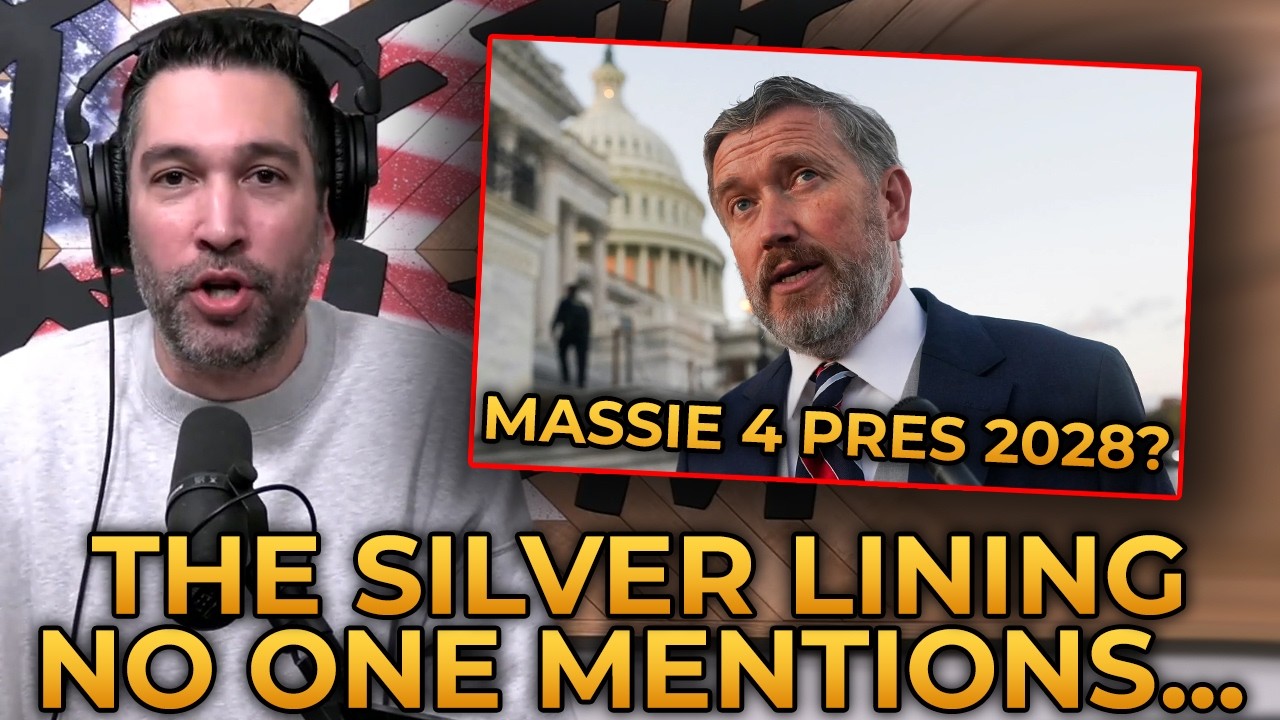
Did Thomas Massie’s Defeat Create Something Bigger Than a Political Campaign?
One election ended. A much larger political fight may have just begun.
Thomas Massie’s primary defeat was more than the loss of a congressional seat. It became a national test of competing visions inside the American right, exposing deep divisions over foreign policy, party loyalty, political influence, and the future of the “America First” movement. Supporters saw the race as proof that independent voices can be punished for refusing to follow the party line. Critics viewed it as an inevitable consequence of challenging a popular president and his agenda. Either way, the contest drew extraordinary attention—and extraordinary resources—for what would normally have been a routine congressional primary.
What makes the race remarkable isn’t simply who won or who lost. It’s what the campaign revealed about the coalition that helped reshape American politics over the last decade.
For years, Republicans who opposed interventionist foreign policy, criticized excessive government spending, and questioned the influence of Washington’s permanent political establishment largely occupied the same political space. Figures like Thomas Massie, Tucker Carlson, Dave Smith, and others often agreed that endless wars, mounting federal debt, expanding surveillance powers, and unchecked bureaucracy were problems that demanded serious attention.
But political coalitions are rarely permanent.
As debates over Israel, foreign aid, government spending, and executive power intensified, many of those alliances began to fracture. The Massie race became one of the clearest demonstrations yet that these disagreements are no longer theoretical—they are defining the future direction of the conservative movement itself.
The central question now isn’t whether Thomas Massie lost.
It’s whether his campaign marked the beginning of a new political realignment.
Why This Race Drew National Attention
Congressional primaries rarely dominate national political discussion.
Most involve little outside interest, modest fundraising, and limited media coverage. This contest was different.
The campaign attracted enormous financial support, extensive national media attention, endorsements from prominent political figures, and intense discussion across conservative media. Instead of remaining a local election, it became a symbolic battle over the identity of the Republican Party.
Supporters of Massie argued that the race was never simply about one vote or one piece of legislation. In their view, it became a referendum on whether elected officials could maintain independence from party leadership and major political pressure groups without facing overwhelming opposition.
His critics offered a different explanation.
They argued that Massie had repeatedly distanced himself from President Donald Trump’s legislative priorities and that Republican voters ultimately preferred candidates who more consistently supported the party’s agenda.
Those competing interpretations continue to shape the conversation surrounding the race.
A Congressman Who Built His Brand on Independence
Thomas Massie has long occupied an unusual place in Congress.
Unlike many lawmakers, he developed a reputation for voting against legislation supported by both parties when he believed it violated constitutional principles or expanded federal power.
That approach frequently placed him at odds not only with Democrats but also with Republican leadership.
Over the years, he became known for opposing large spending packages, questioning emergency government powers, criticizing warrantless surveillance authorities, and expressing skepticism toward foreign military interventions.
Whether one agreed with his positions or not, few doubted that his voting record reflected a consistent political philosophy rather than short-term political calculation.
That consistency became one of his greatest strengths among supporters—and one of the reasons his defeat resonated far beyond his congressional district.
Many viewed the election less as a rejection of Massie’s ideas than as a test of whether ideological independence still has room inside modern party politics.
The Foreign Policy Divide
Perhaps no issue better illustrates the split than foreign policy.
Massie has repeatedly argued for a more restrained American role overseas. He has questioned military interventions, opposed expanding foreign conflicts, and warned that Congress has too often surrendered its constitutional authority over decisions involving war.
Those positions align with a broader current of American political thought that favors limiting overseas commitments and focusing greater attention on domestic priorities.
Others within the Republican coalition argue that American leadership abroad remains essential for national security and that disengagement risks creating opportunities for rival powers to expand their influence.
These competing visions have existed for decades, but recent international conflicts have made the disagreement increasingly difficult to ignore.
The Massie campaign became one arena where those larger debates played out.
Loyalty or Independence?
Another issue raised by the race concerns the relationship between elected officials and party leaders.
Modern political parties increasingly reward unity.
Presidents expect members of their party to support major legislative priorities. Party leadership values discipline. Donors often prefer predictability.
Independent legislators inevitably create tension within that system.
Massie’s defenders argue that members of Congress are elected to represent their constituents and exercise independent judgment—not simply endorse every decision made by national party leaders.
His critics respond that effective governing requires cooperation and that repeated opposition to major initiatives undermines the party’s broader objectives.
This debate extends well beyond one politician.
It reflects a fundamental question about representative government itself.
Should lawmakers primarily serve as independent constitutional officers?
Or should they function as members of a unified governing coalition?
There is no universally accepted answer, which helps explain why the issue remains so contentious.
Why the Campaign Became Symbolic
Political campaigns often become symbols that transcend their immediate circumstances.
Massie’s campaign did exactly that.
For many supporters, he represented constitutional restraint, fiscal conservatism, civil liberties, and skepticism toward centralized government power.
For many opponents, he represented unnecessary obstruction and resistance to a party attempting to implement its agenda.
Once those narratives took hold, the election ceased being merely local.
Every endorsement, fundraising announcement, campaign advertisement, and media appearance became part of a broader struggle over what the Republican Party should become after Trump.
That symbolic significance likely explains why the race generated so much national discussion despite involving a single congressional district.
The Generational Question
One of the more interesting observations emerging from post-election analysis concerns age.
Political preferences increasingly vary across generations, not only because of differing policy priorities but also because of differing media habits.
Older voters remain more likely to rely on traditional television news.
Younger audiences increasingly consume information through podcasts, independent journalists, YouTube channels, newsletters, and social media.
As media ecosystems diversify, political narratives also become more fragmented.
The same election can appear entirely different depending on where voters receive their information.
This phenomenon extends beyond the Massie race.
It has become one of defining characteristics of modern democratic politics.
Rather than sharing a common informational environment, voters often inhabit entirely different ones.
Can Political Influence Still Shape Elections?
Large campaign spending inevitably raises questions about political influence.
Supporters of campaign finance restrictions argue that extraordinary financial resources can significantly shape public perception through advertising, organization, and voter outreach.
Others contend that while money matters, voters ultimately retain the final decision.
Political science research generally suggests that campaign spending can be influential, particularly in lower-profile races where many voters have limited prior knowledge of the candidates.
At the same time, money alone cannot guarantee victory.
Successful campaigns still require effective messaging, organization, and voter engagement.
The Massie race renewed these longstanding debates without providing definitive answers.
A Broader Crisis of Trust
Perhaps the deepest issue highlighted by the campaign has little to do with one politician.
Public confidence in American institutions has declined for years.
Congress.
The media.
Political parties.
Federal agencies.
Large corporations.
Trust has fallen across much of the political spectrum.
As confidence erodes, voters increasingly seek politicians who appear willing to challenge established institutions rather than accommodate them.
Whether Massie fit that description depends on one’s political perspective.
But his supporters clearly believed he did.
That perception helps explain why his campaign attracted attention far beyond Kentucky.
Is a New Coalition Emerging?
Political movements rarely emerge overnight.
They develop gradually as voters discover common interests despite disagreements on other issues.
Some observers believe that concerns over government spending, civil liberties, surveillance, foreign policy restraint, and institutional accountability could eventually unite people from different ideological backgrounds.
Others argue that disagreements over economics, immigration, social policy, and cultural issues remain too significant for such a coalition to endure.
History offers examples supporting both possibilities.
Political alignments constantly evolve.
Issues that once divided voters sometimes become secondary.
New concerns create unexpected partnerships.
Whether the conversations surrounding Massie’s campaign represent the beginning of another such shift remains uncertain.
Beyond One Election
In politics, defeats sometimes matter as much as victories.
Candidates who lose elections occasionally leave behind ideas that continue shaping public debate long afterward.
Barry Goldwater lost overwhelmingly in 1964, yet many historians credit his campaign with laying intellectual foundations for the modern conservative movement.
Likewise, unsuccessful presidential campaigns by figures such as Eugene McCarthy, Ross Perot, and Ron Paul influenced policy discussions long after Election Day.
Whether Thomas Massie’s campaign ultimately joins that list remains impossible to know.
Political significance often becomes clear only with hindsight.
The Future of “America First”
The broader argument exposed by this election concerns what “America First” should actually mean.
One interpretation emphasizes party unity, executive leadership, and projecting American strength internationally.
Another places greater emphasis on constitutional limits, congressional authority, reduced military intervention, balanced budgets, and limiting federal power.
Both camps frequently use the same slogan.
Yet they often envision very different policies.
The tension between those competing visions may become one of the defining questions facing the conservative movement over the next decade.
A Campaign That Asked Bigger Questions
Thomas Massie’s defeat settled one election.
It did not settle the arguments that surrounded it.
Questions about congressional independence, executive authority, campaign spending, foreign policy, civil liberties, and constitutional government remain unresolved.
In many ways, they have become more visible than before.
Political movements are shaped not only by victories but also by moments that force supporters to reconsider their assumptions.
This campaign may prove to be one of those moments.
Whether it ultimately marks the beginning of a new political coalition or simply another chapter in the Republican Party’s internal debates will depend on what happens next—not only in Washington, but among the voters, activists, and independent voices who continue arguing over the future of American politics.
If nothing else, the race demonstrated that the deepest divisions in American politics are no longer confined to the traditional left-right spectrum. Increasingly, they are unfolding within political movements themselves, as competing visions battle to define what their own principles truly mean.
That debate is far from over.